Comment of the Day: “The Darkness of the Right, Pissing Away American Values”

Is that you, Rod?

This is a treat. I was hoping that my post about the most ethically-challenged of the Right’s uber-patriots cheering corpse desecration would flush out a full-throated cheerleader, and here he is!

In his indignant reply to Bill ( a Marine himself), first time commenter Haddit (who, I gather, has “haddit” with all this ethics talk) gives a bravura performance of exactly what ethics-free thinking will get you in this and other war-related issues. It turns people into clones of the ridiculous general (played by the late, great Rod Steiger) in Tim Burton’s “Mars Attacks,” whose nuanced response to every dilemma is “Kill! Kill! KILL!” ( I know, I know…in the movie it turns out that the general was right after all. It is a satire.)

Here is Rod’s, er, Haddit’s Comment of the Day (to Bill) on my post about the infamous pissing Marines, The Darkness of the Right, Pissing Away American Values. You’re welcome for the editing, Haddit. I’ll have some final comments after the featured rant:

“Are you kidding me? They should be punished?????? We train these guys and gals to be heart-breakers and life-takers, but “oh no don’t piss on the enemy”? I say we put all the bodies of our enemies in a giant blender and dump their remains on the cities where they lived and let’s see how long they screw with us. Desecrating bodies……….What does a bullet or a bomb do, man? War is being insane, doing insane things. Sane folks don’t KILL other folks. So, we teach em to be insane but with rules? THERE ARE NO STINKING RULES. KILL, KILL, KILL come the cries of our military men and women while in training. “WHAT MAKES THE GRASS GROW”???? “We don’t go to war to die for our country, we make the other poor bastard die for his country.” Continue reading

A Ban on Threatening “Spiritual Injury”: Unconstitutional But Ethical?

There you go, Bill, letting people be unethical again...

Eugene Volokh, a First Amendment  provocateur, notes that Minn. Stat. Ann. § 211B.07 makes it a gross misdemeanor to

“….directly or indirectly use or threaten force, coercion, violence, restraint, damage, harm, loss, including loss of employment or economic reprisal, undue influence, or temporal or spiritual injury against an individual to compel the individual to vote for or against a candidate or ballot question.

The professor opines that the spiritual injury part, at least, is unconstitutional. Interesting.

Prohibiting the interference and manipulation of a human being’s rights of autonomy and self-determination by using threats to compel his voting choices is a legitimate area for the law, because ethics is notoriously inadequate at preventing electoral abuses. It is also an area where the law is an especially blunt instrument, and many conceivable violations of § 211B.07 would seem to risk colliding with free speech. “If you don’t vote for Ron Paul, I’ll never speak to you again!” comes to mind. The threat of “spiritual harm”—“Vote for Mitt Romney, my flock, or I condemn you to Hell!” adds the  free exercise of religion to the mix, particularly when the threat is linked to a position of a candidate that violates religious doctrine.

I have no difficulty concluding that any and all threats to force a citizen to vote according to another citizen’s desires are wrongful and damaging to democracy, and should be condemned and discouraged to the maximum extent possible. Ethical though such prohibitions may be, some, like the use of threatened spiritual injury, are impossible under the Bill of Rights.

So threatening to send someone to Hell if they vote for Newt Gingrich—a reasonable result, when you think about it—is unethical, but a law punishing that threat is unconstitutional.

Sorry, Ethics…looks like it’s all up to you!


Van Der Sloot’s Defense: Worst Rationalization Ever?

Yup: It's Natalee's fault.

Joran van der Sloot finally pleaded guilty yesterday to the murder of a Peruvian woman, Stefany Flores, whom he had met in a bar. His lawyer, Jose Luis Jimenez, blamed the crime on van der Sloot’s earlier arrest for the disappearance of Natalee Holloway in Aruba and the widespread suspicion that he was the missing teenager’s killer.

Defense lawyers, in the zealous representation of their clients, must often come up with creative theories bordering on the risable to try to wring every last drop of helpful spin out of a hopeless case. It bothers non-lawyers and legal ethicists alike when attorneys assert things about a case or their client that they couldn’t possibly believe is true, though it is enough to meet the low bar of the Rules of Professional Conduct for the lawyer to believe that such statements might be true, perhaps in a parallel universe. They are in the “well, how about this?” category. A defense lawyer with a despicable client like van der Sloot, who appears to be a stone cold sociopath, doesn’t have much to work with. Continue reading

Standards of Decency: Where Ethics Belongs, and Law Does Not

If this is the Super Bowl half-time show, will the FCC fine the network?

Slate legal columnist Dahlia Lithwick drives me crazy on a regular basis, but she hit a home run with her tongue-in-cheek account of the oral argument before the Supreme Court regarding the constitutionality of the Federal Communications Commission’s indecency policy, which has broadcast networks shivering in their boots over the possibility of another “wardrobe malfunction” at the Super Bowl or another trash-mouth star saying “fuck” as she picks up an Academy Award. The particular topic before SCOTUS was momentary nudity in TV drama, such as walrus-like actor Dennis Franz’s mega-butt flashing by our horrified eyes on “NYPD Blue.” In an Ethics Hero-worthy moment, attorney Seth Waxman, representing ABC, showed the Court how absurd and arbitrary it is to try to regulate taste and decorum in art. Lithwick writes: Continue reading

Ethics Hero: Police Officer Robin Parker

The ethical way to take your medicine.

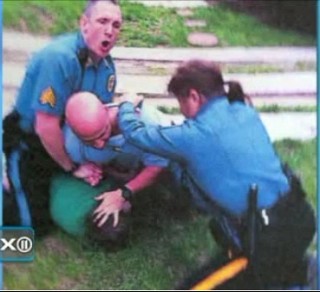
Officer Robin Parker, a Maine state police officer, was pulled over for drunk driving while off-duty and arrested, as he should have been, but as many officers in similar circumstances are not, due to “professional courtesy.”  Parker was put on administrative leave pending an investigation. His arrest was beginning to cause discord at the station, as some of Parker’s colleagues but some of his fellow officers were ostracizing the officers who arrested him.

Parker sent a mass email to all the officers. It read…

Dear Fellow Troopers,

I’m not sure I’m able to articulate exactly how I feel,  but I will try to put into words my thoughts.

Most if not all of you know by now what happened with me last Sunday evening. I was pulled over on the turnpike for suspicion of driving under the influence. I was subsequently processed and charged with that offense by Troopers within Troop G.

 I want to first thank all of you for your tremendous support and prayers. I will continue to graciously accept them as I move forward in this process. One thing I want to make perfectly clear to everyone. My decisions and choices were mine and mine alone. I have made some mistakes and I’m prepared to answer for them. I appreciate the kind words expressing sadness that I will have to deal with this in the courts and within the department. But these are the consequences for MY ACTIONS. I’m not saying this is not painful, because it is. I’m not saying this is not going to be hard, because it will be. I’m not saying I’m not ashamed and embarrassed, because I am. But, what I am saying is I own this and I’m prepared for the consequences. Continue reading

The Third Annual Ethics Alarms Awards: The Worst of Ethics 2011 (Part 1)

Yes, it was Joe Paterno's year, all right.

Welcome to the Third  Annual Ethics Alarms Awards, recognizing the Best and Worst of ethics in 2011!

This is the first installment of the Worst; Part 2 is here. And the Best is here. 

2011 prompted more than 1000 posts, and even then I barely scratched the surface of all the ethical dilemmas and unethical conduct swirling around us. If you have other choices for the various distinctions here and in the subsequent Awards posts, please make them known.

Here are my selections:

Unethical Community of the Year:  Huachuca City, Arizona. Leading the way among American communities that believe, in their hysteria, that former sex offenders who have served their sentences are nonetheless fair game for persecution and the denial of basic rights as citizens and human beings, Huachuca County passed an ordinance that bans registered sex offenders from the use of all public facilities, including parks, school and libraries.  Runner-up: Obion County, Tennessee. Last year, Ethics Alarms gave the county runner-up status as “Unethical Community of the Year” for sending its volunteer fire department to watch a man’s house burn down because he had failed to pay a $75.00 fee. In 2011, it did it again. I swear: if Obion County hasn’t come up with a better system and this happens again in 2012, Obion County will get the title no matter what some other unethical community does.

Most Warped Ethical Values: The Penn State students who protested the firing of football coach Joe Paterno, because, you know, he was such a great football coach that a little thing like allowing a predatory child molester to run amuck on campus shouldn’t be blown all out of proportion. Runner-up: Ron Paul supporters.

Unethical Website of the Year: Lovely-Faces, the anti-Facebook stunt pulled by Paolo Cirio, a media artist, and Alessandro Ludovico, media critic and editor-in- chief of Neural magazine, to show how inadequate Facebook’s privacy controls were. To do it, they stole 250,000 Facebook member profiles and organized them into a new dating site—without the members’ permission. The site embodied “the worst of ethical thinking: taking the identities of others for their own purposes (a Golden Rule breach), using other human beings to advance their own agenda (a Kantian no-no) and asserting that their ends justify abusing 250,000 Facebook users, which is irresponsible utilitarianism.” Continue reading

Philidelphia’s Conflicted, Shameless, Greedy—But Law-Abiding!— City Council

In the City of Brotherly Love, why shouldn't the City Council show a little love to itself--and its members' bank accounts?

Philadelphia, a city that like all cities these days is reeling under budget deficits, contemplating harsh cuts in city services and programs and raising taxes, is receiving a cruel lesson in the limits of public-mindedness by elected officials when the price is right.

Philadelphia City Councilwoman Marian Tasco retired yesterday, collected $478,057 in pension payments, and then plans to return to work after she is sworn-in on Monday to serve her seventh term. Register of Wills Ronald Donatucci retired Dec. 23 and will also return to work on Monday. He collected $366,797.

Why are they doing this? Because they can. Because it’s a lot of money. Because nobody can stop them. In Tasco’s case, because her irresponsible, disengaged, foolish constituency voted her into office despite ample warning that this is what she had planned. Continue reading

Unethical Quote of the Week: Patrick Lott

Patrick Lott, hard working role model

“I have always given my best and tried to be a great role model. No one is perfect. Thanks for the memories.”

—-Patrick Lott, Assistant principal at Bernardsville Middle School in Somerville, New Jersey, in a cryptic Facebook post earlier this month that was explained, sort of, when he was arrested for allegedly using a hidden camera to videotape boys in the Immaculata High School showers for a period of nearly three years.

I say “allegedly” because people get mad at me when I don’t, and because he hasn’t been tried and convicted yet. On the other hand, videos of nude teenagers showering were found in his home. Maybe they flew in the window.

“Nobody’s perfect” is one of the great and infuriating rationalizations used by scoundrels and their apologists,  and goes hand in hand with all the other clichés designed to discourage people from making the kind of ethical judgments that keep societal standards sturdy, ethical, and clear. It is right up there with “It’s not the worst thing” and “Judge not, lest ye not be judged” as bumper sticker dodges that set my teeth on edge, but “Nobody’s perfect” may be the most outrageous of all….at least when employed by someone like Lott.

There is a pretty big chasm between “perfect” and taking secret videos of naked kids when you are a trusted school administrator. This guy couldn’t see “perfect” with the Hubble telescope. And he says he’s always given his best—-this was his best? I shudder to think about what Lott would have done if he wasn’t trying so hard. He tried to be a great role model? For who…Penn State assistant coaches?

Lott’s statement is an outrageous plea for sympathy for all the wrong reasons. His best would have been to seek help of find another line of work when he realized he couldn’t control his desire to watch naked young boys. Trying to be a great role model begins with not breaking the law. And  one who behaves outrageously should not insult the rest of humanity by trying to suggest that we’re really not so different. Oh yes we are.

This is Lott’s disgrace, Lott’s shame, and Lott’s crime. The very least he should be able to do is accept responsibility, and not try to minimize his misconduct or suggest that it’s not all that different from overeating or going 45 in a 35 mph zone.

The Drunk, the Bar and the Missing ID

I’ve been considering starting a continuing category for unethical law suits, but what interests me about this story is that it coincides with a sudden flurry of new comments on the Shannon Stone post. That concerned the man who fell to his death at a Texas Rangers game last summer after lunging to catch a foul ball for his son. My post argued that when someone does something unequivocally reckless and foolish that leads to his injury and death,  it may be legally advantageous to sue third parties for not anticipating the situation and providing prophylactic safety measures, but is unethical to do so.

It was not one of my more popular posts.

This story, from South Carolina, raises a similar issue. Paraplegic Chelsea Hess is suing Jock’s Sports Grill  because the bartender failed to check her ID and didn’t determine whether she was already intoxicated when, at the age of 20 (in 2009), she drank, drove, and crashed her car, causing her current condition. Hess is also suing the state Department of Transportation, saying the agency failed to properly maintain the shoulder of the road where her car crashed. Continue reading

Ethics Quiz: The Case of the Fake But Accurate Social Security Card

A conundrum I have been asked to solve:

A mother is working to get her foreign adopted child a new copy of his Social Security card, which was lost. The child is a citizen since infancy, and a SS number has been assigned to him, but the process for a naturalized alien to get another is long and fraught with red tape, delays and frustration. So far, replacing the card has taken ten months, though it was supposed to take three. Now the son is waiting for the card to be issued. Social Security says it is waiting for final approval from Immigration, and Immigration says that there is a bottle neck, but not to worry.

Meanwhile, the boy has a standing job offer for a job that he is excited about and that would help family finances considerably. He cannot be processed without a Social Security card, however. And the job will not be held open forever.

For $250, a friend of the mother’s can get a counterfeit Social Security card with the son’s real number on it. He can have it in a week,

Your Question, in the last Ethics Quiz of 2011:

Granted that getting such a fake card is illegal, is it unethical?

None of the agencies involved dispute his citizenship, that he is enrolled in Social Security or that his number is valid. He has a document from Social Security that lists his number. The fake card would not assert anything that wasn’t true, except that he actually had the official card. He would be offering fake proof, but fake proof of something that is undisputed and true.

Is this one of the rare cases when conduct would be both illegal and ethical?

I’ll take your responses and update this with commentary later.