Scary Ethics Theater: The Strange Case of the Freedom of DISinformation Act!

"It's Halloween! What better time for a good ETHICS SCARE in ERIC HOLDER'S JUSTICE DEPARTMENT!!! Come along, children! Don't be afraid!"

Welcome, visitors, to SCARY Ethics Theater on this All Hallow’s Eve!

Tonight we ask the scary question, “When is it ethical to be unethical?  For the chilling answer, we must enter the mysterious lair of Eric Holder’s Justice Department!!! Bwahahahahahahaha!!!

Come inside! Don’t be frightened!

The Holder-Obama Justice Department has proposed a regulation that would allow federal law enforcement agencies to tell people seeking information under the Freedom of Information Act that the government has no records on a certain subject, when it really does. That is, the regulation will officially sanction legal lying in response to FOIA requests by citizens. Continue reading

Five Questions and Answers About The Steven J. Braun Law Firm Halloween Party Outrage

Imagine: tasteless Halloween costumes!

Background: New York Times Joe Nocera is stirring up public outrage because some employees of a law firm involved in questionable foreclosure practices attended the firms 2010 Halloween party dressed as homeless people. Photos taken at the Steven J. Baum law firm’s Halloween party last year were passed along to Nocera by a former firm employee.  In one that was posed on the Times site, two party-goers are dressed as  homeless people, with one holding a sign that reads, “I lost my home and I was never served.” Nocera wrote that the costumes show an “appalling lack of compassion.”

Here are ten questions and answers regarding ethics issues raised by the incident. Continue reading

Henry James, Mis-Matched Neighbors and the Naked Silhouette

Like most people, I grew up being told that it was dangerous to hitch-hike, because of the many predatory drivers waiting to pounce, and also never to pick up hitch-hikers, because some of them were serial killers. I always seemed to me that the odds favored an eventual convergence in which a psychopathic motorist picked up a murderous hitch-hiker. I wonder what happens then.

Neighbor disputes are often like this: pure chance places very different  people side-by-side, one an inconsiderate boor, and the other an intolerant jerk. We know what happens then: exactly what has happened in Great Falls, Montana.

Brian Smith objects to the large decal on neighbor Shanna Weaver’s car. The decal portrays a white silhouette of a naked woman. To him, it’s pornography, and he objects to have to look at it.  “My upbringing dictates that the human body is a sacred thing, not something that should be put on display,” Smith said. Weaver, however, is not inclined to remove it. “It’s my freedom of speech, which he can’t take away,” Weaver says. “It’s no different than the mud flaps that you see on trucks.”So Smith filed a complaint against Weaver for violating the local anti-pornography ordinance, which was a stretch. [In an earlier version of this post, it wa stated that Weaver sued him for harassment, and was thrown out of court. That was in error, and Ethics Alarms apologizes for its mistake.] Continue reading

The Great Chicken Sandwich Caper, Safeway and the Duty to Think

In the updated American version, Gene Valjean steals two chicken sandwiches for his starving and pregnant wife, and he is hounded by the relentless Safeway manager, Fred Javert.

[ Update (11/2/2011): Safeway has dropped the charges stemming from this incident, and rescinded its one year ban of the Leszczynskis. None of the commentary on the story is affected by this development. The damage is done, including to Safeway’s image. The fact that the grocery chain decided not to do any more damage, and took a week to decide it, is not anything to admire.]

Periodically Ethics Alarms breaks into a debate over whether prosecutorial discretion is fair and just. When appropriate, it is fair and just, and here is an example of the kind of injustice that occurs when the law is enforced without concern for proportion, intent, or common sense.

The villain in this case was not a prosecutor, however, but a Safeway manager.

Nicole Leszczynski, who is 30-weeks pregnant, her husband Marcin, and daughter Zophia were shopping at a Hawaii Safeway where they bought about $50 worth of groceries. During their shopping, Nicole began feeling faint, and ate two chicken sandwiches, a deal at only $5.  The couple forgot about  the sandwiches when they checked out their other items, however. (Full disclosure: I’ve done this. With a banana.) The store detained them and refused to accept payment. Then the store manager called the police, and they were placed under arrest for larceny.

In accordance with police policy when both parents are arrested, 3-year-old Zophia was taken by Child Protective Services, and not returned to the Leszczynskis until the next day. Continue reading

The Damage Incompetent Pundits Do: Criminal Defense Misconceptions

See? I WARNED you not to listen to Mercedes Colwin!

A couple of months back, I flagged some outrageously mistaken commentary on Sean Hannity’s radio talk show given out by Mercedes Colwin, who is a lawyer but prone to howlers whenever she shows up on Hannity or Fox News, which I suspect favors her for qualities that have nothing to do with her law practice. On the occasion that roused my ire, Colwin suggested that she could not defend a criminal client who told her he was guilty, because she was “an officer of the court.”

This is pundit malpractice grafted to legal incompetence: a defense attorney MUST maintain a client’s legal innocence whether the attorney knows the client is guilty or not, and being an officer of the court has nothing to do with it.

Colwin, who was discussing the Casey Anthony trial, represented herself as an expert and then reinforced the most persistent and most damaging popular misconception about the legal system, which is that there is something unethical about defending guilty criminal clients. The system has to be held to a high standard of due process, and even an “obviously” guilty defendant must be proven guilty with admissible evidence beyond a reasonable doubt. Defense attorneys are there to make sure the state meets its burden of proof by making the strongest argument for their clients’ innocence as possible, whether the defendant has confessed his or her guilt or not. For one thing, a defendant often doesn’t know if he is legally guilty, even if he “did it.” For another, even if he did it, the state still has to prove it.The defense’s job in to make sure it does, Continue reading

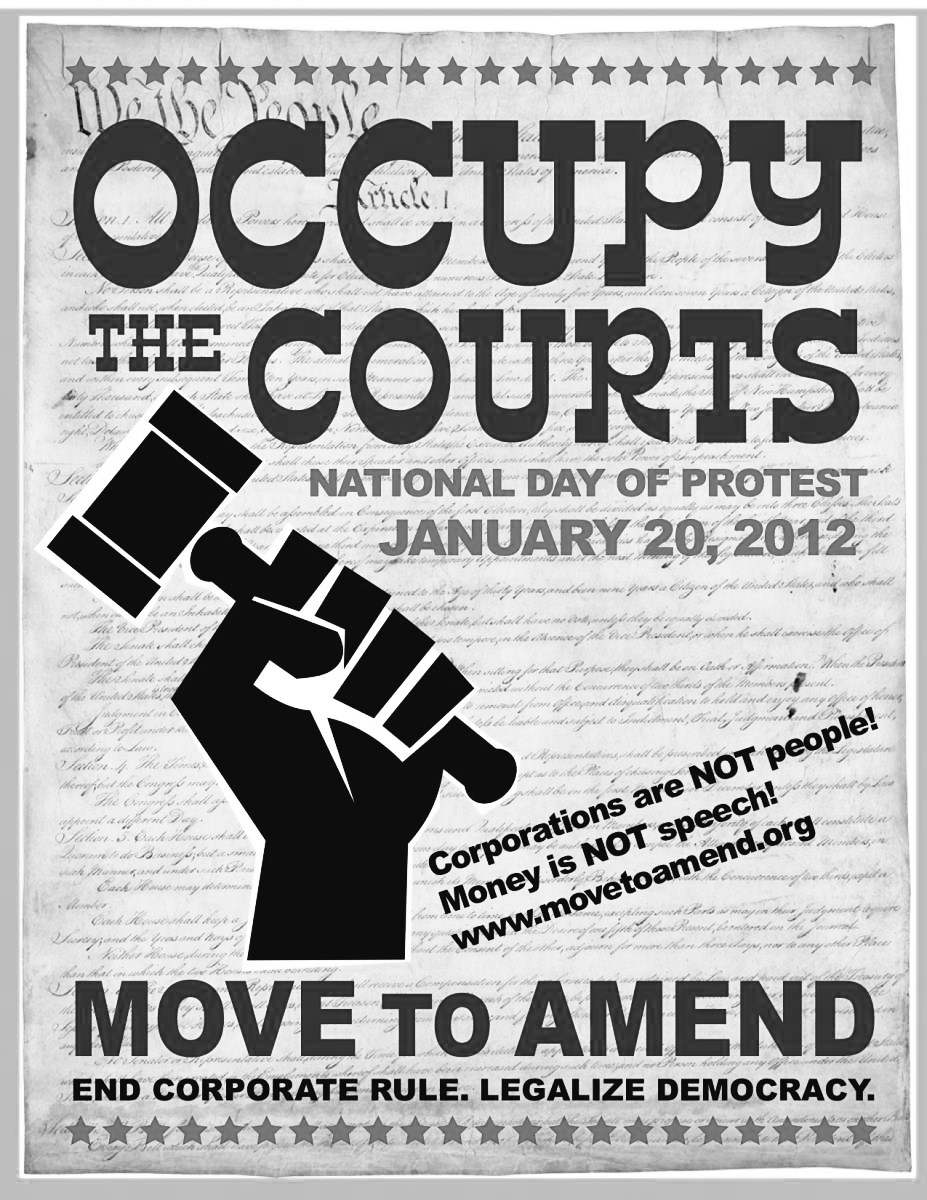
Scott Olsen, The “Occupy” Movement and The Protest Dilemma

The critics of the various Occupy Wall Street demonstrations are hustling to defuse the backlash from an incident that took place this week in Oakland, where a confrontation between police and Occupy Oakland protesters not only led to many arrests, but also a severely injured protestor. Iraq war veteran Scott Olsen is hospitalized with a fractured skull as a result of being hit by a projectile directed by police, probably a tear gas canister.

In the age of YouTube, the various images of Olsen’s injury were quickly exploited by protest organizers, as should be expected and is entirely fair. All demonstrations and protests are ultimately about public relations: if the protesters manage to be viewed more sympathetically than the group they are protesting against, then they attract sympathy and support. They win. If the protesters become unsympathetic, then they lose. All intense demonstrations eventually become a game of chicken between demonstrators and the government’s law enforcement force, be it police or National Guard. The demonstrators refuse to clear out of an area where they do not have a right to be, either because of the lack of a permit, or because they are disrupting the public peace, safety and welfare. They will try to provoke police without appearing so violent, unruly or scary that they lose public support. The police (or National Guard) have a job to do—they also have their own physical safety to protect—and yet they have to avoid making martyrs out of the demonstrators by appearing too militaristic, and also to make sure that their efforts don’t evoke images of police state oppression. Continue reading

Ethics Quote of the Week: Charles Krauthammer

Let's see...nope! Still too good for Gaddafi!

“Under the normal rule of law, truth is only a means for achieving justice, not an end in itself. The real end is determining guilt and assigning punishment. But in war and revolution one cannot have everything. Justice might threaten peace. Therefore peace trumps full justice. Gaddafi could have had such a peace-over-justice compromise. He chose instead to fight to the death. He got what he chose. That fateful decision to fight — and kill — is the prism through which to judge the cruel treatment Gaddafi received in his last hours. It is his refusal to forgo those final crimes, those final shellings of civilians, those final executions of prisoners that justifies his rotten death.”

—- Charles Krauthammer, revered conservative columnist and pundit, in his column rebutting the complaints of human rights activists regarding the rebel execution that took Moammar Gaddafi’s life.

Krauthammer is right, and he is wrong. He is right that no one should feel any pity for Gaddafi, a brutal and inhuman despot who had it entirely within his own power to both save his own life and refrain from killing even more of his countrymen than he had killed already. He is wrong that Gaddafi’s crimes and cruelty suspend civilization’s principles of justice and ethics. Continue reading

Ethical Jobs Plan: Let’s Put Lawyers in the 99%

19th Century American lawyer without law degree or bar exam credentials. Reputed to be effective, honest.

Despite the fact that such a change might be ruinous for me personally, since a large portion of ProEthics income comes from providing bar association-mandated continuing legal education courses on ethics, I have to endorse the arguments made by Brookings Fellow Clifford Winston and George Mason Law Professor Illya Somin for eliminating barriers to entry in the legal profession, such as mandatory law school attendance, the bar exam, and bar membership.

Winston writes:

“For decades the legal industry has operated as a monopoly, which has been made possible by its self-imposed rules and state licensing restrictions — namely, the requirements that lawyers must graduate from an American Bar Association-accredited law school and pass a state bar examination. The industry claims these requirements are essential quality-control measures because consumers do not have sufficient information to judge in advance whether a lawyer is competent and honest. In reality, though, occupational licensure has been costly and ineffective; it misleads consumers about the quality of licensed lawyers and the potential for non-lawyers to provide able assistance. Continue reading

Comment of the Day: “Naming Your Kid After Hitler: 100% Legal, 100% Child Abuse”

Moon Unit Zappa: Only in America!

Site quotemaster and resident pedant Tom Fuller comes through with a rare comment of his containing no quotations whatsoever! (Tom is, among other things, a contributor and researcher for The Yale Book of Quotations.) He adds some useful perspective on the issue of naming children, in his Comment of the Day to yesterday’s post, “Naming Your Kid After Hitler: 100% Legal, 100% Child Abuse.”  I must point out that “Choo Choo” was not the 1962 Mets catcher’s real name, any more than Red Sox pitcher Dennis Boyd was really named “Oil Can.”

Here it is Tom’s comment:

“This is a good illustration of how America’s concept of free speech is such an unusual legal and cultural norm. In many countries, including Germany, a child’s name must be legally approved in advance (in Germany, by the Standesamt — office of vital statistics).

“By German law, a child’s name has to meet two conditions: (1) it must reflect the sex of the child, and (2) it must not endanger the ‘well-being of the child.’ No “Moon Unit” Zappa, no “Choo Choo” Coleman, and — especially — no “Adolf” anybody, unless the local office says “OK”.

“According to wire service reports, hundreds of Algerians wanted to name their babies “Scud” during the 1991 Iraq war, but the local officials nixed the idea.

“My point? Only that Americans are often more likely than those in other countries to regulate speech and behavior in ways other than by prior legal restraint — like ethics, which is what this odd corner of the Web is all about. Sadly, as history has shown, when ethics fails, many people turn to the law to fix things. It doesn’t always work.”

Young, Gullible, Lazy, Unimaginative and Unbelievable: I Wonder Why This Lawyer Has Trouble Finding A Job?

Well, clearly “sign-maker” isn’t an option…

I have some observations regarding this unemployed lawyer’s lament as he Occupies Wall Street.

It is true that many law schools have been exposed lately for inflating their employment statistics. The American Bar Association announced last month that it was drafting a rule including sanctions for law schools that intentionally falsify jobs data, possibly including monetary fines or the loss of accreditation. That is as it should be.

Nonetheless, I am dubious about the sign’s 99.9% claim, especially in the absence of a named institution. Promising 100% employment to any group seems excessive, and a person of normal intelligence would, or certainly should be skeptical. Thus, after only the first line, I am dubious about the candor and/or judgment of the sign-holder.

I am also dubious about his account of his conversation with the Dean. Do you know what the unemployment rate was for lawyers in 2010, according to the U.S. Department of Labor? Continue reading