Wisconsin Democrats have filed an ethics complaint against Governor Scott Walker.
The complaint, and the filing of it, are unethical. Really, really, really unethical. Here’s why. Continue reading
Wisconsin Democrats have filed an ethics complaint against Governor Scott Walker.
The complaint, and the filing of it, are unethical. Really, really, really unethical. Here’s why. Continue reading
Ethics train wreck scholars take note: when an organization’s image and existence is based on multiple lies, an ETW is inevitable.

Oh NO! It's another Ethics Train Wreck!
National Public Radio is now in the middle of a massive, six-months long ethics train wreck that began with the hypocritical firing of Juan Williams on a trumped-up ethics violation. The disaster exposes the culture of dishonesty and entitlement at the heart of NPR, and by extension, the Corporation for Public Broadcasting. To the extent that their supporters blame anyone else, it is evidence of denial. This is a train wreck, however, and the ethics violators drawn into the wreckage are many: Continue reading
It’s Quiz Time!
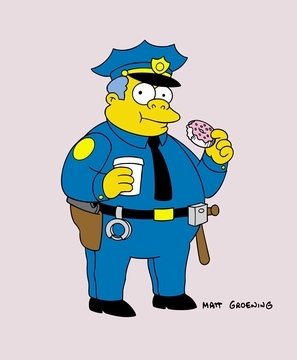
Chief Wiggum would be an upgrade.
Today’s topic: Why the public doesn’t trust the law enforcement system. Here are two horrible and true, tales of AWOL ethics involving law enforcement in New York and Tennessee. Which is more unforgivable, A or B?
A. Brooklyn, NY: The Perpetual Warrant
What is the fair limit of “the police made an honest mistake”? Let’s say the police have a warrant to search your house, and come to your door because they got the address wrong—and it’s a mistake. At least they didn’t break down the door in the middle of the night. OK, mistakes happen. Then they come again, because they got your address in error again. Annoying, but they seem embarrassed: they aren’t trying to harass you.
And then they arrive 48 more times. Continue reading
Charlie made a different kind of mistake, too!
“We’re people, we’re not monsters. We’ve just made a different type of mistake than someone else.”
— 34-year-old John Collins, who announced his support for a provision being pushed forward by the Seattle Office For Human Rights, which believes that convicted criminals should be made a protected class.
Collins sure made a different kind of mistake, all right. He served four years in prison for drugging and raping his estranged wife. Continue reading
 Some day, one hopes not too far in the future, when U.S. culture has unequivocally abandoned the ancient fear of gay human beings, when understanding, fairness and respect has banished ignorance and hate, when same sex marriages are recognized as manifestations of loyalty, commitment and love rather than perversions of nature, and when no American feels the need to hide his or her sexuality, and thus feels no compulsion to trumpet it either, we will look back on such societal embarrassments as the Flour Bluff Intermediate School District as we do now on past purveyors of child labor, forced sterilization, involuntary human experimentation, mistreatment of women, and racism, and wonder, “What was the matter with those people? How did they get that way?”
Or, come to think of it, we could ask that question right now.
Seventeen-year-old Bianca “Nikki” Peet, a senior at Flour Bluffs High School in Corpus Christi, Texas, high school senior requested the she be permitted to launch a Gay-Straight Alliance in her school. The Equal Access Act, a federal law passed in 1984, requires schools receiving federal funding to offer “fair opportunities for students to form student-led groups, regardless of their religious, political and philosophical leanings.” If the school district was going to allow any extracurricular groups, it had to allow Nikki’s.
So it shut down all extracurricular clubs at the school. Continue reading

Sing, Nelly---and charge him through the nose.
Singer Nelly Furtado has been attacked recently for accepting a million dollars in 2007 to entertain Muammar Gaddafi and his family. The idea seems to be that, as ringingly put by screenwriter Mark Tapper,
“It is quite simply willful blindness to claim that there is no moral dimension in the choice to perform privately for a monster like Gaddafi, and in being paid exorbitantly from funds no doubt stolen from his own people, or misappropriated from foreign aid or dirty deals.”
Furtado isn’t the only one who crooned for the Libyan dictator, apparently. Mariah Carey, Usher, Lionel Richie, Beyoncé and other performers also accepted big bucks to give Muammar and his family a good time.Furtado is donating her fee to charity in the wake of criticism like Tapper’s and Beyoncé has also donated the million that she received to charity, apologizing profusely. Mariah Carey is begging for forgiveness.
I’m glad that the stars are giving their money to worthy causes, and no doubt it is a good public relations move in a society where half-baked ethical notions become conventional wisdom before much thought has been applied to them. Nevertheless, Furtado and the rest did nothing wrong by entertaining Gaddafi. Continue reading
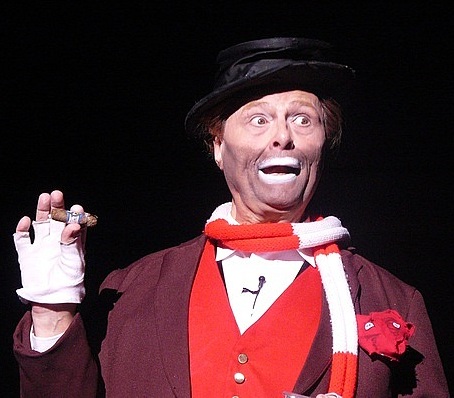
"Freddy the Freeloader": Role Model
Jill McGlone was working for the Norfolk (Virginia) Community Services Board (known as CSB—an independent agency created by the state and funded with state and federal tax dollars) as an office assistant when she was involved in an internal personnel investigation.
McGlone was put on paid leave, but her case remained in limbo, without resolution. She stayed home, and continued to collect her full $29,000/year salary and benefits—for twelve years. Continue reading

"Now about my fee...."
Texas lawyers have voted down a proposed ethics rule that specifically condemned attorneys having intimate relations with their clients. Naturally, the media will represent the decision as the predictable reaction of a bunch of high-rolling, fun-loving Texas legal horn-dogs to people trying to spoil the perks of their job; even the legal media has settled on a misleading headline: “Texas lawyers reject ban on sex with clients.” But Texas lawyers don’t think that sex with clients is ethical, or want it to be ethical. Like the attorneys in many other states, they just think having a rule on this topic is bad idea. And they are right. Continue reading
John-Baptiste Clamence reacts to yesterday’s post with a crucial point (that I happen to agree with) about the role of law in setting cultural values and societal ethics. Here is his Comment of the Day, on “The White Male Scholarship”:
“It’s a hard line to draw sometimes; the line between your right to have the wrong opinion, and how much the law should push you to have the right opinion.
In the UK, since 1996 it has been illegal for B&Bs to refuse rooms to gay couples. These are private businesses – should they have the right to offer their services in a discriminatory way also?
“The situation you describe is, in my view, unethical for the reason that it perpetuates the idea in society that racial discrimination for an academic award is OK. The sooner and stronger the message given by the law is, then the sooner the views of society change.
“To paraphrase Cesar Millan: Change the behaviour, change the thoughts.”

OK, she's snarky...but can she be a good lawyer?
…but not an untrustworthy arrogant jerk!
Marilyn Ringstaff, a 2006 graduate of John Marshall Law School, had to pay a $250 fine as a result of a minor traffic accident she was a first year law student. She represented herself in court, challenging Abe Lincoln’s Rule that “If you represent yourself you will have a fool for a client and a jack-ass for a lawyer,” and then proved Abe correct—on both counts— when she argued on appeal that her own representation was ineffective.
Ringstaff paid the fine and sent along an obnoxious note with two smiley faces, reading, “Keep the change—put into a police/judicial education fund. I can certainly say this has been an educational experience. I am now a second-year law student and can honestly relate to what a crooked and inequitable system of ‘justice’ we have.” Continue reading
 Ethics Alarms