You can be forgiven if you haven’t followed the massive Broadway crack-up saga of the “Funny Girl” revival; after all, Broadway is an elite, increasingly culturally irrelevant dinosaur where 80% of those on stage are gay, 90% of those in those in audience can afford hundred dollar tickets, and half of the shows first premiered when Joe Biden was in braces. You can be excused even more if you missed the massive ethics scandal at the crack-up’s core; after all, most theater reporters have no ethics alarms, just like most theater professionals. Still, to quote a character in an ancient Broadway classic that had an significant ethical impact, “Attention must be paid.”
Law & Law Enforcement
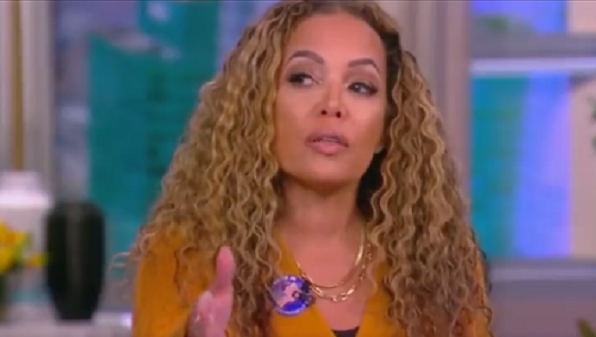
Unethical Quote Of The Week: UC Berkeley Law Prof. Khiara Bridges
“I’m answering a more interesting question to me”
—-Insufferably arrogant and disrespectful witness Prof. Khiara Bridges, after being told by Senator John Cornyn (R-Tx) during today’s Senate hearing,regarding the fall of Roe v. Wade via the Dobbs decision, that she hadn’t answered the question he asked.
The question Cornyn asked was, “Do you think that a baby that is not yet born has value?” She answered, “I believe that a person with a capacity for pregnancy has value.”
And there it is. A flat-out, defiant refusal to acknowledge the existence of the other life in the abortion equation. Her response to Cornyn’s protest that she hadn’t asked the question insulted both the Senator and the professor’s supposed area of expertise, the law. No witness in a trial could say that she was answering a question of her own conceit that interested her more than the one she was asked. No witness at a Congressional hearing can ethically do it either. Nor could a law student in class or on an exam. Continue reading
Ethics Dunces: Kathryn Rubino, And, As Usual, “Above The Law”
What a vile website Above the Law is! The legal gossip cyber-rag, which belched forth the hateful Elie Mystal (who once argued on the site that black jurors should always refuse to vote “guilty” regarding black defendants regardless of the crime or the evidence), covers the progressively rotting legal profession with gusto, and does everything it can to make the profession even more left-biased than it already is. As a recent article by one of Elie’s successors, Kathryn Rubino, shows, a lack of fairness and decency helps the rotting process a lot.
The headline that caught my eye was “On Second Thought, Maybe Federal Judges Shouldn’t Have Hired The Law School Student Famously Accused Of Saying ‘I HATE BLACK PEOPLE’” I was immediately tempted to headline this post, “On Third Thought, Maybe A Site Run By Lawyers Shouldn’t Promote The Concept That Accusations Alone Justify Wrecking A Lawyer’s Career.”
Just Because Someone Is An Idiot Doesn’t Mean It’s Ethical To Make A Fool Out Of Him: The Roy Moore Libel Suit Dismissal
The 2nd U.S. Circuit Court of Appeals at New York refused to revive a lawsuit filed by former Alabama Chief Justice and failed Senate candidate from Alabama Roy Moore (and his wife) against comedian comedian Sasha Baron Cohen. Moore v. Baron Cohen had its genesis when the “Borat” satirist and actor tricked Moore into traveling to Washington, D.C. to receive a fictional award for supporting Israel and to be interviewed for Israeli TV. It was all a set-up to ridicule Moore on an installment of Cohen’s Showtime production, “Who Is America?”
Cohen presented himself to Moore as an Israeli anti-terrorism expert with a high-tech military intelligence device ( he’s holding it above) that supposedly was able to detect pedophiles. Moore’s Senate run was crushed by credible allegations that he had sought relationships with underage teenage girls: the episode of the program in which the interview aired was introduced with news clips reporting those allegations, including one involving a fourteen-year-old girl at the time. In a cringeworthy confrontation, Cohen’s character waved “the pedophile-detector” over Moore as it beeped loudly. Moore then walked out of the “interview.” Moore and his wife sued for defamation and intentional infliction of emotional distress. Continue reading
The Tracey Harris Murder Ethics Train Wreck
I stumbled across a year-old CBS “48 Hours” episode that depressed me about the state of ethics alarms in the culture, but to be fair, almost everything is doing that right now.
Tracey Harris (with her daughter, above) vanished from her home in Ozark, Alabama on March 7, 1990. A week later, her body was found in the nearby Choctawhatchee River, and the autopsy revealed that Tracey had drowned, though she had marks on her neck consistent with strangulation. Her death was ruled a homicide. Suspicion immediately fell on her ex-husband Carl, who had continued to live with Tracey and their young daughter after their divorce. He was rumored to be abusive, and had been having an affair with a local teen. Investigators believed, but could not prove, that Carl was the last person to see Tracey alive.
Police and prosecutors interviewed over a dozen neighbors and acquaintances of the Harrises, but there was never sufficient evidence to arrest Carl or seek an indictment. However, the community hostility inflamed by the widespread belief that Carl had murdered his popular former wife drove him to leave the county. Tracey’s parents adopted his daughter, who remains permanently estranged from him.
Ethics Quiz: Travails Of A Transgender Sex Offender
As Samuel L. Jackson would say if he were preparing to delve into this ethics quiz:
“Ella” is transgender woman now, whatever that means, but back when Ella was a 15-year-old boy, and stood 6-foot, 5-inches while weighing in at more than 300 pounds, she, though then a he, joined another teen in sexually assaulting a 110 pound autistic 14-year-old boy who was blind in one eye and autistic. The Pre-Ella then taunted the kid on Facebook. The male predecessor of Ella pleaded no contest to one count of sexual assault of a child under 16 years of age and spent time in two juvenile detention and treatment centers. Somewhere along the way Ella decided she needed to transition to female-hood, so when, in her new female-identifying edition, she was ordered to register as a sex offender, she objected. Under Wisconsin law, sex offenders must register a legal name and any aliases they use, and they may not legally change their name. That seems reasonable, since there is no point to legally registering as a sex offender to alert the community of sex offending proclivities if one can just foil the measure by using a different name.
Ella has been “Ella” since her teens and is now 22. She argued that requiring her to register as a sex offender under her male name given at birth violates her First Amendment right to express her true female identity. She also contended the registry requirement, as applied to her, amounted to cruel and unusual punishment under the Eighth Amendment, in essence making her out herself as a former him, or a former him trapped in a female body, or something.
The Wisconsin Court of Appeals rejected Ella’s claims, and last week, four mean old conservatives outvoted the court’s liberal members on the Wisconsin Supreme Court also denied Ella’s attempt to change her name after hearing arguments in the case in February. Continue reading
Follow-Up: “Observations On A Potential Supreme Court Ethics Scandal…” Yup, It’s Fake News. (Well, Mostly…)
Mark Tapscott is a veteran Washington, D.C. political pro and investigative journalist (who has weighed in at Ethics Alarms a time or two). Late yesterday he focused on clarifying the troubling Rolling Stone story I wrote about here.
That Rolling Stone piece was headlined, “SCOTUS Justices ‘Prayed With’ Her — Then Cited Her Bosses to End Roe,” an allegation that fed directly into the pro-abortion trope that the Dobbs decision was substantially motivated by theological fervor rather than legal analysis. In the Ethics Alarms post, I expressed skepticism that the story could be accurate because no mainstream media source had picked it up, and also because any Justices praying with a representative of a religious organization before ruling on a case in which that organization had submitted a brief would create a neon-bright appearance of impropriety. On the other hand, I found it unlikely that the publication would drop such a “bombshell” without strong evidence, since its news reporting credibility was on lengthy probation after its phantom UVA “gang rape” story fiasco in 2015.
Now the verdict’s in, thanks to Tapscott: Rolling Stone apparently hasn’t learned anything about journalism ethics the last seven years. In a “Culture” column for PJ Media, Tapscott explains: Continue reading
Comment Of The Day: “Ethics Quiz: Grandstanding Or Justice?”
I didn’t provide my answer to the ethics quiz about the propriety of charging and trying the woman whose accusation against 14-year-old Emmett Till resulted in his infamous lynching in 1955. Jim Hodgson’s Comment of the Day nicely explains what it would be, though.
I also heard an interesting angle from my lawyer sister that is probably worth a full post. What Carolyn Bryant Donham said in 1955 would be literally nothing today. It was only in the warped Jim Crow culture of 1950s Mississippi that a woman false claiming a black teen touched and flirted with her could lead to violence, or could be considered provocation for a violent crime. How do you justify prosecuting someone 67 years later for an act that would no longer be considered a crime?
Here is Jim’s post, in response to “Ethics Quiz: Grandstanding Or Justice?”…
***
My answer to the ethics quiz is that no, she should not be prosecuted. It just isn’t feasible to achieve any fair degree of justice at this point.
As a retired deputy sheriff, the first thing that struck me as odd in the news reports that I read concerning this “discovery” was the clear implication that the “lost” warrant itself was somehow a bar to her being arrested and prosecuted at some time during the past 67 years. It may be news to many people, but paper warrants get lost (or at least temporarily “misplaced”) with some regularity. In my state, any officer of the court with knowledge of the original warrant could have asked for the warrant to be re-issued by the same court that issued the original. In my state this is referred to as issuing an “alias warrant” or an “alias writ.” Continue reading
Ethics Quiz: Grandstanding Or Justice?
Weird.
A team searching a Mississippi courthouse basement for evidence about the infamous lynching of black teenager Emmett Till in 1955 stumbled upon the unserved arrest warrant charging Carolyn Bryant Donham— identified as “Mrs. Roy Bryant” on the document—with the 14-year-old boy’s abduction. Donham was the young woman who falsely claimed that Till had whistled at her and grabbed her, causing a mob of white men to murder him. The warrant was never served, apparently because the Jim Crow-era Mississippi sheriff didn’t feel a mother with two children should be prosecuted. Now Till’s family wants Donham, 88, arrested and tried...almost 70 years after the crime.
Your Ethics Alarms Ethics Quiz on this Independence Day weekend is…
Would it be ethical to do this?
New York’s New Gun Law To Counter The SCOTUS Bruen Ruling Is Unconstitutional, The State’s Democrats Know It, And They Don’t Care
Conclusion: this is not a political party (nor are is progressivism an Ideology) that supports or respects democracy or the Rule of Law.
In the process of passing a restrictive law that bans legally-licensed guns in “many public settings such as subways and buses, parks, hospitals, stadiums and day cares…[and] Times Square Guns as well as on private property “unless the property owner indicates that he or she expressly allows them,” New York legislators included this language in the law:
THE APPLICANT SHALL MEET IN PERSON WITH THE LICENSING OFFICER FOR AN INTERVIEW AND SHALL, IN ADDITION TO ANY OTHER INFORMATION OR FORMS REQUIRED BY THE LICENSE APPLICATION SUBMIT TO THE LICENSING OFFICER THE FOLLOWING INFORMATION: (I) NAMES AND CONTACT INFORMATION FOR THE APPLICANT’S CURRENT SPOUSE, OR DOMESTIC PARTNER, ANY OTHER ADULTS RESIDING IN THE APPLICANT’S HOME, INCLUDING ANY ADULT CHILDREN OF THE APPLICANT, AND WHETHER OR NOT THERE ARE MINORS RESIDING, FULL TIME OR PART TIME, IN THE APPLICANT’S HOME; (II) NAMES AND CONTACT INFORMATION OF NO LESS THAN FOUR CHARACTER REFERENCES WHO CAN ATTEST TO THE APPLICANT’S GOOD MORAL CHARACTER AND THAT SUCH APPLICANT HAS NOT ENGAGED IN ANY ACTS, OR MADE ANY STATEMENTS THAT SUGGEST THEY ARE LIKELY TO ENGAGE IN CONDUCT THAT WOULD RESULT IN HARM TO THEMSELVES OR OTHERS; (III) CERTIFICATION OF COMPLETION OF THE TRAINING REQUIRED IN SUBDIVISION NINETEEN OF THIS SECTION; (IV) A LIST OF FORMER AND CURRENT SOCIAL MEDIA ACCOUNTS OF THE APPLICANT FROM THE PAST THREE YEARS TO CONFIRM THE INFORMATION REGARDING THE APPLICANTS CHARACTER AND CONDUCT AS REQUIRED IN SUBPARAGRAPH (II) OF THIS PARAGRAPH; AND (V) SUCH OTHER INFORMATION REQUIRED BY THE LICENSING OFFICER THAT IS REASONABLY NECESSARY AND RELATED TO THE REVIEW OF THE LICENSING APPLICATION.
What the hell is “good moral character”? Is any Constitutional right dependent on “good moral character”? The answer is no, because first, citizens have certain guaranteed rights regardless of their character, second, the right to bear arms is one of those rights, and third, opinions on what constitutes good moral character is subjective. For example, I think elected legislators in the United States who deliberately pass unconstitutional laws have terrible character. Could voting or freedom of speech be made contingent on a government agent’s judgment of a citizen’s character? No—it’s not even a valid question. No. Obviously no.