Illinois’s Death Penalty Ban: Defensible Decision, Indefensible Reasoning

Justice.

Illinois Gov. Pat Quinn  signed legislation abolishing capital punishment in the state and commuted the sentences of the 15 inmates still on death row to life in prison without parole.

I disagree with the decision, and have stated my reasons for not abolishing the death penalty here and here. Never mind: this is a topic on which ethical and reasonable people can disagree with honor. But if one is going to abolish an important law enforcement tool, the official justification for it ought to be coherent and persuasive, and not just facile rhetoric. That, unfortunately, is what Gov. Quinn gave us.

Here is the relevant segment of Quinn’s statement after signing the bill into law during a private ceremony: Continue reading →

Wisconsin Wars: The Democrats’ Unethical Ethics Complaint

Wisconsin Democrats have filed an ethics complaint against Governor Scott Walker.

The complaint, and the filing of it, are unethical. Really, really, really unethical. Here’s why. Continue reading →

The Missing Ethics Alarm: Spending Other People’s Money

How did I get HERE??

I confess: I honestly don’t understand this problem. From the first time I had an expense account, it never occurred to me to use it for my own pleasure. If I had to eat out on the road, I picked an inexpensive restaurant. I didn’t charge hotel room movies to my employer—he wasn’t sending me there to be entertained. I flew coach, and paid for any personal long-distance calls. Why? Because it wasn’t my money. I was a fundraiser for a non-profit, and I knew that whatever the donors were giving money for, it wasn’t for me.

It became apparent over the years that few of my colleagues or bosses saw it that way, when it came to their own expenses, and that elected officials and corporate officers not only readily use other people’s money extravagantly, but also that few people object when they do. The conduct is clearly irresponsible and unfair; I would call it dishonest. But those in high positions seem to regard it as their right. Continue reading →

Unethical Quote of the Month: Newt Gingrich

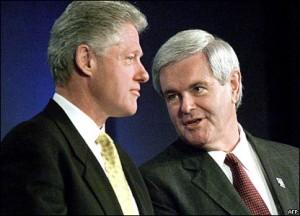
“There’s no question at times of my life, partially driven by how passionately I felt about this country, that I worked far too hard and things happened in my life that were not appropriate. And what I can tell you is that when I did things that were wrong, I wasn’t trapped in situation ethics, I was doing things that were wrong, and yet, I was doing them. I found that I felt compelled to seek God’s forgiveness. Not God’s understanding, but God’s forgiveness. I do believe in a forgiving God. And I think most people, deep down in their hearts hope there’s a forgiving God.”

—–Former Speaker Newt Gingrich, preparing for a presidential run by attempting to explain and apologize for his serial marital betrayals, the most spectacular of which was visiting his first wife while she was in the hospital recovering from cancer surgery to announce that he was divorcing her to marry his mistress. Then he cheated on his second wife, the former mistress, with a member of his staff. He ditched Mistress #1, Wife #2, for Mistress #2, who became Wife #3. This is why he needs a forgiving God, or at least a forgiving electorate.

Newt’s defense now is that he felt so passionately about his country that it caused him to dump his cancer stricken wife (so much for all that “in sickness or in health” stuff), and later, while he was leading a party that was making the case that a U.S. President shouldn’t be having on-the-job sexual encounters with interns, using his staff and appointees to cover it up, and lying about it under oath in court, to commence a second extra-marital affair of his own. This, naturally, helped let President Clinton wiggle of his well-earned impeachment hook, and also helped cement the socially destructive public perception that 1) everyone cheats on their spouses, so it’s okay, and 2) you can’t trust any of our elected leaders.

Thanks for nothing, Newt.

God is welcome to forgive you; I won’t. You are obviously untrustworthy. Once cheating on a spouse may be a mistake; cheating on a second spouse is a behavior pattern. If a politician who likes to invoke God will lie to and betray two women who he swore, before God, to take “’til death us do part,” not to mention his children, I see no reason to assume that he won’t betray voters who has never met, loved, or lived with.

God’s forgiveness is irrelevant to the central issue of whether New Gingrich has the reliability of character and core values to justify entrusting him with great power. As his self-serving quote demonstrates, he does not.

But good luck with God, Newt.
 

The Naked Teacher Principle Strikes Again!

Once the class sees Teacher like this, it's over...

The Naked Teacher Principle holds, in essence, that once a teacher is seen by his or her students cavorting in the nude, school administrators and parents are not being unreasonable or unfair if they decide that the teacher can no longer teach effectively. From the classic example involving internet photos, to exceptions like the male teacher appearing in a community theater production of “The Full Monte”, to strange corollaries like “the Naked Butt-Painting Teacher with a Paper Bag Over His Head Variation,” naked teachers create headaches for their schools, giggles (at least) for their students, and anxiety for the teachers involved.

Now we have another variation. Continue reading →

Don’t Knock “The Code of the West”!

A commenter just nominated the Republicans in the Montana State Legislature for “Incompetent Elected Official” status because they have proposed “The Code of the West” as  Montana’s State Code.

Nomination rejected. I don’t want to argue about whether a state needs a State Code, although it seems a lot more useful and constructive than state birds, state songs and state pies. I also don’t feel like debating the political correctness attacks on the potential use of the Code of the West by Native American activists, who apparently think the Code glorifies cowboys and insults Indians (Oh, all right: the complaint is nonsense. Valid ideals are not sullied by the misdeeds of those who espoused them.) But I like the cowboy codes, all of them. One is already on the site. I might not choose the same ten tenets of the unwritten Code of the West that is being debated in Montana, but the Code of the West is a perfectly good statement of ethical principles, and any state that embraces it should be praised, not embroiled in a lot of political posturing. Continue reading →

Comment of the Day: “Facebook Wars II”

Though not strictly an ethics comment, Mary’s theory about why school administrators are engaging in so much ethically dubious conduct is provocative and has the ring of truth. Here is her Comment of the Day, on the post “Facebook Wars II: More School Abuse of Power and Privacy“:

“A number of years ago, while extracting myself from a bad relationship, a therapist friend told me that the more healed and “normal” I became, the more outrageous and pathological my ex-partner’s behavior would be, in a psychological attempt to pull me back into the relationship.

“I sometimes think the same thing applies to social relationships and organizations. As they lose their relevancy and people withdraw and move on to new social structures, those invested in the old organizations thrash wildly to maintain an ever crumbling status quo. Continue reading →

Facebook Wars II: More School Abuse of Power and Privacy

"Hello? ACLU? Anybody there?"

In January, Ethics Alarms weighed in on reports from Illinois and New York about students being disciplined by their high schools for postings on Facebook about the sexual proclivities of female students in the community. The ethics verdict: the schools were abusing their power and the students’ privacy:

“When did schools suddenly acquire disciplinary control over what students do when they aren’t at school? There is no question that the websites involved were inappropriate, disrespectful, cruel and hurtful, just as the rumors and insults included in high school graffiti were, in those glorious days before the internet. Students so abused need to complain to parents, and parents need to talk to the parents of the offending students, and if they can’t or won’t address the problem, then the courts or law enforcement may need to become involved.”

The rationale offered by the schools at the time was that the students had violated rules against cyber-bullying, that ever-vague plague, although there is no more legitimate authority for a school to decree what a student can say about another student on a personal website than there is for a school to restrict what a kid can say at the dinner table.

Naturally, when an institution exceeds the natural limit on its authority, there is nothing to keep it from even more egregious abuse. Thus two Georgia students were just suspended and one another was expelled for negative Facebook postings about a teacher. Continue reading →

Announcing: The Incompetent Elected Official of the Month

"What, me legislate?"

With this post, Ethics Alarms announces a new continuing category for ethics infamy: Incompetent Elected Officials.

We tend to focus on corruption, dishonesty, conflicts of interest and lies when identifying unethical public officials, but it is the wildly incompetent of the breed who might carry the most ethics baggage of all. An incompetent elected official not only is irresponsible for taking on leadership that he or she is unable to deliver due to a lack of brains, skill, experience or judgment, but also keeps a more deserving and able individual from a distinguished position that needs him, jeopardizes the public, and undermines trust in the government generally. The public’s ethics are also implicated by the incompetent official’s ascension to power, as the truly inept can usually be identified with a modicum of diligence and care. Incompetent and irresponsible officials require the assistance of incompetent and irresponsible voters.

Thus incompetent elected officials warrant special attention. And the first incompetent elected official to be honored as the Ethics Alarms Incompetent Elected Official of the Month is….Alabama Republican State Senator Gerald Allen! Continue reading →

The Prince, The Sex Offender, and the Ethics of Friendship

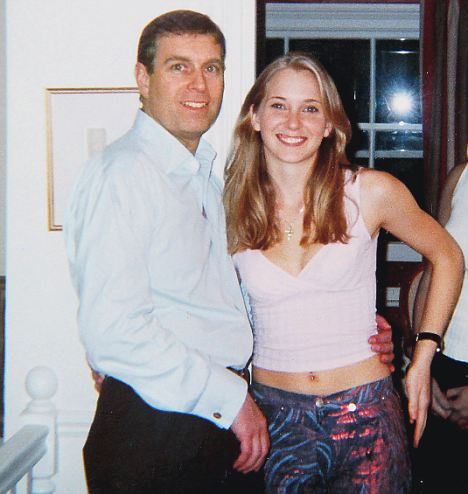
Prince Andrew with one of his friend's victims in 2001

The ethics of friendship is complicated.

President Bush claimed to be friends with Vladimir Putin. F.D.R. once said that Josef Stalin was his friend. President Obama was famously friendly with dubious characters like Rev. Wright and William Ayres.

History is full of heroes and near-heroes who had infamous friends, though the extent of the often friendship is difficult to know. Sammy Davis, Jr. and Elvis were supposedly buddies with Richard Nixon. Bill and Hillary Clinton were close friends with Dick Morris. Wyatt Earp was a life-long friend of “Doc” Holliday; Andrew Jackson may have been friends with pirate Jean Lafitte, who helped him win the Battle of New Orleans. We simultaneously celebrate loyal friends, and yet we also judge people by the company they keep. Should we condemn individuals who have friends with serious character flaws or a history of unsavory acts? Or should we admire them for sticking with their friends when everyone else is turning against them? Continue reading →