That’s exactly how the Justice Department should treat investigations that might come to nothing and yet could affect a Presidential election simply by the fact the investigation is occurring at all.
“Mr. Barr was aware of the investigations involving Hunter Biden before the spring, the person said, though it isn’t clear when or how he first learned of the inquiries…Justice Department guidelines advise investigators against taking overt actions in a run-up to an election so as not to be seen as affecting the outcome.”
Huh. You’d never suspect that such guidelines ever existed from the ham-handed way the Obama Justice Department handled the Hillary Clinton email server investigation before that election. That time, the news media broke the story, and the investigation was first used as a way to mitigate the damage to the Obama administration’s candidate of choice, even to the extent of allowing the Attorney General in charge to stay in charge of it after the husband of the candidate whose conduct was being investigated—when that husband had appointed that Attorney General to a high post while he was President—openly attempted to lobby that AG while the investigation was taking place.
1. Sorry, but there was and is no excuse.. The New Yorker reports that Senator Diane Feinstein (D-CA) is in serious cognitive decline:
[M]any others familiar with Feinstein’s situation describe her as seriously struggling, and say it has been evident for several years. Speaking on background, and with respect for her accomplished career, they say her short-term memory has grown so poor that she often forgets she has been briefed on a topic, accusing her staff of failing to do so just after they have. They describe Feinstein as forgetting what she has said and getting upset when she can’t keep up. One aide to another senator described what he called a “Kabuki” meeting in which Feinstein’s staff tried to steer her through a proposed piece of legislation that she protested was “just words” which “make no sense.” Feinstein’s staff has said that sometimes she seems herself, and other times unreachable. “The staff is in such a bad position,” a former Senate aide who still has business in Congress said. “They have to defend her and make her seem normal.”
Well gee, what a surprise. Ethics Alarms criticized the Senator for having the hubris and not showing proper responsible conduct in 2018, when she ran for re-election and another 6 year term at the age of 85. That was ridiculous, and it was foolish for her constituents to vote for her. Now they are stuck with a Senator who can’t do the job, and it is their fault, plus that of the Democratic Party and Feinstein herself. They all deserve what they get.
Particularly nauseating in the New Yorker story is this section:
“Some former Feinstein aides insist that rumors of her cognitive decline have been exaggerated, and that video clips taken out of context can make almost anyone look foolish. They also bridle at singling out her condition, because declining male senators, including Strom Thurmond, of South Carolina, and Robert Byrd, of West Virginia, were widely known by the end of their careers to be non-compos mentis. “For his last ten years, Strom Thurmond didn’t know if he was on foot or on horseback,” one former Senate aide told me.”
Is this the quality of thought on Capitol Hill? A single idiot making such an argument is too many: “Hey, don’t criticize us for having walking vegetables weilding the power of U.S. Senators:we should be able to do it becaise Republicans did it!”
I typically use this time of year to catch up on or revisit ethics movies, especially since the ones in the Christmas sub-category are embedded in my brain already. Two ethics movies that I recently watched again are Ben Affleck’s “Gone Baby Gone” from 2007 and “Seven Days in May” (1964).
“Gone Baby Gone” is the more obvious ethics movie thanks to its famous ending, which sparked thousands high school essay assignments at the time of its release. I can’t write too much about that ending without spoiling the film for you if you’ve never seen it; let me just state that the climactic decision made by the film’s protagonist, played by Ben’s brother Casey, is or should be an ethics no-brainer. It’s depressing to me that so many viewers agreed with the character’s ethically clueless, emotion-driven girlfriend that his solution to an admittedly wrenching ethics conflict made him a monster. There is literally no ethical system that would legitimately support her argument, which can only be backed by using an army of rationalizations. That a large proportion of the public, perhaps a majority, would back her analysis shows how miserably the education system and our culture has failed in teaching basic ethics problem-solving skills.
“Seven Days in May” presents more diverse and complex ethical issues to consider, and also is old enough after almost 60 years that I have no hesitation in revealing the plot: if you have never seen it, you should have.
That movie is also fascinating as a period piece, flashing ideas and images that seem surprisingly familiar in today’s context in rapid juxtaposition with moments that are hard to imagine today. Silent protests in front of the White House? Women picketing in dresses and men in suits and ties? I found a review of the film from The Harvard Crimson in 1964 that featured this:
“[T]he film has a civil rights tinge. The producer has dutifully used Negroes in minor roles wherever he deemed it appropriate. A Negro in the Pentagon running an automatic door receives a good deal of film footage. Negroes sit in the airports. They march in the pro and anti-treaty lines before the White House. Finally, there are Negroes at the President’s press conference as the film closes. These are simply kowtows to the New Republic set; if the producer had real guts he could have cast Sydney Poitier in Kirk Douglas’ role. But then Producer Edward Lewis would have been troubled by the script’s implication that Douglas will some day sleep with Ava Gardner, who plays Lancaster’s former mistress. Miscegenation might have confused the good guys and the bad guys, particularly for southern audiences. Anything that controversial would have detracted from the film’s propaganda force.“
Fascinating, don’t you think? Today, mixed-race couples on TV and movies are de rigeur, even when it makes no historical sense whatsoever. Today, it takes courage to resist the political correctness edicts that “actors of color” be gratuitously shoehorned into stories and casts based on skin-hue and little else. But today the motivation isn’t “civil rights” but rather affirmative action and “racial justice.” I really don’t care that in Netflix’s “Enola Holmes” blacks turn up in highly unlikely roles for Victorian England, I really don’t. OK, it’s a misrepresentation of history, but the film is a fantasy. However, such blatant virtue-signaling and diversity box-checking does take me out of the story for a moment, and that’s just bad direction. (How many black female martial arts tutors were there in Victorian England, I wonder?)
But I digress. “Seven Days in May” was indeed anti-war, nuclear disarmament propaganda in 1964 at the height of the Cold War, but that’s not one of the ethics issues central to the film.
Why Satchel Paige? The legendary Negro Leagues pitcher and member of baseball’s Hall of Fame once said, “How old would you be if you didn’t know how old you was?” Satchel wasn’t fooling: having played most of his career when blacks were blocked from the Major Leagues, Paige was still good enough at 42 to join the 1948 Cleveland Indians as a relief pitcher, and was effective enough to be contender for Rookie of the Year. Then he became the oldest pitcher to start a Major League game, shutting out the Boston Red Sox for three innings at the age of 59.
In my case, the answer to Paige’s question would be about 18, or perhaps 10. Surely not the age my arithmetic tells me, which is depressing and a little frightening. Every December first since 2009 has been a day with bad connotations: I found my father dead in his favorite chair that year, when I checked to see if he was going to have dinner with me as we had planned. This year there are two. Well, Dad soldiered on to have 19 more productive and mostly happy years after he reached my age, and he was being treated for cancer by than, and I’m not. There aren’t many ways I can top my father, but at least that’s gives me something to shoot for.
1. Wow. You don’t get to see such naked bias and hate just put out there in the media like this very often…Just think: a Washington Post editor okayed this article attacking the White House Christmas decorations and using them to excoriate Melania Trump for existing. How petty and ugly can a writer be and still get published? I guess it depends on whether or not your target is the Trumps.
The “money quote”: “[T]he defenders of Melania have always insisted on comparing her to her predecessor, Michelle Obama, and it became hard to believe that “elegant” was a code word for anything other than “White.” Melania is “elegant” because she represented a very specific kind of White femininity: silent, lovely, delicately fingering the ornaments that her staff had assembled.” The author is Monica Hesse, the Post’s gender writer. She is a biased, vicious, jerk. It is so obvious that Melania Trump could design Michelle Obama’s White House decorations and Michelle could secretly design the Trumps’, and Hesse would pronounce what she thought was Michelle’s inclusive and brilliant, and would condemn what she thought Melania created.
You know, pretty much the way her paper covered the Obama and Trump administrations.
Just so I’m clear: it isn’t only Democratic governors and mayors who have revealed themselves as Big Brother wannabes in the pandemic, just mostly. They also win hypocrisy prizes over their GOP counterparts for their party’s pushing Big Lies # 3 and #6, which are both dependent on the verdict that the President is an autocrat. Yet when a gift-wrapped excuse arrived for totalitarian edicts, it was Trump’s critics, not the President, who eagerly began squashing rights and crossing lines. Thus, to evoke the last line of today’s post, the Democrats are the bigger assholes, though both parties’ tin despots can bite me.
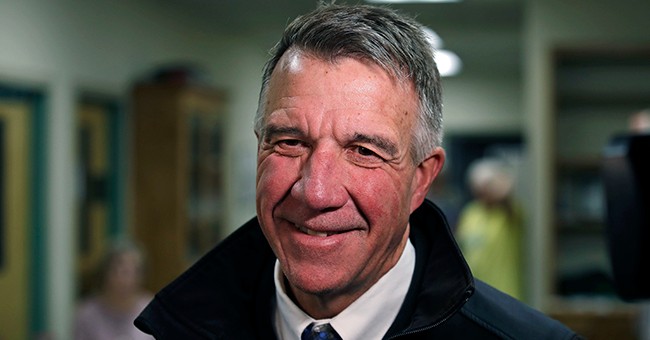
Vemont’s Republican Governor Scott, for example, should be impeached. Luckily for him, he is the governor of the state with arguably the least American values-friendly state in the union: Vermont, where the citizenry have elected such strange creatures as Howard Dean, who thinks hate speech isn’t protected by the Constitution, and Bernie Sanders, who admired the Soviet Union.
Scott informed Vermont via Twitter that schools will be adding new questions about how students spent their holiday to daily health checks. If the answer shows that a family didn’t toe the line, kids may have to take online classes for a two-week period or quarantine for a week. Or the Vermont State Stasi may drop by and take Mom and Dad to a re-education camp. You never know. Businesses are being instructed to similarly9nquire into employees’ private lives:
On this date in 1863, President Abraham Lincoln added a vital coda to the United States mission statement articulated in the Declaration of Independence nearly a hundred years earlier. Gary Wills, among other historians and commentators, has argued that with this single speech Lincoln reframed the purpose of the American experiment as well as clarifying its core values. Those values, it is fair to say, are today under the greatest threat since the Civil War today. Lincoln’s address lasted just two or three minutes (it was not even announced beforehand as a speech, but rather “remarks”), but also reframed the purpose of the war itself, as not only to preserve the union, but a struggle for freedom and equality for all.
There has been so much written about the Gettysburg Address that it would be irresponsible for me to attempt to analyze it here. It probably isn’t necessary to analyze the speech. Few statements speak more clearly for themselves: if ever a speech embodied the principle of res ipsa loquitur, this is it:
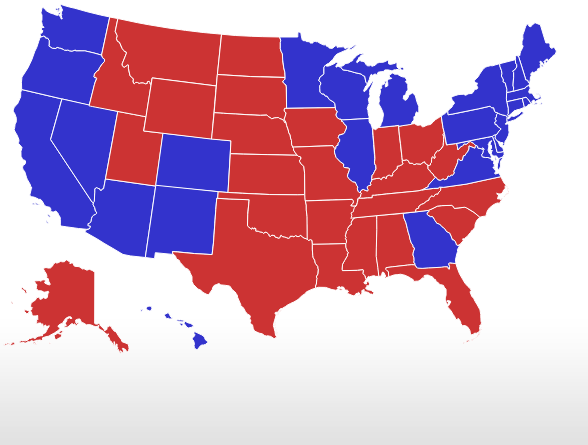
When I noted in last night’s ethics update that North Carolina’s Electoral College votes had been added to the Trump column, I was not aware that that Georgia had been called with Biden in a small but likely uncatchable lead (nonetheless, a recount is underway that will be complete on Wednesday: thanks to James Flood for the correction). Without Georgia, there is no sliver of a path for the President to be re-elected now. The Biden-Harris ticket has 307 EC votes, well above the 270 threshold required for election. RealClearPolitics, one of the very few news sources that did not display open bias and worse, a desire to push the election to a conclusion they favored, has the race marked as decided.
President Trump should make his concession speech today. He has a duty to concede as soon as possible, for the good of the country, in fairness to President-Elect Biden, and, though I doubt anyone could convince him of this (though I would love to have the opportunity to try), himself.
The President should do everything in his power to establish a clear contrast with the irresponsible conduct of Hillary Clinton after her defeat in 2016. She set out to undermined Trump from the beginning by refusing to accept that her loss was genuine and legitimate, thus setting the stage for a four-year effort by Democrats, the “resistance,” and the news media (the “Axis of Unethical Conduct”) to withhold national support of his leadership and wreck his term in office by unscrupulous and despicable means.
One reason this conduct by Clinton and her supporters was so destructive is that it created a precedent that risked being followed going forward to future elections, permanently weakening what had been a strength of American democracy. The President can go a long way toward undoing that damage. I think it is crucial to our national health that he do so, and the sooner the better.
Sometimes, a mere “ethics dunce” designation isn’t enough.
The decision, announced yesterday, by the Boston Red Sox to rehire disgraced manager Alex Cora to a two-year contract that will again put him at the helm of the team is disgusting and indefensible, unethical to the core. For me, it constitutes 2020’s second major ethics offense by an organization and a sport that has been important on many levels throughout my life, substantially challenging my loyalty and affection.
I was going to call the post “Ethics Strike Two On the Boston Red Sox,” but that formula would require me to give the team a third chance to disgrace itself before I called it “out” of my life, and I don’t know if I can do that. Nonetheless, I’m going to attempt to keep the emotional component of this most recent ethics breach on the metaphorical bench in this post as I try to be objective.
I won’t promise that I will succeed.
Cora was fired by the Red Sox in January after he was found to be the architect of the Astros’ 2017 sign-stealing scheme, one of the worst scandals in Major League Baseball history, trailing only the 1918 Black Sox scandal and the illegal player steroid era in its degree of damage to the sport. Commissioner Rob Manfred later suspended Cora through the end of the 2020 postseason. The revelation that Cora, a bench coach for then Astros manager A. J. Hinch, had been at the center of an organized cheating scheme that helped bring the Houston Astros a World Championship also cast a shadow over the following year’s World Championship achieved by the Boston Red Sox, which had hired Cora as its manager. Did the cheating mastermind from Houston bring his unethical ways to his first managing job? Why wouldn’t he?
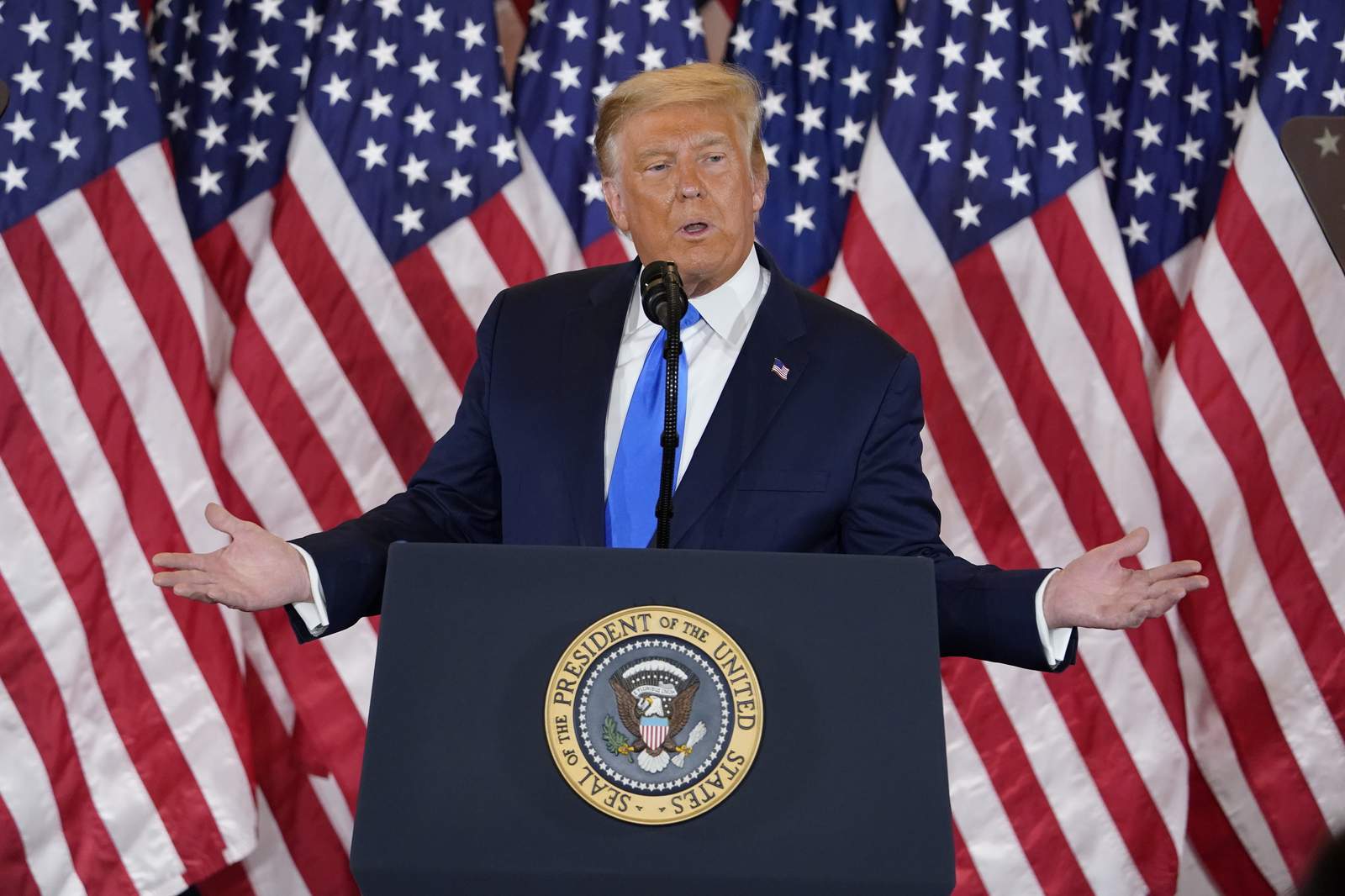
1. This was pretty close to Donald Trump at his worst, if we don’t count episodes like his performing mocking imitations of journalists or insulting women’s appearances. It was also predictable. Even as bad as it was, I would rate the press conference as superior to Richard Nixon’s infamous concession speech when he lost his attempt to become Governor of California in 1962 (“You won’t have Richard Nixon to kick around anymore…”). There was no self-pity in Trump’s rant, just anger and indignation. Anger and indignation are appropriate and justified in this case.
2. He should not have given the press conference at all. Some Presidents could under these circumstances; this one can’t, and he should know that. All he could do is stir up division, or worse. Trump has no ethical bearings, so he feels (I’m sure) that since Hillary Clinton and the Democrats worked to undermine the legitimacy of his election in 2016, he is justified in doing the same to Biden. That’s not ethical, but that is how he thinks. So do a majority of Americans.
Tip: The most important observation is the last one.
1. In the hours between when I started the last post when I got back out of bed two-and-a half hours later, two crucial states where the President was shown leading flipped to narrow leads for Biden. This does not prove or even suggest chicanery, but under the circumstances it looks bad. (“Gee, they cheat fast!” was a comment on one of the conservative blogs following the election live.) The meme above may be unfair, but it accurately expresses what went through my mind when I saw the new totals.
This is why it is unethical to create “the appearance of impropriety” if you have anything to do with the government. People need to trust the government, its institutions, and the fairness and openness of elections. The appearance of impropriety is just as damaging as actual impropriety. We have already seen this in the aftermath of the Mueller investigation and the prosecution of General Flynn.
2. Both parties have worked to deliberately create suspicion about the political process, and the decision to vastly increase the use of mail-in ballots, in what should have been recognized as a close election, knowing that doing so would delay the process, create opportunity for mischief, and keep the results of the election mired in uncertainty for days and even weeks was either epically incompetent or sinister. Now, instead of the single state having a “too close to call” vote total with the Presidency hanging in the balance as in 2000, we have six, which will presumably multiply litigation and uncertainty. That’s a disaster, no matter what the final result is, and it is a disaster that should have been avoided at all costs. It was unethical and negligent not to avoid it at all costs.





 Ethics Alarms