Ethics Hero: Washington Post Columnist Carolyn Hax

I’m breaking some precedent here: I don’t usually pick Ethics Heroes based upon writing alone, and I don’t usually reprint long sections from someone else’s column. But relationship advice columnist Carolyn Hax has long displayed a brilliant feel for ethical analysis, and expresses it sharply and entertainingly to the great benefit of her readers. Good general readership ethical analysis is all too rare, and she deserves accolades.

Today she provided as clear and as deft a lesson in how responsibility, honesty, fairness, bias and accountability work as I can imagine, while chiding a man who wants to rescue a younger woman from the relationship he didn’t have the guts to pursue herself. It shows her at her best, and is impeccable ethics as well. Brava!

Here is the inquiry and Hax’s response: Continue reading →

Colorado’s Adultery Dilemma

Relax! It's OK...you're in Colorado!

In most states, adultery is one of the great examples of how something can be wrong and destructive without being illegal, a useful concept to have in mind when a corrupt politician or a crooked corporate executive  says “I didn’t break any laws!” It is also a good example of unethical conduct that is better controlled by ethics than law. A law against adultery is theoretically defensible as a deterrent of harmful social conduct, and the state definitely has an interest in preserving family stability. The problem is that regulating offenses triggered by love, lust and romance feels excessively intrusive to most of us. It has overtones of the Plymouth colony. For better of worse, minimizing adultery belongs in the realm of ethics, not the criminal law. Continue reading →

Ethics Hero Emeritus: Phoebe Snow 1950-2011

She sang a little too.

I thought Phoebe Snow had died long ago, when she was really just being an Ethics Hero.

In the mid-1970’s, the strong-voiced writer and singer of “Poetry Man” had two gold records at the young age of 26. She was hailed by critics as one of the most interesting and versatile singers in the pop world. “She appeared on ‘Saturday Night Live’ and recorded duets with Paul Simon and Jackson Browne. She made the cover of Rolling Stone magazine, which pronounced her voice ‘a natural wonder,’” recalled the Washington Post in her obituary today. Phoebe Snow was an entertainer and an artist, and had reached the place where all artists strive to reach but few ever do: being paid a fortune to do what she loved and was talented at doing.

In December 1975, she had given birth to a daughter, Valerie Rose, with severe brain damage and other disabilities. Most recording stars of her stature, as well as actors and those in other intense, lucrative and competitive fields in the arts and out of them, would have placed Valerie in an institution. (Arthur Miller, the moralist playwright, not only institutionalized his Down Syndrome son during his Broadway career but hid his existence from the public.) Snow, however, put her show business success on hold to care for her daughter. Continue reading →

The Ethicists, Backing Judge Walker and Gay Marriage, At An Unacceptable Price

"Oh, all right...as long as we like the decision."

Thanks to the Judge Walker controversy, now have proof that the best legal ethicists in the nation are human. I suppose that’s something.

My colleagues in the legal ethics field are arguing—decreeing, really— that Judge Vaughn Walker’s decade-long same-sex relationship didn’t need to be disclosed before he ruled against Proposition 8 (California’s voter-approved gay marriage ban) because, they say, it created no reasonable doubts about his impartiality. Coincidentally, they also really, really like his decision. But then, so do I. Continue reading →

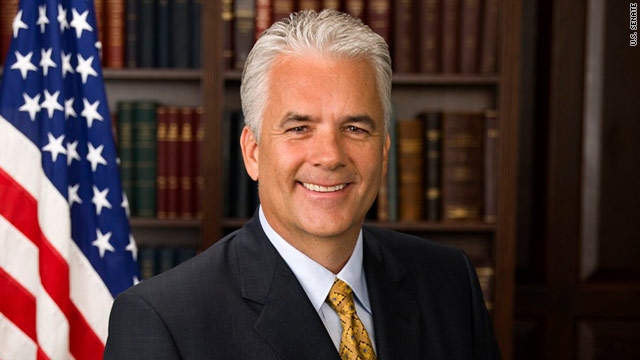
Unethical Quote of the Week: Sen. John Ensign

“While I stand behind my firm belief that I have not violated any law, rule, or standard of conduct of the Senate, and I have fought to prove this publicly, I will not continue to subject my family, my constituents, or the Senate to any further rounds of investigation, depositions, drawn out proceedings, or especially public hearings.”

Sen. John Ensign (R-Nev.), announcing his resignation from the U.S. Senate about two years late. Ensign’s continuing service in the upper chamber has been a continuing embarrassment thanks to a 2009 sex scandal and sordid cover-up attempt. Interestingly, Ensign maintains that such conduct doesn’t violate any “standard of conduct” for him and his colleagues.

Sadly, perhaps he’s right.

“I didn’t violate any laws or rules” has been Ensign’s mantra since it came to light that he: Continue reading →

My Mother’s Funeral and the Kindness of Strangers

Few things are sadder than a long life commemorated by a sparsely attended funeral. The sadness is based more on illusion than reality, I know: the best way to ensure a good crowd at your funeral is to die young. Still, no son or daughter wants to deliver a eulogy to an empty chapel, even if the attendance figures at a love one’s funeral often say little about the richness of the life being remembered.

Most of the mourners at my mother’s funeral yesterday afternoon at Arlington National Cemetery barely knew her. Many had never met her; I doubt that she would have been able to name half of them if she had encountered them on the street. Yet they came, in the middle of a workday, to make sure that my mother’s family, including my sister and me, did not have to endure the sadness of the empty chapel. It was an amazing group. Among those whose connection to my mother was solely that they knew me, there were several whom I had not seen or spoken with in years, and others whose presence immediately made me feel guilty for being out of touch with them for too long. There were colleagues from jobs I had left long ago, and old friends who had, through the relentless roadblocks that family, work and assorted crises and priorities of living, had receded into names on a Facebook list. A former fiancee…a cast member of a show I had directed long ago. They were all expending time, their most precious resource, to be kind.

I’ve been going to a lot of funerals lately, something I once avoided with a passion. I’m going to start going to a lot more, and not merely just because, to paraphrase a line from the last Indiana Jones movie, I’ve reached the time when life stops giving you things and starts taking them away. As Yogi Berra reputedly said, “You should always go to other people’s funerals, otherwise, they won’t come to yours.” I appreciate the joke, but I’m pretty sure what Yogi was talking about was The Golden Rule.

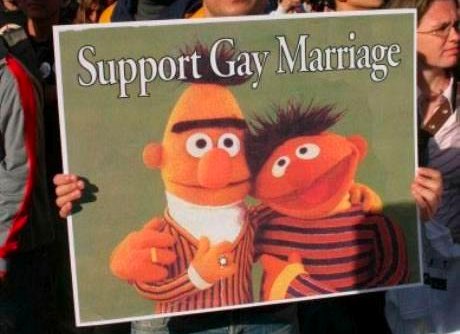
Judge Walker Was Wrong

Now that we know about Bert, should Judge Ernie have recused himself?

Judge Vaughn Walker, the Federal District judge who a year ago ruled California’s Proposition 8, which banned same-sex marriages, unconstitutional, was wrong. No, not about the law, which is pretty clearly unconstitutional: his opinion was fair and well-reasoned, and is likely to be upheld on appeal. Walker was ethically wrong in his handling of the delicate issue of his own sexuality, which had raised a controversy about his objectivity and ability to be impartial.

Two weeks ago, following his retirement from the bench, Walker publicly disclosed for the first time that he has been in a same-sex relationship for the past ten years. This changes the analysis regarding the propriety of his ruling on Perry v. Schwarzenegger. Walker had long been rumored to be gay; supposedly “everybody” knew he was gay. My position, as well as that of many others considering the arguments of anti-gay marriage opponents that he should recuse himself, was that sexual orientation could not and should not create a presumption of bias, any more than gender, age, race or marital status. Continue reading →

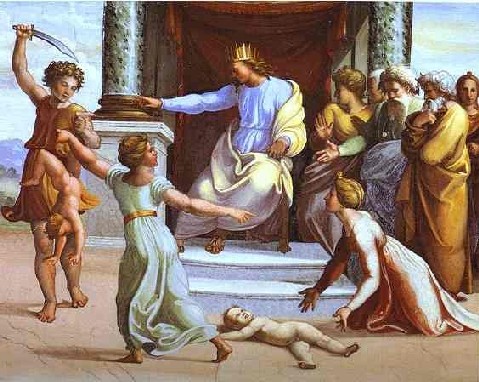
The “Baby Emma” Saga Revisited: The Core Issue

Didnt King Solomon have a case like this once?

When the mother of the child an unmarried father co-created with her decides that she doesn’t want to/ can’t raise the child and doesn’t trust the father to raise her, is it ethical to put said child up for adoption without notifying or consulting the father?

That is the ethical issue the “Baby Emma” incident, first discussed here in an earlier post, ultimately raises. It is a question that I did not discuss in that post, focusing instead on the father’s conduct and his current plight, as self-described on his “Baby Emma” website. I made three ethical assessments, each of which are self-evident:

1. The whole situation would have probably not occurred if John Wyatt and Baby Emma’s mother had been married before conceiving a child.

2. Both of them were irresponsible to plan on having a child together without formalizing a mutual commitment to form a family and raise the child together…that apparently archaic institution known as “marriage.”

3. The mother betrayed John’s trust, deceived him, and treated him unfairly.

I also suggested that, absent a marriage, it is fair and reasonable that the mother of a newborn be able to put the child up for adoption if she deems that course better for the child than being raised by the child’s father. I did not say that was the law, or even that I would vigorously oppose a law that directed otherwise, as Virginia’s law does. I only stated that my own belief is that incentives for irresponsible parenthood are unwise. I have been asked why I focused on the issue I did, rather than the other ethical issues raised by the controversy. It was because the issue was brought to me with the presumption that John Wyatt, the father, was a blameless and unequivocal victim in the matter. My ethics alarms sounded: he has significant ethical accountability for the mess, and I explained why.

As to the answer to question above, I can only say this: it depends. The conduct of Baby Emma’s mother is mysterious and extreme. Did she panic? Did she have a mental break? Why would a lifetime friend and partner of a man conceive a child, pretend to plan to raise her with him, and then secretly negotiate to have the baby adopted and taken out of state?

I see many scenarios that could be behind her decision, which fall into three distinct categories: ethical, unethical, and too close to call: Continue reading →

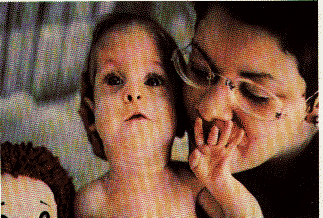
Love Isn’t Enough: the “Baby Emma” Saga

Too bad Baby Emma's father didn't see "Juno" first...

This, from the birth father’s perspective, is the strange story of “Baby Emma,” a newborn whisked out of Virginia by her mother to be adopted by a couple in Utah, which has unusual laws that seem to circumvent fathers’ rights in others states:

“My name is John Wyatt,  the birth father of Baby Emma Wyatt,  born February 10, 2009 in Woodbridge, Virginia.  I have never held my daughter in my arms or even been allowed to see her in person.  My daughter has never had her Daddy hold her and say “I love you” to her, or hug her and kiss her.  Baby Emma and I have been denied those precious moments together.

“Imagine this happening to you: as a 20 year old, you have been friends with the mother since second grade and you have dated since middle school. You anxiously make preparations with the mother of your child, your childhood sweetheart,  for the arrival of your new baby.  You go to the doctor’s appointments, you rub the mother’s belly and feel your baby moving and kicking in the womb.  Both of you pick out the name.  It’s so exciting, you can hardly wait for the arrival of your new baby!! You look forward to what you expect to be the happiest moment of your life, to be with the mother and baby at birth…Both of you make plans on raising the baby together.  Continue reading →

Ethics Quiz: The Re-cycled Sperm Trick

I think we all will agree that a woman obtaining a man’s semen via oral sex, secretly saving it, and using it to impregnate herself is unethical, correct? And that even if some fool court requires the deceived man to pay child support, the entire episode is outrageously dishonest, irresponsible and unfair?

This apparently happened to a Chicago man five years ago, and he is suing his former Lewinsky for the infliction of emotional distress. This seems inadequate. The use of a man’s sperm to produce his child without his consent in a surreptitious, deceitful manner should probably be a criminal offense—applying the Ethics Alarms principle that the law must often step in when ethics fail—and your challenge is to determine:

  • What conduct should the theoretical law prohibit?
  • What is an appropriate punishment for violating the law, as in the Chicago case?
  • How, if at all, should the law address the welfare or the innocent child?

Or do you think there should be a law at all?

My answer, after I’ve absorbed all of your wisdom, will follow.

On a related note, one upside of this revolting incident may be that it ends the ridiculous, Bill Clinton-fertilized argument that fellatio isn’t sex. I sure hope so. If only this had happened to Bill…what a great Lifetime movie it would have made!

[Again, thanks to Jeff Hibbert for the tip.]