1 It’s also my wedding anniversary. I am very thankful , and proud, frankly, that I am one of the very few people among my pretty large and diverse community of friends, acquaintances and colleagues still married (after 37 years…yes, I married at 13) to the same person I pledged to make a life with “til death do us part.” It’s not easy, for anyone, and determination and commitment, forgiveness and contrition, are a large, crucial, indispensable part of it. A lot of the journey is based on ethics, in other words.
2. Surprise! More accusers of both Rep. John Conyers and Senator Franken surfaced yesterday. Conyers’ new alleged victim is Melanie Sloan, formerly the head of CREW, the left-wing D.C. ethics watchdog that somehow manages to see unethical conduct by Republicans about five times more often than it fingers Democrats. Sloan says she was not sexually harassed, but alleges that Conyers called him into his office to verbally abuse her while being dressed in his underwear. Uh, Melanie? If your boss is ever berating you in his underwear, that is per se sexual harassment. This is a hostile work environment; I don’t care if your superior is built like Batman…well, like his costume.
The predictable proliferation of accusers was why, in the hypothetical apology I authored for Alternate Universe Al, I included the part about mistreating other women. It was a sure thing; harassers harass, and if you are going to pretend that the first accuser was “just a mistake,” you might as well skip it and head for George Bailey’s bridge. In the sexual harassment training field, nothing is more certain than the fact that with the real harassers and predators, if there’s one victim, there are many. This is why the narrative about Anita Hill amounts to a Left-driven, media-driven smear of Clarence Thomas for the crime of being a black conservative.
An unanticipated horrible consequence of this leg of the Harvey Weinstein Ethics Train Wreck, which also includes new allegations about the Democratic Party’s keynote speaker when it was accusing conservatives of a “war on women,” as well the revelation that the GOP President who selected Thomas emulates his favorite magician, “David Cop-a-Feel,” is that it very well might elect Roy Moore, who is worse than any of them. Meanwhile, most analysts think that both Franken and Conyers will have to resign. ( I would eagerly vote for a mad scientist-make hybrid of Conyers and Franken—Frankenconyers!—before I would even shake Roy Moore’s grubby hand…and really, who knows where it’s been?)
Republicans have been incredibly lucky with their choices of foes, luckier than they deserve. Continue reading →
Last year (to the day) when I posted the Ethics Alarms ethics guide to Frank Capra’s 1946 masterpiece “It’s A Wonderful Life,” one of the great ethics movies of all time, as this blog’s official welcome to the holiday season, I wrote, “I suspect we need it more in 2016 than usual.” As it turned out, we need it even more in 2017.
Multiple forces have been hard at work for a full year now, roiling the nation, painting the future as dire and the present as unbearable, trying to divide us and even to encourage discord and conflict during this special time when we are supposed to remember what is most important in life. In case you have been infected, it’s not politics and not partisan agendas, but love, family, community, kindness, and friends. The simple message of Frank Capra’s masterpiece—it has aged far better than his other films, including, and maybe especially, “Mister Smith Goes To Washington”—that no one is a failure who has friends, is vital to recall when so many are rejecting friends because they don’t conform to some ideological talking point. This is madness, and watching and heeding “It’s A Wonderful Life” is a better remedy than Thorazine.
Senate Minority Leader Chuck Schumer actually told his Twitter followers this week to bring a chart prepared by a think tank to attack the Republican tax plan during Thanksgiving dinner. This is part of the effort to politicize everything in our lives, by zealots who value power over humanity, country, and spirituality. They belong with Mr. Potter, not George and Clarence.
I need this movie more in 2017 than usual for other reasons. It has been a year in which I have lost many peers and cherished friends, and listened to too many of the living bemoan the passage of time and looming mortality. I don’t think like that—a lifetime gift from my brave and fatalist father—but I can’t pretend that the game clock isn’t running out, or not face the fact that I have not sunk anywhere near the baskets I could have and should have. Fortunately, what I wrote in an earlier year introducing this post still resonates…
Everyone’s life does touch many others, and everyone has played a part in the chaotic ordering of random occurrences for good. Think about the children who have been born because you somehow were involved in the chain of events that linked their parents. And if you can’t think of something in your life that has a positive impact on someone–although there has to have been one, and probably many—then do something now. It doesn’t take much; sometimes a smile and a kind word is enough. Remembering the lessons of “It’s a Wonderful Life” really can make life more wonderful, and not just for you.
Have a terrific Thanksgiving, everyone.
And here we go:
1. “If It’s About Ethics, God Must Be Involved”
The movie begins in heaven, represented by twinkling stars. There is no way around this, as divine intervention is at the core of the fantasy. Heaven and angels were big in Hollywood in the Forties. The framing of the tale seems to advance the anti-ethical idea, central to many religions, that good behavior on earth will be rewarded in the hereafter, bolstering the theory that without God and eternal rewards, doing good is pointless.
Yet in the end, it is an ethics movie, not a religious one. George lives an ethical live, not out of any religious conviction, but because step by step, crisis after crisis, he chooses to place the welfare of others, especially his community and family, above his own needs and desires. No reward is promised to him, and he momentarily forgets why we act ethically, until he is reminded. Living ethically is its own reward.
We are introduced to George Bailey, who, we are told, is in trouble and has prayed for help. One has to wonder about people like George, who resort to prayer as a last resort, but they don’t seem to hold it against him in Heaven. The heavenly authorities assign an Angel 2nd Class, Clarence Oddbody, to handle the case..He is, we learn later, something of a second rate angel as well as a 2nd Class one, so it is interesting that whether or not George is in fact saved will be entrusted to less than Heaven’s best. Some lack of commitment, there— perhaps because George has not been “a praying man.” This will teach him—sub-par service!
2. Extra Credit for Moral Luck
George’s first ethical act is saving his brother, Harry, from drowning, an early exhibition of courage, caring and sacrifice. The sacrifice part is that the childhood episode costs George the hearing in one ear. He doesn’t really deserve extra credit for this, as it was not a conscious trade of his hearing for Harry’s young life, but he gets it anyway, just as soldiers who are wounded in battle receive more admiration and accolades than those who are not. Yet this is only moral luck. A wounded hero is no more heroic than a unwounded one, and may be less competent as well as less lucky.
3. The Confusing Drug Store Incident
George Bailey’s next ethical act is when he saves the life of another child by not delivering a bottle of pills that had been inadvertently poisoned by his boss, the druggist, Mr. Gower. This is nothing to get too excited over, really—if George had knowingly delivered poisoned pills, he would have been more guilty than the druggist, who was only careless. What do we call someone who intentionally delivers poison that he knows will be mistaken for medication? A murderer, that’s what. We’re supposed to admire George for not committing murder.
Mr. Gower, at worst, would be guilty of negligent homicide. George saves him from that fate when he saves the child, but if he really wanted to show exemplary ethics, heshould have reported the incident to authorities. Mr. Gower is not a trustworthy pharmacist—he was also the beneficiary of moral luck. He poisoned a child’s pills through inattentiveness. If his customers knew that, would they keep getting their drugs from him? Should they? A professional whose errors are potentially deadly must not dare the fates by working when his or her faculties are impaired by illness, sleeplessness or, in Gower’s case, grief and alcohol.
4. The Uncle Billy Problem
As George grows up, we see that he is loyal and respectful to his father. That’s admirable. What is not admirable is that George’s father, who has fiduciary duties as the head of a Building and Loan, has placed his brother Billy in a position of responsibility. As we soon learn, Billy is a souse, a fool and an incompetent. This is a breach of fiscal and business ethics by the elder Bailey, and one that George engages in as well, to his eventual sorrow.
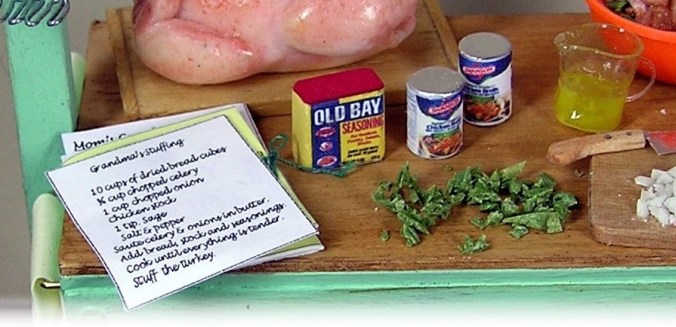
Holidays and family get-togethers are a time for yummy food, sweet traditions, funny stories, and lots and lots of love. But they could, without you even realizing it, also be a time when your daughter gets the wrong idea about consent and physical affection.
Have you ever insisted, “Uncle just got here—go give him a big hug!” or “Auntie gave you that nice toy, go give her a kiss,” when you were worried your child might not offer affection on her own? If yes, you might want to reconsider the urge to do that in the future.
Think of it this way, telling your child that she owes someone a hug either just because she hasn’t seen this person in a while or because they gave her a gift can set the stage for her questioning whether she “owes” another person any type of physical affection when they’ve bought her dinner or done something else seemingly nice for her later in life….
…Give your girl the space to decide when and how she wants to show affection. Of course, many children may naturally want to hug and kiss family members, friends, and neighbors, and that’s lovely—but if your daughter is reticent, don’t force her. Of course, this doesn’t give her license to be rude! There are many other ways to show appreciation, thankfulness, and love that don’t require physical contact. Saying how much she’s missed someone or thank you with a smile, a high-five, or even an air kiss are all ways she can express herself, and it’s important that she knows she gets to choose which feels most comfortable to her.
Your Ethics Alarms Thanksgiving Ethics Quiz:
Is this responsible advice, or does it go too far?
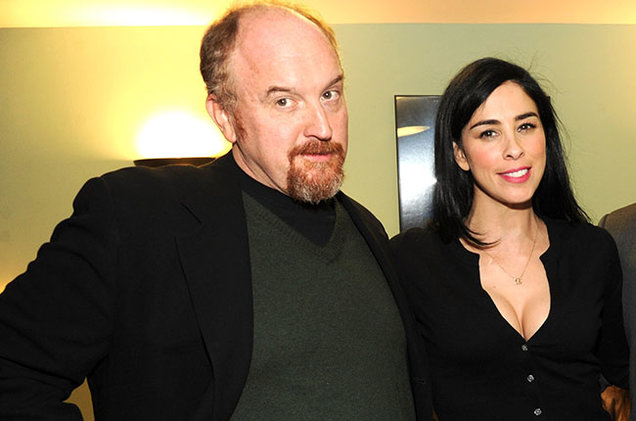
“I love Louie, but Louie did these things. Both of those statements are true. So, I just keep asking myself, can you love someone who did bad things? Can you still love them? I can mull that over later, certainly, because the only people that matter right now are the victims. They are victims, and they’re victims because of something he did.”
I hope Sarah doesn’t have to ponder her question too hard, because the answer should be obvious.
Of course you can love someone who did bad things. Everyone of us has, and probably does. Good people do bad things. Loving and lovable people do bad things, even terrible things. Being loved is one of the crucial life experiences that makes people better.
There are limits, of course. Still, at the root of Silverman’s question is the narrow intolerance and self-righteousness that are polarizing and fracturing our society. I find it ominous that she would ask the question.
From Pakistan comes this story, which alternatively sounds like a Coen Brothers black comedy or that lost Shakespeare tragedy, “Shahid and Aasia.”
Aasia Bibi, 21, lived in the small village of Alipur. She was in love with a young man, Shahid Lashari, but her Muslim parents forced her to marry another man of their choosing. After the marriage, Aasia continued to see her lover secretly, and they decided on a desperate plot. Shaid procured some poison, and the bride put it her husband’s milk.
Unexpectedly, he refused to drink it. Maybe it tasted funny: this is what any good “How to Poison Your Spouse” book would have explained. Milk is a really bad drink to poison. Then Aasia left the poisoned milk lying around, and her enterprising mother-in-law used it to make a traditional yogurt-based drink and served it to 27 members of her extended family.
Wait: how much milk did Aasia expect her husband to drink? Was she married to the Pakistani Paul Bunyan? Assuming he wasn’t twenty feet tall like Paul, the term “overkill” comes to mind, and appropriately so, for “Oopsie!” does not begin to express the magnitude of her mistake. All of 27 people who drank the yogurt—see, yogurt always tastes like its poisoned— passed out and were rushed to the hospital. Seventeen of them died. Aasia’s husband, however, remains hale and hearty.
Observations:
1 I liked “Romeo and Juliet” better.
2. Moral luck is a bitch. Still, if you poison food and leave it around, you are asking for random bad things to happen. Usually it isn’t this many or this bad, but you never know. Continue reading →
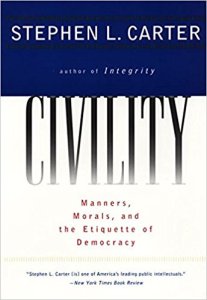
In his Monday column for the New York Times, David Brooks evoked Yale Law professor Stephen L. Carter‘s 1998 book “Civility” to recommend how reasonable people should engage with “fanatics.” I like the quote a lot, with this caveat: Brooks makes it clear, as almost all Times op-eds do now, that by “fanatic” he means all those strange, nasty, stupid, hateful people who don’t subscribe to the New York Times world view and progressive cant. As a result, I have to take Brooks’ words with several grains of sea salt, and indeed try to forget that they are coming from a pundit who has at other times implied that President Trump should be removed from office regardless of whether he actually does anything that would meet the standards required by the impeachment clause or the 25th Amendment.
That and other opinions he has put into print–always in the measured words of the intellectual he styles himself to be—marks him as a fanatic in my book, just one operating under the cover of gentility and intellectual rhetoric. Now, it would have been easy for Brooks to dispel my suspicions and also to have a larger audience for his wisdom had he chosen, as his example of a fanatic, a member of the antifa, or a college student who believes that conservatives should be censored, or any number of leftist nut cases who are as plentiful now as the autumn leaves. But no. Brooks knows that wouldn’t endear himself to his colleagues like Paul Krugman and Charles M. Blow, so his first example of a fanatic, and his only American one, was “a Trump supporter” who threatened him at a baseball game.
Thus Brooks’ column manages to be condescending and arrogant, as well as partisan, because of his failure to harness his biases. The substance of his quote, however, comes via Terry Teachout, the drama critic of The Wall Street Journal, the critic-at-large of Commentary and a thoughtful moderate for an arts guy, and through Amy Alkon, a moderate conservative feminist Trump-hating blogger and author, and Professor Carter, who seems like a reasonable and not especially political sort. This is enough, I think, to cleanse Brooks’ words of their inherent hypocrisy. Deciding that those who disagree with you must be the fanatic in the conversation is, after all, a poor starting point for a productive discussion.
With those reservations and qualifications, here is the quote: Continue reading →
I can’t bear those photos of abandoned and abused animals, so here’s the never abused Marshall dog, Rugby. He can trust us. (OK, we can’t always trust him, but he’s a Jack Russell. He has our informed consent to be unreliable.)
Authorities in Palm Beach County, Florida discovered dozens of dogs left behind by owners who evacuated in advance of Hurricane Irma, leaving the pets tied up or trapped in cages or pens without any means to escape or survive the storm. Palm Beach County Animal Care and Control was able to rescue 40 such dogs before the storm struck Florida. Director Dianne Sauvetold USA Today that in cases where she can identify owners of these abused animals, she would press felony charges for animal cruelty. “There is absolutely no excuse” for leaving the dogs like that, she said, noting that there are two shelters that allow residents to bring pets along with them.
I don’t comprehend how a human being could do this to an animal that they have accepted the responsibility of caring for. The conduct is an ultimate betrayal of reliance and trust. Dogs always fulfill their ends of the ancient agreement between them and people. They provide companionship, unconditional love, support and comfort in exchange for care and shelter. Abandoning a dog like this—“Hey, what’s the big deal? They’re only animals!”—represents such a basic failure of responsibility, fairness, kindness and caring that no one who betrays a dog so heinously should be trusted in any other field of endeavor or social context. If you don’t respect the lives of animals, that’s fine, but then don’t have pets. Don’t make an animal love you, and then leave it to die in fear and pain. How hard is that?Continue reading →
More important than giant chickens, more susceptible to compassionate solutions than North Korea, and more worthy of our consideration than Debbie Wasserman Schultz because anything is, the teen suicide problem generated excelled responses to a post about it here, and was, as topics are so often, quickly buried by other controversies and events.
Lets’ discuss this a bit longer, shall we? It’s worth it. A good way is to recall one of the best comments the post about the Netflix series dramatizing a fictional teen’s suicide and its effect on her friends. Here is Rip’s Comment of the Day on the post, Ethics Quiz: “13 Reasons Why”:
OK— this issue is one I have spent years delving into. I spent the better part of a decade doing volunteer work; developing interviewing techniques at Georgetown hospital with student actors to help train pediatric medical students on how to find youth that are engaging in or thinking about behaviors that put themselves at risk.Doctors Abrams and Hawkins have done amazing work on developing tools to reach at risk adolescents
I hope to return to this at some point, but my volunteer work is currently on hold. Here is what I know.
75% of teen deaths, including suicides, in this country are avoidable if there is intervention in time. Suicide is the second leading cause of youth death, and LGBT youth are 4 to 6 times more likely to commit the act. Thank god for the Trevor Project and It Gets Better campaigns: they help. In the 90s when I tried to create suicide prevention programs through theater, I was told by administrators that we could not do this, as it might give the kids “ideas.”
Ugh. The statistics show they already have the ideas. Continue reading →
From Emily, a marvelous Comment of the Day so full of wisdom and good advice that it stands on its own:
I’m not from flyover country, but I live on the Eastern Shore of Maryland, red counties that include the poorest counties in the state (the lower shore has Baltimore City beat.) My family of three hovers around the federal poverty line.
However, my husband and I were both raised middle class. And while there are no major economic differences between us and our friends and neighbors, there are a lot of differences in the choices we make, which allow us to use the same amount of money to give our daughter opportunities that other parents in our economic class are unaware of or neglect.
This, more than money, is what affects the opportunities that my daughter has access to (as well as the ones my husband and I have access to.)
Despite the economic hardship, I’m a stay at home mom, which allows me to be dedicated full time to my daughter’s developmental delays. I could go to work and make *slightly* more money for us, after childcare expenses, but that would be a very different level of care for my daughter, and it turns out she needs it. The expert we’ve consulted is almost certain she’ll catch up, and has indicated me being home with her is an important part of that certainty.
I mentioned above that my daughter does have a tablet, a $30 one from Amazon. I found that tablet because I got a $20 Amazon giftcard for Christmas, and I was saving it for something special. I had to dig in the library’s website to find the link to borrow ebooks, but I figured there must be something like that.
We have internet, despite having no long distance for our phone (and no cellphone service where we live.) My husband and I manage to pick up extra money doing work online, despite neither of us having college degrees. This is part of what allows us to get by while still having plenty of time for our daughter.
These are just examples of things *we’ve* figured out. Everyone’s situation is different, especially among the poor. The thing that most people don’t seem to see is that down here social capital (the network of friends and family you have and what they’re willing to help you with,) knowing how to allocate resources carefully, and understanding how to navigate the various systems — both private and government — are more important to the kind of life you have than income, and those are highly individual things. Continue reading →
1. Follow-Up on the 7/28 morning post: Sometimes a popular public figure’s words and conduct so obviously show a deficit of character that I wonder if those who admire him or her are not paying attention, or are creeps themselves. “Harry Potter” author J.K. Rowling is officially in this category. First, I do not care for foreigners who obsessively bash our leaders, however bashable. They don’t have standing, in most cases, and their opinions are by definition uninformed if they don’t live here. Most obnoxious of all, however, in Rowling’s case, was her indefensible conduct regarding her recent infamous fake news tweet that circulated to her mob of followers a deceptively edited video showing President Trump cruelly ignoring a boy in a wheelchair, when he in fact stopped, crouched, and spoke to the child. She did this (“When someone shows you who they are, believe them.’ – Maya Angelou” was the snotty accompanying comment) on July 28, and the same day it was widely debunked, with the actual video being circulated on the web. No response came from Rowling, even as her tweet and libel continued to be liked and retweeted by “the resistance.”
On July 30, even CNN’s Brian Stelter, with extra time on his hands because his alleged news media ethics show avoids criticizing bias in the news media, flagged the bad tweet, and asked why Rowling hadn’t retracted it. Come on, Brian, you know why! It is for the same reason CNN continues to use unethical journalism to attack the President: they don’t believe he’s worthy of fairness or honesty.
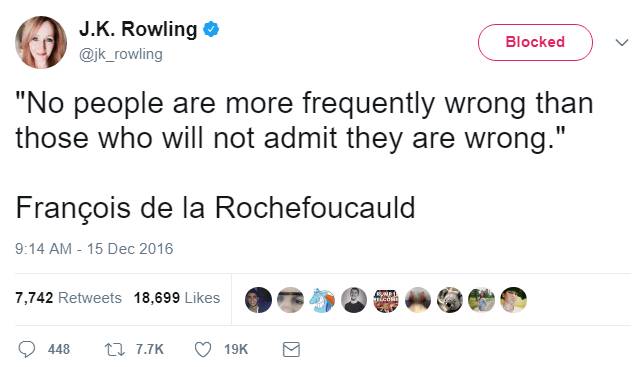
Finally, after various conservatives dredged up this year-old tweet from Rowling to show her hypocrisy and shame her with her own chosen words…
…and after left-wing, fellow Brit Trump-basher Piers Morgan expressed frustration with her, and after PunditFact, a spin-off of PolitiFact, rated Rowling’s claim “Pants on Fire,”and after the boy’s mother herself denied that Rowling’s version occurred, the author finally retracted the tweet and took it down. She also tweeted this unethical apology:
Re: my tweets about the small boy in a wheelchair whose proferred hand the president appeared to ignore in press footage, multiple sources have informed me that that was not a full or accurate representation of their interaction. I very clearly projected my own sensitivities around the issue of disabled people being overlooked or ignored onto the images I saw and if that caused any distress to that boy or his family, I apologise unreservedly. These tweets will remain, but I will delete the previous ones on the subject.
This is a miserable apology, containing the stinking tell of the non-apology apology, “if anyone was offended” in this case the equivalent “if that caused any distress.” The two people she non-apologizes to had no reason to be “distressed,’ since the tweet wasn’t an attack on them. This is not an apology at all, since it does not apologize ..
…to the person fraudulently attacked, President Trump, as well as his family and supporters
…to those deceived by her retweeted lie, and
…to the people who trusted her and became accessories in the false attack
…for taking four days to take down a lie that had been thoroughly exposes as one.
An insincere and dishonest apology designed to allow the wrongdoer to escape accountability cheaply, and to deceive his or her victims into forgiveness and trust, so they are vulnerable to future wrongdoing.
This rot is actually worse than a #10, as Rowling dares to ladle soppy virtue-signalling onto it. She only falsely attacked the President of the United States and spread a lie around the world because she is so, so sensitive and concerned about the treatment of handicapped people! Don’t you understand? It’s because she’s so compassionate and good that this happened!
It is my experience that good people can usually manage a sincere and remorseful apology to those harmed by their words or conduct.
2. This unethical lawsuit could sustain a stand-alone post, but I refuse to devote one to it as a matter of principle. Continue reading →






 Ethics Alarms