“Start The Car!” Ethics

“Start the car!” shouts the woman in a ubiquitous IKEA TV commercial for its “Winter Sale.” She has received her receipt, and  the total is so low that she assumes there has been a mistake.  She quickly exits the store with bags of purchases, and while running calls to her husband in the car outside so he will pick her up and hit the gas before someone comes to reclaim the merchandise or demand more payment. As they drive away with what she thinks are her ill-gotten gains, she lets out a whoop of triumph.

The narration explains that IKEA’s sale prices are so low, this how you will feel.

The commercial is unethical. It trivializes and normalizes theft, and rejects the ethical values of honesty, integrity and responsibility. Apparently the ad has been running internationally for a long time (it only just started showing up in my region) and is very popular. Writes one industry commentator, “People relate to the message because at one point or another while shopping we’ve all had that feeling that we just got away with something.”

Really? I haven’t. My father didn’t either (my mom was another story.) I’ve told waitresses and clerks that they undercharged me. I’ve returned excessive change. I’ve handed back money to tellers when two bills stuck together. You don’t? What the hell’s the matter with you? Were you raised by Fagin?

Though the commercial was a hit and positively accepted in all of the nations where it was viewed, there is hope:  it also received many negative comments and complaints. An Advertising Standards Board—I cannot for the life of me find out which; the U.S. has no such board. I’m guessing Sweden— thus considered whether this advertisement breached   its Advertisers Code of Ethics.

The breach would be that the commercial isn’t socially responsible, since it represents taking merchandise from a store that hasn’t been fully paid for as normal and acceptable conduct. The Board viewed the advertisement in light of the complaints and decided that the ad was ethically inoffensive.

Guess why.

No, go ahead, guess.

Continue reading

The Ethical Problem With The Cinnebon Tweet

cinnebon-fisher

First I was going to post an essay about Cinnebon’s humorous tweet above under the title “How Humor Dies.” Our culture is in serious trouble if a clever, playful, obvious joke like this attracts so much criticism that it generates a retraction and an apology.Clearly, there are Political Correctness Furies on the Left and  Puritan Scolds on the Right lurking and  lying in wait to make any attempt at levity too much of a risk for all but the socially inept or defiantly rude to attempt. I confess, I laughed out loud when I saw Cinnebon’s gag. I thought the company deserved applause, not opprobrium.

Then I thought about it, and decided to make the episode an Ethics Alarms ethics quiz. Does the fact that Cinnebon can be accused of using Carrie Fisher’s tragic death as product promotion outweigh the cleverness of the tweet, or was the joke a natural one for the sticky bun-makers to make? Who better to remind us of all the jokes about Leia’s odd hairstyle when “Star Wars” debuted? Maybe this was one example where the “she would have approved” standard might be more than a rationalization. Is there any doubt that Carrie Fisher would have laughed at Cinnebon’s joke more heartily than anyone?

Fortunately, I thought some more.

I hadn’t realized until just a few minutes ago that the tweet was issued on the day Carrie Fisher died.  Ick, and also, yecchh, as well as “Ethics Foul!”

It doesn’t matter how clever, well-executed or funny it was. Krusty the Clown could have told Cinnebon what was wrong with the tweet in a trice, if they had the sense to ask, and Krusty wasn’t a cartoon character.

Too soon.

When Debbie Reynolds Took A Stand

Some readers were offended that I noted in a comment here that Debbie Reynolds characteristically upstaged her daughter by dying a day after Carrie Fisher, again stealing the spotlight from her daughter. Sorry about that—but it’s true. For most of her life, Reynolds was less than comfortable when she didn’t feel an audience watching her, as Fisher herself complained in her semi-autobiographical novel, “Postcards from the Edge.” Debbie Reynolds shared the life-defining neurosis of many performers: she was happiest when she was being herself for the world to see. Debbie, in fact, was an extreme version of this model. Most such performers are miserable, and recognizably so, when they aren’t performing. Reynolds appeared not to acknowledge that there was a world off-screen.

In “The Unsinkable Debbie Reynolds,” an excellent appreciation of her career today in the New York Times (another good one is this, in “Variety,”and the Times obituary is here.), Anita Gates confirms my assessment. It was hardly a difficult one, for Reynolds radiated her love of performing in everything she did. Here are some excerpts (do read the whole essay), as Gates begins by doubting that we will ever see a show business figure like Debbie Reynolds again in our increasingly cynical culture:

“Who’ll be as plucky? Who’ll work as hard to stay as morally pure? Who the hell is gonna be named Debbie? …We’ve all been happy to be at the movies. She always seemed happy to be in the movies. She never ceased to be thrilled to be herself. Ms. Reynolds, who died Wednesday, didn’t so much act as sell — she sold happiness, she sold pragmatic romance, she sold professional stardom…Ms. Reynolds was, as they say, a trouper. So she did what came naturally to her: She trouped… Ms. Reynolds embraced virtue. She was the least ostensibly neurotic of her peers — a class that included Shirley MacLaine and Doris Day. The movie titles got a lot of that anti-anxious decency across. She played “The Singing Nun,” for heaven’s sake. But she also starred in the 1964 musical “The Unsinkable Molly Brown,” a title whose adjective best explains the full Debbie Reynolds experience: maximum buoyancy…”

When a time came to take a public stand on principle, however, Debbie Reynolds proved that she had her priorities straight. Continue reading

“Rogue One” Ethics: Peter Cushing Returns From The Grave

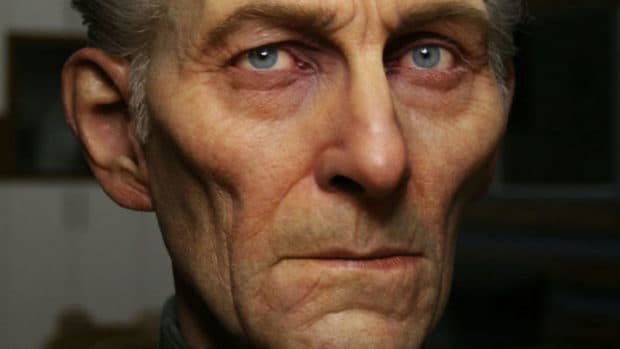
He's baaaaack!

He’s baaaaack!

Hammer Films horror icon and Christopher Lee foil Peter Cushing died in 1994 from prostate cancer. That couldn’t stop the makers of the latest “Star Wars” movie from bringing his image back from the grave.  The gaunt-faced British actor—an early “Doctor Who”!—played Grand Moff Tarkin in the original “Star Wars,” a bad guy, Cushing’s specialty. Since “Rogue One,” the current addition to the series, is a prequel, Tarkin is alive again (he went down with the Death Star in Episode IV). Instead of recasting the part, the producers decided to recreate Tarkin/Cushing using CGI technology. Lucasfilm-owned digital effects house Industrial Light & Magic reanimated Cushing’s likeness so that a recognizable Tarkin could make a convincing  appearance in “Rogue One.” The results are not perfect, but it is still one step closer to allowing future movies to cast avatars of long dead stars to interact seamlessly with live performers.

We have recently seen actors like Arnold Schwarzenegger, Jeff Bridges and Anthony Hopkins digitally youthened, but forcing a dead actor’s image to perform is a different matter entirely. The use of computer animated images of dead performers to do the bidding of their director masters evokes memories of “Looker,” a science fiction film directed and written by the late Michael Crichton of “Jurassic Park” and “Westworld” fame. In that 1981 movie, a corporation transferred the images of living models to a computer program that could use the new cyber-models to do and say anything more effectively and attractively than the models themselves in television ads. Then the company had the models killed—less residuals that way.

The emerging technology raises many ethical issues that didn’t have to be considered before, but when it comes to using a dead actor in a new role, the ethics verdict should be easy. It’s unethical, unless a performer  gives informed consent for his image to be used post mortem in this fashion. Presumably, the consent or the lack of it will be part of future negotiations and standard contracts. Actors who agree to have their images used as cyberslaves will also probably want to limit the uses of their names and images. No porn films, for example. No uses of an actor in a role he would have never agreed to playing while alive. Don’t make John Wayne shoot someone in the back. Don’t show Fred Astaire as clumsy on his feet; don’t make Jimmy Cagney a weenie.

Allowing another actor to use a dead one’s face and body, like Andy Serkis wore his cyber King King suit, is a closer call. If it is clear that the dead actor isn’t the one doing the acting, and that digital technology is being used as the equivalent of make-up, maybe that practice is just icky rather than unethical, provided the credits are clear.To make Cushing’s Tarkin live again on screen, “Rogue One’s “film-makers hired Guy Henry, a 56-year-old British actor who resembles Cushing. Henry played the part of Tarkin on the set, then the tech wizards transformed him into a Cushing clone. Continue reading

Ethics Quiz: Dr. Phil, Shelley Duvall, And Exploitation

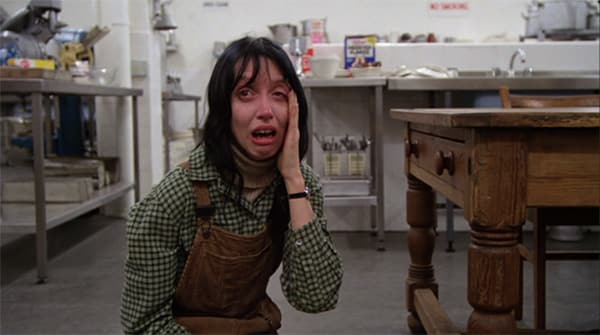
shelley-duvall

A 30-second promotional clip for today’s episode of “Dr. Phil” is disturbing, beyond question. It shows Shelley Duvall, from “The Shining,” “Popeye,” “Nashville” and other well-known films talking to the fake doctor about her mental illness.The syndicated advice show’s promo shows Duvall, almost unrecognizable, talking about how her “Popeye” co-star, the late Robin Williams, is alive and “shape-shifting.” She says she is being threatened by Robin Hood’s Sheriff of Nottingham, and that a “whirring disc” is inside her.

The ad ends with Duvall, 67, telling Phil McGraw, “I’m very sick. I need help.”

She certainly sounded like it, and looked like it too.

Now Dr. Phil is being criticized for exploiting a vulnerable mentally ill woman for her audience drawing powers. The daughter of Stanley Kubrick, who directed Duvall in her most famous role as Jack Nicholson’s terrorized wife in “The Shining,” is leading the charge. Vivian Kubrick called for a boycott of the popular daytime program, tweeting, “You are putting Shelley Duvall ‘on show’ while she is suffering from a pitiable state of ill health. Unquestionably, this is purely a form of lurid and exploitative entertainment — it’s appallingly cruel.”

Your Ethics Alarms Ethics Quiz of the Day:

Is it unethical for “Dr. Phil” to feature Shelley Duvall this way?

Continue reading

When Ethics Alarms Don’t Ring Dept: Planet Fitness

header-2

There’s nothing substantively wrong with the fitness chain Planet Fitness’s new philanthropic program to combat bullying. However, one has to question the ethics alarms and basic English comprehension of a company that sees nothing wrong with naming a campaign “The Judgement Free Generation.” I just saw a TV ad that was a teaser for the program. The announcer ended by saying “Now Planet Fitness is creating a Judgement Free Generation.”

Judgement is not a bad thing. Judgement is a good thing. So is making judgements. Society without constant judgements of all kinds cannot possibly have or maintain standards. Without standards, there can be no ethical guidelines and boundaries.Nobody with any concept of what ethics are and why they are essential to civilization would every want to eliminate judgement. Judgement and bullying are not synonymous, not even close.

What some copywriter at Planet Fitness has done is to launch a national campaign that frames “judgement” as something to be avoided. Nobody in the hierarchy there perceived anything wrong with that. This isn’t being “judgement free,” this is just bad judgement, as in incompetent.. To the extent that it advances the culture’s increasing tendency to discourage negative judgements against any conduct, even objectively destructive conduct, leading to purely subjective ethics (that is, no ethics at all), the campaign’s message is irresponsible.

Besides, based on what I’ve seen of late on college campuses, Bernie rallies and anti-Trump freakouts, we may already have a judgement-free generation.

At least one.

From The Ethics Alarms Mail Bag: A Reader Asks, “Is The Verizon Wireless “Can You Hear Me Now?” Guy Unethical For Going Over To Sprint?

Question: Is the former Verizon Wireless spokes-character  whose tag line was “Can you hear me now?” unethical to star in commercials for Verizon competitor Sprint?

Answer: No, because that character, “the Test Man,” wasn’t real.

The real actor who played him, Paul Marcarelli, was playing a character and reading a script. He was acting the role of someone who told the audience how good the Verizon Wireless network was. He didn’t have to believe what he said was true. His loyalty extended no farther than his contractual obligations. The actor wasn’t ethically obligated to use Verizon Wireless, like it, understand it or believe in it, any more than Dos Equis’s “most interesting man in the world” has to really be interesting. Once the first ad series was dropped, he was a free agent.

Verizon could have included some kind of non-compete provision in the contract, forbidding Marcarelli from doing ads for a competitor, at least for a while.  It definitely could have prevented him from playing the same character as he played in the Verizon commercials, because that character is owned by Verizon. However,  Marcarelli uses his real name, Paul, in those Sprint ads, so he can argue that he’s not playing the Verizon character, but himself, and he owns the rights to “Paul Marcarelli.”

However, I do think the Sprint ads are unethical, and so obviously dishonest that they reflect poorly on Sprint. Continue reading

Along With All The Other Critical Issues Ignored In This Presidential Campaign, What Completely Neglected Crime Robs American Consumers Of An Estimated $25 billion A Year?

fish2

Why it’s fish fraud, of course!

Ethics Alarms covered the problem way back in 2011, in a post called “Getting Scrod in Boston: The Ravages of Seafood Fraud. I just checked: almost nobody has read it, and those who have almost certainly have 1) forgotten about it and 2) been ripped off buying seafood since.

Now the guys at “Stuff You Should Know” have done an excellent  podcast about the issue. It really is infuriating that with all the regulations we pay for, and all the attention the government focuses on fads, politically correct crusades (how many Americans are affected by limitations on which public rest rooms can be openly used by transgender citizens?) , and out-and-out trivia, something like this goes not only unaddressed by officials, but ignored as well. The news media, meanwhile, would rather use its limited daily space to tell us how Stephen Colbert just skewered Donald Trump last night than to warn us about our pockets being picked.

Well, not me: I almost never buy seafood unless it’s raw oysters, whole shrimp or crab,  and if I’m in New England, Ipswich clams and lobster, all hard to fake. Continue reading

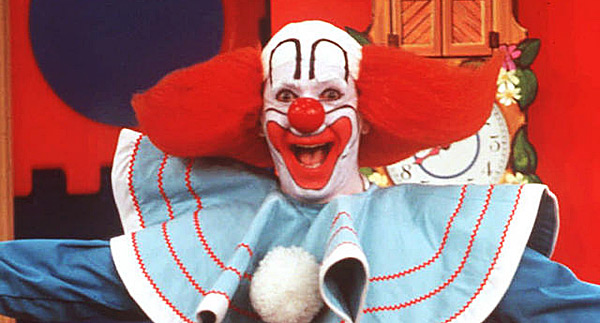
More Clown Ethics: The County That Banned Bozo

bozo

An alternate title was “The County Run By People So Ignorant Of The Constitution That They Think You Can Tell People How To Dress And Who Will Be Easy Pickings When The Democrats Decide To Ban What They Decide Is “Hate Speech,” but I thought it was a little too long.

The mass Ethics Dunce in question is Mississippi’s Kemper County, which in response to the evil clown hysteria embarrassing the nation almost as much as the evil Presidential candidates hysteria, enacted a clown ban this week, forbidding people from dressing as clowns until after Halloween. Anyone caught in public wearing a clown costume, mask or makeup will face a $150 fine.

This is, of course, ironic, since any elected officials voting for such a ban are, by definition, clowns themselves.

County supervisors president Johnny Whitsett justified this overly broad law and per se violation of the Constitution as a matter of public safety because, he said, people “could react badly if they get scared by a clown in their yard.” Wait: how does my wearing clown shoes and a red nose in my yard scare someone in their yard?

Boy, I can’t wait until I am retired, rich, and at leisure to go down to future Kember Counties and get arrested for being dressed like Bozo.

In these tiny, trivial, stupid examples of elected officials proving themselves ignorant of our rights and protections are the seeds of the destruction of American liberty.

Meanwhile, non-government entities, which are legally free to reject the principle of free expression but not ethically free to get away with it, at least on this little corner of the Internet, have revealed their own censorious clown DNA. Target, for example, has removed clown masks from its stores and website. “Given the current environment, we have made the decision to remove a variety of clown masks from our assortment, both in stores and online,” the Big Box chain announced through a spokesman.

This is consistent with the current reasoning of the increasingly totalitarian left on guns and other commodities, that if a small minority of citizens abuse a product or right, the rest of us have to do without. Again, I look forward to my future career as the Ethics George Soros, funding nation-wide Scary Hair Dryer User  hoaxes to see if Target will ban hair dryers too.

KABOOM! Just…KABOOM!

atom-bomb-cloud

Now I think understand why Ann Althouse, an intelligent, rational lawyer and law professor, has begun holding a “Most Loved Rat” contest on her blog to see which of her rat doodles are most popular. I’m less creative, I guess (though I also draw good rat cartoons!)—my head just explodes. It exploded last night.

It’s hard to explain exactly what did it.  Here I was, watching a series of baseball play-off games (since the Red Sox had been eliminated by the Cleveland Indians the day before), and Neil Patrick Harris appeared yet again to tell me that “Heineken Light makes it OK to flip another man’s meat.” (I wrote about the gratuitous vulgarity of this ad here. Apparently this makes me a homophobe.)

Wait…isn’t flipping another man’s meat sexual assault? What is the difference, in lack of respect and sexual assault ethics, between grabbing a woman by the pussy, as Donald Trump so eloquently put it, because you’re a rich celebrity, and flipping another man’s meat because…of beer? 
Continue reading