Cover Art Ethics: Sexism, “Rape Culture” or Just Marketing

If you had asked me thirty-five years ago whether we would still be debating what is the appropriate and ethical use of women as sex symbols—or “objectification,” if you like—in non-sex trade publications today, I would have answered, I think, “Are you kidding? By 2014 we will have hashed all this out. Either the combination of consensus  political correctness and the increased influence of women in business in general and publishing in particular will have reformed standards of acceptable practices, manners and taste, or emerging feminism will embrace the power of sexuality as a source of influence and power over the male of the species. The battles over this are too hot now to keep going on indefinitely! Either using sexy women and models in “take me” poses will be considered shameful and unappealing in 2014, or they will be accepted as part of an “anything goes” culture.”

No, I’m not very bright.

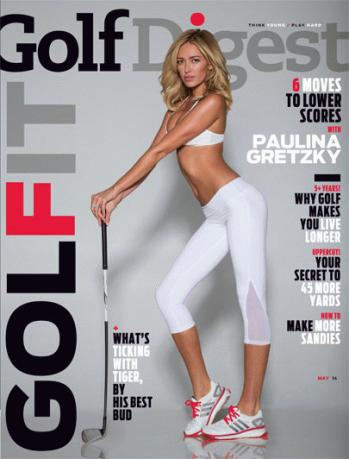
Case Study #1: The Golf Digest Cover

Paulina-Gretzky-on-cover-of-Golf-Digest

The cover of the latest issue of Golf Digest caused a stir by featuring Paulina Gretzky, who plays a little golf but who is primarily a model, and obviously there for other reasons. Until the Gretzky cover, the only woman to appear on the magazine’s cover without having won a pro or major amateur event was Golf Channel personality Holly Sonders, in May 2013. From the New York Times: Continue reading

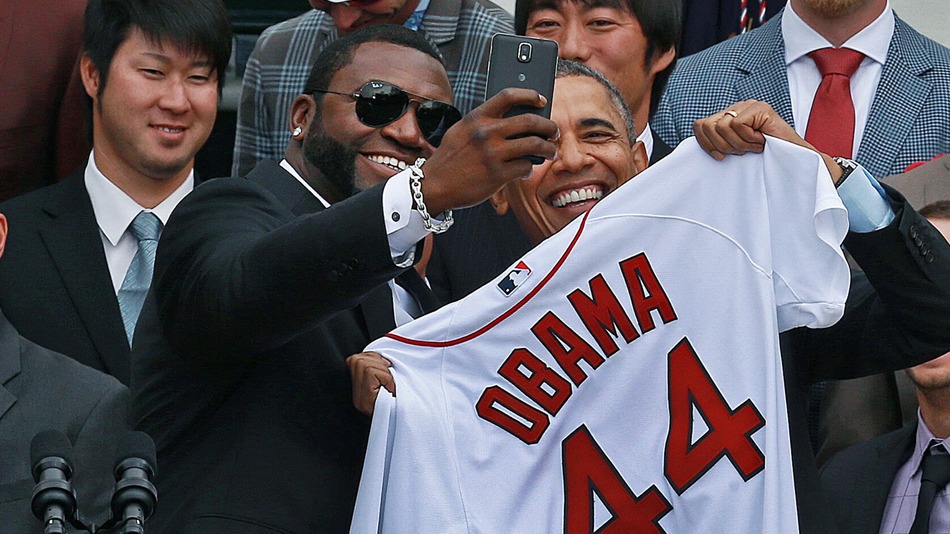
Selfie Ethics: Yes, Big Papi Exploited The President

Ortiz-Obama-Selfie.jpg

I wrote about this ethical breach when Ellen DeGeneris did it at the Oscars. The short version is this:

“It’s unethical to pretend that a selfie is a spontaneous  gesture of fun and friendship when you have a commercial agreement in place to use the photograph in a way that promotes the cell phone manufacturer.”

This is exploitation for commercial gain, and it’s wrong. It’s wrong when the victims are movie stars, and it’s wrong when the exploited party is President of the United States. Continue reading

Clever! But Wrong: “Hoodies For Hobos”

Homeless advertisng

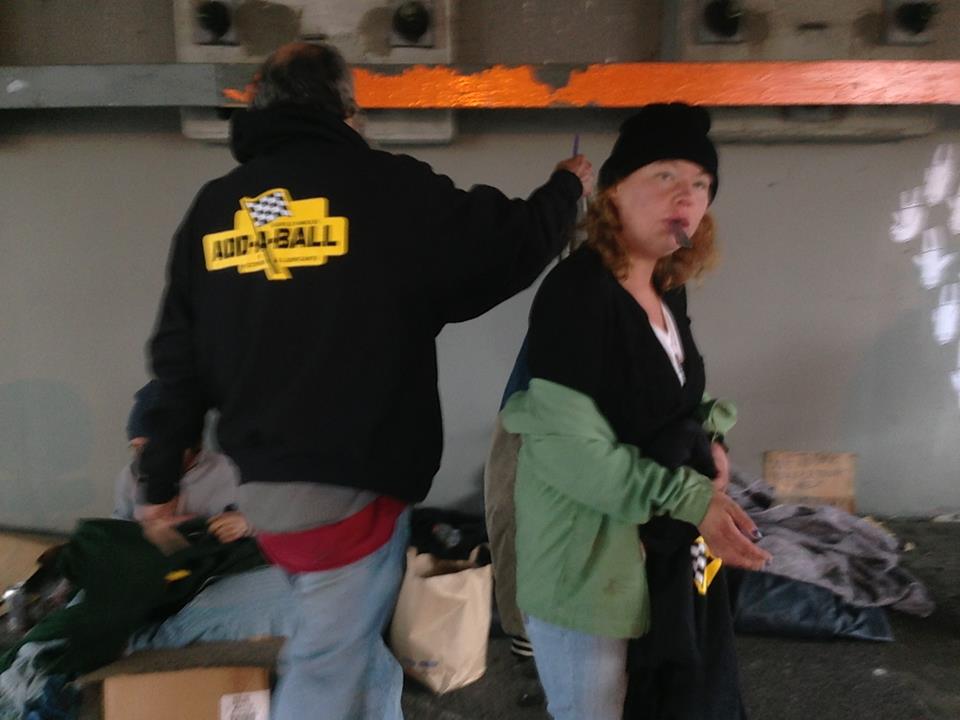
“Team ADD -A-BALL is proud to announce our new outreach program ‘Hoodies for Hobo’s’. All profits from sweatshirt and t-shirt sales go towards outfitting Seattle’s street people with some fresh gear. I will post a pic of every new bum we spruce up. Thanks everyone.”

—-Add-a-Ball owner Brad Johnsen, on his company’s Facebook page.

Yes, Brad, who casually refers to his walking billboards as “bums,” has what he sees as a perfect plan. Profits profits from all  T-shirt and apparel sales at Johnsen’s Seattle arcade will be used to outfit the city’s homeless “with some fresh gear,” all sporting the arcade’s name and logo. Everybody wins! He gets publicity and good will for this—wink, wink—“charity,” the homeless get spiffy new clothes, and he gets really cheap advertising.

So what if he robs the objects of his charity of their dignity, exploits them, and dehumanizes them into the equivalents of car bumpers? Hey, no plan is perfect! To his credit, sort of, Johnsen’s comments don’t exactly leave much room for doubts about his compassion and motives. “If it also encourages people to go play pinball and get drunk—all the better,” he says.

If he was interested in anything other than the cheap publicity…like, say, the welfare of the homeless, Johnsen would hand out clothes without the logo. I’m sure he wouldn’t understand why I say that. Or why paying the “bums’ who choose to wear the ones that advertise his business would be the ethical course, since it would compensate the homeless for their service and give them a sense of self-worth, rather than making them, in effect, unpaid sandwich-board wearers for the privilege of wearing a lousy hoodie.

I wonder how many people see nothing unethical Johnsen’s scheme. I’m a little afraid to find out.

[Addendum (4 PM 4/10/14): I should have mentioned in the original post that Kant would have agreed with me. This is a Categorical Imperative situation, using human beings as a means rather than an end: “Act in such a way that you always treat humanity, whether in your own person or in the person of any other, never simply as a means, but always at the same time as an end.”  The fact that the cynical ploy can be represented as a one that aims at clothing the homeless makes the label a little shaky, and I admit that the “Ick Factor” looms large here.]

________________________________

Pointer:  Drudge

Facts: Vocative


Ethics Quiz (Movie Division): “The Impossible,” Whitewashing, and Betrayal

"Bennett" and Belón

“Bennett” and Belón

I suppose some of you may have thought about this two years ago, when the Spanish film “The Impossible” was first released. I, however, take a while to catch up with my movie-viewing, and though the film was much praised by critics and got Naomi Watts an Academy Award nomination, I had not seen the film until recently. “The Impossible,” about as accurately as a motion picture can, tells the amazing story of how Spanish physician María Belón, her husband Enrique Álvarezs, and her three young sons miraculously  survived the 2004 Indian Ocean earthquake and tsunami when the family was on vacation in Thailand.

It is an engrossing, harrowing movie. I was surprised to find out, however that the family’s name wasn’t “Bennett,” and that they weren’t British, as the movie presented them. Apparently to maximize box office receipts, the film makers decided to take the heroic story of a real family and make the characters “more relatable” by recasting them as English-speaking Brits. There was a minor controversy about the film “whitewashing” the story*, but not much of that made it into the mainstream media. Belón, after all, is white. She was an active participant in the appropriation of story and that of her husband and sons, and they all profited from it, at least financially. Still, the movie’s point of view left a bad taste in the mouths of some international critics. Here is Australian critic Ruby Hamad:

“Based on the true story of a dark haired and darkish-skinned Spanish family, the filmmakers admitted to changing their nationality and casting lily-white actors in order to make the story ‘universal’. In other words, only white people can stand in for the human race as whole. For this reason, Thailand and its people are mere backdrops for the story of a Caucasian family who learn the hard way that even western privilege is no match for the brute force of mother nature.”

Your (two-year late) Ethics Alarms Ethics Quiz, therefore, is:

Is “The Impossible” unethical”?

Continue reading

Spreading the Word: “The Amazing Mouthwash Deception: Helping Alcoholics Relapse For Profit”

"Bottoms up!"

“Bottoms up!”

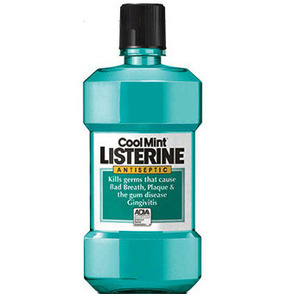
I am moved to re-post the early Ethics Alarms entry from 2010, titled “The Amazing Mouthwash Deception: Helping Alcoholics Relapse For Profit,” for a few reasons.

It raises an important and shamefully under-reported topic, one that despite my exhortations then has yet to be adequately examined in the media. If one googles various combinations of “mouthwash,””Listerine,”‘alcoholism,” and “alcoholic,” the first result is, sadly, my post. Most people who are not afflicted with the disease of alcoholism have no idea that mouthwash is a popular stand-in for liquor, or that is used to deceive family members who think an addict is no longer using or intoxicated. None of the recommended policy changes I suggest in the post have been implemented, either.

Last week I chanced to mention the use of Listerine by alcoholics to a friend who is a doctor who treats alcoholics. He was shocked, and had no knowledge of this at all. “Eww!” he said. “Isn’t that poison? You can drink it? I had no idea.” And he is a professional who keeps up  with the literature. (But obviously doesn’t read his friend’s blog.)

Despite my frustration that what I regard as a true exposé that should have sparked an equivalent article in a more widely read forum has remained relatively unknown, I am encouraged by the effect it has had. Most posts have their greatest traffic around the time they are posted, but since 2010, the page views of this article have increased steadily every month. More importantly, it has drawn comments like this one, from yesterday:

“Am looking after my twin sister who is a chronic alcoholic. She has been three days sober and then she just walked in and I couldn’t work out what the hell happened. She was in a stupor , but there was no alcohol and I am dispensing the Valium for detox period and she smelt like mint!! Found three bottles of it !!! This is my last big push to help her and she pleaded innocent and no idea it had alcohol in it! Hasn’t had a shower for two days but keeps her month fresh and sweet !! Thanks for the information. Much appreciated XXX”

Most of all, I am revolted that what I increasingly have come to believe is an intentional, profit-motivated deception by manufacturers continues, despite their knowledge that their product is killing alcoholics and destroying families. I know proof would be difficult, but there have been successful class action lawsuits with millions in punitive damage settlements for less despicable conduct. Somewhere, there must be an employee or executive who acknowledges that the makers of mouthwash with alcohol know their product is being swallowed rather than swished, and are happy to profit from it.

Few had discovered Ethics Alarms by April of 201o. I hope that by re-publishing the post now, it might find its way to more social media pages and even be sent to some investigative reporters. As I ended the original post, spread the word. Mouthwash is killing your friends and family members, or if not yours, those of someone not far away.

Thus, for the second time and hoping for more impact than the first, here is “The Amazing Mouthwash Deception: Helping Alcoholics Relapse For Profit.” Even if you read it the first time, refresh your memory.

People are killing themselves right under our noses, and we are being thrown of by the minty smell of their breath.

Continue reading

Ethics Diagnosis: #SueyParkisanirresponsiblepowerhungrypoliticalcorrectnessbully

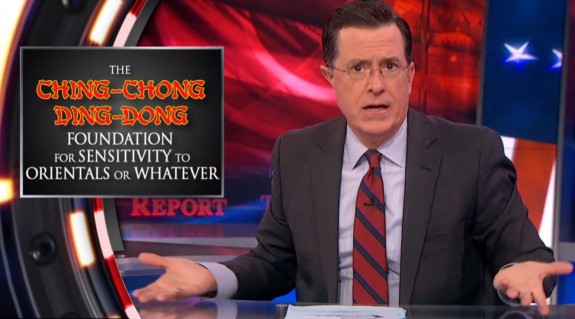
Colbert gag

Suey Park has declared war on Stephen Colbert over a promotional tweet made in his name by some Comedy Central PR employee. Not that there was anything wrong with the tweet*, unless you chose to willfully misconstrue it. The line was a quote from Colbert during a comic riff on his show mocking Redskins owner Daniel Snyder’s lame effort to deflect criticism of his team’s name as being ‘racist.’ (Reminder: It isn’t—not in the context in which is being used. Tasteless? Perhaps…) Anyone who is familiar with Colbert’s schtick—it is all tongue in cheek, exaggeration, irony, sarcasm and satire—understands that the Twitter quote is mocking the idea that one can continue being “racially insensitive” as long as you set up a foundation to show sensitivity to the group you have been accused of being racially insensitive about. Here is an explanation of how Park saw an opening for some cheap social media muscle-flexing, from Slate:

“On Wednesday night Stephen Colbert made sport of Washington football team owner Dan Snyder and his plan to undercut criticism of the team name by founding an organization for the uplift of “original Americans.” Colbert ran though all the reasons why this was funny, then called back to a skit from one of the show’s first episodes, way back from the fall of 2005—a joke about the host being caught on a “live feed” playing a racist Asian stereotype (Ching Chong Ding Dong, from Guanduong), then not understanding why it was racist. Colbert would make amends with his new “Ching Chong Ding Dong Foundation for Sensitivity to Orientals or Whatever.” He’d played versions of the game since then, dressing up in a sombrero for “Hispanic heritage month.” It’s one of the Colbert character’s oldest gags—he “doesn’t see color,” so he can’t ever be blamed if he accidentally does something horribly racist.”

The rest of the story: Suey Park pounced, first telling Colbert “Fuck you” and then sending her many followers a directive to flood the twitterverse with   …. and so they did, and have. Continue reading

Fundraising Ethics Controversy in Michigan! Naming Buildings After Big University Donors: Ethical or Not?

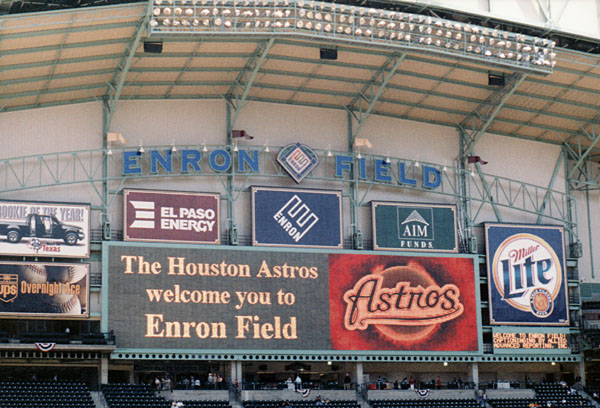
Enron-Field

I worked in the development (capital fundraising) office of Georgetown University for many years, and am well aware of the sausage-making that goes into attracting big donations. Thus the controversy that recently erupted in Michigan is of interest both for its ethical content and the way it dances around inconvenient truths.

With the college student’s wonderful knack for avoiding the obvious, the student newspaper of Grand Valley (Michigan) State University declared ethics war on what it called “billboards”: buildings and lecture halls named after corporate and individual donors. With naivete and boundless ignorance of the world of philanthropy and non-profit fundraising, the editorial declared (among other things)…

  • “What’s next? Will we turn Lake Huron 133 into the “Amway Lecture Hall?” Will the backs of our chairs have plaques dedicated to the lower-level donors?” COMMENT: For enough money, of course the university would rename the hall. Why should it care what a lecture hall is called, if it can avoid having to raise tuition? As for the backs of seats: did the editors do any research at all? Opera companies, theaters, museaums and other non-profit entities do exactly this. So what?

Continue reading

Annoyances For The Obsessing Traveling Ethicist

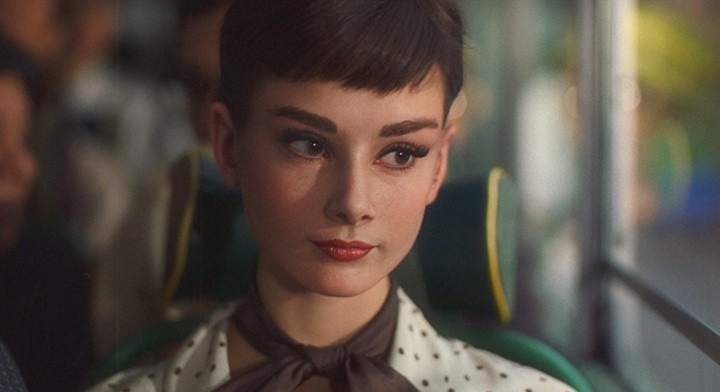
Hepburn

I just got home from another day trip, and am too weary to essay a significant post. Allow me, instead, to give readers a taste of what goes through one’s mind when you have begun to focus exclusively on ethics in preparation for a key, out-of-state presentation:

  • The incompetence of supposed professional broadcasters. Shortly before leaving for the airport on Sunday, I watched the local Fox affiliate report on the new Vogue cover, featuring Kim Kardashian and Kanye West. One of the two anchorwomen noted that there was a parody of the cover titled “Vague” featuring Kermit and Miss Piggy in the same poses. She pronounced it as “Vagg.” Her partner did not correct her. I think newsreaders should be able to read, don’t you?
  • Dishonesty in headlines. With the Kardashians still gnawing at my brain, I noticed an issue of “Star” in an airport magazine rack. The headline read, “Kardashians Cancelled!” Filled with momentary hope for civilization, I looked up the corresponding story in the rag. It stated that cable’s “Keeping Up With The Kardashians had been renewed, but that the family was worried that it might be cancelled next year. Yes, the headline was “X” and the story was “Not X.” I don’t care that the Star is just a glossy paper tabloid—how can anyone justifying this? Deceitful headlines are bad, but at least they are literally true, if misleading. Tabloid ethics are as low as ethics can be, but this flat-out false cover headline seems to have breached them… a neat trick.
  • More  incompetence of supposed professional broadcasters. CNN’s John Berman showed a clip of Bill, Hillary and Chelsea Clinton with Jimmy Kimmel and said…”Next…what Jimmy Kimmel did with three generations of Clintons.

Continue reading

What Is An Ethical Tiger Lily?

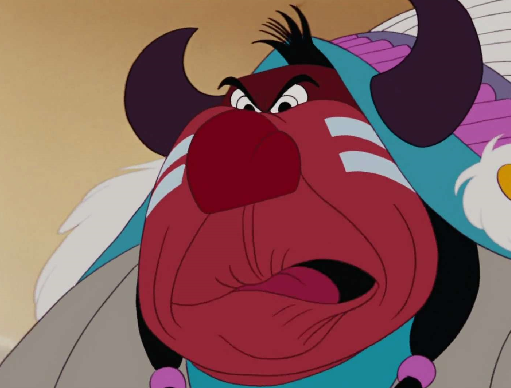
Believe it or not, this is Disney's version of an Indian chief.

Disney’s version of an Indian chief.

I recently watched the Disney “Peter Pan,” long my favorite of the classic animated films, which I had not seen from beginning to end in decades. I was genuinely shocked at the portrayal of the Indians, which would make the average movie Western seem politically correct and the Washington Redskins seem like a compliment. I know the story is a fantasy; I know that these are not supposed to represent real Native Americans, but a Victorian child’s visualization of the villains of their games. Nevertheless, it is hard to imagine the effect of such a film on a Native American child as being anything but devastating. The Neverland Indians, and their heroine, Tiger Lily, have been a human relations problem since at least the civil rights era, and the provocation is legitimate: did you recall (I had forgotten) that Tiger Lily belonged to the “Piccaninny tribe”? That James Barrie was a funny guy. Continue reading

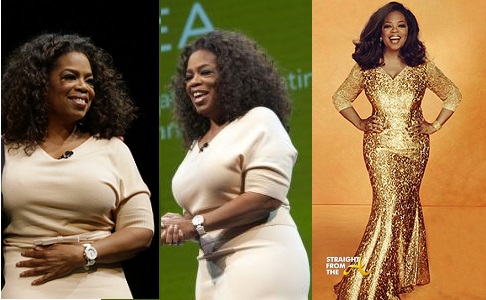
Who’s That Woman On The Cover of “O” Magazine?

l, c: O yesterday; r: Cover O.

l, c: O yesterday; r: Cover O.

By purest coincidence, I was looking through a magazine rack at CVS yesterday and taking notice of how well Oprah Winfrey has been keeping the pounds off lately. Then, this morning, I saw footage of her walking across a stage to announce her latest venture, something to do with chai tea. Mama mia! The woman I saw smiling and waving, presumably the real Oprah, was easily 50 pounds heavier than the look-alike who has been gracing the cover of recent O’s, though I will say, as mitigation, that the strategically shot March cover has a graphic over OW’s gut.

I could not care less how much Oprah weighs or what she looks like. However, an ethical narcissistic—and what else can you call a woman who publishes a magazine named after herself that has her as the cover model for every single issue?—has limited choices:

  • Keep yourself in fabulous shape, so you are fit to be a cover girl (by your own standards)
  • Don’t put yourself on the cover when you don’t feel cover-worthy
  • Use cartoons, or
  • Let it all hang out.

Not an ethical option: showing your loyal, trusting readers that you look one way, when in fact you look a whole lot fatter.

Yes, yes, I know—photoshopping, airbrushing, make-up, glamor photos, “it’s done all the time.” This is Oprah’s magazine, her image and her body, and pictures communicate. Her covers say “This is what I look like, be like me.” If she doesn’t look like her covers or even close, that’s an outright, calculated lie. It’s really as simple as that.