Comment of the Day: “Calorie Deceit”

baitandswitch

Ed Carney contributes this additional intelligence on bait-and-switch tricks, and flags a particularly obnoxious one. Here is his Comment of the Day on the post,  “Calorie Deceit”:

“This reminds me of an experience I had at a local Big Lots store. I had seen their ad, which indicated that select headphones were fifty percent off. Since I have somehow destroyed every pair of headphones I’ve owned, I was in the market for that item and I figured that taking the price from twenty dollars down to ten dollars changed it from unaffordable to barely affordable to me. So I went there and searched their shelves but could find no indication of which ones were on sale. I took the one’s I thought might be and had them scanned at the front of the store, and when that turned out to be wrong I asked which ones were indicated by the ad. By turns, every employee squinted at the picture next to the “save 50%” label, scoured the shelves, and turned the search over to someone else until finally a manager explained to me that none of the headphones were on sale, and that when the ad proclaimed that their price was fifty percent lower, it just meant they were fifty percent less expensive than what you would pay at another store. I have not been back since. Continue reading

UPDATE: A Cynical Ethics Tale That Wasn’t So Cynical After All

In the recent Ethics Alarms post The Asperger’s Child, the Company With A Heart, and the Cheapskate Parents: A Cynical Ethics Tale, I expressed both ethical and credibility doubts about the heart-warming story of a little boy who was sent the out-of stock LEGO set he had saved to buy for two years, only to discover that it was no longer manufactured and could only be purchased at premium rates via collectors or online auction. The child’s joyful reaction when he opened the box containing the set sent to him as a gift by the toymaker was captured in a family video that subsequently went viral on YouTube.

I won’t rehash my analysis here; read the post. I questioned why the family wouldn’t just contribute the necessary funds to ensure that the child’s long effort to obtain the toy didn’t come to naught, and I expressed skepticism that LEGO’s generosity wasn’t part of a pre-arranged quid pro quo in exchange for the video, especially since the father is professional videographer, and the YouTube product functioned as a promotion for LEGO.

By purest coincidence, a personal friend here in the Washington, D.C. metropolitan area, Jeff Westlake, is also a close personal friend of the Groccia family. He was privy to the events of the story as they unfolded, and relayed information to me about both the family and the events surrounding the YouTube video that were not evident in the media reports. Thanks to Jeff’s insight, I am now satisfied that the family’s decision to explore every avenue of obtaining the LEGO set was reasonable rather than penurious, and that there was no quid pro quo with LEGO.

I apologize for mistakenly impugning the Groccia’s motives and account in the episode. I don’t apologize for raising the ethical issues that I saw implicit in the media accounts. That’s my job, and provoking discussion and debate over the ethical or unethical conduct of public figures is why this blog exists. If a family is going to participate in making an occurrence in their lives the subject of news stories, features and blog posts, they cannot insist that all commentary be unequivocally positive. I thought the doubts I expressed were legitimate and fair; it happens that they were not borne out by the facts.

Mr. Groccia was offended, understandably, and not so understandably, decided to respond here with, first, an anonymous comment noting that my “foil hat must be too tight as it appears to be impeding your cognitive abilities.” I didn’t know who the author was, and informed him via the email; address accompanying the comment that I would post his remarks if 1) I had a real name, as the Comment Policies require,  and 2) if the screen name he used was not a commercial website, since this would lead to the comment being spammed. He responded that he “knew” I wouldn’t have the “spine” to print his comment, which is manifestly not the case. I told him that I would be happy to publish a more thorough account by him, and would retract my suspicions if I was persuaded by it. Instead. Mr. Groccia chose to send a series of alternately insulting and threatening e-mails, none of which were substantive, and all of which served to reinforce my doubts. There the matter would have laid, except for the intervention of Jeff Westlake. I’m grateful to him for setting the record straight.


The Perfect Ethics Story: The Dilemma Of The Extra iPads

Your ethical dilemma just arrived!

Your ethical dilemma just arrived!

Now here is an example of a consumer episode in which everyone involved behaved with exemplary ethics, and without hidden agendas. There is no need to draw this out—Consumerist does a great job telling the story, and you should read it here. A quick summary:

  • A woman who ordered one iPad from Best Buy received five.
  • Her e-mail to the store about what she should do was unanswered.
  • Legally, she was within her rights to keep the extra merchandise, but (correctly) worried about possible consequences to the worker who made the shipping error,
  • She consulted the consumer advice maven at Consumerist, who tracked down someone at Best Buy to deal with the problem.
  • Best Buy’s rep contacted the consumer, thanked her for her honesty, and sent her this letter: Continue reading

The Asperger’s Child, the Company With A Heart, and the Cheapskate Parents: A Cynical Ethics Tale

This is a sweet and gooey ethics tale with, I fear, a fishy center.

James, luckily captured in spontaneous celebration over the completely unexpected gift from the LEGO company

James, luckily captured in spontaneous celebration over the completely unexpected gift from the LEGO company

James Groccia of West Boylston, Massachusetts was nine years old when he told his parents that his dream gift was an Emerald Night Train LEGO Set. His parents, seeking to build his character before he could build his dream train. told the boy that he had to save up for the expensive set, which cost $100. James has Asperger’s Syndrome, which means that he obsesses about things that interest him to an extreme degree, and he made the Lego set the object of his tunnel vision. After two years of meticulous saving, he finally had enough money saved to purchase his prize—-and discovered that it had been discontinued. Now the  Emerald Night Train could only be obtained from collectors or in expensive online auctions, costing far more money than James had saved. The boy was devastated.

At the suggestion of James’ Asperger’s counsellor, his mother helped him write a letter to LEGO, explaining his devotion to the toy and asking if the company could track one down for him. It responded, with regret,  that indeed the Emerald Night Train LEGO Set was out of stock and was no longer made. Then, a few days before James’s birthday this October, a box addressed to James arrived at the family home. Yes, Virginia, it was a brand-new model of the Emerald Night Train! The accompanying letter from Lego said, Continue reading

Hyundai: Ethics Corrupter

As we try to build an ethical culture, it doesn’t help to have amoral corporations employing ethics-challenged advertising flacks to send America toxic messages about honesty and trust. Hyundai, in its campaign for the 2013 Santa Fe, represents family members keeping secrets from each other and parents enlisting their children as accomplices in lies as funny, normal and cute. “Don’t tell mom,” a father orders, in the midst of a movie that will give his young children nightmares, and other misadventures (including one incident of father-led vandalism.). “Don’t tell Dad,” says Mom, after taking her son parasailing. I’m presuming she’ll have to tell him when her son breaks his neck on their next flight. Continue reading

Offense By Proxy: “Laugh At The Crippled Girl!”

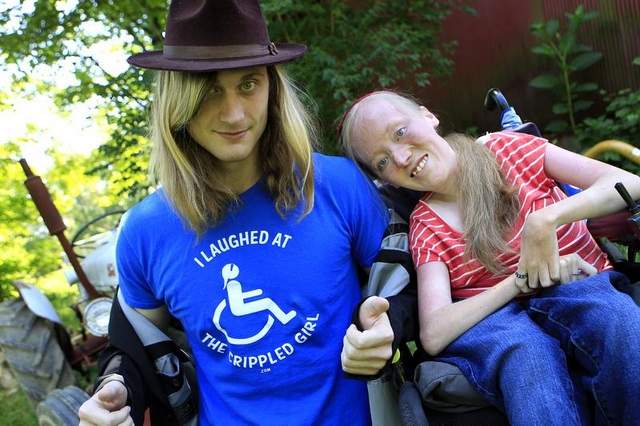
The Offender and his friend,the Unoffended Offended.

Forest Thomer II  says he was conducting  “guerrilla marketing” when he went to a May 23 “Party in the Park”  hosted by the local Cincinnati Chamber of Commerce. Pointing to Ally Bruener, wheelchair-bound because of Muscular Dystrophy, he quizzed various groups in the crowd, asking, “Do you want to laugh at the crippled girl?” Then Bruener, who is an aspiring comic, wheeled up, told a joke and announced the location and time of  her next performance.

Surprise! Someone was offended—so offended that the police were called. They threatened to shock Thomer with a taser and then arrested him, charging disorderly conduct by virtue of “grossly abusive language.” This could have sent Thomer to jail for a month. When Thomer’s attorney made it clear that he was going to argue censorship, the city changed the charge to “Turbulent behavior,” whatever that is. Amazingly, this ridiculous case actually went to trial, and after four days that could have been better spent making napkin holders out of popsicle sticks, a jury found Thomer “not guilty.” Continue reading

Spam Report: I Hate You, Lista De Emails!

My spam filter has caught 260,504 spam comments to Ethics Alarms to date, and I have read every damn one of them. This is to make certain that one of your comments doesn’t end up in spam purgatory, which sometimes happens, especially if you include a link, or your parents named you “Penis Enlargement” for some reason. You also end up there if you send me a anonymous comment with a fake e-mail, or if you become too insulting or otherwise annoying to justify whatever enlightenment your opinions might provide. I just sent “Another Child of the Future” to Spam Land, as well as “Joe”.

To say I resent spam and spammers wildly understates the case. It is unethical conduct to say the least, and the companies that facilitate the process are beneath contempt. Lately, the field has come to be dominated by something called “lista de email,” which deposits about 100 pieces of junk on Ethics Alarms every day. I really, really hate it, and everyone connected with it. They are vandals, freeloaders, cheaters, liars and frauds. They have added to the abundant wasted time in my life, which was already seriously crowded with the hours I spent studying anti-trust law and the novels of Conrad and Butler,  the weeks I spent trying to read “War” by Raymond Aron, and every second I spent watching soccer, “Hart to Hart,” and “American Idol.”

That is not to say that reading all that spam doesn’t have its occasional rewards, for it is often amusing in a surreal way.  For example: Continue reading

Ethics Hero Vs. Unethical Website and Scammer: Marc Randazza Takes Aim At The Contemptible “Is Anybody Down” and “The Takedown Lawyer”

Go get em, Marc!

First Amendment lawyer Marc Randazza is a genuine Ethics Hero. I speak from personal experience: when a cyber-bully was trying to use a threatened libel lawsuit to force me to remove a posted opinion he didn’t like, Marc (thoughtfully referred by Ken at Popehat), generously offered his time and advice…and Marc does this all the time. Right now he has a different mission: exposing a revolting cyberscam and hounding the perpetrators into retreat. His target is the website “Is Anybody Down,” and a more disgusting web enterprise would be hard to imagine, and its parasitic creation, the “Takedown Lawyer.”

I’ll let Marc explain why he has “Is Anybody Down” on his hit list:

Here’s their business plan:

  • Step one: Register the domain name “isanybodydown.com”
  • Step two: Get ahold of nude photos of people who never consented to having their photos published.
  • Step three:Publish them, along with their names, home towns, and links to their facebook profiles.

So now how do you “profit?” Well, openly saying “I’ll take down the photo for $250,” would probably create some legal issues for you. So, instead, you create a fake lawyer persona and say “I am an internet lawyer, named David Blade, III, and I’ll get your pics down for $250.” Continue reading

Forget Balancing: Lance Armstrong Is a Villain

A constant conundrum faced by every culture is how it should categorize significant individuals whose positive contributions to society and civilization are marred by other acts that range from the unethical to the despicable. How much bad can a great man do and still be called “great”? How much wrong can a good woman engage in and still fairly be remembered as “good”? Can one wonderful act erase a lifetime of bad conduct? Are some bad acts so terrible that nothing can compensate for them? Every real human being is going to yield to some temptations, make some bad choices, be selfish, be cruel, lie, or worse. If we insist that all our heroes have an unblemished record in every aspect of their lives, we simply forfeit our heroes.

One reaction to this persistent dilemma is that we tend to be reluctant to look under the rock of a heroes accomplishments for fear that we will be disillusioned, or once the rock is lifted, we will attempt to rationalize into invisibility the ugly things we find there, or insist that they don’t matter. Of course they matter. It matters that Thomas Jefferson, who gave this nation its beating heart, didn’t pay his debts, cheated his friends and refused to live up to his own ideals. It matters that Clarence Darrow, who saved over a hundred men from execution, was a terrible father and husband and an unethical lawyer. It matters that Arthur Miller, whose plays dramatized the plight of the aging worker and the dangers of political persecution, rejected his mentally-challenged son, leaving him institutionalized and without contact from his father, though he knew who his father was. Charles Lindbergh, Jackie Kennedy, Diane Fossey, Thomas Edison, George Washington, Andrew Jackson, Frank Sinatra, Ted Kennedy, Pete Rose, Lillian Hellman, Walter Cronkite, Hillary Clinton—the list of the great, near-great, lionized and admired who behaved less than admirably or worse in significant ways can circle the globe. In assessing their character, as well as whether their lives deserve to be regarded as positive or negative influences on their society, fellow citizens and civilization, all we can do is apply a complex balancing formula, with factors in their lives weighted according to ethical principles, experience and our own priorities.

The question of how this balance should be applied has been raised in recent weeks in the wake of the final verdict on Lance Armstrong’s cycling career, which was decisively removed from the categories of “alleged misconduct,” “controversies,”and definitely “witch hunts” for all time as mountains of documentation, lab tests, and testimony moved it squarely into the categories of “outrageous cheating’, “criminal activity”, “corruption” and “fraud.” Continue reading

“Mitt Romney — He’s Not One Of Us”

“I’m Barack Obama, and I approved this message.”

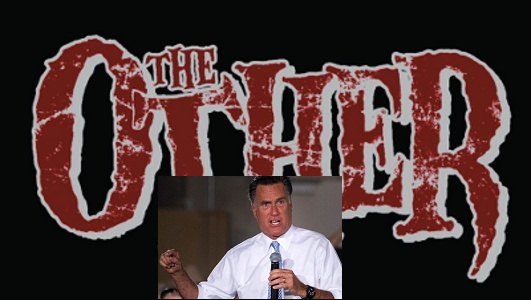
I must admit that I could not devote my full attention to last night’s final Presidential debate. I had just seen the latest from President Obama’s attack machine, a television spot approved by Barack Obama, that concludes with the legend, “Mitt Romney—He’s Not One of Us.”  It is an unfair, shocking, miserable, indefensible, dangerous argument to be employed by any party, any candidate, in any race for any office in the United States, at any time in the nation’s history. For it to be employed with the approval of a President of the United States, and this President in particular, should be cause for mourning, but also anger.

If I thought that President Obama was actively involved in releasing this disgrace to his campaign and the ideals he claims to represent, I would have no difficulty concluding that it alone disqualifies him for a second term. I don’t believe that. Perhaps I won’t let myself believe that. One of Obamas myriad weaknesses as a leader, however, is that he tolerates unethical, incompetent and untrustworthy staff and advisors. He trusted his campaign advisors, and they betrayed his trust. Still, he is accountable. Continue reading