From The “Saint’s Excuse” Files:The Catholic Church, Penn State, and Now Choate…What Have We Learned?

Protect the hive. Always protect the hive…

The renowned private boarding school school Choate Rosemary Hall, alma mater of such luminaries as John Dos Passos, Edward Albee, Glenn Close, multiple Kennedys and dozens more of the rich, famous and powerful, , just revealed that at least twelve former teachers had sexually molested, and in one case, raped, students without the crimes being reported to police. The pattern continued over decades. In some cases, teachers were allowed to resign after being confronted with evidence of abuse, and administrators wrote still letters of recommendations for them after they were fired. The predators then went to other schools, sometimes in positions of power and authority.

After the similar institutional conduct revealed by the Catholic Church and Penn State, does anyone believe that this is a rare occurrence in institution, including the most prestigious—and virtuous!—ones? The lesson is that established, powerful, iconic institutions are programmed to protect themselves above others, and regard their own missions and continued vitality more precious than any single individual, even a child.

Revisiting one of the most important of the Ethics Alarms’ 92 rationalizations:

13. The Saint’s Excuse: “It’s for a good cause”

This rationalization has probably caused more death and human suffering than any other. The words “it’s for a good cause” have been used to justify all sorts of lies, scams and mayhem. It is the downfall of the zealot, the true believer, and the passionate advocate that almost any action that supports “the Cause,’ whether it be liberty, religion, charity, or curing a plague, is seen as being justified by the inherent rightness of the ultimate goal. Thus Catholic Bishops protected child-molesting priests to protect the Church, and the American Red Cross used deceptive promotions to swell its blood supplies after the September 11, 2001 attacks. The Saint’s Excuse  allows charities to strong-arm contributors, and advocacy groups to use lies and innuendo to savage ideological opponents. The Saint’s Excuse is that the ends justify the means, because the “saint” has decided that the ends are worth any price—especially when that price will have to be paid by someone else.

Continue reading

Ethics Hero Emeritus: Eugene M. Lang

A kind, courageous Ethics Hero died last week. To my shame, I had never heard of him. In 1996, President Clinton awarded him the Presidential Medal of Freedom, but that award has been so degraded and politicized that I no longer pay much attention to it. My mistake: in this case, the award was well-earned.

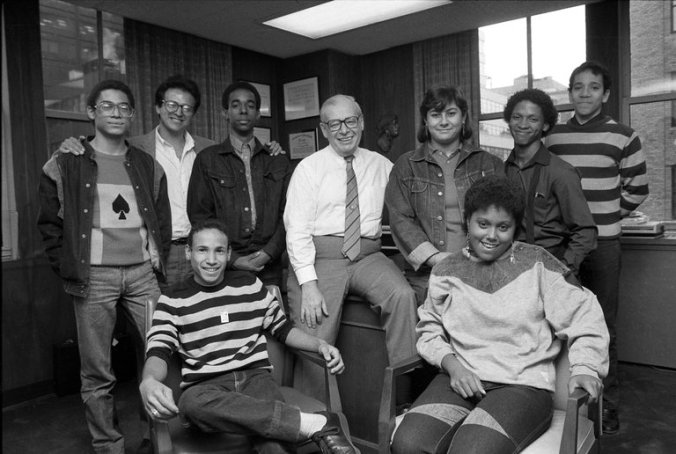
Eugene M. Lang was born poor and became  a successful and wealthy  investor. In 1981, he was invited to deliver a commencement address to 61 New Your City sixth graders at Public School 121, his alma mater.  “I looked out at that audience of almost entirely black and Hispanic students, wondering what to say to them,” he recalled years later. “It dawned on me that the commencement banalities I planned were completely irrelevant…So I began by telling them that one of my most memorable experiences was Martin Luther King’s ‘I Have a Dream’ speech, and that everyone should have a dream.”

Then, in a flash of inspiration, he decided on the spot to tell them that he would give a scholarship to every student in the class who was admitted to a four-year college.

That impulsive promise led to his establishment of the I Have a Dream Foundation, with an office in Manhattan. Lang hired a project coordinator and established a year-round program of academic support including mentoring and tutoring as well as sponsored cultural and recreational outings. In the meantime, he virtually adopted that 6th grade class, taking them on trips and restaurants, and personally counseling them through personal travails as well as school problems, often intervening with school officials on their behalf. By the time Eugene Lang died at age 98,  his dedication had changed the lives of more than 16,000 at-risk children nationwide.

Lang said the he knew, when he made his pledge to those 11 and 12-year olds, that giving poor and  troubled children money for an education would not ensure their success. He knew many would succumb to the cycle of poverty,  drugs, jail and irresponsible parenthood.  “When I made the original promise, the principal told me that maybe one or two students would take advantage of my offer,” he told  one interviewer. That’s why he dedicated himself to doing more.

Continue reading

Ethics Jump-Ball At The 7-11

Boy, you better be quick if you want to be “pay it forward” in Alexandria, Virginia.

Today I dropped by the local 7-11 for a quick purchase and was third in a line of four. Being served was a very tall—basketball player tall—, very striking young African American man, late 20s, early 30s,  in a three- piece suit and tie. He had his items on the counter for checkout, and excused himself briefly to go out to his car where he said he had left his wallet. A few seconds later he stepped back into the store and said, “Never mind. I’m sorry, I left my wallet at home,” and started to leave. I hesitated maybe two seconds and started to speak, as did the man ahead of me. I was about to say that I would pay for his items, but the guy behind me, short, stocky, white, about 50, and noticeably missing a few teeth in front, stepped out and said, “Hey, man, I’ve got it.”

The young man looked surprised and said, “Are you sure?” “Of course. Is that it?” replied the older man, pointing to the counter.

“Just pay it forward, friend,” said the man in front of me.

“Thank you,” said the Kareem Abdul Jabbar look-alike.  I really did think he looked like Kareem, early 70’s vintage, but handsomer. He also appeared a lot more affluent than his shorter benefactor. “Here’s my contact information…” and he reached into his pocket.

“No, no, come on, that’s not necessary,” said his new friend,, flashing his missing teeth in a big smile. “I’ve got it. We’re all in this together.” And he paid the clerk.

The tall black man shook his hand, and they both held the clasp for a few second. “Thanks so much,” he said.

After he left, both I and the man in front of me congratulated the winner of this ethics jump ball, saying that we both were about to do the same thing, but he had been quicker.

“Oh no!” he said suddenly, eyes twinkling. “I just spent my last dollar! Now I can’t pay for MY stuff!”

“See? I’d really have you both then, wouldn’t I?”

And we all laughed.

From The Ethics Alarms “Do The Ends Justify The Means?” Files: The Breast Cancer Survivor’s Inspiring Scam

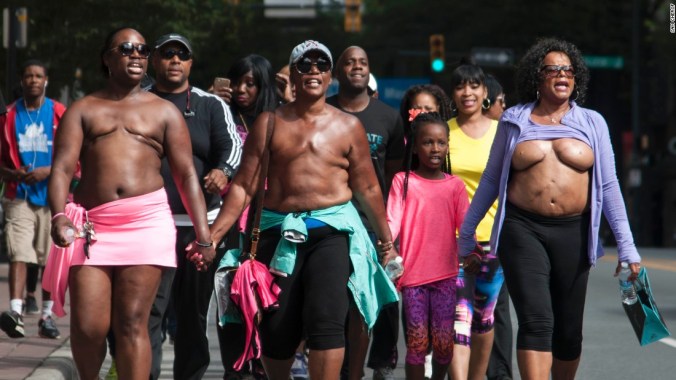
At one point, profiling the double-mastectomied Paulette Leaphart’s 1,000-mile walk from  Mississippi to Washington, D.C….topless…CNN reporter Jessica Ravitz writes,

“If even one woman’s life was saved thanks to a conversation Paulette started, wasn’t that enough? So what if our hero was flawed?”

Oh, no: the “just one child/just one life” rationalization again! (Which, I now notice, isn’t on the Rationalizations List, and it should be.)

Ravitz writes this to begin a long, detailed, infuriating narrative about the well-publicized and much-hyped crusade of Leaphart, whose journey, displaying her scarred chest,  was to ostensibly demand more funds for cancer research cure and  better and more affordable health care. She said she was a champion for women without breasts “to believe in their beauty and be proud of their strength.”

“By showcasing and embracing her scars, she hoped to inspire others to do the same,” Ravitz writes. “Her journey was bold, visual, moving. It offered a hero to admire and, given Paulette’s audacious decision to walk shirtless in the face of strangers, a rich spectacle to witness. It spoke to African-American women, who face the highest breast cancer mortality rate. It inspired legions of survivors. And it spoke to many who’d lost someone to the disease.”

Ravitz is conflicted, clearly, as she tells the complicated story of the woman whose official cause is admirable, but whose motives are murky, and whose credibility is non-existent. While explaining the mounds of evidence she uncovered that the woman has a record of deception, venality and financial flim-flam, that she sees the long walk as a ticket to fame and cash, and that she has lied and fabricated aspects of her ‘inspirational story” repeatedly while the efforts of journalists to pin her down. Yet Ravitz still ends up by  being wishy-washy and equivocal:

“There’s no way to measure how much of a difference Paulette Leaphart made in shaping the conversation about cancer in this country. She touched many minds and hearts, but whether she did so in the most honest and transparent way remains questionable.”

What? There is nothing questionable about whether Leaphart has been honest and transparent—she hasn’t. Ravitz documents her deceptions impressively. She lied about her cancer treatment. She lied about her eligibility for Medicaid and financial resources. She lied to a documentary team that had arranged to follow her, leading them to end the relationship. She lied on her Facebook page, representing her health travails by using the experiences of a friend. Her unguarded comments suggest that she began the walk as a way to make money for herself as well as research. She accepted contributions under false pretenses.  Yet the journalist still seems to want to say that all of this doesn’t matter,  if some good resulted from it: Continue reading

Update: Generalissimo Franco* Is Still Dead, And Snopes Is Still An Unethical Website

Snopes.com's favorite in "The Wizard of Oz," and I don't mean Ray Bolger...

Snopes.com’s favorite in “The Wizard of Oz,” and I don’t mean Ray Bolger…

The July 31 Ethics Alarms post detailing how snopes.com, usually referred to as the “fact and rumor check website,” has quietly morphed into just another progressive Democrat online spin-merchant nailed these frauds based on their tortured spin to protect Hillary Clinton and her election prospects from legitimate criticism and, in the case of Clinton’s decade-old defense of a child rapist, illegitimate criticism based on genuine facts that Snopes denied anyway.

That is…don’t ask me why…the most read, linked and shared Ethics Alarms post ever. It even was the target of some of Hillary’s paid online trolls, whom I recognized when I realized they were writing from the same (false) talking points memo. Just to be clear, there is no longer any legitimate dispute that Snopes can’t be trusted, is subject to partisan bias, and is thus 100% useless as a “fact and rumor check website,” since their writers warp facts and debunk the truth when they feel like it.

I ended the July pots on this depressing note for me, because I once used and recommended the site with confidence:

That’s the end for Snopes. Even one example of bias-fed misrepresentation ends any justifiable trust readers can have that the site is fair, objective and trustworthy. Snopes has proven that it has a political and partisan agenda, and that it is willing to mislead and deceive its readers to advance it.

Can it recover? Maybe, but not without…

…Getting out of the political fact-checking business.

…Firing Dan Evon, who used the misleading flag photos, as well as Kim LaCapria.

…Confessing its betrayal of trust and capitulation to partisan bias, apologizing, and taking remedial measures.

With all the misinformation on the web, a trustworthy web site like Snopes used to be is essential. Unfortunately, a site that is the purveyor of falsity cannot also be the antidote for it.

I’ll miss Snopes, but until it acknowledges its ethics breach and convinces me that the site’s days of spinning and lying were a short-lived aberration, I won’t be using it again.

Two developments since this was written are worth noting. The weird one is that the site has been prominently cited as an authority more often since that post than before it. NBC’s FBI action drama “Blind Spot” had a character settle an argument by referring to Snopes, a first, and increasing numbers of news reports and op-eds have cited Snopes as well. Obviously the scriptwriters, reporters and pundits don’t read “Ethics Alarms,” but this is pure negligence. Snopes can’t be trusted. It’s as simple as that.

I have received from readers more examples of Snopes Spinning For Democrats, but this one, flagged by the Daily Caller, is worthy of this brief return to the issue. Continue reading

From The “When Ethics Alarms Ring” Files: The Saga Of The Kind Repo Man

car-paid-off

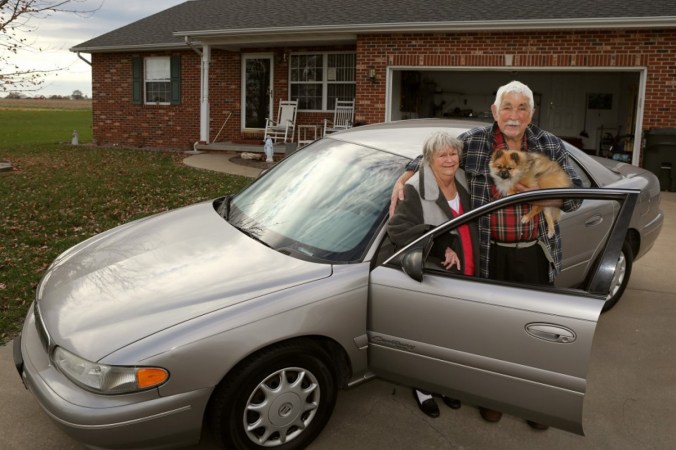
Jim Ford is a repo man, the co-owner of Illini Recovery Inc., a company in Southern Illinois. Pat and Stanford Kipping were in arrears in the monthly payments for their car, a 1998 Buick, and he was engaged to repossess it.

The past due amount  was about $350, and the payment amount was $95 a month. The Kippings are elderly retirees, and when he met with them in their home, his task became more and more unpalatable. “I had to get the hell out of there,” he recalled. He was feeling more guilty by the second, and was especially bothered by their explanation that health care costs, especially rising prescription drug expenses, caused them to fall behind on their payments. Ford could see himself in that same dilemma some day.

The Golden Rule can be a bitch.

He felt so badly about taking the car that he stopped to phone a bank official only a block  or so after seizing the car, and asked if he could just pay off the whole loan on the couple’s behalf. That, he learned, would be a red tape nightmare. Instead, Ford followed a friend’s advice and  launched an online fundraising effort in his own name. That attracted support from Ford’s friends and business associates, and in about 24 hours, the appeal had raised the necessary amount, and more.

The Kippings got their car returned and completely paid for, along with an oil change, detailing, and repairs. They also received an extra $1,000, and the week of Thanksgiving, the gift of a turkey from Jim Ford and his friends. When Ford arrived to deliver the car, family members,neighbors and a reporter from a local paper were waiting to be part of the moment.

“They were really really happy,” Ford said. “I don’t know. I was just glad I could help somebody out.”

When ethics alarms ring, good things  happen.


Ethics Hero: Bill Lee, “The Spaceman,” An Integrity Exemplar…And I Really Need One About Now

bill-lee

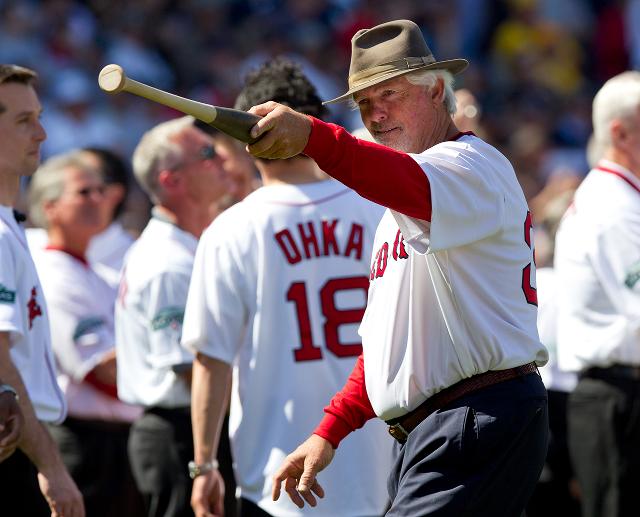
If you weren’t a baseball fan in Boston during the Sixties and Seventies you may never have heard of Bill Lee, but if you were, he was an unforgettable and unique source of pleasure. Lee joined the Red Sox in 1969 as a junk-balling left-hander with a hippie streak not previously seen in the sport.  He was prone to say things like, “I think about the cosmic snowball theory. A few million years from now the sun will burn out and lose its gravitational pull. The earth will turn into a giant snowball and be hurled through space. When that happens it won’t matter if I get this guy out.”  The college students around Boston loved him, the old school baseball management types not so much. But he was good, and in major league baseball, good will always trump weird.

Lee was an excellent a reliever for four years before becoming a Sox starter in 1973, then won 17 games that season and the next two as well. The success was secondary for his often-stoned fans than his non-conformist attitude and determination to be himself at all costs. He was well-read, well-educated, opinionated and funny, and at various points in his Red Sox career, wore a gas mask, a coonskin cap and a propeller-topped beanie onto the field. Once, when the umpires refused to halt play in a downpour, Lee came out of the dugout wearing rain gear and carried an umbrella to the mound. This and other exploits caused him to be nicknamed “The Spaceman.”

Twice, once with the Red Sox and later with the Montreal Expos, Lee went on strike, refusing to play to protest the elimination of one of his friends from his team’s roster. The last time he did it, it ended his career.

Lee made up his own rules and principles, so he’s a different kind of Ethics Hero.  Above all else, however, the Spaceman has integrity down to a life-style. When he was at his zenith with the Red Sox, he often said that baseball was a still just a game to him, that it was what he loved to do, and that he didn’t care about the money. He would play baseball for whatever was available, he said, or just for the love of it. My father, who didn’t get Bill Lee, thought he was grandstanding.

He wasn’t. Continue reading

Four Unethical Dispatches From The 2016 Post Election Ethics Train Wreck: #2

...and that mission is "Make sure children are raised to be afraid of Republicans."

…and that mission is “Make sure children are raised to be afraid of Republicans.”

[This is the second of four posts exposing recent screeds and missives that demonstrate  various degrees and kinds of ethics rot spreading from the 2016 Post Election Ethics Train Wreck. The first is here.]

II. The Evanston/North Shore YWCA

Karen Singer, the CEO of the Evanston/North Shore (Chicago) YWCA sent a post-election letter that read in part,

Dear Friends,

We walk through our doors at the YWCA Evanston/North Shore each morning determined to make our communities more just and equitable, determined to work for women’s empowerment and equality, for a woman’s right to choose what happens to her own body, for freedom from violence, and for people of all races, ethnicities, sexual orientations, cultures and religions to feel that they are embraced, have opportunity, are respected and that their lives are valued.

Yesterday morning, we walked through our doors and felt that instead of a glass ceiling shattering, the floor had dropped out from under us. We sat and grieved together for what seemed to be a national affirmation of everything that is antithetical to what we aspire to and hold as our most cherished values.

We are all searching for an explanation; a way to get our heads around something we are struggling to understand. How can the climate and rhetoric of hate, racism, violence against women, and fear have been given its ultimate validation?

Mia, a staff member who answers our domestic violence crisis line, wrote something yesterday that especially resonated with us:

“(My son) stayed up with me until 12:30 am. He went to bed knowing it was probably over, but saying that maybe it wasn’t. There was a tiny bit of hope in his heart. The Cubs taught him about late night miracles last week. Still, I could hear the despair in his voice when he said, ‘I don’t want to go to school tomorrow, Mom.’”

“In the morning I came downstairs immediately after hearing him get up. I hugged him long and hard, with tears in my eyes, tears that are still in my eyes as I type this. I said, ‘I love you.’ And then I said, ‘You have to go to school today. You have to go to school for all those girls and Latinos and blacks and gays and Muslims at your school who were just told by America that they are not valued. You have to show up for them.’” Continue reading

Election Extra! This News Story Illustrates Why You Can’t Trust Hillary Clinton: Corruption! Conflict Of Interest! Lies! Cover-Up! And Of Course, The Mainsteam News Media Doesn’t Want You To Understand It, Which Is Part Of The Story Itself

[ I apologize: this is long. I also think it is important: I know this may be a tipping point for me. I hope you’ll read it, and share it.]

Yesterday, I saw this news item from Reuters, one of the few respectable news sources on the U.S. election that has not been distorting and withholding information to tip public opinion one way or the other. I tracked it all day to see whether the mainstream news media would highlight, or even mention it.

Significantly, the information involved came in a post-workday news dump on a Friday, a technique that has become a favorite of the Obama administration, and has been adopted by its party too.  If you missed it, in other words, that was the intention.

I’ll bold the most critical points:

Reuters:

The Clinton Foundation has confirmed it accepted a $1 million gift from Qatar while Hillary Clinton was U.S. secretary of state without informing the State Department, even though she had promised to let the agency review new or significantly increased support from foreign governments.

Qatari officials pledged the money in 2011 to mark the 65th birthday of Bill Clinton, Hillary Clinton’s husband, and sought to meet the former U.S. president in person the following year to present him the check, according to an email from a foundation official to Hillary Clinton’s presidential campaign chairman, John Podesta. The email, among thousands hacked from Podesta’s account, was published last month by WikiLeaks.

Clinton signed an ethics agreement governing her family’s globe-straddling foundation in order to become secretary of state in 2009. The agreement was designed to increase transparency to avoid appearances that U.S. foreign policy could be swayed by wealthy donors.

If a new foreign government wished to donate or if an existing foreign-government donor, such as Qatar, wanted to “increase materially” its support of ongoing programs, Clinton promised that the State Department’s ethics official would be notified and given a chance to raise any concerns.

Clinton Foundation officials last month declined to confirm the Qatar donation. In response to additional questions, a foundation spokesman, Brian Cookstra, this week said that it accepted the $1 million gift from Qatar, but this did not amount to a “material increase” in the Gulf country’s support for the charity. Cookstra declined to say whether Qatari officials received their requested meeting with Bill Clinton.

Officials at Qatar’s embassy in Washington and in its Council of Ministers in the capital, Doha, declined to discuss the donation.

The State Department has said it has no record of the foundation submitting the Qatar gift for review, and that it was incumbent on the foundation to notify the department about donations that needed attention. A department spokeswoman did not respond to additional questions about the donation.

According to the foundation’s website, which lists donors in broad categories by cumulative amounts donated, Qatar’s government has directly given a total of between $1 million and $5 million over the years.

The Clinton Foundation has said it would no longer accept money from foreign governments if Clinton is elected president and would spin off those programs that are dependent on foreign governments.

“MATERIAL” INCREASE

Foundation officials told Reuters last year that they did not always comply with central provisions of the agreement with President Barack Obama’s administration, blaming oversights in some cases.(reut.rs/2fkHPCh)

At least eight other countries besides Qatar gave new or increased funding to the foundation, in most cases to fund its health project, without the State Department being informed, according to foundation and agency records. They include Algeria, which gave for the first time in 2010, and the United Kingdom, which nearly tripled its support for the foundation’s health project to $11.2 million between 2009 and 2012.

Foundation officials have said some of those donations, including Algeria, were oversights and should have been flagged, while others, such as the UK increase, did not qualify as material increases.

The foundation has declined to describe what sort of increase in funding by a foreign government would have triggered notification of the State Department for review. Cookstra said the agreement was designed to “allow foreign funding for critical Clinton Foundation programs” to continue without disruption.

The State Department said it has no record of being asked by the foundation to review any increases in support by a foreign government.Asked whether Qatar was funding a specific program at the foundation, Cookstra said the country supported the organization’s “overall humanitarian work.”

“Qatar continued supporting Clinton Foundation at equal or lower levels” compared with the country’s pre-2009 support, he said. He declined to say if Qatar gave any money during the first three years of Clinton’s four-year term at the State Department, or what its support before 2009 amounted to.

In another email released by WikiLeaks, a former Clinton Foundation fundraiser said he raised more than $21 million in connection with Bill Clinton’s 65th birthday in 2011.

Spokesmen for Hillary Clinton’s campaign and Bill Clinton did not respond to emailed questions about the donation.

Now let’s get this out of the way up front: the import and significance of the facts in this story were covered up…by Clinton, by her Foundation, by State, and by the news media.This story was buried in October by the Donald Trump “pussy-grabbing” video, and the news media focused the public’s attention on little else. Continue reading

Don’t Feel Too Bad, Americans: Ethics Alarms Aren’t Ringing In Canada, North Korea Or Japan, Either

It’s an International Ethics Dunce parade!

donald-trump-humane-society

1. Ontario, Canada

The Windsor-Essex County Humane Society in Ontario thought it would be really clever to use the Donald Trump phrase that many believe disqualify him to be President in an ad to adopt kitty-cats. It featured a photo of Trump and said, “You don’t have to be a star to grab a pussy … cat.”

Amazing. Not one person in the chain of custody of this—I would say obviously, but when so many people miss it, I guess it’s not—offensive ad had an ethics alarm sound.  Nobody had the sense, prudence or guts to say,

“Uh, guys? Hello? You do realize that this is using a phrase describing sexual assault while alluding to the one who used it to describe sexual assault? You do realize that “pussy” alluding to female genitalia is vulgar and uncivil, right? No? Here, let me explain it to you…or hwo about this: there is no way this won’t spark criticism. Is that what you want?”

Sure enough,  the ad promoting cat adoptions this week for $50, was taken down shortly after it appeared this week.

The society offered a pathetic apology. Melanie Coulter, executive director of the humane society, “explained” it was an attempt to make light of the U.S election campaign, though it also “made light” of sexual assault, contemptuous attitudes toward women,  and obscene rhetoric.

“We are obviously sorry if people are offended by the ad — that wasn’t our attempt in the least,” Coulter said. “Our attempt was to find homes for cats that need them.” She also added that the shelter took in more than a hundred cats in the last week.

For the record, the rationalizations here are…

3. Consequentialism, or  “It Worked Out for the Best”

13. The Saint’s Excuse: “It’s for a good cause”

19A The Insidious Confession, or “It wasn’t the best choice.”

It also suggests that I need to add “We meant well” to the list as a sub-rationalization to #13.

****

contest-winner

2. Kuroishi, Japan

Continue reading