 A persnickety Washington Post reader recently reprimanded that paper for using the term “snafu,” which, he said, is but an acronym for “Situation Normal, All Fucked Up” and therefore inappropriate in a “family paper.” Leaving aside whether there actually is such a thing as a family paper any more, the letter once again raised the ethics and civility issue of whether a stand-in for an uncivil word is less uncivil than the word itself. The reader actually agrees with the position I have taken in the past, though he reaches some conclusions from it I would not. Continue reading
Popular Culture
Ethics Quiz: Is This Racism, or Just Business?
The Mother Jones headline is designed to provoke a gasp: George Lucas: Hollywood Didn’t Want To Fund My Film Because Of Its Black Cast.
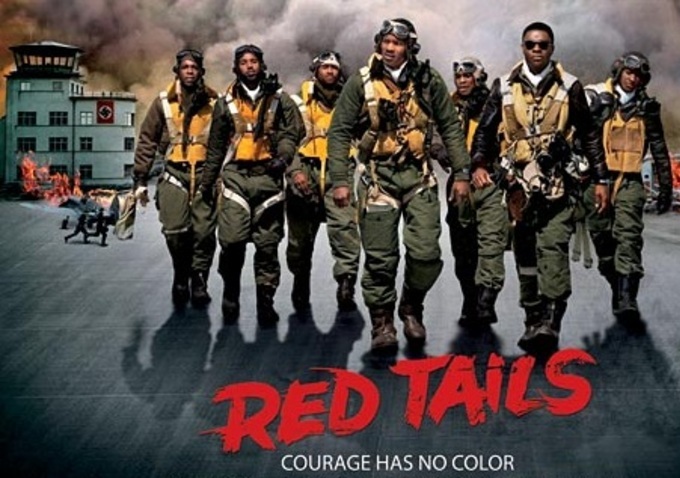 The headline is literally accurate. Lucas tells the magazine that he had trouble finding backers for “Red Tails,” his upcoming film about the fabled Tuskegee airmen, because the studios told him that films without white protagonists didn’t draw a wide enough audience, especially overseas, to make his film a good investment for them. Presuming that the film-makers know their business—and presuming their real reason for rejecting Lucas was not that the movies he’s produced lately were god awful, —Lucas’s story raises this Ethics Alarms Ethics Quiz Question, which you may answer if you dare:
Is a studio that refuses to fund a movie with an all-black cast engaging in racism, or just practicing business responsibly? Continue reading
The White House’s Wonderland Ethics
This is a weird one.

"Alice in Wonderland" party at the White House? I don't remember any party!
“The Obamas,” one of those “behind the scenes at the White House” books that has become a routine feature of every administration since the Reagans, has the usual tales about First Couples bickering and First Lady power trips. Author and New York Times correspondent Jodi Kantor has caused something of an uproar with her account of the first Halloween party the first couple hosted at the White House, in 2009. She writes that it was so lavish and “over the top” that the administration kept the event secret out of fear of a public backlash. After all, this was a time when the Tea Party was in full swing, the economy was at low tide, and there was the ten-percent unemployment rate, bank bailouts and Obama’s health-care plan battles. Not exactly a smart time for a Marie Antoinette-style costume blow-out. Continue reading
The Admirable Mr. Sondheim
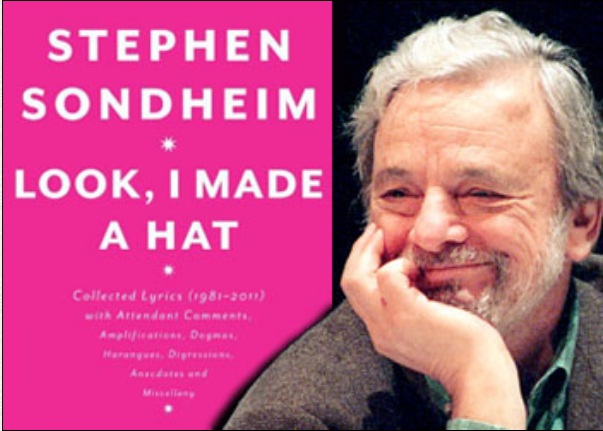
And an ethical hat it is, too!
Readers who are not interested in the art of lyric writing and the mechanics of constructing a Broadway musical should probably avoid the second and final installment of Stephen Sondheim’s chronicle of his creative life, “Look, I Made a Hat.” They will be missing something important nonetheless: a rare example of truly ethical memoirs.
As in his first volume, “Finishing the Hat,” America’s pre-eminent composer-lyricist for the stage reveals himself as a gentleman, an adult, and a thoroughly ethical human being, and does so not by proclaiming his virtues, but by demonstrating them in his writing. He is not uncritical, but always fair and kind. He accepts personal responsibility for projects that failed, and is generous with giving credit for projects that were successful. There is no false modesty in Sondheim about his own skills and achievements, but neither does he seem to overvalue them or seek his reader’s admiration by blowing his own horn.
The line Sondheim walks in both books is fine, and he walks it finely. For example, I initially thought his decision to only criticize the techniques of other lyricists who are dead was a cowardly one, but upon reading both books it is clear that the decision was motivated by kindness. Sondheim takes the craft of lyric-writing very seriously, and his integrity would not allow him to censor a critical observation regarding a colleague’s work when he believed the criticism was illuminating and had merit. Realizing how hurtful a critique from someone of his reputation and accomplishments could be, Sondheim restricted his frank and (mostly) fair assessments to writers beyond wounding. If Jerry Herman isn’t grateful, he should be. Continue reading
The Third Annual Ethics Alarms Awards: The Worst of Ethics 2011 (Part 2)
 The 2011 Ethics Alarms Awards for the worst in ethics continues (you can catch up with Part I here) with the large and depressing…
Shameless Bad Character Division
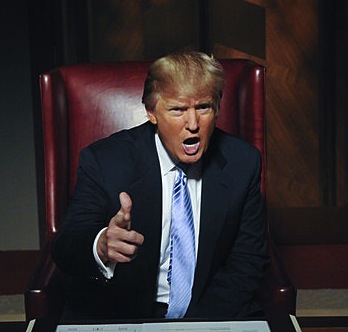
Jerk (defined as an individual who habitually places his personal benefit and ego gratification above the welfare of everyone and everything else) of the Year: Donald Trump
The Dennis Rodman Award, (Awarded to a professional athlete for a career and lifetime of behaving like a jerk): Jose Canseco. Jose’s done it all, from being baseball’s Typhoid Mary of steroids, to getting arrested for various assaults, to writing a series of tell-all books designed to rat out the very players he corrupted, not as a service to his sport, but as revenge for it rejecting him. In 2011, he hit a new low, accepting money to appear in a celebrity boxing match (the 21st Century version of becoming a circus geek to pay the bills) and sending his less-talented, equally dim-witted, identical twin brother Ozzie to perform instead, hoping to fool the fools who hired him. This, of course, was fraud. It takes quite a jerk to take this award from Manny Ramirez, who became eligible in 2011, but Jose was up to the task.
Asshole (defined as an individual who intentionally and maliciously causes pain and harm to others because he can) of the Year: Rev. Terry Jones, the publicity-seeking leader of a tiny rural church, who caused riots and deaths abroad and ramped up political tensions between America and Muslim nations by threatening to burn, and finally burning, the Koran as a demonstration of contempt for Muslims and the Islamic faith. Continue reading
Comment of the Day on “Comment of the Day: “Distracted Driving, Pot, and “The Great Debate””
 Michael, whom I believe leads the field in 2011 Ethics Alarms Comments of the Day, just weighed in with an epic comment to Neill Franklin’s Comment of the Day from the lively distracted driving/marijuana post. It restores some balance to what has been largely an Ethics Alarms vs. NORML mugging: I knew there had to be someone out there who agrees with me on the governments ethical obligation to keep drugs from further infecting American society. Here is Michael’s Comment of the Day on both Neill’s COTD and Distracted Driving, Pot, and “The Great Debate”:
“I was just a little horrified by Mr. Franklin’s comment, especially considering the source. I live in a neighborhood rife with drugs and the effects to me are evident. The effects that I see are different from those Mr. Franklin seems to care about, however. I see the wasted lives and wasted generations. If you look at the children around here, you see a generation that grew up without parents, without guidance, and without hope. They have never known adults who worked or who cared about their kids. They only know adults who are on drugs. These adults don’t play with their kids, don’t teach them. They don’t provide food, clothing, or reliable shelter and they subject their children to every form of abuse. These kids have no hope because they haven’t seen anyone like them live any other way. To escape this nightmare existence, they too turn to drugs and the cycle continues. I can’t understand how someone can advocate validating this behavior by legalizing drugs. I understand the self-serving legalization argument of the idle college student drug user and the people who somehow have lucked into good paying jobs that are easy enough to do while high, but I don’t respect them. Continue reading
Sarah Palin, Obama and The Dumbest Christmas Controversy of the Year

Not Christmasy?
The President of the United States, especially this one, is blamed for enough without having to endure trumped up charges on trivial issues. Nevertheless, some Republicans and conservative pundits are criticizing President Obama because his Christmas card and the National Christmas Tree aren’t Christmasy enough.
Yes, I really wrote that. I can’t believe it myself. Sarah Palin, echoed by a chorus of talk radio hosts, finds the Obama card “odd” because, she says, it doesn’t feature traditional American values like “family, faith and freedom.” No, it features traditional Christmas imagery like a crackling fire, gifts, Christmas greenery and a Poinsettia plant. At least it isn’t a Gary Larson “Far Side” Christmas card, or the legendary Charles Addams card with the empty manger and a tiny foot sticking out of the cow’s mouth. Who appointed Sarah Palin the Christmas card critic? The card reads,
“From our family to yours, may your holidays shine with the light of the season.”
Completely appropriate. Then there is the tree, which, breathlessly reports the CNS News Service:
“… includes a prominently displayed ornament paying homage to President Barack Obama, but includes no ornament readily visible to a person standing near the tree’s base that uses the word “Christmas,” or includes an image of the Nativity, or bears the name or image of Jesus Christ.”
Wait, I’m checking...oops! Neither does mine! Well, mine has a bunch of angels, now that I check it. And so what? If the government isn’t in the designating official religion business, and it’s not, a religiously neutral tree is completely sensible. Oh, I’m not saying hanging a wise man ornament or two would be a constitutional crisis, but isn’t it enough that Obama has a Christmas tree, instead of Rhode Island Governor Lincoln Chaffee’s politically correct, pusillanimous “holiday tree”?
Christmas is a cultural holiday celebrated by Americans of all creeds. There is nothing wrong with the tree omitting Christian symbols completely, much less having “no ornament readily visible to a person standing near the tree’s base that uses the word “Christmas,” or includes an image of the Nativity, or bears the name or image of Jesus Christ.”
Give me a break. Give Obama a break. Give us all a break. Be fair.
After all, it’s Christmas
The Loudon County Courthouse Christmas Display Fiasco: Anatomy of an Ethics Train Wreck

Believe it or not, this is a train wreck.
In Loudon County, Virginia, the county board didn’t want to let Christmas displays on the courthouse lawn go down without a fight. Once upon a time a community could put up Santa and his sleigh without a militant anti-religion or non-Christian group threatening law suits, but no longer, especially in a community so close to Attorney Central, Washington, D.C. Other communities have gotten away with pan-religious displays—a pretty silly solution, I think, since Christmas is a Christian and secular holiday but has exactly nothing to do with Islam, Buddhism or the others—but again, once atheists organized and pressed the issue that the state supporting all religion was tantamount to promoting a religion, “inclusive” displays must be open to groups actively hostile to the religious displayers. Can we guess what will happen in such an environment? Yes? Well, the Loudon County board couldn’t.
A sensible board-appointed citizen group, the Courthouse Grounds and Facilities Committee, recommended in December 2009 that the county ban courthouse displays. The board rejected the committee’s request. In July 2010, the committee again requested a ban be put in place on courthouse lawn displays. The board, in its infinite wisdom, decided that anyone could put up displays on the lawn with ten spots open on a first-come, first-serve basis, pending county approval.
Yes, this was bound to turn out well, pull the community together, and promote the good feelings of the holiday season! Thus we reached Stage One in our ethics train wreck: official incompetence. The board’s actions lit the fuse of a cultural bomb, and only a Christmas miracle could have kept it from detonating.
So the displays were duly allotted thusly:

You can see two nativity scenes, the predictable Flying Spaghetti Monster display ridiculing all religion, the atheist display, and other benign additions. Hmmmm...but what, pray tell, is the “Santa cross?” Oh, just this… Continue reading
Stop Cruelty To Children—Or To Put It Another Way, Stop Jimmy Kimmel
Bulletin to Jimmy Kimmel: Enough is enough, you sadistic jerk.
Also known as "Jimmy Kimmel Cruel!" and "Jimmy Kimmel Sadistic!"
Flush with his “success” of persuading his most irresponsible viewers to make their own children cry by lying to them about eating all their Halloween candy and then posting the videos of their kids’ emotional distress on YouTube, ABC late night talk show host Jimmy Kimmel has told the same warped people to traumatize their children again, this time by granting the kids the special treat of opening a Christmas gift early, but having a terrible gift (like a half-eaten sandwich) inside. The emotional reactions of the children thus deceived are also, per Kimmel’s directive, videotaped for posterity to inspire mirth on the part of his similarly warped viewers who don’t have children (and thank God for that), because, as we all know, disappointing kids at Christmastime is fun.
This has got to stop. It doesn’t matter if some, like Mediate’s Jon Bershad , think this is “the cruelest, funniest joke ever,” and others, like the Huffington Post’s reviewer, think the pranked children’s misery is “hilarious.” Children are not props for Jimmy Kimmel’s sadistic amusement, and parents who are willing to use their children this way, intentionally spoiling their Christmas anticipation for the entertainment of sadistic strangers, are, to be blunt, rotten, despicable, and untrustworthy parents. Something important—Compassion? Kindness? Empathy? Loyalty? Responsibility? Love? — is absent in their parental make-up, and that void is being cynically exploited by Kimmel, who has crossed the threshold from arrested adolescent to full-fledged villain. Continue reading
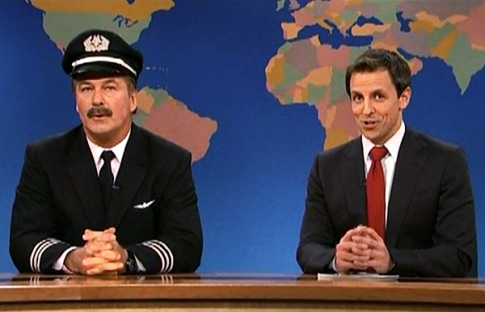
Alec Baldwin, Something of the Year
 I should have known I was going to regret naming Donald Trump the Ethics Alarms “Jerk of the Year” in May. True, The Donald has only burnished his credentials since then, but other worthy candidates have charged into what would be contention for the crown, had I not rashly bestowed it on Trump, confident that nobody could be a bigger jerk than a man who sided with the birthers while using the crucial presidential nominating process as a crude promotion for his cheesy reality show.
But 2011 has been a banner year for jerks, uber-jerks, and beyond-jerks. There was Rev. Terry Jones, for example, who got people killed by threatening to burn a Koran. He blew right past jerk to asshole, so Trump was spared having to compete with him. There was Leroy Fick, the despicable lottery millionaire who kept getting food stamps after his bonanza, because of a loophole in the Michigan food stamp regulations. He inspired a whole new category for himself, fick, which describes an especially shameless jerk.
Now, however, I am faced with a serious dilemma. What is an appropriately severe designation for actor (and alleged New York mayoral hopeful, which is disturbing on so many levels) Alec Baldwin, who in addition to revealing himself as a 9-11 conspiracy theorist earlier this year, just behaved like a spoiled child on an American Airlines flight, got himself kicked off to the inconvenience of his fellow passengers, and insulted the airline and the plane’s crew afterwards on Twitter? Continue reading

