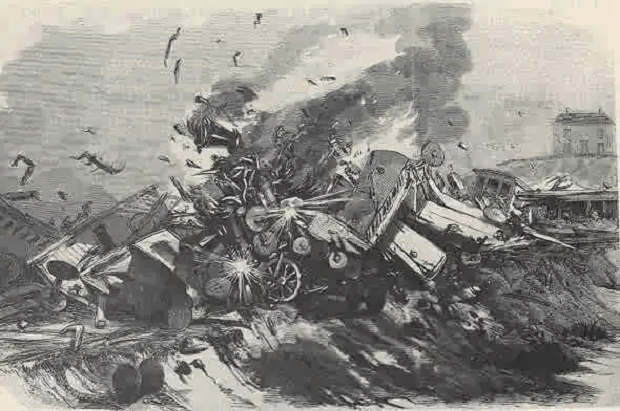
It is unusual to see an ethics train wreck continue to roll along to the extent that it affects the movie about the ethics train wreck, but that was what happened with the Richard Jewell saga. Remember the definition of an ethics train wreck: an episode in which virtually everyone who becomes involved in it, however tangentially, becomes entangled in ethics mistakes and misconduct. The “Richard Jewell” Ethics Train Wreck (or the Richard Jewell Ethics Train Wreck) even yanked me on board.
I’ve already written about the film, directed by Clint Eastwood and a 2019 holiday bomb (no pun intended). My focus then was on the single unethical feature of the screenplay, its unfair portrayal of the real-life Atlanta-Constitution reporter, the late Kathy Scruggs, who broke the FBI leak that the security guard who had become a national celebrity by detecting the deadly pipe bomb that had exploded at the 1996 Atlanta Olympics was suspected of making the bomb himself. Though film reviewers usually register few rejections when films smear the deceased in pursuit of a more compelling narrative, “Richard Jewell’s” claim that Scruggs traded sex for the leak walked into the #MeToo buzzsaw, and on that basis alone, Clint’s movie was trashed by reviewers and pundits alike.
I strongly doubt the average viewer passed on the film because it may have been unfair to a dead reporter. Who had the genius idea that releasing a film about the press’s abuse of a strange, sad, fat man played by an unknown actor would be a Christmas season hit? I had no interest in seeing the movie, and I’m an admirer of Eastwood and will cheer on any further proof of how rotten our journalism has become, but why pay to see the news media falsely try to destroy a security guard in 1996 when the same institution has been trying to destroy the President of the United States for three years?… So the news media was incompetent and vicious to Richard Jewell? That’s supposed to get me to the movie theater?
Nevertheless, let me be clear: I hate what the movie did to Kathy Scruggs, just as I detest it every time an individuals can’t defend themselves are lied about in a movie, misleading audiences and scarring their reputations….
Unless Eastwood had strong evidence that the reporter was trading sex for information, he should not have used her name. He owes the Scruggs family an apology, and I’m glad his movie is tanking.
Gee, the seats on the “Richard Jewell” Ethics Train Wreck are so comfy, and the fare on the snack car is excellent! Continue reading →
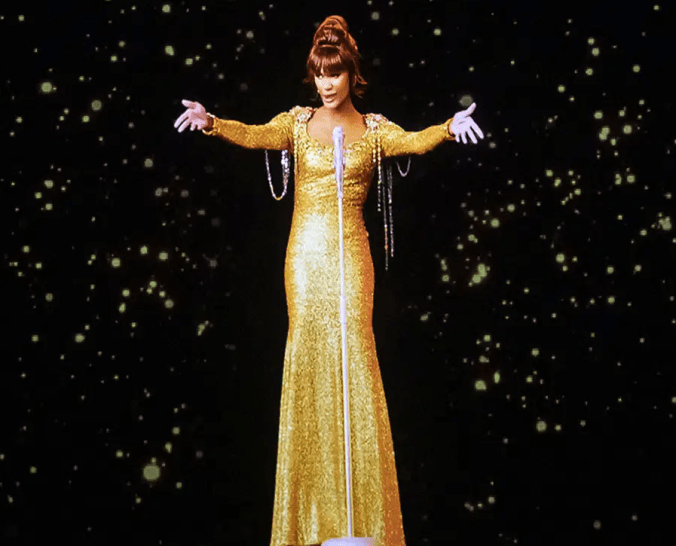
…as long as they don’t materially misrepresent the performer or the performance. They may be icky, but they aren’t unethical. This is in ethical contrast with the Ethics Alarms position on zombie performers in films, as examined here several times, most recently upon the unveiling of zombie James Dean.
The issue has arisen because a holograph of Whitney Houston, mercifully in a form before her physical and vocal decline due to drug abuse, is touring the country. Here’s a review of one of the performances; Zombie Whitney will make her debut in the US soon. Big plus: she doesn’t have to worry about the Wuhan virus, just holograms of the Wuhan virus. Fans have been less than ecstatic, as much because of the quality of the image as the ickiness of the concept. Here’s part of one review:Continue reading →
I have discovered, in my ongoing efforts to get traffic here back to 2016 levels, before Facebook banned the blog and The Great Exodus Of The Trump Deranged, that daily visits are 20% higher if I get a post up before 8 am. This has often caused me to get out of bed at 4 am or earlier to hit the keyboard. Today I couldn’t do it: I was so anxious last night about all the looming cancellations of my ethics programs that I barely got any sleep. Sure enough, I’m down about 400 visits compared to yesterday.
There are remarkably few comments on the Paige Spiranac saga. Well, I thought it was interesting. I also must confess that the post was in part for beloved long-time commenter Lucky, who I hope is still following the blog. Paige is his type.
I have concluded that a large number of my Facebook Friends block my posts from their feeds, because they’d rather read the daily wave of anti-Trump columns from the likes of Paul Krugman, Jennifer Rubin, and Michelle Goldberg without any unsettling clarifications from me. I have never unfriended anyone who didn’t personally insult me, but I’d unfriend someone for that. It reminds me of the “Black Mirror” episode where you can block someone in real life, and then they can’t see you, communicate with you, and vice versa.
I’m procrastinating finishing Part III of the Wuhan Virus ethics series. It covers politics and the news media, and the content makes me so angry I can’t see straight. Increasingly I’ve been wanting to write like Kurt Schlichter, the novelist/conservative gadfly, who writes things like,
“But the battle is really for the shriveled heart of the Democrat Party, and no one better represents the yin and the yang of that dying collection of power-hungry elitists and grasping greedos than the doddering socialist Sanders and that Biden guy who should by all rights be chasing that damn know-it-all squirrel around the park.”
I can write like that, I have written like that in the past, and I enjoy writing like that, but its not ethical. Schlichter recently wrote that a snarling Hillary Clinton would pop out of Joe Biden’s chest at the Democratic National Convention like in “Alien.” What a great image…
1. Do you feel like you are being conditioned and brain washed against your will? In addition to Hollywood’s efforts to change the race or gender of every white male hero of yore, TV commercials are now giving sex changes and race overhauls to iconic characters in ads. “Mikey” in a new Life cereal commercial is a little girl. “Jake from State Farm” is now a black guy. I really don’t care who plays “Mikey” or “Jake from State Farm.” I do object to intrusive woke propaganda.
I’m waiting for Tony the Tiger to show up as a black panther and for a new Jolly Green Giantess…
1. Hmmmm.“Congress shall make no law respecting an establishment of religion, or prohibiting the free exercise thereof; or abridging the freedom of speech, or of the press; or the right of the people peaceably to assemble, and to petition the Government for a redress of grievances.” Recognize those words? Might the news media have the sense and integrity to include them in stories about state governments “ordering” that there be no public gatherings of 500 or more (New York) and 250 or more (Washington state)?
Update:Massachusetts just “banned” gatherings of over 250. I’d like to see the research showing that numbers not ending in zero are unsafe.
As far as I can figure out, a state governor can’t unilaterally restrict the right to assemble even in a “state of emergency,” and whether such a draconian measure is permissible is subject to court challenge and judicial scrutiny. These two orders seem especially vulnerable. Why 500? Why 250?
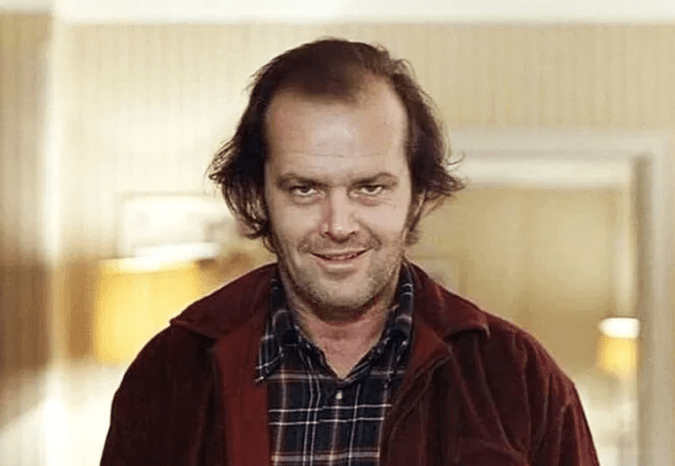
I’d feel a lot better if organizations and the public would assert their rights and demand that governors, as Tom Cruise was required by Jack Nicholson in “A Few Good Men,” to ask nicely. This reminds me of Boston, of all places, meekly submitting in 2013 to a completely illegal demand by police that its citizens stay inside while the search for the Boston Marathon bombings was underway. Fear is a dangerous tool in the hands of the powerful, who have a nasty habit of becoming totalitarians if they sense any lack of resolve among their potential lackeys and victims.
2. Every now and then Jake Tapper’s once significant commitment to honest journalism creeps out of its post-CNN recruitment paralysis. Tapper recently opined on the air that Democratic voters were acting like progressive pundits:
“To be completely frank, I’m getting real 2004 vibes tonight…Democrats want to defeat an incumbent Republican so badly…that they decide which one is electable…and they decide, okay, it’s John Kerry, or in this case it’s Joe Biden… the point is that when you have the Democratic electorate deciding that they are all a bunch of Rachel Maddows and Chris Hayess and the like, that they’re just, you know, progressive pundits and they’re going to pick out who is the best one, maybe they don’t necessarily always know what they’re doing.”
“Hey! Where’s Tapper’s Kool-Aid? Get him a straw, quick!” I assume that within days, a former female guest will reveal that in 2014 Tapper complimented how she looked in her dress and asked, “Are you working out?,” leading to his immediate dismissal.
A fair point made by CNN critics: “I wonder why he didn’t say “Don Lemon and Chris Cuomo?” Continue reading →
Believe it or not, that’s Sarah next to the bear….
To be absolutely transparent, my mind’s made up on this one: I think it’s unethical. However, I admit to be a hard-liner on this issue, which is “The duty of leaders not to debase their positions or former positions for personal gain or ego gratification.”
Let me introduce this horrific cultural episode by saying that I regard the TV show involved, “The Masked Singer,” among the Top Ten Stupidest Shows in the history of network television, and I’ve seen a LOT of network television, far more than is good for me. Its existence is an insult to the public, its taste and intelligence, and the United States of America. Maybe the species too. Adam and Eve.
Now here is the video clip. Consider yourself warned: it cannot be unseen or unheard:
Yes, Sarah Palin dressed up in a rainbow teddy bear suit and rapped “Baby Got Back” on national television.
The lyrics from Sir Mix-a-Lot’s Noel Cowardesque 1992 hit:
Oh, my, God Becky, look at her butt It is so big, she looks like One of those rap guys’ girlfriends. But, ya know, who understands those rap guys? They only talk to her, because, She looks like a total prostitute, ‘kay? I mean, her butt, is just so big I can’t believe it’s just so round, it’s like out there I mean gross, look She’s just so, black
I like big butts and I can not lie You other brothers can’t deny That when a girl walks in with an itty bitty waist And a round thing in your face You get sprung, want to pull up tough ‘Cause you notice that butt was stuffed Deep in the jeans she’s wearing I’m hooked and I can’t stop staring Oh baby, I want to get wit’cha And take your picture My homeboys tried to warn me But with that butt you got makes (me so horny)…
Nice. Classy!
Your Ethics Alarms Ethics Quiz of the Day:
Was Palin’s appearance on “The Masked Singer” icky, funny, or unethical?
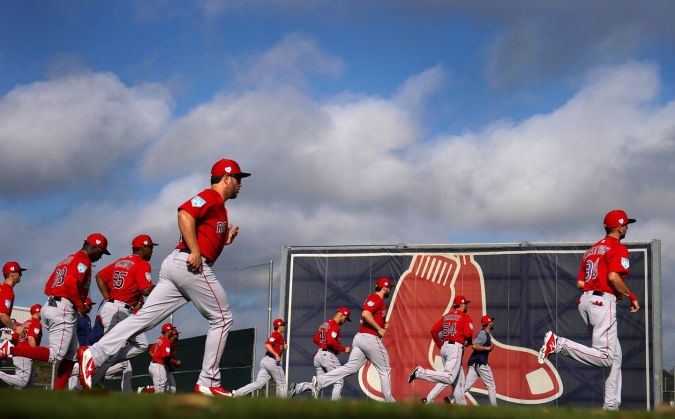
Boy, I wish I was in Fort Myers, at the Red Sox Spring Training camp, instead of at my desk, obsessing…
1. Report from the social media wars: The tone among the Facebook Borg has shifted dramatically. The Trump Hate is as strong as ever, but the lack of enthusiasm over Joe Biden is palpable, and the Bernie Bros. clearly see the writing on the wall. The posts by the more rational infected are full of hopes that Joe will be so weakened by age and dementia that he’ll let “good people” run the show. Most troubling of all are the discouraged Warren fans, who appear to have been permanently disabled. Even the fact that Massachusetts Democrats had reached the unavoidable conclusion that she was a fraud and couldn’t be trusted—for a “Favorite Daughter” of a state to finish third in a state primary is almost unprecedented—can’t penetrate those Trump Derangement hardened skulls. A genuine friend, not a pure Facebook variety, wrote that he had read my “arguments” that Warren was a lying fraud and found them “unpersuasive.” This guy’s a tenured college professor! What I wrote weren’t arguments, they were facts. That the mainstream media didn’t widely publicize those facts—more people know about the President’s typos than know that Warren lied about being “chased around a desk” by a male superior who was in a wheelchair at the time, or her false spin claiming that she had fought for female plaintiffs in a lawsuit where her client was a defendant corporation—is beside the point. The entire period from Trump’s election to the present has been an experiment is selective perception of reality. Every day now, I have to check my ethics alarms to prevent me from posting an intentionally pain-inflicting message that says to the people who have been trading “likes” and “loves” over daily hate-pieces of various levels of truth and have been excoriating anyone who points out the danger inherent to efforts to undo an election:
“Your party is going to lose, and lose ugly. It’s going to lose because it rejected democracy, and behaved disgracefully, dividing the nation while accusing the President of exactly the misconduct they were engaging in themselves. And you, the mob, have applauded and cheered while they did this, attacking anyone who tried to bring rationality to the discussion. You deserve what’s coming. You deserve the misery it will cause you. I’m sure you will blame anyone and anything in sight, but it will be your fault for becoming weak, biased, arrogant, and hysterical. I hope that you will learn from the experience, but everything I have seen, heard and read since November 2016 tells me that you will only get worse—more angry, more resistant to non-conforming views, more doctrinaire and totalitarian in your attitudes. You had the intellect to behave otherwise, but lacked the integrity and courage to resist peer pressure and groupthink. I have no sympathy for you.
2. This is a scam. My wife got an email offer from CVS for a “free gift” if she would fill out a questionnaire. When she prepared to submit it, she discovered that the “shipping fee” for the “gift” would be eight bucks, and would require her to send in all manner of personal information. She deleted the whole thing having wasted 15 minutes she will want back on her deathbed. Our choices are to encourage the government to regulate this abuse of free speech, to find a way to punish the companies who engage in it, or to ignore these devices in sufficiently large numbers that they try something else less obnoxious, or more effective. Continue reading →
If you don’t know what I’m talking about, you should. Frederick is the overly duty-conscious and somewhat dim-witted hero of Gilbert and Sullivan’s “The Pirates of Penzance,” one of the Savoy duo’s so called “Big Three,” the Victorian operettas that have been performed the most over the years. (The other two are “H.M.S Pinafore,” and the currently unfairly besieged—but arguably the best of them all—“The Mikado.”) They aren’t my three favorites, mind you, but like seven of the other G&S masterpieces, they are damned good, and have aged better than most American musicals, especially the Rogers and Hammerstein classics. Poor Frederick was apprenticed to a pirate until his 21st birthday, but due to a cruel twist of fate and legalistic nit-picking, his 21st birthday didn’t arrive until 1940, because he was born on leap year. Today is his 41st birthday, though he is 164 years old.
I apologize for the stupid subtitles in the clip from the movie. Unlike most G&S performers, the diction of Kevin Klein, Rex Smith and Angela Lansbury is excellent.
(I’m hurrying because I’ve learned from cruel experience that traffic on Saturday after 12:30 slows to crawl..)
1. Thus ends Black History Month. I do not favor tribal distinctions in our days and months. It is inherently divisive, and Black History Month smacks of honors affirmative action. The history of black Americans is American history, inextricably intertwined with the history of the rest of us. Our entire history ought to be taught and learned without bias and spin, and no race or ethnic groups should hesitate to take pride in the accomplishments of other Americans regardless of their color or ancestry.
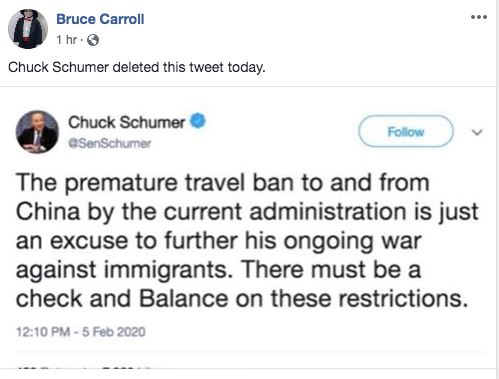
NOTICE of CORRECTION! Item #2 below has now been shown to have been based on a hoax. More after…
2. Res ipsa loquitur:
Obviously the note in Chuck’s tickler file came up: “Today transition from saying Trump was doing too much in response to the Corona virus to saying that he isn’t doing enough.”
What awful, awful hacks these people are.
They are still awful hacks, but I hate being caught by these hoaxes. This one was especially sinister, because the fake tweet is completely consistent with what the Democrats and the news media had been saying about the President’s move to stop travel from China. However, insisting that a faked message is still “true enough” is what Dan Rather did in the scandal that ended his career as a respectable journalist.
We now know that the tweet is a hoax because ProPoblica, a nonprofit journalism organization, maintains a database of tweets deleted by politicians called Politwoops that uses Twitter’s Streaming API to find tweets from politicians that have been deleted. Schumer’s tweet is NOT in the database, thus we know it wasn’t posted.
[T]here are the Tilli Buchanans among us, who want to tear down social norms, not really knowing what the consequences will be over the long term, just for the hell of it. In addition to being irresponsible and disrespectful, they are also lousy citizens.
They are not, however, criminals. She should be able to walk around naked in front of her children, just as we allow parents to engage in all sorts of other dubious practices. That she can doesn’t mean she should, but this is part of a long, long list where we must rely on ethics rather than law.
Facing being placed on a sex offender registry for 10 years, Tilli agreed to a plea deal with her pleading guilty one class B misdemeanor lewdness charge and paying a $600 fine while serving probation. The charge will be dismissed if Buchanan can keep her shirt on for a year.
4. More “The rest of the story,” uber-jerk division. In 2018, Saturday Night Live performer Pete Davidson mocked GOP Congressional candidate Dan Crenshaw for his eyepatch, the result of a combat wound. Davidson said that he looked like “a hitman in a porno film” and dismissed the origin of his disfiguring injury as something he got in “war or whatever.” Veterans, their families and others who don’t usually pay attention to SNL anymore since it has become partisan, shrill, and lazy protested loudly, and Davidson apologized while Crenshaw appeared on a later show, where he was funny, gracious, and forgiving
It was obvious to me (and, I’m sure, Crenshaw) that Davidson was forced to apologize, but it takes a special breed of jerk to come back after he has left the scene of his insults and say so.
In Davidson’s new stand-up special, “Alive from New York,” Davidson, says,
“So I made fun of this guy with an eyepatch and then, like, I kind of got forced to apologize. My roommate thought I should apologize so that I didn’t get shot in the face. People were like, ‘You hate America!’ And I’m like, ‘No, I just didn’t want to be incorrect about how he lost his fucking eye. Is that a crime?! The only thing I did do, which I am guilty of — and I apologize for — is I did make that guy famous and a household name for no reason, right? I did what, like, Ariana Grande did for me, right? I sucked his dick at ‘SNL.'”
This is what you lost your eye for, Dan.
5. You could show this to your Bernie Bros friends, but I doubt they could understand it. At the Foundation for Economic Education, J. Kyle de Vries does an excellent job of explaining the Social Security cheat, and why it has to be reformed. The system no longer makes sense, but the socialist enablers refuse to consider the problem. de Vries writes in part,
Millennials and Generation Z: Do you want to fund my Social Security benefits with higher payroll taxes than I paid in the past? Especially when the likelihood is high that your benefits are not going to be as lucrative as mine?
I am lucky. My Social Security benefits will be funded by you and other workers, and I plan on living to 140. If you are younger, that should concern you. Right now, you and your employer are forced to contribute 12.4 percent of your income into a fund that goes into a black hole, financing some other guy’s retirement. Wouldn’t you rather put that 12.4 percent into a fund you manage?
…Assume a self-employed 25-year-old makes $75,000 this year. Further assume she is required to set aside 12.4 percent of her income into a protected, tax-deferred trust, just as she must do for Social Security. But this is her account, managed by her, just like a 401k plan. If she realizes a 3 percent increase in income each year and can earn 6 percent on a conservative mix of stocks and bonds during her lifetime, her trust will accumulate to over $3,500,000 at age 70. At 8 percent growth, that number will be an astounding $6,142,000.
Would you rather have accumulated these much larger sums to augment your retirement income than get the average $1,500 per month Social Security check issued today? Lesser potential income is just one of the problems with the present system.
…Contrary to popular belief, payroll taxes are not invested in a fund to secure benefits like most other pension plans. Since the beginning, payroll taxes went first to make payments to current retirees with the balance “borrowed” by the feds for spending on things other than Social Security benefits. For most of the program’s history, the amount of payroll taxes the feds received was much higher than the Social Security payments, meaning the feds had a lot of money to spend on other things. Because of demographics, that situation has changed perilously, threatening the future of the Social Security system.
…What all this means is millennials and Gen Zers will see higher taxes for Social Security across the board, perhaps many times. They will also most likely see reductions in promised benefits, especially if they accumulate a lot of money over their working lifetimes.
…Wouldn’t you rather have your own retirement fund you manage yourself instead of the flimsy promise of government IOUs? Increasing payroll taxes today only delays the day of reckoning. The current unfunded liabilities for Social Security are over $34 trillion. Let’s not double down on a failed experiment that will bankrupt our country in the future and leave millions destitute in retirement.
Wouldn’t it be nice if Donald Trump was articulate enough and organized enough to explain this in a debate, or in a national address to the public? Wouldn’t it be nice if young voters would pay attention, and if the news media could report on the issue fairly?
Wouldn’t it be nice if I could fly to Disney World by flapping my arms really hard?
Not thrilled to be up before Virginia’s sunrise, but looking forward to it…
1. It’s sad what happens to Ethics Alarms expatriates...One upon a time, uber-progressive blogger/cartoonist Barry Deutsch, aka Ampersand, was one of the most prolific, open-minded, articulate and reasonable commenters here. Then Barry banned himself because he didn’t like my pointing out that his blog is an echo chamber, after he censored my comment there noting that his SJW throng’s position on the Trayvon Martin-Zimmerman affair was intellectually dishonest. So Barry retreated to his self-made bubble. I check in on him now and then, and that admirable open-mindedness has disappeared in the marinade of relentlessly woke and intolerant fans.
Here’s how bad it is for Barry: this what he wrote on his “Alas! A Blog”recently: “Conservatives are against all immigrants (or at least all non-white immigrants), not just unauthorized immigrants.”
Tragic. Barry Deutsch now believes that anyone who disagrees with his far left world view is a racist. The Ampersand who followed Ethics Alarms would never think such a thing, much less publish it.
2. The trouble with billionaires. The class warfare being fomented by Bernie Sanders and others for a cynical and destructive power grab is an old formula that, when it works, always brings chaos in its wake. Throughout history, it has succeeded more often than basic economics and common sense would dictate in part because so many of the ultra-rich persist in being jerks. Does being a jerk make one more inclined to get rich, or does becoming extremely rich have a tendency to make one a toxic jerk?
That’s a question for the ages, but the behavior of people like billionaires Peter Nygard and Louis Bacon make things easier for class warfare demagogues like Sanders, Elizabeth Warren, and Rep. Ocasio-Cortez, just as it did for Lenin and Robespierre before them. This story, about their absurd and costly feud, illustrates how extreme wealth can permit one’s ethics alarms, not to mention sense of proportion, go dead.
The Bahamian pleasure palace featured a faux Mayan temple, sculptures of smoke-breathing snakes and a disco with a stripper pole. The owner, Peter Nygard, a Canadian fashion executive, showed off his estate on TV shows like “Lifestyles of the Rich and Famous” and threw loud beachfront parties, reveling in the company of teenage girls and young women. Next door, Louis Bacon, an American hedge fund billionaire, presided over an airy retreat with a lawn for croquet. Mr. Bacon preferred hunting alone with a bow and arrow to attending wild parties, and if mentioned at all in the press, was typically described as buttoned-up.
The neighbors had little in common except for extreme wealth and a driveway. But when Mr. Nygard wasn’t allowed to rebuild after a fire, he blamed Mr. Bacon. Since then, the two have been embroiled in an epic battle, spending tens of millions of dollars and filing at least 25 lawsuits in five jurisdictions. Mr. Nygard, 78, has spread stories accusing Mr. Bacon of being an insider trader, murderer and member of the Ku Klux Klan. Mr. Bacon, 63, has accused Mr. Nygard of plotting to kill him.
I’ve been working on accounting ethics, which always slows down my metabolism to Galapagos tortoise levels…
1.Worst lie of the year (so far)…In Winter Park, Florida, Jorge Torres was found dead , zipped into a suitcase. Suspect Sarah Boone insisted that it was all a tragic mistake. They were playing hide and seek, she said, and he just hid too well. A cellphone video, however, caught his cries for help from inside the suitcase, as she said, “That’s what I feel like when you cheat on me!” Boone, however, told police that the wacky couple thought it would be funny if he got inside the suitcase. They were drinking at the time and who hasn’t zipped up a loved one in a suitcase when spirits run high? Unfortunately, Sarah passed out on her bed, and when she woke up hours later, poor Jorge was dead.
That’s her story, and she’s sticking with it.
2. Remember “Baby Peggy”? Probably not, but she was probably the last living link to the silent movie era, and she died this week at 101. She was also one of the earliest examples of the child abuse that became routine in Hollywood. Baby Peggy, real name Peggy-Jean Montgomery, had made about 150 movies by the time she was five-years-old, and was a multi-millionaire at four. As has been the norm with child stars from Peggy through Jackie Coogan to Gary Coleman, Peggy’s parents stole her money and spent it all. They also let her risk life and limb in pursuit of her “art” that she was too young to understand. During her silent-film career, “Baby Peggy” was thrown from a speeding pickup truck, narrowly escaped a horse trampling and survived near-drownings and incineration. Continue reading →
I hope you have the same good fortune wherever you are…
1. What a fun season the Astros are facing...Yesterday, in their first Spring Training game, the Houston Astros were booed by their own “home” fans in West Palm Beach, Florida. They will have an overhwelming amount of pressure on them this year in addition to being pariahs in every ballpark in te American League. If they don’t win their division again, or approach the 100+ wins the team has amassed ever season since 2017, the narrative will be that tis proves that it was the team’s cheating, not its superior talent, that had made them champions. Of course that will be a false conclusion, since there are many factors that could diminish the Astros in 2020, such as the loss of their best pitcher, Gerrit Cole, to free agency.
There were other ethically dubious moves by the Astros yesterday. Although teams are required by an MLB directive to include at least some team regulars in Spring Training games, since spectators are paying substantial amounts to attend, manager Dusty Baker had only minor leaguers in the line-up, apparently wanting to delay and minimize the fan abuse heaped on his team. Thus a line-up of players who had absolutly nothing to do with the sign-stealing that marred the Astros’ 2017 season and World Series victory absorbed the anger of the fans intended for the no-shows.
Meanwhile, ball park personnel confiscated signs brought by some fans to express their disapproval. The signs weren’t obscene or vulgar, just critical, like “Houston” with an asterisk, implying that the Astros’ 2017 World Series title would be forever blemished by the team’s cheating. That sign is telling the undeniable truth.
Can’t have that.
2. Now here’s an old tradition that does not need to be revived...