Morning Ethics Warm-Up, 3/31/2018: The Baseball-Trained Rifleman, The Hockey Hero Accountant, And Some Other Stuff That’s Just Annoying…

Good morning!

1. “The Rifleman” and “Fix the problem.” I recently was interviewed by a graduate student in organizational leadership and ethics. One thing we discussed was how popular culture in America once dedicated itself to teaching ethical values and ethics problem-solving, especially in shows aimed at young audiences. This is not so true any more; indeed, popular culture models unethical conduct at least as often today.

I told my interviewer about recently watching an episode of “The Rifleman,” the early ’60s TV Western about a single father raising his young son while being called upon to use his skill with a rifle to fight for civilization in the harsh frontier.  In the episode, hero Lucas McCain (played by the under-rated Chuck Connors) had to deal with an old friend, now an infamous outlaw, who had come to town. (The ethical conflict between personal loyalty and an individual’s  duty to society was a frequent theme in Westerns.) Lucas was a part-time deputy, and at the climax of the episode, his friend-gone-bad is prepared to ride out of town to escape arrest for his latest crime. Lucas tells him not to leave, and that if he tries to escape, Lucas will have to let his custom-made rifle settle the matter, as usual. (Peace-loving Lucas somehow managed to kill over a hundred men during the run of the series.)  Smirking, his friend (Richard Anderson, later known as the genius behind “The Six Million Dollar Man”), says that he knows his old friend is bluffing. For Lucas owes him a lifetime debt: he once saved “The Rifleman’s” life.  You’re a good man and a fair man, the villain says. “You won’t shoot me. I know you.” Then he mounts his horse , and with a smiling glance back at “The Rifleman,” who is seemingly paralyzed by the ethical conflict, starts to depart. Now his back is all Lucas has to shoot at, doubling the dilemma.  You never shoot a man in the back, an ethical principle that the two officers who killed Stephon Clark somehow missed. We see McCain look at his deadly rifle, then again at the receding horseman. Then, suddenly, he hurls his rifle, knocking his friend off his horse. The stunned man is arrested by the sheriff, and says, lamely, as he’s led away. “I knew you wouldn’t shoot me.”

I love this episode. It teaches that we have to seek the best solution available when we face ethics conflicts, and that this often requires rejecting the binary option presented to us, and finding a way to fix the problem.

Of course, it helped that Chuck Connors used to play for the Dodgers, and could hurl that rifle with the accuracy of Sandy Koufax.

2. Here we go again! Now that anti-gun hysteria is again “in,” thanks to the cynical use of some Parkland students to carry the anti-Second Amendment message without having to accept the accountability adults do when they make ignorant, dishonest, and illogical arguments in public, teachers and school administrators are back to chilling free speech and expression by abusing their students with absurd “no-tolerance” enforcement. At North Carolina’s Roseboro-Salemburg Middle School, for example, a 13-year-old boy in the seventh grade was suspended for two days for drawing  a stick figure holding a gun.

I drew pictures like this—well, I was little better at it—well into my teens. It’s a picture. It isn’t a threat. It isn’t anything sinister, except to hysterics and fanatics without a sense of perspective or proportion—you know, the kind of people who shouldn’t be trusted to mold young minds. “Due to everything happening in the nation, we’re just being extra vigilant about all issues of safety,” said Sampson County Schools’ Superintendent Eric Bracy, an idiot. How does punishing a boy for a drawing make anyone safer? It makes all of us less safe, by pushing  us one step closer to government censorship of speech and thought.

Then we have Zach Cassidento, a high school senior at Amity High Regional School in Connecticut who was suspended and arrestedarrested!—for posting a picture of his birthday gift, an Airsoft gun, on Snapchat. He was not charged, but was suspended for a day from school….for posting, outside of school, on his personal account, the picture of an entirely legal toy gun (It shoots plastic pellets: my son has several of them).

The people who do this kind of thing to children in violation of their rights as Americans are the same people who cheer on David Hogg while signing factually and legally ridiculous petitions. They should not be permitted to teach, and this kind of conduct ought to be punished.

Where is the ACLU? For the organization not to attack these abuses is an abdication of the organization’s mission. Continue reading

Morning Ethics Warm-Up, 3/30/18: Classless


1. Of unethical, and useless, unpaid internships. There is about as a good a summary of what is wrong with unpaid internships at the UConn website as you will find. My only complaint is that the piece, by Henry Zehner, ignores my long-time objection to these positions based on my experiences with various employers who forced me to use out-of-class students in ill-defined roles. (Yes, one of them was the current Secretary of Education.) Zehner mentions that the law requires interns to do substantive work rather than low level office tasks. He doesn’t mention that only the rare intern is able to do tasks “not requiring specialized training.” My experience was that interns usually had negative effects on my time, management and productivity, as I not only had to instruct them, but also often had to re-do whatever work they completed. (Julie and LeeAnn, wherever you are, I don’t mean you.) But as for the young man who was assigned to assemble  my foundation’s annual meeting board books and explained that it took him so long because the “little slips to label the dividers kept falling into the typewriter,” the less said the better.

2. More on the art vs the artist. Last week we discussed the folly of judging art according to the character of the artist, in my post [#3 in a Warm-Up] on the op-ed. “We’ve been too forgiving of unethical artists.”

Here is an example of an artist of disgusting art being found to be disgusting: John Kricfalusi, the creator of the animated “The Ren & Stimpy Show” has been accused by a 37-year old woman of sexually abusing her 20+ years ago, apparently with her consent, but since she was under 18 at the time, such consent is legally meaningless.  So, really, is her late hit, except to gain #MeToo creds. It’s too late to prosecute the cartoonist, and he was remarkably candid about his relationships with teens while he was having them. Kricfalusi had always admitted to his disturbing taste for under-age teenage girls.

Does this old/new information mean that parents should treat “The Ren & Stimpy Show” as taboo, and that channels that feature cartoons should refuse to show it, thus robbing the show’s creator of residuals and income?

No. Kricfalusi’s art has value, if it has value, independent of his own private misconduct. “Lohengrin” is no worse or better because Wagner was a racist and an anti-Semite. The “Alice” books are wonderful, and our culture shouldn’t be robbed of them because Lewis Carroll was creepily obsessed with little girls.

Kricfalusi, for me, is an easy case. I always thought his work was sick and disturbing, and that no parent should allow any child under the age of 13 to watch it. I would feel the same if Kricfalusi was a certified saint. Continue reading

John Wayne Western Ethics: Just Thought I’d Mention This…

“Chisum” is a lesser effort by the Duke for sure; I saw the Western when it came out in 1970, and it made no impression on me at all, apparently. When I watched it again two days ago, almost nothing seemed familiar. There was one scene, however, that raised my eyebrows.

The story is very loosely based on John Chisum (of  Chisum Trail fame) and his involvement in the Lincoln County War of 1878 in the New Mexico Territory. At one point in the story, British rancher and Chisum’s neighbor Henry Tunstall rides to Santa Fe to seek help from Territorial Governor  Sam Axtell in the increasingly tense range war.  Henry does not know that he has been framed for cattle rustling, and when he  is intercepted by two deputies (they are in on the plot, but he doesn’t know that) who accuse him and tell him he is under arrest, he objects strenuously.  Saying he is late, Tunstall starts to reach into a pocket. One of the deputies shoots him dead. The two then plant a gun on Tunstall to back the story that the deputy fired in self defense.

But why did he have to do that? Continue reading

“Melanie Wilkes” Loses Her Defamation Lawsuit…But Was She Right?

A California appellate court yesterday dismissed a defamation lawsuit brought Dame Olivia de Havilland against FX Networks. De Havilland, now 101, is one of the last surviving—and lucid—members of Golden Age Hollywood royalty. Those who are culturally literate know her as Melanie Wilkes, Scarlet’s angelic sister-in-law, in “Gone With The Wind,” Maid Marion in MGM’s definitive “Robin Hood” with Errol Flynn (de Havilland’s most frequent leading man),  my personal favorite, poor Bette Davis’s evil tormentor in “Hush, Hush, Sweet Charlotte,”  and many other roles in an epic career that won her two Academy Awards. (If you don’t know her, get cracking! What’s the matter with you?)

De Havilland had  sued for damages, claiming her portrayal in the Ryan Murphy-produced 2017 docuseries, “Feud: Bette and Joan” about the feud between Davis and Joan Crawford, misappropriated de Havilland carefully nurtured image without her consent, and harmed her reputation by portraying her inaccurately, especially a scene where she is shown referring to her sister, actress Joan Fontaine (“Rebecca,” “Jane Eyre,” “Suspicion”—What is the matter with you?), as a “bitch.”

“When ‘Feud’ was first being publicized, but before it went on the air, I was interested to see how it would portray my dear friend Bette Davis,” de Havilland wrote the New York Times, explaining the suit. “Then friends and family started getting in touch with me, informing me that my identity was actually being represented on the program. No one from Fox had contacted me about this to ask my permission, to request my input, or to see how I felt about it. When I then learned that the Olivia de Havilland character called my sister Joan ‘a bitch’ and gossiped about Bette Davis and Joan Crawford’s personal and private relationship, I was deeply offended.”

“Feud,” she said, represented itself as historically accurate fiction, but falsely portrayed her as a hypocrite “with a public image of being a lady and a private one as a vulgarity-using gossip,” undermining what de Havilland  described as a hard-earned reputation for “honesty, integrity and good manners.” Continue reading

Morning Ethics Warm-Up, 3/24/18: Ethics Musings While Not Marching [UPDATED]

A Good Saturday Morning To All!

[If you had a speech impediment and lisped your “s’s”, would you choose this song as your only solo among the repertoire of your singing group? Why didn’t Karen tell her bother? This has mystified me for decades…]

1  It’s irrational and pointless fury day in D.C. Today hundreds of thousands of intellectually dishonest, ignorant or purely emotional citizens will be doing the equivalent of screaming at the sky to call for “something” to be done about gun violence., because “think of the children.” Yes, I think that’s a fair characterization.

Given the chance to suggest actual measures that would stop the equivalent of the Parkland shooting, one of my usually rational but currently virtue-signalling-to beat-the-band friends really made this pathetic argument in response to a Facebook post that was a shorter, gentler version of what I just posted on Ethics Alarms: ‘Where is your empathy? Would you feel this way if your son had been killed in the Parkland shooting?”

Can you believe that? “How would you feel if you were so emotionally ruined, angry and despairing that you couldn’t think straight?” Why, I believe that I would be so emotionally ruined, angry and despairing that I couldn’t think straight—and thus useless to any serious and objective public policy discussion. As I told my friend, when “Why can’t you be irrationally and emotionally biased like the rest of us?” is your reflex rebuttal, you’ve got nothin.

2. Related: YouTube is banning gun instructional videos. This a part of a growing trend in the online platform world to attempt to constrict information and discourse according to ideology and partisan preferences. There is no more justification for banning how-to videos about guns than there is for banning how-to videos for chain-saws. The social media companies are going to have to be regulated as common carriers, or the right of free speech and access to information will be slowly strangled by these left-wing, high-tech, useful idiots.

3. From the ” Tragic Misunderstandings of the Cognitive Dissonance Scale” files. Lindsay Lohan is the new spokesperson for Lawyer.com. What, O.J. wasn’t available? Continue reading

Morning Ethics Warm-Up, 3/22/18: Nanoo Nanoo, And The Oxford Comma

Good Morning!

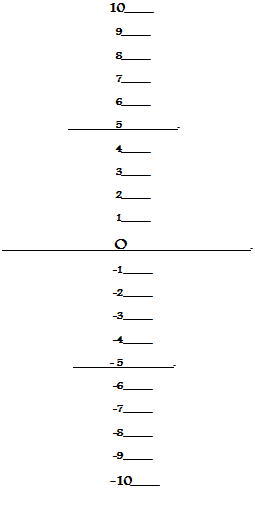
1 . From the “Oh, Come on!” files. As I have mentioned here several times, Georgetown Law professor Professor Paul Butler decided to ambush me with a cheap shot on NPR last year, interjecting “Oh come on!” as I was explaining how a celebrity or prominent man’s inappropriate sexual advances could be initially welcome to a female subordinate, and then later, after, say, the same celebrity is regarded as toxic by that woman’s peer group, what were originally “welcome” (or not unwelcome) attentions could become retroactively unwelcome, prompting an accusation of sexual harassment. I was 100% correct. Last month, in an email exchange on ten topic with the NPR host, I was told that both she and the professor thought I was making excuses for Donald Trump.

Thus does Trump hate and bias make intelligent discourse increasingly difficult. If I had used Al Franken as my example instead of the President, I presume my commentary would not have been kneecapped. But I digress…

In jaw-dropping revelations in a new book coming out in May, actress Pam Dawber and others describe how co-star Robin Williams often treated her and other actresses on the set of “Mork and Mindy.” The book discusses Williams’ “improvisations”…

[M]any of these additions were sexual and directed at the women in the cast, such as when he goosed the actress who played Mindy’s grandmother with a cane.

[Director Howard] Storm said: ‘I’m standing there watching this and I’m thinking, “oh my god” and I just laughed. I thought she was going to turn and say: “How dare you stick a cane in a woman’s ass?” That sweet old lady.’There was nothing lascivious about it, in his mind. It was just Robin being Robin, and he thought it would be funny. He could get away with murder.’

Other times Williams would grab Dawber’s bottom or her breasts simply because he was ‘bored.’ 

‘He’d be doing a paragraph and in the middle of it he would just turn and grab her ass. Or grab a breast. And we’d start again. I’d say, “Robin, there’s nothing in the script that says you grab Pam’s ass.” And he’d say: “Oh, ok,”‘ Storm added.  

Garry Marshall, the producer of the show, said: ‘He would take all his clothes off, he would be standing there totally naked and she was trying to act. His aim in life was to make Pam Dawber blush.’

But Dawber remained unfazed, she admits: ‘I had the grossest things done to me – by him. And I never took offense. I mean I was flashed, humped, bumped, grabbed. I think he probably did it to a lot of people…but it was so much fun.

‘Somehow he had that magic. If you put it on paper you would be appalled. But somehow he had this guileless little thing that he would do – those sparkly eyes. He’d look at you, really playful, like a puppy, all of a sudden. And then he’d grab your tits and then run away. And somehow he could get away with it. It was the Seventies, after all’.

Wait: if it was the 70’s, does that mean that in the parallel universe where Robin Williams has conquered his demons and is running for the U.S. Senate as a Republican (those parallel universes are funky, let me tell you), Dawber couldn’t come out and destroy his candidacy by describing his outrageous behavior? Does it mean everyone would say that she was being unfair, and that she wouldn’t be lionized as another #MeToo hero?

Continue reading

Comment Of The Day: “When Ethics Alarms Don’t Ring: Snapchat Approves A Domestic Abuse Game Ad”

Video games and their effect on societal violence have been mentioned in the comment threads of several recent posts of late, so Michael West’s essay on the topic is especially timely (even if my posting of it is tardy). I am dubious about claims that forms of entertainment warp healthy minds, as I am old enough to have seen a series of modes and genres be condemned from various sides of the political spectrum as turning children into violence-prone monsters. Even the Three Stooges once were fingered as making kids unfeeling sociopaths. I’m also historically astute enough to know dime-novels about bloody Wild Bill Hickock shootouts, pulp novels with half-naked blondes on the cover and  EC comics about shambling, face-eating corpses were similarly accused. My son played “The Godfather” video game, and five earlier versions of the “10 Violent Video Games” the Parenting website says to avoid, all with my blessing.

When my son was 18, he bought a gun, too. I’m not worried. He has many friends, a strong peer group, he has strong ethical values and character, and is kind and thoughtful. That is not to say that every new social influence is different, and that attention must be paid.

Here is Michael West’s Comment of the Day on the post, When Ethics Alarms Don’t Ring: Snapchat Approves A Domestic Abuse Game Ad

Video games have been out nationally for quite a while. Even video games that have abstract versions of violence…like Mario Brothers or Donkey Kong…and I mean old school versions of those games like I used to play on Apple IIe. But for us to seriously contemplate capital V, capital G, capital V Video Game Violence as a force affecting the acculturation of our youths, we ought to fast forward in time specifically to “realistic” video game violence. An estimate that will be off plus or minus a few years, the *mid* 1990s is when our culture saw First Person Shooters enter the market, with early favorites like “Doom” and “Wolfenstein 3D” for desktop computers and ultimately entering the console market. In other words, Video Game Violence is still a young force in our society. This makes measuring its effects a bit problematic.

As we raise our young, they are acculturated through several INPUTS…all of which communicate to some level or another the values that the culture espouses OR worse, inadvertently communicates values the culture notionally DOES NOT espouse, but accidentally promote. In a manner of speaking, “we are what we eat”. My personal take up front is that YES, video game violence, as a subset of ALL informational inputs DOES affect each individual’s acculturation. The real questions are, “how much” and “are it’s effects mitigated by other inputs”?

I would think that for video game violence to start acculturating the young towards violence, they would need to be inundated by it and have few effective counter-acculturating forces in their lives teaching them that wanton and purposeless violence is bad. For the first 20 years of video game violence, my gut tells me we can explain away its effects as having been minimally noticeable without deeply searching each individual or practically non-existent. Children of the early years of video games had plenty of other inputs in their lives as well as outlets for their minds at a vastly greater ratio than the violence int he games…first and foremost active and attentive parents.

That leaves us really with only about 15 years of any generation that could be said to be inundated by truly graphic depictions of limitless violence…most of those age cohorts are still too young to see how they turn out as adults. Again, my gut says that you’d see actual correlations, if they exist, in about another decade. And even then, I don’t think we’ll find a direct causal effect between video game violence and individuals acting on violent tendencies *except in marginal cases*. Continue reading

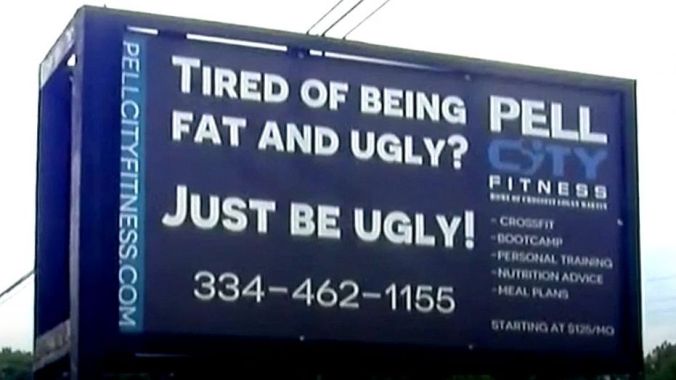
Ethics Review: “Three Billboards Outside Ebbing, Missouri”

I watched last year’s “Three Billboards Outside Ebbing, Missouri,” twice, just to make sure it was the profound ethics movie I thought it was. It is. None of the reviews described it that way, of course. Here is the New York Times:

“The movie opens on low boil with Mildred behind the wheel of her station wagon near three derelict billboards…she uses the billboards to announce her crusade … a way to get things jumping (the investigators, the tale) and splash some foreboding on an outwardly pacific scene. Much of the story involves the ripples of outrage, confusion and buffoonery that the billboards inspire and that soon envelop almost everyone Mildred knows. Months after her daughter’s death, grief has walled her in; isolating and seemingly impenetrable, it is inscribed in the hardness of her gaze and in her grim new identity as a mother of a dead girl. The billboards turn that grief into a weapon, a means of taking on the law and assorted men — a threatening stranger, a vigilante dentist and an abusive ex (John Hawkes) — who collectively suggest another wall that has closed Mildred in….”

None of which addresses what is remarkable about the film, which is that it shows what causes our ethics alarms not to ring—Frances McDormand as Mildred and Sam Rockwell as Dixon, a racist and vicious deputy, in particular demonstrate  what it is like to be driven by non-ethical considerations of the darkest and most passionate sort—and more important, what causes them to start ringing again. Most reviewers described this as a dark and depressing film. The ethics alarms are mostly off again as the film ends, and that is ominous, but its main ethics message is uplifting in many ways. “Three Billboards” teaches us that even broken, ignorant, alienated human beings have the capacity to access their innate instincts for compassion, justice, forgiveness, selflessness and kindness, and even when our ethical selves seem permanently overcome and decisively defeated, they can burst out again, in control, salvaging what’s best about the species.

There is a moment early in “Three Billboards” that signals that it is not only going to show us what monsters anger and grief can transform us into, but also that what George Washington’s list of 110 Rules called “that little spark of celestial fire called conscience” is remarkably resilient.  A sheriff—the ethics compass of the story, played by Woody Harrelson— visits Mildred after her billboard messages embarrass him and roil the town. She is hard and cold as marble as he tries to explain his failure to find her daughter’s rapist/killer, even after he reminds her that he is dying of cancer. Suddenly the sheriff has a violent  spasm: he coughs up blood on himself and Mildred. And we see her fury evaporate in an instant. The compassionate and caring mother she once was emerges, if only for a few moments. ( McDormand is such a superb actress that she pulls off the sudden transition convincingly and movingly: you believe it, though it is like watching Mr. Hyde turn into Dr. Jekyll in the snap of a finger.) Later, when again her fury has been aroused, we see the same woman firebomb the police station and watch implacably as her nemesis deputy burns. A warning: just because the ethics alarms can ring doesn’t mean they are working well enough.

Sam Rockwell’s character also reveals surprisingly that his ethics spark has not been entirely extinguished, again thanks to a catalyst supplied by the sheriff. This transformation caused considerable  criticism of the film among critics and artists in Hollywood, and some attribute the film’s failure to win the Best Picture Oscar to the fact that a racist is redeemed and revealed to have an ethical core. But except for the sociopaths and psychopaths among us, admittedly a disturbingly large group, we all have that ethical core. We have the ethics alarms too, ready to be re-activated, even if they aren’t in perfect working order. Yes, this is  even true of racists. So much of our current political discourse is driven by the false construct that a single belief or a single lapse of reason marks an individual as irredeemable. Its easier to marginalize and demonize them that way. But it isn’t true.

Indeed Ethics Alarms often declares certain conduct and words as signature significance, proving that an individual is unethical because such actions and thoughts are alien to ethical human beings. “Three Billboards Outside Ebbing, Missouri” reminded me that people may be unethical–Mildred and Dixon, the deputy, could never be called ethical, for ethical people don’t set police stations on fire or throw young men out of second story windows, as Dixon does—but that even unethical individuals can find their ethics if you give them a chance.

And if they can find their ethics, so can all of us, and so can society. There is hope.

________________________

Addendum: I cannot leave “Three Billboards” without a salute to one of its most powerful scenes, when Mildred tells a priest why she doesn’t care what he has to say when he comes to her home to admonish her for the messages on the billboards:

Bingo.

When Ethics Alarms Don’t Ring: Snapchat Approves A Domestic Abuse Game Ad

On February 8, 2009, Chris Brown beat up pop megastar and then-girlfriend Rihanna. Five months later, Brown pleaded guilty to a felony assault and was sentenced to community labor, five years probation, and domestic violence counseling. Naturally, someone looking to make a buck off of the millions of ethics dunces who use social media recognized this as an appropriate basis for a game, and paid Snapchat to run their ad, which you can see above.

The “Would You Rather” ad was removed earlier this week, and Snapchat released an apology, saying “The advert was reviewed and approved in error, as it violates our advertising guidelines.” What does “in error” mean in such a case, though? It means “we have erroneously been hiring people at high levels with the ethical sensitivity of mollusks, and upon reflection, this was a miscalculation.” What  deadness of soul and mind could ever ever explain someone, indeed a chain of employees, seeing an ad mocking domestic abuse and reacting by saying, “Great! Put it up and bill ’em!”

Advertising on Snapchat is purchased through a self-serve advertising platform and subject to review,  the company says. Review by incompetents,  creeps and fools, apparently. Unfortunately, they are far from unique.

Rihanna posted a rebuke to Snapchat on Instagram, writing in part, Continue reading

Morning Ethics Warm-Up, 3/14/2018: The “Blotto From A Sleepless Night Fuming About Nobody Stopping That Puppy From Being Stuffed In The United Overhead Luggage Bin” Edition

Good Morning, United!

Where’s that whimpering sound coming from?

Grrrrrrr.

1 Don’t make America stupid, ABC. The new ABC legal drama “For The People” premiered last night, and lost me forever. I can’t trust the writers. In the final moments of the episode, a veteran female defense lawyer was consoling a young lawyer who was upset after losing a case. The older lawyer evoked the memory of a 1951 rookie for the New York Giants, who went hitless in his first Major League games and was devastated. But his manager put him in the line-up again, and he hit a home run in his first at bat, and never stopped hitting.

“Ah,” said the young lawyer, “Willie Mays. The greatest player who ever lived.” The older lawyer nodded sagely.

By no measure was Willie Mays the greatest baseball player. Is this racial politics by series creator Shonda Rhimes? I assume so: there is no other plausible explanation. The odds of two randomly selected baseball fans asserting that Mays was the greatest baseball player would only be more than miniscule if anyone who knows baseball believed that. Willie was the greatest centerfielder of all time, the greatest African-American player of all time, quite possibly the most charismatic and entertaining player to watch of all time, and very possibly the second most gifted baseball player of all time. But he wasn’t the greatest. The best player by every measure, statistical, modern analytics, WAR, JAWS, OPS, contemporary reports and common sense was, of course, Babe Ruth. He was the greatest hitter who ever lived, a great pitcher before that, and no athlete in any sport ever dominated it like Babe did in the Twenties.

Now, any individual can hold an eccentric opinion that Willie was better. But that was not how the assertion was presented. It was presented as an accepted fact that two random baseball fans agreed upon. This is irresponsible misrepresentation. I was trying to think of an equivalent: I think it’s like a TV show having someone quote the Declaration of Independence, and a listener then  say, “Thomas Jefferson. Our greatest President!” as the other individual nods sagely.

2. Four Regans, or, if you prefer, Linda Blair Heads.This is the new Ethics Alarms graphic for unethical media spin. The number of Regans can range from one to four, with four Regans signifying “spinning so furiously her head might fall off.” (If you don’t get the reference, you are seriously deficient in cultural literacy.) The four Regans go to the polar news media spinning yesterday’s special election in Pittsburgh, Pennsylvania, where Democrat Conor Lamb appears to have narrowly won a seat in a Republican stronghold, though the race is still too close to call. Continue reading