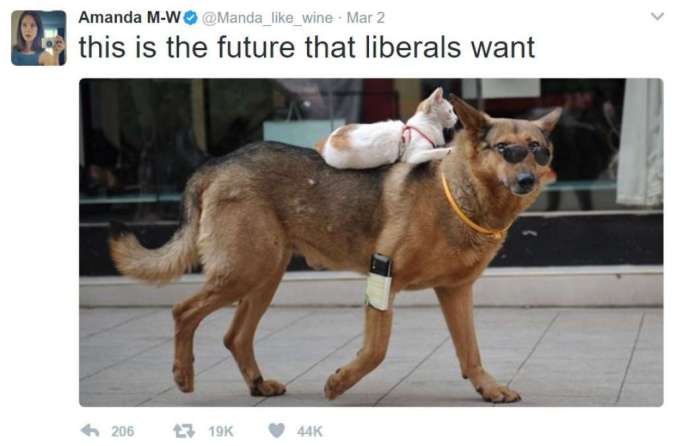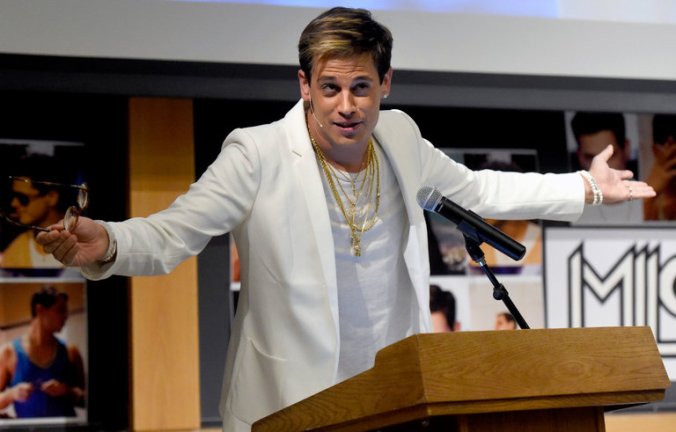
Jerry Seinfeld sends out a tweet to announce new episodes of his Crackle series “Comedians in Cars Getting Coffee,” typically with a joke involving the guest comic’s name. For example, his tweet from two weeks ago read: “New Comedians. Cars Getting Coffee! Cedric The Entertainer. No affiliation with Cedric The Regular Person.” On Thursday, Seinfeld’s tweet used a predictable pun on the name of his guest, as you can see in the screen shot above:
“New! Comedians in Cars Getting Coffee. Lewis Black. Black’s life matters.”
Today’s incredibly easy Ethics Alarms Ethics Quiz of the Day:
New Jersey’s Cherry Hill School District announced last week that the planned Spring student production of the 1998 Broadway musical “Ragtime” would continue to be rehearsed and would proceed, despite the complaints of some parents. However, student actors would not use “nigger” and other racially-charged terms in the original script. They would be changed or eliminated, the District said.
A spokeswoman for the district, said at the time that officials had already been discussing the possibility of censoring the Cherry Hill High School East production when the Cherry Hill African American Civic Association and the NAACP offered their remedies: censorship, political correctness, and bye-bye free expression and thought. Of course this was their reaction. It is simple-minded, but typical of left-wing political correctness tyranny. It doesn’t matter what ideas are being conveyed, certain words cannot be used to convey them. Whenever possible, the heavy boot of government should crush the non-conforming expression. Also “of course,” lily-livered school administrators initially offered no opposition. Duck the controversy, and the real issues be damned. After all, it’s just a high school musical.
Unfortunately, there was the little issue of licensing agreements. “Ragtime” is a work of art, not that the NAACP cares, and artists have a right to control how their work is performed, even in Cherry Hill. The contract under which the school was allowed to produce the show specifies that the script and songs must be performed as written, no exceptions.
The National Coalition Against Censorship, the Dramatists Guild of America, and Arts Integrity Initiative wrote a smart letter urging the school officials “to reconsider and reverse [the] decision to censor “Ragtime”:
“Ragtime’s” use of racial slurs is an historically accurate and necessary aspect of a play that explores race relations in the early 1900s. Ragtime helps minors understand the brutalities of racism and the anger that has historically accumulated, partly through the use of racially offensive language. In contrast, censorship of such language ignores historical reality and presents a falsified, whitewashed view of race relations. Censoring the play will only perpetuate ignorance of our past. While we empathize with concerns about the emotionally disturbing effects of hearing or uttering racial slurs, we believe such concerns are to be resolved through educational means, not by censoring a renowned text. In our experience, similar concerns… have best been confronted through dialogue rather than censorship.”
Then the students, who had been rehearsing the show since before Christmas (no, real high school performers can’t prepare an elaborate show of professional quality in a few days, as “Glee” would have us believe), created a petition on Change.Org: Continue reading →
No Tit for Tat. For eight years, Republicans have been fuming over the 2009 Inauguration crowd booing George W. Bush. Many wondered if the 2017 throng would do the same to Obama.
They did not. Which party is the civil party?
If only it could be a harbinger…Nah. For all the network’s transgressions during the campaign and after, CNN’s coverage throughout the day has been remarkably upbeat, factual, and fair.
The sourest note in the media commentary that I caught was on Fox News, where Juan Williams pronounced Trump’s speech as the likely work of advisor Steve Bannon and described it as far from unifying. I have to wonder about anyone who would listen to that speech and call it divisive, but I’m sure Williams will have company. The speech sure sounded like 100% Trump to me.
The Address. It is refreshing to hear a major political speech from a President that isn’t full of soaring language that obviously is a speechwriter’s creation. I was initially dubious of Trump’s reported decision to write his own Inaugural address, but now that I have heard it, I realize that a President who presented himself to voters as unfiltered and genuine had no other choice, lest he appear false and hypocritical. The speech wasn’t eloquent, but it was, as CNN commentators said, historic. Trump didn’t use “I” but “we.” The speech was non-partisan, equally indicting both parties. One could imagine Bernie Sanders giving the same speech with few changes. The pledges Trump made will be hard to keep: If he knows that, then he was courageous to make them.
If he doesn’t know it, he is frightening naive. We shall see.
Praise is due to Senator Roy Blunt for producing a tight, professional event that every American can be proud of. He did this despite the despicable efforts of the show business community and others to discourage and intimidate talent so that the Inauguration and related events would not be worthy of nation. They failed, he succeeded. Thank-you, Senator.
Like so much of the bitter, nasty, un-American conduct of beaten Hillary supporters, the efforts to harm the event only harmed Trump’s opposition, and alienated everyone else.
Ethics Hero: 16-year-old Jackie Evancho, who gave a heartfelt rendition of the National Anthem after a month of social media abuse and death threats. She sang in a slightly immature but lovely soprano, and unlike Beyoncé four years ago, actually used her own voice, eschewing lip-syncing. At its launching, at least, the Trump Presidency didn’t begin with deception. A young teen tackled a difficult composition under challenging conditions, and pulled it off without resorting to fakery, like the superstar who had the job before her.
Above is the current wax figure used at the museums’ various locales to represent Barack Obama. Boy, I LIKE that guy! Who wouldn’t trust THAT guy?
And here is the newly unveiled effigy of Donald Trump, just in time for his Inauguration…
ARRRGH!!!!
RUUUUUUUNNNNNN!!!
Nice, Madame. Make him look as much like Mussolini, or Alec Baldwin’s ugly SNL impression as possible.
No bias there!
Just out of curiosity, I checked the museum’s representations of Hillary Clinton..
(Looks just like her, don’t you think?)
and Bill…
(To be fair, Wax Monica is just out of the picture…)
…in comparison to that of President George W. Bush.
Hey, what’s unfair about any of those? We all know Republicans are mean and scary, and never smile, right? Democratic leaders, however, are warm, friendly and welcoming!
The Ethics Hero was going to be Jennifer Holliday, the big-voiced diva who stopped the Broadway hit “Dreamgirls” with her solo, “I’m not going.” She had agreed to sing at the Inauguration, telling the Associated Press that her decision to participate was a way to welcome the American people to an event that should be about unifying the country.
Which is, of course, what it is.
She then faced a vicious response to her patriotic and principled decision, with critics calling for a boycott of her music, labeling her as an “Uncle Tom,” promising that her career was over and telling her to kill herself. Most vociferous of the bullies were those from the LGBT community, which has managed to convince itself that Trump is a foe despite the fact that nothing in his speeches or record suggest that he is. But he is a Republican, and thus presumptively biased. (Assuming anyone is less than admirable based on group membership is bigotry, but in this case, the argument goes, good bigotry.)
Rather than stand up for what she said was right, Holiday whined, and capitulated:
“How could I have this much hate spewing at me, and I haven’t even done anything? I guess it’s not like those old days when political views were your own and you had freedom of speech. … We live in a different time now and a decision to go and do something for America is not so clear-cut anymore.”
The way to stand up for the values you claim to embrace, you sniveling coward, is to refuse to be bullied out of supporting them, and opposing the forces of divisiveness and hate.Ah, but performers who are willing to resist peer pressure and the howls of the mob are rarer than Florida panthers, so Jennifer grovelled instead, in a nauseating open letter:
This is the last time I’m going to try to explain why the fair, patriotic, ethical and rational approach to the impending Presidency of Donald Trump is to be supportive of the office and the individual until his actual performance in the job earns just criticism. Attempting to undermine a Presidency at its outset is a self-destructive act, for nobody benefits if a Presidency fails. Wishing for a failed Presidency was what Rush Limbaugh did in 2008, and he was justly condemned for it, substantially by the same people who are saying the same thing he did, but about Donald Trump. They were right then, and they today are just as wrong, and despicable, as Rush was.
I have had numerous debates, on and off Ethics Alarms, with usually reasonable people who take the #NotMyPresident position, which is nonsense on its face. If you are a citizen, Trump is your President. We don’t have, or allow, citizen states. You can dissent, and support political opposition, but you still must obey the laws and be loyal to the nation, which means loyalty to the nation’s elected leadership. Loyalty doesn’t require agreement, but it does require respecting legitimate authority, and seeking what is best for the United States of America. Constitutional crisis is never good for any nation. A crippled government is never good. A leader estranged from the public is never good. Seeking these things is irresponsible and foolish, but more than that, it is dangerous.
In The Caine Mutiny, a film version of the stage drama and novel “The Caine Mutiny Court Martial,” Captain Queeg (Humphrey Bogart), a man whose war-shattered nerves and self-esteem problems have rendered him an erratic and an unpopular officer, falters in his command during a storm. His officers, frightened and already convinced that their captain is unfit for command, mutiny. At their military trial, their defense attorney causes Queeg to have a breakdown on the witness stand, winning the case for the accused mutineers. Later, however, at the post trial victory party, the lawyer, Barney Greenwald (Jose Ferrer), shames his clients. He represented them zealously, but he tells them that they were, in fact, at fault for what occurred on the Caine: Continue reading →
The reactions to Donald Trump’s tweet above were so predictable. Trump-haters are continuing their meltdown, because he used that scary word “enemies,” and imagining political foes being hung by piano wire and shot against a wall…maybe even THE wall. Trump’s fans are cheering, “That’s our guy!” Predictable or not, here is the official Ethics Alarms reaction to what may be Trump’s first tweet destined for the Yale Book of Quotations:
1. Get used to this. He’s not going to stop. I recommend re-reading this post from last year, on the Julie Principle. In fact, heeeeere’s Julie!
2. Oh, let’s get this out of the way: it’s a juvenile, undignified, un-Presidential message, and a deliberately provocative thing to do. It also made me laugh out loud, I have to admit. Really, if you’re going to let this sort of thing drive you crazy, you’re not going to make it through four years. You’re not even going to make it through one. Reserve a padded room. I’m serious. Think about this song, because this is where you’re headed…
It looks like I wasn’t the only one who felt that Peter Cushing was being abused by finding himself in “Rogue One” without his prior consent. Of the late actor being digitally inserted into a role he never agreed to play and deliver lines he never contracted to deliver, I wrote…
The emerging technology raises many ethical issues that didn’t have to be considered before, but when it comes to using a dead actor in a new role, the ethics verdict should be easy. It’s unethical, unless a performer gives informed consent for his image to be used post mortem in this fashion. Presumably, the consent or the lack of it will be part of future negotiations and standard contracts. Actors who agree to have their images used as cyberslaves will also probably want to limit the uses of their names and images.
Cushing’s exploitation and the subsequent death of Carrie Fisher with widespread speculation that she would soon be added to the “Star Wars” franchise’s army of CGI clones have now sounded the alarm loudly. But apparently many actors were already aware of the threat, and taking affirmative action to control their destinies. Continue reading →
First I was going to post an essay about Cinnebon’s humorous tweet above under the title “How Humor Dies.” Our culture is in serious trouble if a clever, playful, obvious joke like this attracts so much criticism that it generates a retraction and an apology.Clearly, there are Political Correctness Furies on the Left and Puritan Scolds on the Right lurking and lying in wait to make any attempt at levity too much of a risk for all but the socially inept or defiantly rude to attempt. I confess, I laughed out loud when I saw Cinnebon’s gag. I thought the company deserved applause, not opprobrium.
Then I thought about it, and decided to make the episode an Ethics Alarms ethics quiz. Does the fact that Cinnebon can be accused of using Carrie Fisher’s tragic death as product promotion outweigh the cleverness of the tweet, or was the joke a natural one for the sticky bun-makers to make? Who better to remind us of all the jokes about Leia’s odd hairstyle when “Star Wars” debuted? Maybe this was one example where the “she would have approved” standard might be more than a rationalization. Is there any doubt that Carrie Fisher would have laughed at Cinnebon’s joke more heartily than anyone?
Fortunately, I thought some more.
I hadn’t realized until just a few minutes ago that the tweet was issued on the day Carrie Fisher died.Ick, and also, yecchh, as well as “Ethics Foul!”
It doesn’t matter how clever, well-executed or funny it was. Krusty the Clown could have told Cinnebon what was wrong with the tweet in a trice, if they had the sense to ask, and Krusty wasn’t a cartoon character.
Some readers were offended that I noted in a comment here that Debbie Reynolds characteristically upstaged her daughter by dying a day after Carrie Fisher, again stealing the spotlight from her daughter. Sorry about that—but it’s true. For most of her life, Reynolds was less than comfortable when she didn’t feel an audience watching her, as Fisher herself complained in her semi-autobiographical novel, “Postcards from the Edge.” Debbie Reynolds shared the life-defining neurosis of many performers: she was happiest when she was being herself for the world to see. Debbie, in fact, was an extreme version of this model. Most such performers are miserable, and recognizably so, when they aren’t performing. Reynolds appeared not to acknowledge that there was a world off-screen.
In “The Unsinkable Debbie Reynolds,” an excellent appreciation of her career today in the New York Times (another good one is this, in “Variety,”and the Times obituary is here.), Anita Gates confirms my assessment. It was hardly a difficult one, for Reynolds radiated her love of performing in everything she did. Here are some excerpts (do read the whole essay), as Gates begins by doubting that we will ever see a show business figure like Debbie Reynolds again in our increasingly cynical culture:
“Who’ll be as plucky? Who’ll work as hard to stay as morally pure? Who the hell is gonna be named Debbie? …We’ve all been happy to be at the movies. She always seemed happy to be in the movies. She never ceased to be thrilled to be herself. Ms. Reynolds, who died Wednesday, didn’t so much act as sell — she sold happiness, she sold pragmatic romance, she sold professional stardom…Ms. Reynolds was, as they say, a trouper. So she did what came naturally to her: She trouped… Ms. Reynolds embraced virtue. She was the least ostensibly neurotic of her peers — a class that included Shirley MacLaine and Doris Day. The movie titles got a lot of that anti-anxious decency across. She played “The Singing Nun,” for heaven’s sake. But she also starred in the 1964 musical “The Unsinkable Molly Brown,” a title whose adjective best explains the full Debbie Reynolds experience: maximum buoyancy…”
When a time came to take a public stand on principle, however, Debbie Reynolds proved that she had her priorities straight. Continue reading →