The O’Bannon Case: A Judge Explains How The Law Requires An Unethical and Corrupt Practice To Be Fair….But It’s Still Unethical and Corrupt

NCAA-ban

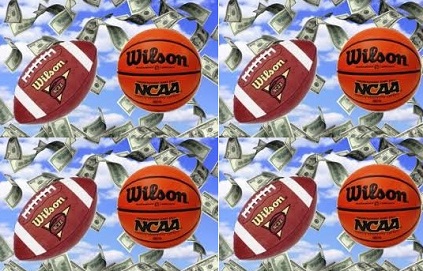
Now that a federal judge has declared the elite student-athletes at big time sports colleges to be what they are…paid mercenaries…and the sports programs at such institutions to be what we always knew they were…cynical sideshows that sacrificed education to greed…will the pubic, the media, educators, and universities now stop this slow-moving ethics train wreck?

Of course not.  If they cared about how high-profile college sports were warping both America’s education and its values, they would have addressed the problem decades ago. They would have stopped it before, for example, schools started paying football and basketball coaches more than any professor. They would have stopped it before prestigious schools gave degrees to graduates whose entire education was a sham, who took ridiculously easy courses and who were held to infantile academic standards, all so rich, fat alumni would continue writing checks. They would have stopped it before a revered football coach held such power in a university that he was able to persuade the school’s leadership to allow a child sexual predator operate on campus.

U.S. District Judge Claudia Wilken, in a 99-page ruling agreeing with the claim of a group of plaintiffs fronted by former UCLA basketball player Ed O’Bannon, issued an injunction against the NCAA from “enforcing any rules or bylaws that would prohibit its member schools and conferences from offering their FBS football or Division I basketball recruits a limited share of the revenues generated from the use of their names, images, and likenesses in addition to a full grant-in-aid.”

The ruling will be appealed, and some of its legal conclusions certainly seem debatable. That is not my concern. The opinion effectively kills the fiction that the semi-literate youths who perform on-the-field heroics to burnish the images of universities and attract huge broadcast fees are what the NCAA, alumni, students , the schools and the media pretend that they are. Now that we know they are not truly students, what persuasive ethical justifications can be given for them to play college sports at all?

My answer?

None. Continue reading →
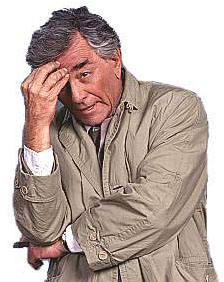
Tony Stewart, the Suspicious Death of Kevin Ward Jr and NASCAR’s Bizarro World Ethics

If a real Columbo was on his case, Tony Stewart might be in trouble.

If a real Columbo was on his case, Tony Stewart might be in trouble.

The word “ethics” and NASCAR should never be uttered in the same sentence without irony. After all, the sport arose out of the exploits of outlaw bootleggers. The current billion dollar sport’s culture regards cheating as “breaking rules and getting caught doing it.” The fact that the team manager of one of the sport’s biggest stars would see no reason for his meal-ticket not to compete today just because he was being investigated for what might have been a mid-race homicide yesterday shouldn’t shock anyone.

In case you missed it Saturday (I did, having a visceral aversion to NASCAR stronger than my dislike of nightcrawlers), NASCAR superstar Tony Stewart drove his car into twenty-year-old driver Kevin Ward Jr., killing him, during a dirt-track race at Canandaigua Motorsports Park  in upstate New York. Ward’s car and Stewart’s car had swiped each other during the race, disabling Ward’s vehicle. Ward left his car and was walking on a track with the caution flag out, waving his arms and pointing at Stewart. One car swerved to avoid Ward, but Stewart’s hit him, injuring him fatally. Until the media and public began to register its objections, Stewart was preparing to race today as if nothing had happened. As recently as this morning, Stewart team manager Greg Zipadelli called it “business as usual.”

It’s business as usual in a culture where a participant who just killed someone in public under suspicious circumstances sees no reason to show, or even fake, any remorse or contrition whatsoever. Here’s the latest entry on Tony Stewart’s website, at least as I write this:

“Thanks to everyone who participated in this week’s edition of “Tony Trivia.” This week’s answer: There’s no track on the circuit where Tony Stewart is more dominant than at Watkins Glen International.”

[UPDATE: At 1:pm Sunday, Stewart finally posted the statement about the accident that is now up on the site. Note that he says nothing about his part in the accident at all. It could be about any NASCAR accident, anywhere.]

Call me a silly sentimentalist, but if I ran down another racer and killed him, I would make certain that a public statement expressing sorrow and regret at the incident would be up on my “official website” before the first ESPN headline was written about the incident. Meanwhile, why would NASCAR allow a racer to compete after an incident like this? Oh, that’s right: because the only ethics in NASCAR involve making money, protecting its stars, winning races, and keeping the fans entertained. After all, having Stewart race today would be a great story. Will he kill again? Will any driver have the guts to point at him this time?

Yes, it’s Bizarro World ethics again, another culture with inverted values like the fictional cube planet in Superman comics, where idiotic clones of Superman and Lois Lane think, live and speak illogically. Continue reading →

Woody Allen, James Shigata, And Diversity Casting Ethics

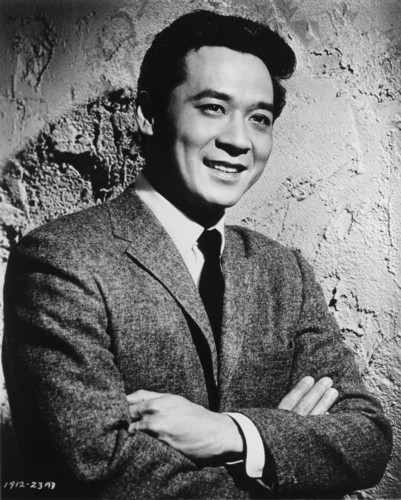
You have no idea who this is, do you? Well, it shouldn't have turned out  that way...

You have no idea who this is, do you? Well, it shouldn’t have turned out that way…

I’m sure you heard about James Garner’s recent death, but were you aware of James Shigata’s passing? Shigata, who died July 28 at the age of 85, was a contemporary of Garner’s, a superb actor, and like Garner, a leading man with leading man looks. James Shigata, however, was of Asian descent, though American through and through, and never escaped the perceived limitations of the shape of his eyes. Though he had a starring role in the hit film adaption of  the Rodgers and Hammerstein musical “Flower Drum Song” and routinely received critical acclaim for all of his film work, but though he got roles on television through the ’80s, he never was able to break through the typecasting straightjacket that deemed him only suitable for “Asian” roles. If you remember him as all, it is probably as the brave Japanese executive shot by Allan Rickman in “Die Hard.”

I thought about Shigata when I read a piece in Salon, noting that director Woody Allen didn’t cast African-Americans in his movies, and that his explanation why didn’t justify the neglect. Prachi Gupta writes, Continue reading →

“The Strain” Ethics: Feminism, Sophie’s Choices and Moral Cowardice

The-Strain-Vampires

The FX cable networks ultra-creepy, disturbing and often disgusting series “The Strain” has begun raising ethics issues, as good science fiction (this is a horror-science fiction hybrid) is wont to do. The last episode, “It’s Not For Everyone” provided its characters with one ethical dilemma after another. [SPOILER ALERT!!] Arguably, all of them were botched. Continue reading →

Zombie Ethics, Spoiling Things For Everyone, And The Barn Door Fallacy

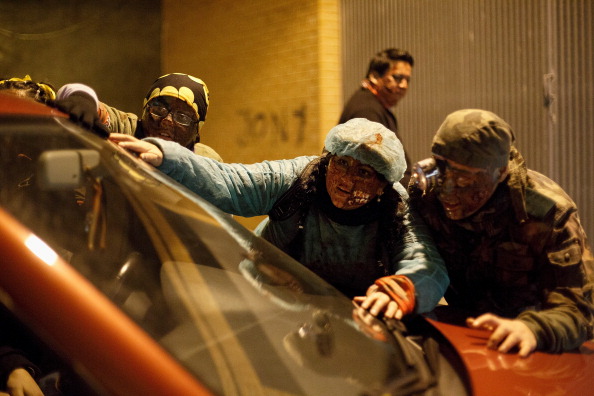
With so many terrible news stories going on around the world, it is not surprising that a bumper crop of strange and stupid ones this week went almost unnoticed. In Indiana, a truck crashed and spilled 45,000 pounds of butter, whipped cream and other dairy products on an interstate. In the skies, an elderly woman went berserk on an airplane and began beating everyone is sight with her artificial leg. This, however, wins the prize: the annual Comic Con  “Zombie Walk” in San Diego went horribly wrong when a group of rogue zombie portrayers, dressed like rotting corpses and moaning, carried their method acting too far and swarmed a car containing a family with young children—a deaf family with deaf children. Ignoring the obvious alarm and terror on the faces of the car’s occupants, the Walking Dead Wannabes pounded on the car, broke its windshield, and one zombie jumped onto the hood. At that point the driver panicked, and tried to pull away from the crowd, running down a 64-year-old woman who was seriously injured as a result. Continue reading →

[Update] Mission Accomplished, NPR: Classic American Folk Song Censored

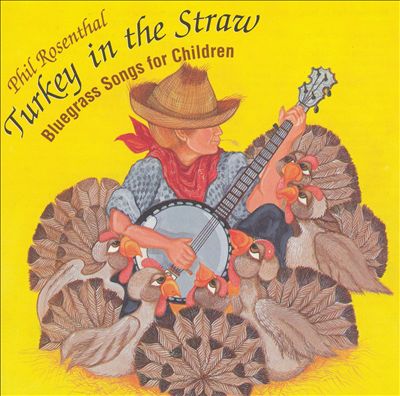
turkey in the straw

In May, National Public Radio carried an essay arguing that the old American folk tune “Turkey in the Straw,” long the melody of choice for ice cream trucks, was really “horribly racist.” Of course, a tune can’t be racist unless it is intended to communicate a racist message, which is impossible if nobody who hears the music discerns racial animus. NPR took care of that in a hurry. As soon as that new bit of imaginary racism surfaced, I knew that this grand old tune, a standard for square dances, country fiddlers, blue-grass bands and of course, the Good Humor truck, was on the way to oblivion. I wrote..

“You know the next step, though, because it is so familiar. Some race-huckster…will seize on NPR’s piece, and organize a Good Humor boycott, and the weak and principle-free corporate executives will fold immediately, issue an apology, and change the tune played by the trucks…”

Shortly after the appearance of the NPR piece and its progeny, Audi began running a TV ad that involved an ice cream truck playing…”Turkey in the Straw.” Someone, I don’t know who, maybe my predicted race-huckster, maybe some internal political correctness watch-dog, maybe an NPR fan, intervened, and now, “Turkey in the Straw” is gone, replaced by  the melody of “Pop Goes the Weasel.”

Mission accomplished, Race Grievance Hit Squad, NPR, Cultural Censors! American musical culture heritage is diminished, and a piece of music that entertained Americans of all races for centuries is on the way to extinction. You must be so proud.

I’m curious: what’s next on your hit list, “Huckleberry Finn”?

Oh, NO!!! “The Mikado” Ethics Again (Political Correctness Division)!

[Here…listen to this while you read the post.]

I am apparently the official protector of Gilbert and Sullivan’s “The Mikado” from ridiculous accusations of ethics offenses, so once again, I will charge into the breach. No thanks needed, Mr. Gilbert, Sir Arthur—I owe you debts that can never be repaid.

In a brain-endangering op-ed for the Seattle Times, expresses the opinion that the operetta is a “racial caricature,” and thus “every snap of the fan was a slap in the face.” The nature of the complaint has old origins: the original show in 1885 nearly caused an international incident, as Japan registered an official complaint to Great Britain claiming a grievous insult to its people. W.S. Gilbert, who was skilled at such things (a few years later he stifled French indignation over a song in “Ruddigore” that pretended to make fun of the French while actually ridiculing British bravado), explained that “The Mikado” in no way ridicules anything about Japan or its people, but is entirely a witty and original satire on everything British. This was true then, and is true now. Then, however, people, including the Victorian era Japanese, were able to see distinctions, and were not seeking victim status and leave to play public censor under the authority conferred by political correctness. Today, people like Ms. Chan are not so easily calmed.

Thus is art harmed, entertainment stifled, laughter stilled and music forgotten. A good argument could be made that “The Mikado” is the greatest musical comedy entertainment ever written.* It certainly caused the biggest international sensation (the closest rival is another Gilbert and Sullivan classic, “H.M.S. Pinafore”): it is estimated that by the end of 1885, at least 150 companies in Europe and the U.S. were producing the satire. As recently as the 1960s, it was credibly claimed that a “Mikado” was going on somewhere in the world every minute of the day.

The show is fun in every respect: comedy, music, lyrics, satire, characters. It is also fun to act in and produce, for children as well as adults. Unfortunately, several factors have led to the gradual scarcity of productions in recent years, from the cyclical (Gilbert and Sullivan go out of style, but always come back) to the ridiculous ( it seems like every production has to cope with some absurd controversy, like the 2011 Montana production that was accused of threatening Sarah Palin’s life). Political correctness aversion has been the biggest factor in making the very best G&S show rare while productions of Broadway musical junk flourish, however. Since the characters are supposedly “Japanese,” shouldn’t all the singers be Asian? Isn’t Asian make-up offensive like blackface? Oh, hell, let’s just do “The Pirates of Penzance.”

From Ms. Chan: Continue reading →

Ethics Lessons From An Ethical Life: James Garner, 1928-2014

Brett_Maverick_-_James_Garner

To me, James Garner will always be Bret Maverick, his black hat worn girlishly on the back of his head, or “The Scrounger” in “The Great Escape,” a role modeled after Garner’s real-life exploits in the military. For some reason Garner’s aging through the years—his health issues ranged from a heart by-pass to knee replacements and several strokes—bothered me more than that of most stars from my youth. His death bothers me more. James Garner always struck me as a someone who should be perpetually young. Of course, I feel the same way about myself.

By all accounts from contemporaries, fans and colleagues, he was a decent, fair and usually amiable man who never let stardom turn him into a monster, as so many do. He had a single, long-lasting marriage and a stable family; he was not fodder for tabloids with affairs, illegitimate children, drug abuse or DUI arrests. He did apparently have a penchant for punching people in the nose who insulted him to his face, a habit about which he was unapologetic. Continue reading →

John Travolta, Carrie Fisher, and The Ethics of Outing

Mr. and Mrs. John Travolta

Mr. and Mrs. John Travolta

Should it matter if John Travolta is gay? It shouldn’t, no. To say it shouldn’t, however, is not to prove that it doesn’t. In his industry, for all its liberal and progressive grandstanding, the perceived sexuality of leading men does matter, because it is believed that it affects the bottom line. Most important of all, John Travolta doesn’t want the public to know/believe/think that he’s gay.

That alone ends the story, in ethics terms. Revealing this aspect of a private life that the actor has chosen to keep private is entirely his decision to make, and nobody should force him to make it, or make it for him. Therefore, what did actress Carrie Fisher, Hollywood kid, writer, “Star Wars” icon, and former bride of a gay man, think she was doing when she told the Advocate, in response to a question about Travolta’s legal maneuvers against a website that published a story about his alleged gay lifestyle…

“Wow! I mean, my feeling about John has always been that we know and we don’t care. Look, I’m sorry that he’s uncomfortable with it, and that’s all I can say.”

Continue reading →

A Proposed Guide To Spoiler Ethics

"It SINKS??? You spoiled the ending!!!"

“It SINKS??? You spoiled the ending!!!”

I was just admonished on Facebook by a friend (a real friend, not just the Facebook variety), for referencing the end of the last episode of Season One of “Orange is the New Black.”  He hadn’t finished viewing the season yet, and this was a breach of spoiler ethics. Or was it?

Ever since I encountered for real someone who was angry with me for “spoiling” the end of “Thirteen Days,” ( “Yes, World War III started and everybody died”), I have been dubious about spoiler etiquette. The advent of DVDs and Netflix has made this all the more annoying. If I’m in a group of five, and one individual hasn’t kept up with “House of Cards,” are the rest of us obligated to censor our discussion? As a devotee and fanatic devourer of popular culture, I admit that my first instinct is to say, “Keep up, get literate, or pay the price.” If I actually live by that rule, however, I will be a walking, talking, writing, spoiler machine.

Chuck Klosterman, “The Ethicist” in the world of the New York Times, recently pronounced himself an anti-spoiler absolutist:

“I’m an anti-spoiler fascist. I don’t believe that any conversation, review or sardonic tweet about a given TV show is more valuable than protecting an individual’s opportunity to experience the episode itself (and to watch it within the context for which it was designed). I’ve never heard a pro-spoiler argument that wasn’t fundamentally absurd.”

Even Klosterman, however, excepted sporting events (the question posed involved mentioning World Cup scores to a friend who was annoyed that the game had been “spoiled” for him) from his fascism, writing, reasonably:

“I must concede that live, unrehearsed events are not subject to “spoiler” embargoes A live event is a form of breaking news. It’s not just entertainment; it’s the first imprint of living history. …Because this guy is your buddy, you might want to avoid discussing the games’ outcomes out of common courtesy — but not out of any moral obligation. It’s his own responsibility to keep himself in the dark about current events.”

For once I agree with Chuck. But what are reasonable ethics rules for dealing with the other kind of spoiler, involving literature and entertainment?

Luckily, this is not new territory, though it is evolving territory. The underlying ethical principles include fairness, trust, consideration, compassion, and empathy, which means that the Golden Rule is also involved.

Back in 2010, an erudite blogger calling himself The Reading Ape proposed a draft “Guide to Responsible Spoiling.” That blog is defunct; the promised successor is not around, and so far, I haven’t been able to discover who the Ape is. Whoever he is (Oh Aaaaape! Come back, Ape!) , he did a very good job, though some tweeks might  improve his work, especially in light of the emergence of Netflix.  (I have edited it slightly, not substantively…I hope he doesn’t mind, or if he does, that he’s not a big ape.) His approach is to frame the problem as an ethical conflict, in which two competing ethics principles must be balanced. I think that’s right.

Here is his “draft”—what do you think?

“A Brief Guide to Responsible Spoiling”

by The Reading Ape (2010)

The objective is to balance two ethical principles:

I. The Right to Surprise: The inherent right of any viewer or reader to experience the pleasure of not knowing what’s
going to happen next.

II. The Right to Debate: The inherent right of any viewer or reader to engage in public discourse about the content of
a given work of narrative art.

Part 1: When Spoiling is Fair Game

In the following circumstances, one can discuss crucial plot details and reveal endings with a clear conscience. Continue reading →