Natasha Leggero’s Stand: Protecting The Jester’s Privilege


"Sing what you like, Fool. Just make sure I laugh."

“Sing what you like, Fool. Just make sure I laugh.”

In days of old when knights were bold, it is said, the King’s Fool was able to safely say outrageous, disrespectful things to the sovereign that might get anyone else drawn and quartered. This lucky exemption came to be known as the Jester’s Privilege, and it existed, and exists, for valid reasons. Humor, satire and all the other permutations of comedy are essential to societal sanity, and it makes sense to give the broadest discretion to practitioners of the craft in their efforts to provoke laughter—which is, as Reader’s Digest still reminds us monthly, “the best medicine.” That means that comics should not fear decapitation if their inspiration of the moment fails to provoke the desired mirth, or touches an audience member’s sensitive areas. In addition, the jester is sometimes able to expose a truth that will not be reached any other way.

It sounds like a good rule, and it is a good rule, but as with most ethics-related rules, applying it is difficult. Who gets the Jester’s Privilege…only professional comics, or does it apply to amateurs too? What about non-jesters just trying to be funny? “It was just a joke!” is a classic excuse invoked by insensitive and vicious people, including politicians, when they say something outrageous, as they try to use the privilege without a license, and in so doing, make it less effective for the humorists who really need its protection. Not everyone should assume that they have the full armor of the Jester’s Privilege. Mockery and ridicule are too often used as political weapons of targeted destruction.

Should some subjects be exempt from the Jester’s Privilege? The official position of comics, comedians, wags and wits has long been “No,” but even in Ye Olde Days, jesters sometimes went too far, and ended up with their heads on pikes. The problem any humorless king had after doing this, of course, was finding a jester willing to hazard a joke more edgy than “Why did the king cross the road?” For that reason, I think it’s vital that the Jester’s Privilege be strong and a near absolute. The sin that matters is not being funny, which means topics of unusual sensitivity take care of themselves.For centuries, for example, comics imitated and mocked those afflicted with speech impediments, especially stuttering, with big laughs guaranteed. Somewhere along the line, though, Porky Pig stopped being funny. The absence of laughs was enough to retire him; no heads had to roll.

On NBC’s New Year’s Eve show, the following exchange occurred between host Carson Daly, comic actress Jane Lynch and rising comedienne Natasha Leggero:

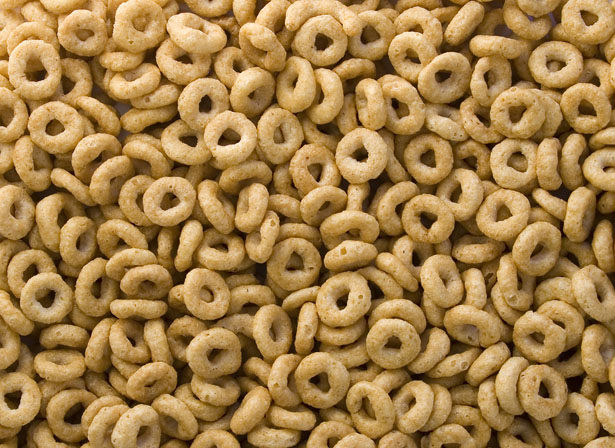
CARSON DALY: SpaghettiOs on Pearl Harbor Day, they sent out a tweet featuring their mascot holding an American flag asking people to quote “take a moment to remember #PearlHarbor with us.” It offended a lot of people, corporations glomming on to, you know, sentimental American historic traditions, seemingly looking for people in business. It wasn’t good. But you were offended for another reason.

JANE LYNCH: I’m offended because they were referring to SpaghettiOs as pasta.

NATASHA LEGGERO: I mean, it sucks that the only survivors of Pearl Harbor are being mocked by the only food they can still chew. It’s just sad.

Hilarity ensued, as the NBC gang laughed uproariously. Almost immediately, Leggero was getting flamed all over the social media and the wbs for denigrating the Greatest Generation. Steve Martin, I assume, would have humbled himself and apologized immediately, but not Leggero. Continue reading

Shia LaBeouf, Plagiarism Addict, With Much Worse To Come

Shia past and present, with apology...

The child star past and present, with apology…

Actor Shia LaBeouf, known to Disney Channel aficionados as the annoying little brother on “Even Stevens” and to movie fans as Indiana Jones’ son and the Transformers Guy, is so much more, and not in a good way. His rapidly expanding list of reckless and socially-clueless episodes, including the obligatory misconduct behind the wheel of an expensive car, signals that he may be the new Lindsay Lohan, a talented former child-star raised to adulthood without basic life-skills, respect for others, and an appreciation of the difference between right and wrong. This is a tragic scenario that we are cursed to witness again and again—we saw it in 2013 in the increasingly obnoxious and desperate conduct of pop star Justin Bieber. Give a child wealth, power and adulation without first imbuing him or her with values, discipline and humility and what do you get? A menace.

As LaBeouf’s acting career has waned with his growing reputation as an untrustworthy (and sometimes violent) jerk, he has refashioned himself into an aspiring artist. Unfortunately, he lacks some basic traits of successful artists, like integrity and creativity. His inclination, being raised, like most child stars, in an unstable environment by self-absorbed and dysfunctional parents, is to cheat. In 2012, LaBeouf attached his name to three short graphic novels and a webcomic series. This year, we learned that at least two of the graphic novels contained text plagiarized from other writers. Then LaBeouf attached his name as writer to the short film (which he also directed) called “HowardCantour.com,” which was unveiled at the Cannes Film Festival and received some praise there. The  short, about an online film critic, included a strong resemblance to Daniel Clowes’ 2007 comic “Justin M. Damiano,” as well as large sections of dialogue directly lifted from it. No one picked up on the plagiarism until LaBeouf  released his film online.  Continue reading

The Fifth Annual Ethics Alarms Awards: The Best of Ethics 2013

Ethics Story 2013

I decided to start with the Best in Ethics this year, in contrast to other years, on the theory that it would get things off to a positive start in 2014. What it did, instead, was make me realize how negative Ethics Alarms was in 2013. Either there wasn’t much positive going on in ethics, or I wasn’t seeing it. My thanks to those of you who send me nominations for Ethics Heroes (and other stories); even when I don’t write about them, they are valuable. Please keep them coming. In the meantime, I pledge to try to keep the jaundice out of my eye in 2014. Things just can’t be as dire as they seemed last year.

Could they?

Here are the 2013 Ethics Alarms Awards for the Best in Ethics:

Most Important Ethical Act of the Year:

The U.S. Supreme Court declared the Defense of Marriage Act unconstitutional, paving the way for the universal legalization of gay marriage. Yes, it was a legal decision, but it was also based, as all such culturally important decisions are, on a societal recognition that what was once thought to be wrong and immoral was, in fact, not. This is ethics, an ongoing process of enlightenment and wisdom about what is right and wrong, and the U.S. Supreme Court did its part. Continue reading

Ethics Hero: “Ludo,” Under-Employed Law Grad Blogger

True Grit - Reminds me of me

As Rooster Cogburn (John Wayne) says of plucky Maddy Ross (Kim Darby) in the original, and best, film version of “True Grit,” Ludo “reminds me of me.”

Naturally, I admire him.

Ludo is, in his own words, ” a recent law school graduate and aspiring writer from Southern California. He is currently overeducated and underemployed, working two jobs and keeping sane only by writing down the stories of the crazy stuff happening to him.  He is currently working on his first book, a collection of stories from his days driving a taxi in Orange County….” He is beginning to get some publicity thanks to his blog, Law Grad Working Retail, which provides sometimes hilarious accounts of his current existence as an over-educated, presumed automatic admittee to America’s powerful and elite presumably thrust into life the way most of America lives it.

Do not lump Ludo with “Nando” and the other bitter, unemployed or under-employed recent law grads who have had their ire aroused by my observations about them on Ethics Alarms   (also here). He is doing exactly what he should be doing, using his unique talents to open up new opportunities while presenting himself to the world of law and elsewhere as a likely asset. As he writes in a recent post rebutting criticism of his blog… Continue reading

Before Christmas Gets Away: A Brief Note On The Most Insidious Christmas Song Of All

Drummer Boy

In response to my post about the decline of Christmas which included some comments on  the dearth of new religion-themed Christmas songs over the last half-century, some readers, on and off site, have pointed me to the 1977  duet between Bing Crosby and David Bowie from Bing’s last (and posthumously broadcast) TV Christmas special, where Bing sang “The Little Drummer Boy” (yechh) and Bowie sang some doggerel about world peace in counterpoint. Aesthetically, as one who yields to no one in admiration for the copious talents of Der Bingle,  I found the song atrocious when I saw it. Philosophically, politically and ethically, however, it is even worse.

Here are the lyrics of Bowie’s section: Continue reading

Bob Newhart, Legatus And GLAAD: “What’s Going On Here?” Is Tricky To Answer

"Hey, Bob---What's going on here?"

“Hey, Bob—What’s going on here?”

The news item about comedian Bob Newhart cancelling an appearance for the Catholic executives networking group Legatus under pressure from GLAAD is fascinating.

From the perspective of Ethics Alarms, it illustrates a peculiar phenomenon I experience often, where a prominent story seems to have been designed by the Ethics Gods specifically to combine and coalesce several issues that have been discussed here recently. For Bob’s travails neatly touch on the issues of pro-gay  advocacy groups attempting to restrict expression they disagree with( The Phil Robertson-A&E Affair, Dec. 19), a comedian being pressured to alter the course of his comedy (Steve Martin’s Tweet Retreat, Dec. 23) and an entertainment figure being criticized for the activities of his audience (Mariah’s Dirty Money, Dec. 23). You would think I could analyze the Newhart controversy by just sticking my conclusions from those recent posts, plus some of the more illuminating reader comments, into my Ethics-O-Tron, and it would spit out the verdict promptly.

It doesn’t work that way, at least in this instance, and that prompts the other observation. In most ethics problems, the starting point is the question, “What’s going on here?”, which forces us to determine the factual and ethical context of the choices made by the participants. Here, the question can be framed  several diverging ways, leading to different assessments of the ethics involved. Thus, asking “What’s going on here?” in the Bob Newhart Episode, we might get: Continue reading

There May Not Be A War On Christmas, But Whatever It Is, Christmas Is Losing

??????????????????????????????????????????

I don’t think it’s my imagination, or that I’m watching too much Bill O’Reilly (since I almost never watch Bill O’Reilly), but it became very clear to me this year that Christmas, as a society-wide cultural convergence in America, is losing its grip.

The reasons are varied and many, and to pick out any in particular one would betray my own biases. But I am a fairly obsessive observer of the popular culture, and there was markedly less Christmas this year in every way. Religious references to the Christmas story—the manger, the Wise Men, the Star of Bethlehem and the rest, are almost invisible outside of church. On television, that part of Christmas is taboo, apparently; on radio too, traditional carols, which once were standard fare, whether sung by pop singers like Bing Crosby or classical artists, are mostly relegated to the classical music channels. On the other stations, there was less Christmas music than I can ever recall, and perhaps because of that, I was very conscious of how dated virtually all of it is. The last non-frivolous Christmas standard to enter the playlist was 1962’s “Do You Hear What I Hear?, ” and the other newer ones  are either songs about romance using Christmas as a backdrop, anti-Christmas novelties (“Grandma Got Run Over By  A Reindeer”), or just lousy.

Meanwhile, listening to the parade of pop yule classics is an exercise in morbidity. Almost all of them are sung by dead artists that no one under the age of thirty (or forty?) could have ever heard or seen perform live. Bing, Dean Martin, Karen Carpenter, Andy Williams, Burl Ives, Gene Autry, Judy Garland, Nat King Cole, Mel Torme, Frank Sinatra—Andy just left us, but most of the rest, with the lingering exceptions of Johnny Mathis and Harry Belafonte, are not merely dead, but long dead, like Marley. No one has taken their place in this genre, and that means that it’s a dying genre.

It is obvious that Christmas movies are being run on television less than ever before, too. It was once impossible to avoid encountering several versions of “A Christmas Carol,” and sometimes the same one would keep popping up, annoyingly so. Not any more. “It’s A Wonderful Life” had its annual showing, and I stumbled upon “White Christmas” a couple of times, but the pickings were slim.   The lousy Richard Attenborough “Miracle on 34th Street’ turned up; Turner Classics ran through most of the old Christmas classics once, but you had to look for them. There haven’t been any new Christmas movies from Hollywood that have made the grade for a very long time: with the exception of the first “The Santa Clause,” what Hollywood has been churning out are more or less bitter comedies (“Christmas With The Kranks,” “Jingle All The Way,” “Bad Santa,” “Christmas Vacation”–even the “Home Alone” films) that portray Christmas as suburban hell.

Then there are the wan or missing town hall and town center Christmas displays (Gotta watch out for those law suits), the tasteless Christmas TV commercials (the men in boxers jingling their “bells” is gross, in my opinion), and the hesitation you hear in strangers’ voices as they try to guess whether “Merry Christmas” will offend you or not.  I used to encounter carolers several times every Christmas, in shopping malls if nowhere else. The malls are disappearing, and kids don’t go caroling any more. They don’t know carols any more, because if their school teaches them one (because it’s a lovely song) some fanatic will raise a stink and claim its religious indoctrination.  Children, in a more innocent, less cynical age, were allowed to believe in Santa Claus well past the age of 5. (I was 26 before I knew the truth.) No longer. Christmas just feels half-hearted, uncertain, unenthusiastic now. Forced. Dying.

It was a season culminating in a day in which a whole culture, or most of it, engaged in loving deeds, celebrated ethical values, thought the best of their neighbors and species, and tried to make each other happy and hopeful, and perhaps reverent and whimsical too.  I think it was a healthy phenomenon, and I think we will be the worse for its demise. All of us…even those who have worked so diligently and self-righteously to bring it to this diminished state.

But anyway,

Merry Christmas.

For what it’s worth.

________________________________

Graphic: Stacy Gustafson

Hall of Fame Ethics… Rock and Roll Hall of Fame,That Is

Cat Stevens

Conservative blogress Kathy Shaidle pleaded with voters not to enshrine Yusuf Islam, a.k.a Cat Stevens, into Cleveland’s Rock and Roll Hall of Fame, and then, when they added him anyway, expressed her disgust. Her objections were not based on music criticism (as would be justified with nominees like Yes), nor on Cat’s honor blocking more worthy nominees (like, say, The Zombies). She objects to Yusuf Islam on political and ethical grounds, complaining that during his activist days and perhaps even now, he qualified as a Muslim radical.

It doesn’t matter. Cat Stevens belongs in the Rock and Roll Hall of Fame because of his art, not his character. His character is irrelevant to the reach, influence and value of his art, as are his politics. The Rock and Roll Hall of Fame makes no pretense of making difficult measurements of an artist’s character, unlike the Major League Baseball Hall of Fame in Cooperstown, which has come up on Ethics Alarms frequently. Baseball players are cultural icons and societal heroes, whose symbolic exploits on the field of play evoke and inspire young people as well as the rest of us, embodying positive traits like courage, perseverance, fortitude, sacrifice, team play, loyalty, honor, fairness and honesty. As derided as it is by sportswriters and jaded fans who would like to see both the baseball Hall and its rosters filled with enabled and highly paid cheaters, felons, thugs, miscreants, deadbeat dads, and worse—like those of professional football and basketball—the character clause holds baseball players, at least those who want to be remembered as great ones, to a higher standard. And that higher standard is relevant to the game they play and our appreciation of it.

The character of artists, however, are simply accompanying trivia to the artist’s contributions to society. If there was a character clause in the Crooner’s Hall of Fame, Frank Sinatra and Bing Crosby might be barred from entry, meaning that it would then be the Imitators of Frank Sinatra and Bing Crosby Hall of Fame. For entrance to the Classical Composers Hall of Fame, Mozart and Wagner (and a lot more) would need to buy a ticket. Don’t get me started on the Novelist’s Hall of Fame, or the Hall of Fame for American Playwrights. Beautiful, transcendent, moving and immortal works have issued from ugly, warped, cruel and diseased minds, and it has always been thus, in Rock and Roll as well as every other art form. Picking on Cat Stevens, among all the others, smacks of anti-Muslim bigotry to me. Sure, I hated Cat’s politics; I hated John Lennon’s politics too.

It’s the art, and only the art, that matters.

______________________________

Sources: PJ Media 1, 2

The Ethics of Singing For Muammar…No, Wait, I Mean José

Mariah-CareyIt is seldom that an ethics controversy repeats itself so exactly that I am tempted to re-run a previous post word for word with just a couple of names changed, but the flack Mariah Carey is getting from human rights activists and others for accepting a million bucks to perform for Angola’s dictator is just such an instance.

I wrote about this situation in 2011, when Nelly Furtado (and Carey) were under fire for performing for the late Muamar Gaddafi, when he was dictating to Libya.  I officially incorporate said post into this one, in full.  Just read it here, with “Mariah” substituted wherever I wrote “Nelly,” “Carey” for “Furtado,” and the name of Angola’s president, José Eduardo dos Santos, wherever the dead Libyan leader’s name appears.It all still applies. To sum up for the large percentage of people who, surveys say, can’t be bothered to click on links, it’s completely bogus criticism. Continue reading

Unethical Quote Of The Week: Comedy Central’s Jon Stewart

“Actually, I think that’s the official slogan of oppression.”

—-Comedy Central’s Daily Show host Jon Stewart, mocking Megyn Kelly’s statement that “just because it makes you feel uncomfortable, doesn’t mean it has to change.”

Motto Kelly, because she appears on Fox News, is presumed to be an idiot by Stewart, who manages to reserve a disproportionate supply of his barbs for that network as opposed to the even more barbable MSNBC. Her statement, however, was completely correct and responsible, unlike Stewart’s “motto” quip.. In fact, “‘Just because it makes you feel uncomfortable, doesn’t mean it has to change’ is the official slogan of oppression” could be the official slogan of smug, censorious and hypocritical political correctness peddling wise-asses.

This is why nobody should take Jon Stewart seriously, and also why he needs to take pains to discourage anyone from taking him seriously. As an off the cuff comic’s retort to Kelly’s silly defense of racial purity for Santa Claus portrayers, the motto comment is fine—snappy, pointed, properly dismissive. Unfortunately, as Stewart well knows, lots of young, otherwise unread and politically ignorant viewers (and web columnists) view him as a substantive political commentator, and from that perspective, his statement is irresponsible and reckless. Gays make Phil Robertson uncomfortable—should they have to change? Are they oppressing him? Student criticism of President Obama makes some college professors uncomfortable—should the students be muzzled? Stewart’s statement, if it is taken as more than a momentary quip to tweak Kelly, is an endorsement of tyranny of the conveniently offended, which is another form of oppression. There is too much of that going on already, as the current Duck Dynasty flap is demonstrating. Continue reading