Scott Carpenter And Being Unfair To #2

scott-carpenter

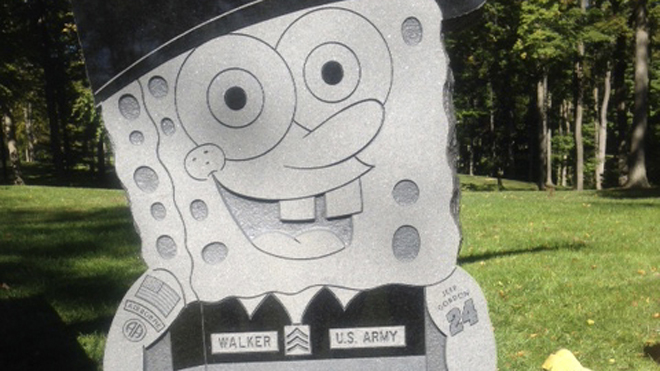
Scott Carpenter died last week, at the age of 88. Did you notice? Did you even remember who Scott Carpenter was?

I remember who he was and what he did, but I didn’t know that he had died. The world stops when the actor who played Tony Soprano dies, but an aged American hero and explorer? The news media says “Meh.” If Carpenter was still famous or a celebrity at all, it was only in the vague, foggy sense that obscure rock artists from the 60’s and expired pop icons are famous. I think Tony Dow, Barbara Feldon and Mama Cass are about as familiar to today’s public as Scott Carpenter, if not more. I just asked my son, who is 18 and better schooled in history and culture than most of his contemporaries. He knew Mama Cass was a member of the Mamas and the Pappas. The rest? Crickets.

Yet Scott Carpenter was, unlike those people, important. He was  one of the original Mercury astronauts, and in 1961, he orbited the Earth. After he left NASA he became a different kind of explorer, challenging “inner space,” the ocean’s mysterious depths. He launched an undersea habitation called Sealab II, where he and three other men conducted experiments on how well humans  function in a high-pressure undersea conditions for extended periods. Carpenter was a deep-water pioneer, mining on the sea bottom and harvesting exotic fish and other sea creatures. He salvaged and refloated a sunken jet fighter; he built an undersea petroleum-exploration platform.

Scott Carpenter, however, wasn’t famous by the time he died, because one of his fellow astronauts and good friends, John Glenn, orbited the Earth before him. Glenn went on to become a U.S. Senator based on his fame and heroic reputation (it helped that he was a combat pilot and decorated military hero as well). Carpenter did something important, dangerous, selfless, difficult and heroic, but he did it second, after John Glenn. We don’t remember second, and the distance between the accolades and honors heaped on #1 and the shrugs that follow #2 is disproportionate and unfair. Continue reading

Down The Rabbit Hole Again With Hank

Forgive Hank, sir....he only watches TV, and besides, he's a twit.

Forgive Hank, sir….he only watches TV, and besides, he’s a twit.

Another day, another annoying Washington Post TV review from Hank Stuever. When I last checked in on Hank as he was practicing his craft, he was ridiculing the concept of young parents committing to the care of an unplanned baby without considering abortion. Today, he’s just trying to make his readers as ignorant as he is.

I suppose there no requirement that a TV critic be conversant in literature…but there should be. All drama and entertainment is constrcted on the foundation of the stories and traditions that came before them, and while one can critique popular culture while being ignorant of everything between Beowulf and All in the Family, one cannot do so competently or professionally, both of which, as the TV critic for a major newspaper, Stuever is obigated to do. This is especially true when he presumes to critique a new TV show based on literature, however lightly, as  ABC’s new “Once Upon a Time in Wonderland” is.

Right off the bat, Hank lets us know that he knows diddly about Lewis Carroll’s strange and wonderful classic, getting “Alice in Wonderland” confused with its (equally brilliant) sequel “Through the Looking Glass.”  Hank speaks of “Lewis Carroll’s 1865 story of Alice, the girl who stepped through the Looking Glass and saw all those freaky things — rabbits, Mad Hatters, worms, Cheshire cats, etc.”  But Alice never saw any of those things when she stepped through the looking-glass, for that is a different book. “Rabbits, Mad Hatters, worms, Cheshire cats, etc.” were encountered by Alice when she fell down the rabbit hole, one the few things the Disney animated version got right. (By “worms” I’m guessing Hank ie referencing the hookah-smoking caterpillar, which is not a worm. Does Stuever know? Is he just showing contempt for the book and its characters? As Hank would undoubtedly say, “Whatever.”) Continue reading

Ethics Dunce: “Saturday Night Live” Cast Member Jay Pharoah

Maya Rudolph being Oprah, being funny, and nothing else should matter.

Maya Rudolph being Oprah, being funny, and nothing else should matter.

In a spontaneous call for more black cast members to be added to NBC’s long-running late-night satire show, “Saturday Night Live,”  veteran cast member Jay Pharoah told an entertainment reporter that he wanted the producers to add actress Darmira Brunson. “Why do I think she should be on the show? Because she’s black first of all, and she’s really talented,” Pharoah said. “She’s amazing. She needs to be on ‘SNL.'”

By logic, rights and justice, Pharoah should be fired for such a statement. He is pushing his show, and therefore his producers and his bosses, into a controversy that they neither want, need, nor deserve. Sure enough, his comments have already ignited debate and commentary in major dailies and in the blogosphere. He can’t be fired, of course—no producer in Hollywood would dare fire a black performer for advocating politically correct causes like diversity and affirmative action, no matter how inappropriate and unfair his comments were—and Pharoah knows that. Breaking reasonable rules of the workplace—criticizing your own boss in public and causing trouble for your employer are pretty basic taboos—because you know you’re immune from punishment doesn’t make the conduct any better.

He’s not the producer, and casting isn’t part of his job. To announce his own candidate for a hire is as outrageous and out-of-bounds as for a Pentagon general to tell reporters who President Obama should appoint as his Secretary of Defense.

Then there is the  statement itself, which in the context of entertainment and show business, is an endorsement of racial bias and discrimination, even more than with most workplace diversity and affirmative action advocacy. “Because she’s black first of all?” First of all must only be “because she’s funny, and the funniest female comic available.” Saturday Night Live’s goal, which it fitfully achieves, is to make its audience laugh. If Brunson is the best performer to accomplish that, then it makes sense to hire her. Her skin color is irrelevant, except to the extent that it opens up comic opportunities for the show. Otherwise, Brunson is pressuring his employers to hire Brunson over  superior white, Hispanic or Asian performers because of some theoretical diversity formula.

The resulting media focus on the imaginary problem to which Pharoah’s comments alluded is full of reflections, names and statistics, but the basic facts are these:

  • Professional performance comedy is completely utilitarian: if a cast entirely made up of black performers of any gender mix could be shown to be the optimum way to get laughs, ratings and make money for the network and SNL’s producers, that’s what we would have.
  • A funny, talented, improvisational skilled black actress has obvious benefits for a weekly satire show, as the reign of Maya Rudolph amply demonstrated.  There is no reason to presume that the producers would not immediately hire such a performer if one was available.
  • The pool of top-rate improvisational comic actors in general isn’t large (if it were, SNL would be funny more often), the pool of such performers who are African-American is much smaller, and the number of female black improvisational comics is tiny. When the African-American Wayans brothers wrote and produced their own satire show (Jim Carrey was the token white), they included only one full-time black female in the cast, and she was their sister (also the weak link in the cast.)

We can argue about the general principle of affirmative action at another time and place, but applying them to entertainment, sports or any field that must be a pure meritocracy is irresponsible and unfair. Saturday Night Live “needs” funny, talented performers who its audience finds funny…like, say, Eddie Murray. It does not need any black performer, male or female, just to have more black performers, and to take away performing and career opportunities from superior performers whose sole deficit is skin color or ethnicity while simultaneously getting fewer laughs and lower ratings.

Oddly, nobody has ever argued that Saturday Night Live discriminates against improvisational comic actors over the age of 35. Only once has it cast an actor of that age—Randy Quaid, in 1985. 1985 was also the most disastrous and unpopular season in the show’s history. Why no middle age or senior cast hires?  The reasons are legion: 1) Improv comedy is demanding physically and psychologically. Few older performers practice it, or are capable of doing it on a regular basis. 2) SNL’s audience is very young (as well as very male and white). Comedy is generational. 3) Older performers are seldom “new faces.” The ensemble’s called the “Not Ready For Prime Time Players” for a reason. 4) Young actors playing older real life figures and comic characters can be funny; old actors playing younger celebrities or characters is seldom funny, and often creepy. Age diversity, in brief, would not improve Saturday Night Live. Diversity is only an asset to the extent that it allows more comic opportunities. The U.S. does not require, not should ikt ask for, a contemporary satire TV show that “looks like America.” What  it needs is a show that is good.

All of which makes Pharoah’s comments irresponsible, unfair, disloyal, and racially offensive.

And not funny.

______________________________________

Sources: Washington Post, Policy Mic

Graphic: Hello Giggles

Ethics Quiz: Peter’s Problem

40 years from now, would you book Kaitlyn Hunt for your Congressional campaign fundraiser? Should you...if she's become a famous and beloved singer?

40 years from now, would you book Kaitlyn Hunt for your Congressional campaign fundraiser? Should you…if she’s become a famous and beloved singer?

Shelly Stow, an occasional commenter here who blogs provocatively at With Justice For All about the harassment and persecution of former sex offenders, raised the topic of today’s Ethics Quiz. She  posted about the plight of Peter Yarrow, the Peter in Peter, Paul and Mary, now, thanks to cruel mortality, just Peter and Paul. I was not aware of this, but in 1970, when he was 30 and a rather significant star, he had sexual relations with a 14-year-old girl. Shelly is wrong to call this “consensual,” for 14 is statutory rape territory. The law declares that a 14-year girl is a child and not capable of meaningful consent, and fans of  Roman Polanski, Woody Allen and Kaitlyn Hunt notwithstanding, it is quite right. He pled guilty to something less than rape, and served a three-month sentence; he is also, as a result, a registered sex offender. President Jimmy Carter pardoned him in 1981.

Yarrow, as Sixties folk singers tend to be, is a social activist, and is politically active as well. Not for the first time, his child molesting past became an issue recently when he  agreed to sing at a campaign event for Martha Robertson, a Democrat running for Congress in New York against incumbent Republican Tom Reed. A spokesman for the RNC told the media,

“It is absolutely deplorable that Martha Robertson would kick off her congressional campaign by having a convicted sex offender headline her fundraiser. If Robertson’s judgment is so bad that she would even entertain the idea of raising money with a man who molested a 14-year-old girl, she has no business representing the people of the 23rd District of New York in Congress.”

He also said Robertson should cancel the fundraiser and return any money she raised with Yarrow’s support.

Shelly writes,

“What is wrong with this scenario? Our criminal justice system is comprised of one part punishment and one part rehabilitation. The purpose of the punishment is to bring about rehabilitation. Sometimes it works like it is supposed to. Mr. Yarrow committed a crime in 1969. That is over 40 years ago. He served his court ordered punishment, and in light of the fact that there has been no re-offense in over 40 years, I think we are safe in declaring him rehabilitated. Everything worked just like it is supposed to. What then is the problem? Is rehabilitation not good enough for some? Is there some other standard of measure needed?”

This launches the Ethics Alarms Ethics Quiz for this weekend, which I will phrase this way:

Is it unfair for Peter Yarrow to still face criticism, suspicion and condemnation based on his crime of 40 years ago, for which he has been both punished and pardoned?

For this one, I am not at all certain of the answer, and will be very interested in your responses, not that I am not always.

Here are some of the considerations that have me, to paraphrase the title of one of the hit pop songs Mr. Yarrow helped to write, “Torn Between Two Answers.Continue reading

The Right Thing In Spite Of Themselves: CNN And NBC Abandon Their Hillary Projects

Hillary Clinton, in her dreams...and Bill's...

Hillary Clinton, in her dreams…and Bill’s…

If CNN and NBC had any sense of responsibility, fairness and respect for the American political system, neither would have planned Hillary Clinton projects—CNN, a documentary, NBC, a “docudrama” mini-series—for the coming year, in which the controversial Ms. Clinton is expected to begin running for President of the United States. Neither deserves any credit for cancelling them now, after pundits and especially the Republican Party screamed foul, and foul it was.

There is no way either product could avoid making difficult content choices that would be inevitably influenced by such non-ethical considerations as entertainment value, ratings, political pressure, and artist bias. The documentary and the mini-series would necessarily distort fact and history, because so much of any contemporary figure’s life and career has yet to be objectively examined, and no more so than Hillary Clinton, as polarizing and mysterious figure as U.S. politics has ever produced, rivaling Richard Nixon and Aaron Burr. Continue reading

Grassy Knoll Ethics: How Deception Breeds Distrust

UmbrellaMan2

We once again must squarely face the hoary  quote from Walter Scott’s epic poem Marmion: “Oh what a tangled web we weave when first we practice to deceive.” It is hoary because it is true, and this month’s Smithsonian Magazine reminds us of how true it is, recounting how well-intentioned deceptions by the news media regarding evidence in the assassination of President Kennedy helped create a conspiracy theory that will not die, and that may have begun the slow, relentless deterioration of America’s trust in its own government that has reached dangerous proportions today.

Frame 313 of Abraham Zapruder’s accidental record of one of the pivotal moments in U.S. history gave him nightmares, and when he sold the rights to his amateur movie to Life Magazine, he insisted that frame be withheld from the public, and not published. “We like to feel that the world is safe,” documentary maker Errol Morris explains in the article.“Safe at least in the sense that we can know about it. The Kennedy assassination is very much an essay on the unsafety of the world. If a man that powerful, that young, that rich, that successful, can just be wiped off the face of the earth in an instant, what does it say about the rest of us?” I understand, but withholding the truth is not the way to make the world seem safer. As the story of the conspiracy shows, it is how we end up trusting no one. Continue reading

Celebrity Values: The Good, The Bad And The Ugly

Sprouse-West-Cano

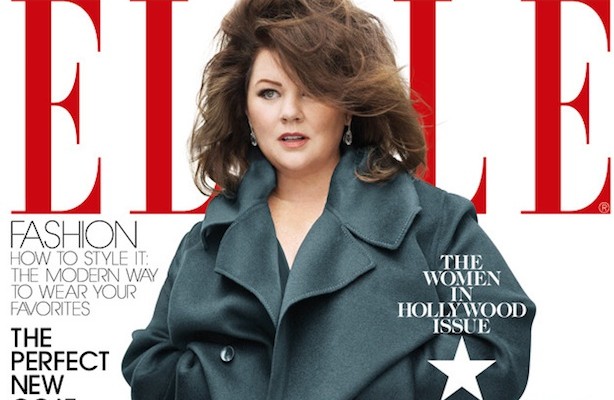
Celebrities have the opportunity to use their disproportionate and sometimes unexplainable fame to pass along good values, priorities and ethical habits to those who admire and follow them. The problem is that the U.S. culture’s current values are in a muddled state, with virtues sometimes being treated as embarrassments, and the enthusiastic embrace of non-ethical goals that once were regarded as the seven deadly sins are now often looked upon as the norm, and even appropriate. Here are some recent events in the strange world of celebrity values:

The Good: This headline on numerous web sources piqued my interest: “Dylan Sprouse Defends Restaurant Host Job.” Dylan Sprouse is a former Disney child star, a long time lead, with his brother, on the long-running “The Suite Life of Zach & Cody,” one of those loud, hyper-frenetic tween comedies that Disney and Nickelodeon acquire from some production company in Hell. Dylan was seen working in a restaurant, and this immediately spawned multiple rumors that he was broke, had blown through his millions, and was, in brief, a pathetic loser….because he has the same kind of job most American twenty-somethings fresh out of college would be thrilled to have.

Thus Dylan, who along with his brother decided to get out of the child star rat-race that has recently put Lindsay Lohan in rehab, Amanda Bynes in a mental health treatment facility and Miley Cyrus naked on a wrecking ball, and start a more conventional life with a college education (at NYU). Sprouse decided to address the weird criticism being sent his way on social media and in the gossip blogs by writing, Continue reading

Ethics Note To Senator Cruz: You Can’t Begin A Principled Stand With A Lie

Little is more damaging to the public’s trust and faith in government than when elected officials engage in gratuitous lies—statements that can only convince those who don’t bother to check the facts underlying them, made for their momentary impact on the theory that the effect is worth the eventual exposure of the lie for what it is. Such lies are detestable, because they not only reinforce the impression that politicians lie when their lips are moving, they also convey the message that lies are merely tools of the politicians trade, and not even particularly shameful or worthy of criticism. When a politician engages in such transparent dishonesty, he or she is saying, quite literally, that lying is no big deal.

It is a big deal. It is especially a big deal when the point of the lie is to fool the public into believing something the politician is doing is a big deal itself, when it is really a sham.

Welcome to Sen. Ted Cruz and his fake filibuster, also known as Ted Cruz’s Bad Jimmy Stewart Impression.

"Ted, I knew Mr. Smith, and you're no Mr. Smith. You're not even Rand Paul..."

“Ted, I knew Mr. Smith, and you’re no Mr. Smith. You’re not even Rand Paul…”

Evoking memories of the Frank Capra classic, “Mr. Smith Goes To Washington,” Sen. Cruz told the world that he was going to talk on the floor of the Senate against Obamacare until he couldn’t stand any more…you know, just like the Jimmy’s idealistic junior Senator in the film, who finally collapses of exhaustion to end his filibuster but whose courage makes the corrupt, manipulating senior Senator from his state confess that he was trying to fund a lousy health care b…no, wait, it had something to do with a kids camp and influence peddling. I haven’t seen the film in a while.

Cruz, however, unlike Stewart, is not engaging in a filibuster, because he is not trying to block a vote or anything else: Senator Majority Leader Harry Reid has scheduled a vote on funding the Affordable Care Act for today, whereupon Cruz has to sit down and shut up whether he can still stand or not. Continue reading

The Emmys Play Favorites And Undermine Their Mission

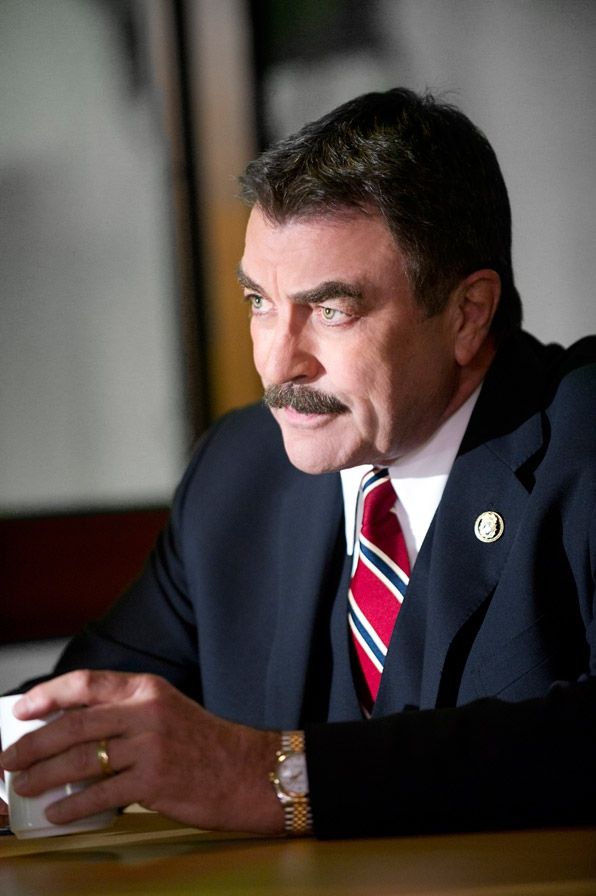
Quick, now...and no cheating: Who is this recently deceased TV legend?

Quick, now…and no cheating: Who is this recently deceased TV legend?

Three separate organizations present the Emmy Awards: the Academy of Television Arts & Sciences (ATAS), the National Academy of Television Arts & Sciences (NATAS), and the International Academy of Television Arts & Sciences. Each is dedicated to the television industry, and the award the organizations collaborate to  hand out for excellence are intended to serve multiple objectives. Prime among them is to honor and promote the professionals who bring—in theory, at least, quality entertainment into the homes of Americans. The show itself that broadcasts the awards only exists because of their larger mission, which is to say that the Emmy show exists to support the Emmys, not the other way around. The program’s producers, not for the first time, managed to forget their priorities this year, and are getting well-deserved scorn for it both in and outside the entertainment community.

The offense occurred during Sunday’s live telecast, when the show reached its annual “In Memoriam” segment. The Oscars have botched this crucial part of its own show in recent years by failing to recognize the deaths of important Hollywood figures who deserved their final bow and a last ovation. Emmy found a new and different way to insult its own. The Oscars’ omissions were negligent; the Emmys insult was, incredibly, intentional. It’s just that either nobody realized it was insulting, or, more likely, they knew but had other objectives. Continue reading

Cher’s Ethics Tweets

Lan 159

Earlier this week, Cher used her interview with USA to take some well-aimed pot-shots at Miley Cyrus’s universally loathed “twerking” antics on the MTV Awards show. She said of Cyrus

“”I’m not old fashioned. She could have come out naked, and if she’d just rocked the house, I would have said, ‘You go, girl.’ She could have come out naked, and if she’d just rocked the house, I would have said, ‘You go, girl.’ It just wasn’t done well. She can’t dance, her body looked like hell, the song wasn’t great, one cheek was hanging out. And, chick, don’t stick out your tongue if it’s coated. If you’re going to go that far, then think about it before you do it.

These are wise words from a veteran and proven performing star to a young one on the way up, or heading for a crash. Essentially, Cher is stating the principles of professionalism: whatever you do, do it right, do it well, and respect your constituency. Cher has the bona fides to offer such an opinion since she has stretched the lines of sexual propriety on stage more than once, but it was always used as an additional enhancement on the way to her “rocking the house.”

The legendary pop diva was apparently surprised that her comments became a one-day sensation on the gossip websites and cable entertainment shows, and  had second thoughts about them, which she communicated in a couple of tweets to the Twitterverse. In Cher-ese, they are all about ethics:

Chers Tweets

Translation: Continue reading