(I am backed up three deep on the “Comments of the Day,” and I apologize to the deserving and patient commenters.)
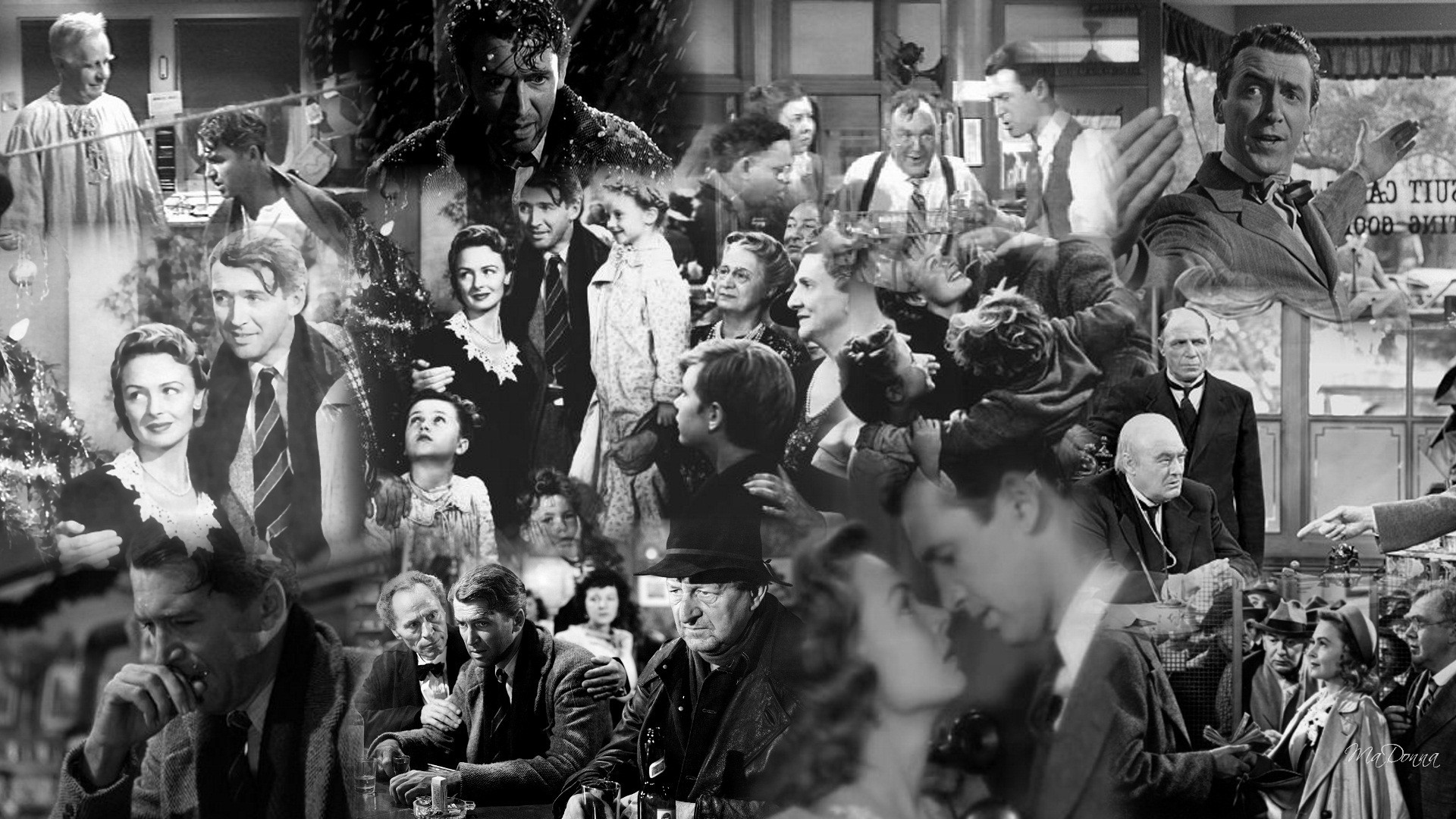
And who can forget Mickey Rooney’s hilarious turn in that beloved American film masterpiece “Breakfast at Tiffany’s”?
Alex Yuan raised an element of the revolting Jimmy Kimmel stunt discussed in my post, an extension of his penchant for using children as uncomprehending props for his often ugly comedy, that I glided right over: Why was showing a child suggesting that wiping out the Chinese was a viable solution to national problems even considered fit for broadcast, when a similar comment about Jews, gays, Hispanics or blacks would be considered instantly taboo? Why doesn’t the ethics alarm sound when the minority being slurred or threatened is Asian?
It is interesting that you should mention political correctness because I can’t help feeling that in deciding it appropriate to air this segment, ABC – perhaps as a reflection of societal attitudes at large – is illustrating the alleged double standard against Asians when it comes to how topics concerning minorities and other protected classes are handled in public. Continue reading →
If you want to ground your child in basic values and ethics, buying the new DVDs (available next month) with all 168 half-hour episodes of “The Rifleman,” the classic Western TV series, is a good way to start. I’ve been watching episodes recently (they are currently showing on both AMC and Starz), and am struck by how virtually every one has a strong ethics lesson to teach, and teaches it well without interfering with the drama. Most of the TV westerns from the genre’s Golden Age (which had already ended before the demise of “Bonanza,” the last of the great ones) had strong ethical values embedded in their plots, but few made ethics as thematic as the show starring Chuck Connors as a single father, living on the prairie in the 1880s, who used his Winchester rifle the way other cowboys used a pistol, but faster and with more accuracy. Because Lucas McCain was trying to survive while teaching his young son (played by original Mousekateer Johnny Crawford) how to be a good man and citizen, he was always striving to be a role model while solving the difficult and often dangerous problems that came his way. Unlike many Western heroes, McCain didn’t always get it right, sometimes letting his emotions get the better of him or being unfair or impetuous, and had to undergo an ethical course correction by the end of an episode.
A repeated theme in the show was redemption and trust, as McCain often became the champion of a fallen woman or reformed criminal, or had to rely on an ally with a less than sterling past. Villains in “The Rifleman” sometimes saw the error of their ways at the last second, committing a noble act before dying or going to jail. And sometimes they didn’t, and got shot with the Winchester. I’m sure that “The Rifleman,” with its gun-happy opening sequence (it presents the rifle as the star of the show as much as Connors) will seem like an unlikely source of ethics to the gun-queasy parents out there, and that is a shame. There is much to learn from “The Rifleman.”
You can watch some episodes of the show here, here and here. The catchy theme music is here; I was surprised to discover that it had lyrics, which by the standards of the generally terrible lyrics of westerns that had songs that were actually sung on a show, aren’t too bad. The best of its endless verses:
THERE IS A MORAL TO HIS EXPLOITS
AND HE’S TAUGHT IT TO HIS SON
SPEAK SOFTLY TO YOUR ENEMY
BUT LET HIM SEE YOUR GUN!
Chorus:
THEY CALL HIM THE RIFLEMAN
THE STRONG, COURAGEOUS RIFLEMAN
A GREAT BIG MOUNTAIN OF A MAN!
Once the epitome of sharp, incisive, erudite weekly news reporting and commentary, it long ago morphed into just another left-biased shill for liberal politicians and positions, but with a desperate, tabloid-style habit of using intentionally gross, disturbing or controversial cover graphics to sell more copies than its equally biased and shameless rival, Newsweek. Now Newsweek is mercifully gone, but Time’s rude cover habit remains, culminating in the above disgrace to Time’s traditions and responsible journalism.
New Jersey Governor Chris Christie is fat, get it? He’s the “elephant in the room.” Continue reading →
“The Walking Dead”…as always, providing abundant ethical dilemmas to chew on…
If you can stand the periodic spectacle of shambling, rotting flesh and heads being lopped off or split down the middle, AMC’s “The Walking Dead” still provides the most daring and interesting ethics storylines available on television.
The latest episode, titled “Indifference,” raised two gutsy issues that are unpopular in today’s culture to the point of taboo. It was revealed that Carol, previously the simpering and tragic mother of the now dead, zombified and executed little girl Sophia, has morphed into a stone-cold pragmatic survivalist who advocates killing on instinct when the threat is sufficiently severe. In addition to teaching methods of mayhem to the children entrusted to her instruction in the grim, abandoned penitentiary where our heroes have fortified themselves against the roaming zombie hoards, Carol summarily executed two members of the community who were fatally ill with a pernicious virus on the grounds that they threatened the safety of the rest. For this, Rick, the sheriff-turned farmer alleged leader of the non-zombies, orders her out of the prison.
Strange. In a world without doctors, medicine and hospitals, where the objective is simply to survive long enough for some remote miracle to rescue humanity, a runaway virus is as much of a threat as a maniac with a hatchet. Rick and the rest have long ago accepted the necessity of killing members of their group who are bitten by zombies, since they are certain to “turn”after death and start indiscriminately eating people. True, the preferred method is to withhold execution until the second after the living become undead after becoming unliving, but this is a distinction without a difference. Carol is quite right that a breathing, doomed, virus-carrier is as much of a threat to the group—perhaps more—as a newly-minted brain-muncher. Why is her strong action in defense of the group, a defensible utilitarian act, reason for exile? Continue reading →
Bravo and thanks to penn for a thoughtful and thought-provoking personal reminiscence that supports my recent post about the claim that the famous panic over Orson Welles’ famous 1938 “War of the Worlds” radio drama never happened. Here is his fascinating Comment of the Day on Print the Legend Ethics: The “War of the Worlds” Panic:
This story came up every Hallowe’en in my family as I was growing up. We had family living in Toms River and in Lakewood, NJ (about 35 miles from Grover’s Mill) at the time Orson did his thing. The different reactions to the broadcast by the people living in the two places resulted in a minor family schism which continues to this day in the attitudes of their descendants.
It was a city mouse/country mouse situation. The Lakewood adults were elementary school teachers — the sophisticates. They listened to that program as a matter of course and as they later reported, they declared this one silly from the very beginning. But then, all science fiction was silly to them (really! space ships and aleeums? pshaw!) — my father (it was his side of the family) always contended they had no imagination. My mother recalled, however, many years later (and after taking several psychology courses at the New School), that commercials or not, she was convinced they had been very disturbed, if not downright scared. Scared enough to sit through the whole “silly” program in the first place, and for the rest of their lives to focus an uncharacteristic rage on the writers … for using the name of a real location in the program. [I think this naming of Grover’s Mill may account for some of the anxiety, if not the panic — people were sooo trusting of the media in those days .. . .] Continue reading →
One of the worst results of an untrustworthy news media is that it becomes difficult, as time passes, to determine with any certainty what the truth is.
A classic example is on display today, in Slate, which celebrates the 75th anniversary of young, svelte, Orson Welles’ famous Halloween Eve broadcast of his radio adaptation of H.G. Wells’ “War of the Worlds,” with no Tom Cruise or Dakota Fanning but a nice conceit that involved telling the story through fake news flashes and eye-witness interviews. (One reporter is fried on the air by the Martian invasion vehicles.) An new NPR program and a PBS documentary both tell the familiar story of how the realistic-sounding radio play caused widespread panic among radio listeners who missed the opening credits, leading them to think that Earth was really under attack. Newspapers of the day headlined mass panic, and gave accounts of citizens running for cover, huddling in the basement, and cringing in terror. The episode made Orson Welles a national celebrity, and launched him on his meteoric, long and strange career.
According to Slate authors Jefferson Pooley and Michael Socolow, it never happened. Declaring the story of the “War of the Worlds” panic a myth, the authors state without equivocation that the newspaper accounts, headlines, commentary and interviews, were fabricated:
“Radio had siphoned off advertising revenue from print during the Depression, badly damaging the newspaper industry. So the papers seized the opportunity presented by Welles’ program to discredit radio as a source of news. The newspaper industry sensationalized the panic to prove to advertisers, and regulators, that radio management was irresponsible and not to be trusted. In an editorial titled “Terror by Radio,” the New York Times reproached “radio officials” for approving the interweaving of “blood-curdling fiction” with news flashes “offered in exactly the manner that real news would have been given.” Warned Editor and Publisher, the newspaper industry’s trade journal, “The nation as a whole continues to face the danger of incomplete, misunderstood news over a medium which has yet to prove … that it is competent to perform the news job.” Continue reading →
Clearly, we need some rational ethics standards for Halloween costumes, but I doubt that we will ever have any unless political correctness is removed from the equation. The holiday is by its very nature in bad taste with a heavy dose of defiance. The tradition is all about invoking the things that frighten us, with death being tops on the list. Trivializing death or mocking it is any way is guaranteed to offend somebody. My solution: if it offends you so much, don’t participate in Halloween. Boycott it. Don’t give out candy. Let everyone else—you know, those enough to distinguish reality from make-believe and satire from insults—have a good time once a year.
Once Halloween is transformed into Halloweenie, as so many of the political correctness police would have it, it isn’t Halloween, and isn’t fun. We have properly purged the vandalism that once part of the ritual, and if every possibly offensive disguise and costume is deemed socially unacceptable, all we have left is an annual event where kids dressed in blinking lights (to avoid accidents) get non-sugar candy, fruit, dental floss or contributions to charities while dressed up as non-offensive politicians, Greenpeace captains, cartoon characters, occupations and maybe insects. Then parents x-ray the candy and limit how much of it the kids can eat. As for adults, they not only have to wear costumes that won’t offend their friends and fellow party goers, but also costumes that won’t offend somebody, somewhere, when an officious jerk at a party takes a photo with his phone and posts it for the world. What fun. Continue reading →
Shame on George Washington University (in Washington, D.C.), not only for lying to its students and community, but also for dishonoring the name of the scrupulously ethical American icon which they presumed to expropriate as their own. Such things carry with it some crucial obligations.
For years, the GW admissions and financial aid offices have claimed in printed materials and on the University website that admissions were independent of need. The admissions process does not consider financial need during the first round of screening applications. Before applicants are notified, however the University examines its financial aid budget and decides which students it can actually afford to admit. Wealthier students are accepted, taking the spots of students who would need more financial aid from the University.
Last week, a GW administrator confessed to a student newspaper—one ironically called “The Hatchet” after the apocryphal axe little George used to cop down that cherry tree in Parson Weems’ fable—– that financial resources indeed were considered in the admissions process, and have always been considered despite University statements to the contrary. As recently as last weekend, admissions representatives told prospective students that their applications would be judged without consideration of their financial aid profiles. Until it was removed Saturday evening, the newspaper reports, the undergraduate admissions website read, “Requests for financial aid do not affect admissions decisions.”
That site now confirms a “need-aware” policy that has always been in place. George Washington University just had another policy of lying about it. Continue reading →
Apparently I was last one in the nation to learn about the surreal dispute between the parents of the late Kimberly Walker, a 28-year-old Iraq War vet who was found murdered in a Colorado hotel room eight months ago, and the owners of Cincinnati’s historic Spring Grove Cemetery, concerning the headstones erected over her grave on October 10.
The cemetery reversed its official approval of the twin monuments, apparently bestowed by someone who had momentarily been possessed by the spirit of Chuck Jones, saying that it would be inappropriate for a traditional and historic 19th Century pastoral cemetery that serves as the final resting place of Supreme Court Chief Justice Salmon P. Chase, several Civil War generals including “Fighting Joe” Hooker, who lost the Battle of Chancellorsville, the Hall of Fame manager of the 1927 Yankees, Miller Huggins, and many others, to sport not one but two hideous 6-foot-high, 4-foot-wide, 7,000 pound slabs of granite lovingly carved to depict SpongeBob Squarepants in military gear, one of which displays Kimberly’s name on his uniform. (For those of you who are hopelessly estranged from popular culture, SpongeBob is a fictional deep sea yellow sponge who stars in a popular Nickelodeon cable TV children’s cartoon show. Kimberly, we are told, loved the show. SpongeBob is an idiot, by the way.)
The family is outraged, and feels abused. “I feel like, and we all feel like, SpongeBob should stay there. We bought the plots, all six of them. We put the monuments there, we did what we had to do and they said they could provide that service to us,’ said Walker’s twin sister Kara, who was looking forward to eventually being buried under the second headstone. “I thought it was the greatest thing in the cemetery. I even told the people there that I think this is the best monument I’ve ever seen. It’s the best headstone in the cemetery and they all agreed. It came out really nice.”
Yyyyyyyeah.
Still, putting considerations of taste aside—-and what American these days doesn’t do that daily?—the Walkers duly purchased the plots (they have four more…and just think of what might end up on them) and properly cleared the monuments.
Your Ethics Alarms Ethics Quiz for this lovely Fall day is this:
Does fairness dictate that the Walkers be allowed to erect whatever monuments they choose, including giant, garish sculptures of a cartoon character, to honor the memory of their daughter? Continue reading →
Actress Melissa McCarthy stole the film “Bridesmaids” right out from under its better known stars, including the screenplay’s author, Kirsten Wigg. In that film, her hit CBS sitcom “Mike and Molly,” and subsequent films (of varying quality), McCarthy has shown that she is s versatile, appealing comedienne with deep dramatic resources. Film critic Rex Reed, however, is mostly concerned with her weight, which is usually a component of the characters she plays and the quality, other than her talent, that sets her apart from the standard issue, impossibly thin, fit and sexy Hollywood actress.
In his withering review of her latest comedy “Identity Thief,” Reed causally refers to McCarthy as a “female hippo” and reduces her career to this: “Melissa McCarthy (Bridesmaids)is a gimmick comedian who has devoted her short career to being obese and obnoxious with equal success.” Called on his fat-bashing, Reed responded, “I have lost entirely too many friends to obesity-related diseases to pretend Ms. McCarthy’s alarming obesity is anything to applaud.”
There are two aspects of this that are striking. One is that Rex Reed, who played the pre-op Myra Breckenridge in the awful movie version of Gore Vidal’s gender-bending, and considered scandalous at the time, satiric novel (Raquel Welch, now over 70, was post-op), is still alive and reviewing, albeit obscurely until, as now, he writes something outrageous. At one time—40 years ago? Longer?— Reed was considered the most quotable and one of the most influential film critics; now, to say he is passé would be a compliment.
The other striking aspect of this incident is this: while the culture will turn with unforgiving venom on any public figure who derides individuals for their color, sexual orientation, malady or disability, any of which would be considered cruel, bigoted, and hateful, deriding individuals because their weight doesn’t meet with aesthetic norms—among which are now out-sized breasts on otherwise fat-free frames and sharply chiseled abdominal muscles, a look that was literally freakish until the dawn of Nautilus and personal trainers—-still is largely regarded as justified and acceptable. Continue reading →