Ethics Quiz: The Macaque’s Selfie

Macaque

The wonderful photo above has gone viral on the web, and is also causing serious debate among intellectual property lawyers. The weird tale is as follows:

Wildlife photographer David Slater was visiting a national park in North Sulawesi to photograph the wildlife. His subject was a group of crested black macaques, and when he left his camera unattended, the primates took advantage of the opportunity. Apparently attracted by the reflection and the noise the camera made when activated (the implications of the macaques doing this because they were interested in photography are too disturbing to contemplate, so I won’t),  one macaque took hundreds of photos of itself. Most were blurry and out of focus, just like the pictures my dad took, but a few were superb selfies that would have Ellen DeGeneres eating her heart out.

Wikimedia took the clear images off of Slater’s website, adding them to its collection of royalty-free graphic, and sending them all over the web as a result.  Slater now demands that the images be taken down or that he be paid for them. While Wikimedia argues that either the monkey owns the copyright for the photos or nobody does, the photographer claims that being the owner of the camera, and the artist who created the circumstances under which the macaque was inspired to release his inner Richard Avedon, he alone is the owner of the photographs.

As you might expect, copyright law is unclear on the issue of lower primate selfies, an art form that was not anticipated as the law evolved. I don’t care about that: today’s Ethics Alarms Ethics Quiz is about fairness:


Should Slater have full ownership of the macaque’s creations?

Continue reading →

Police Misconduct, Professional Courtesy, and the Insideous Virtue of Loyalty

"No, I still have your back...I'm just going to have to give you a speeding ticket, that's all!"

“No, I still have your back…I’m just going to have to give you a speeding ticket, that’s all!”

In 2011, Florida Highway Patrol Trooper Donna Jane Watts pulled over—after a brief chase– an off-duty Miami police officer whose vehicle she clocked at over 120 mph. Lead-footed officer Fausto Lopez explained to Watts that he was late for an off-duty job. The tradition among police, as in other professions (like the law and politics), is to extend “professional courtesy” in such situations, or as I call it, unwarranted privilege and corruption.

 Watts, however, arrested Lopez, who had a history of reckless driving, and he was eventually fired. Continue reading →

Is There An “Almost Naked Lovely Lawyer Principle”?

cathy-mccarthy

Not really.

But it’s complicated.

Cathy McCarthy (above) is a 2013 graduate of Loyola Law School-Los Angeles, and she is sounding the clarion call for the right of bikini model-lawyers to be taken seriously. She wrote…

I graduated law school a year ago after receiving an academic scholarship and passed the California Bar last November on my first try. I am also a model and have had moderate success, building fan base of over 26,000 people where I do mostly bikini promotions. Does this make me better or worse at my job? According to some people, it makes me unable to be taken “seriously” in the business community. In fact, two weeks ago, I was reprimanded by a coworker for my online presence and was told to “handle the situation.”I fought back and was ultimately let off the hook, but this is not the first time that I have faced backlash from colleagues who think that a lawyer should not also get the privilege of “looking hot in a bikini.”

Unlike the case with primary and secondary school teachers, where a published presence on the web that is sexually provocative can interfere with a healthy student-teacher relationship, there is no automatic impediment to a lawyer client relationship posed by the lawyer moonlighting as a bikini model, a fold-out, or even a porn star. The profession acknowledges this in several legal ethics opinions affirming lawyers’ First Amendment rights. Lawyers can express themselves any way they choose, provided that it does not undermine their ability to represent their clients in any way. Continue reading →

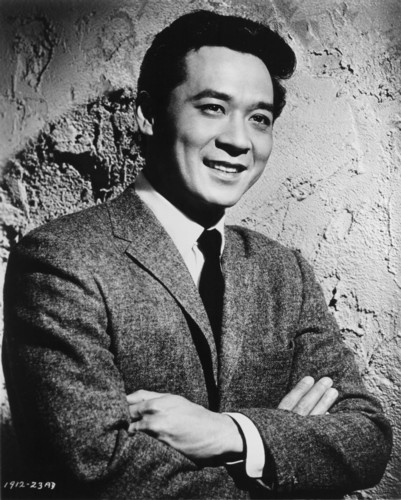
Woody Allen, James Shigata, And Diversity Casting Ethics

You have no idea who this is, do you? Well, it shouldn't have turned out  that way...

You have no idea who this is, do you? Well, it shouldn’t have turned out that way…

I’m sure you heard about James Garner’s recent death, but were you aware of James Shigata’s passing? Shigata, who died July 28 at the age of 85, was a contemporary of Garner’s, a superb actor, and like Garner, a leading man with leading man looks. James Shigata, however, was of Asian descent, though American through and through, and never escaped the perceived limitations of the shape of his eyes. Though he had a starring role in the hit film adaption of  the Rodgers and Hammerstein musical “Flower Drum Song” and routinely received critical acclaim for all of his film work, but though he got roles on television through the ’80s, he never was able to break through the typecasting straightjacket that deemed him only suitable for “Asian” roles. If you remember him as all, it is probably as the brave Japanese executive shot by Allan Rickman in “Die Hard.”

I thought about Shigata when I read a piece in Salon, noting that director Woody Allen didn’t cast African-Americans in his movies, and that his explanation why didn’t justify the neglect. Prachi Gupta writes, Continue reading →

More Bad Law Ethics: Integrity Test Coming For The Judiciary On Obamacare

"Dear Courts: We intend this mess to be a big, perfect, beautiful palace. Please let us know when its finished.       Your Friend, Congress"

“Dear Courts: We intend this mess to be a big, perfect, beautiful palace. Please let us know when its finished.
Your Friend, Congress.”

In a recent post, I explained how the incompetent drafting and reckless manner in which the Affordable Care Act was passed has corrupted every branch of the government as well as damaged our system and the public’s faith in it. Affordable Care Act supporters continue to desperately try to excuse, fix, and rationalize this disgracefully bad law. Next up is an integrity test for the judiciary, as the legal argument against the US Court of Appeals for the DC Circuit’s decision in Halbig v. Burwell becomes untenable.

If the two judges on the three judge panel were correct, and it appears they were, then a drafting miscalculation in the ACA has rendered the health care overhaul unworkable, meaning that it can’t be fixed, constitutionally at least, by Executive Orders, waivers, delays or lies, like so much else connected to the legislation. It will have to be addressed the old-fashioned—as in “according to the Constitution”—way, or not fixed at all. Continue reading →

Ethics Dunce: ESPN

"That will teach you to fudge the truth, Smith. Remember, you're a journalist!"

“That will teach you to remember to fudge the truth, Smith. Remember, you’re a journalist!”

Item: ESPN suspends Stephen A. Smith. Why? In response to the uproar over the NFL’s suspension of domestic abuser Ray Rice only two games for punching a woman’s lights out—the love of his life!—Smith uttered the blasphemy that some victims of domestic abuse share responsibility for their plight. Of course, he is 100% correct, and this something that many women must hear, learn, and act upon, or perhaps die. The proof: the precise case that prompted Smith’s comments! Janay Palmer, Rice’s punching bag, refused to file a complaint against him, and married the bastard a couple of months after he hauled her unconscious body out of a hotel elevator like a sack of potatoes, caught on camera.

If (I would say “when”) she gets clocked again, is she partially responsible? Absolutely. I also think she’s responsible in part for the injuries of every abused woman who follows her high-profile, irresponsible, violence-provoking (I use that unfortunately inexact word as Smith used it) example.

Smith’s suspension—for a week, almost as long as Rice— to mollify the feminist apologists for their violence enabling sisters, is craven and wrong.

________________________

Facts: ESPN

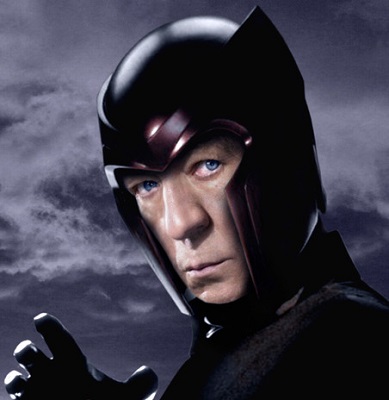
Great, Now Magneto Wants To Wipe Out Professional Theater…

Magneto McKellen

Maybe he should run for Vice-President on a ticket with Elizabeth Warren.

Quoth revered British actor Ian McKellen, Magneto (and Gandalf ) in the flesh:

“The one thing you can ask, I think, is that actors get paid a living wage. I would like it if all the repertory theaters that currently exist could do that. It would make a huge difference.”

It sure would. It would put most small professional theaters out of business, make theater unaffordable for any but rich theater-lovers, and eliminate a huge number of acting jobs. It is an idiotic, ignorant, irresponsible, but very, very nice, liberal, compassionate, well-intentioned and Elizabeth Warrenish suggestion that willfully ignores reality and basic economics—in other words, it is consistent with progressive mythology. We owe the Magster a debt of gratitude for illustrating exactly what is wrong with blanket endorsements of minimum wage increases and “living wages.” Continue reading →

State Of U.S. Journalism: “Conflict of Interest? Oh, THAT Old Thing!”

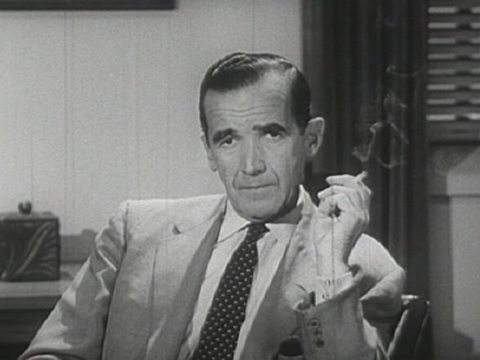
At last report, rolling in his grave...

At last report, rolling in his grave…

I believe that the field of journalism ethics has been negated, as the news media now routinely ignores the most obvious conflicts of interest, and make no effort  to avoid them, address them, or disclose them.

Case #1: Taking orders from Hamas

 Hamas has published media guidelines instructing Gazans to always refer to the dead as “innocent civilians” and to never post pictures of armed Palestinians on social media. Hamas has prevented foreign reporters from leaving the area, and it is easy to see how foriegn journalists would conclude that the best way to ensure their safety is to avoid angering their “hosts.” Seemingly mindful of these concerns, the New York Times’ reporting on the Gaza conflict from Israel depicts tanks, soldiers, and attack helicopters, while virtually all images from Gaza are of dead children, weeping parents, bloody civilians, ruined buildings, overflowing hospitals, or similar images of pain, carnage and anguish. As Noah Pollack noted in the Weekly Standard website,  a Times photo essay today contains these images:

“…three of Gaza civilians in distress; one of a smoke plume rising over Gaza; and three of the IDF, including tanks and attack helicopters. The message is simple and clear: the IDF is attacking Gaza and harming Palestinian civilians. There are no images of Israelis under rocket attack, no images of grieving Israeli families and damaged Israeli buildings, no images of Hamas fighters or rocket attacks on Israel, no images of the RPG’s and machine guns recovered from attempted Hamas tunnel infiltrations into Israel.”

Is this just naked anti-Israel bias, or is the Times simply trying to report the story without getting its reporters’ into further peril? I’ll be charitable and presume the latter: fine. But that defines a clear conflict of interest that mars the objectivity of the Times’ reporting, and the paper has an ethical obligation, under its own guidelines, to disclose it in every report where it might be relevant.

It has not. Continue reading →

Now THIS Is An Unprofessional Actor

Even John would have a problem with this actor's "method"...

Even John would have a problem with this actor’s “method”…

The 8th Circuit has ruled that actor Paul Doering was justly sentenced for his conduct during a 2011 theatrical event in which he was performing. What did he do?

For a Western-themed charity event in Hill City, South Dakota,  Doering portrayed an outlaw in a shootout.Stage actors using guns shoot blanks, of course. For some reason—extreme method acting? Bad reviews? That ineffable something that makes a star?—Doering used live rounds, real bullets, wounding three spectators.

And they say the theater is dull.

You can read about the case here; that’s of secondary interest. What I find fascinating is that this might be the most unethical performance by an actor in a theatrical performance ever.

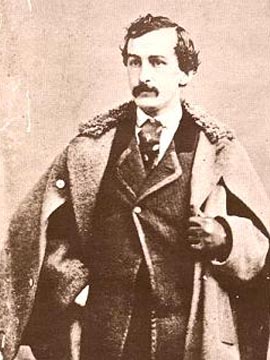
John Wilkes Booth doesn’t qualify: he wasn’t in the cast when he shot Lincoln during “Our American Cousin.” I’m pretty sure he would have found Doering thoroughly unprofessional.

Ethics Lessons From An Ethical Life: James Garner, 1928-2014

Brett_Maverick_-_James_Garner

To me, James Garner will always be Bret Maverick, his black hat worn girlishly on the back of his head, or “The Scrounger” in “The Great Escape,” a role modeled after Garner’s real-life exploits in the military. For some reason Garner’s aging through the years—his health issues ranged from a heart by-pass to knee replacements and several strokes—bothered me more than that of most stars from my youth. His death bothers me more. James Garner always struck me as a someone who should be perpetually young. Of course, I feel the same way about myself.

By all accounts from contemporaries, fans and colleagues, he was a decent, fair and usually amiable man who never let stardom turn him into a monster, as so many do. He had a single, long-lasting marriage and a stable family; he was not fodder for tabloids with affairs, illegitimate children, drug abuse or DUI arrests. He did apparently have a penchant for punching people in the nose who insulted him to his face, a habit about which he was unapologetic. Continue reading →