The degree to which the average American, even the average educated American, even the average educated and rational American, is ignorant about the ethical mandates and structure of the legal profession and the justice system is by turns shocking, depressing, and frightening. The consequences of this ignorance, for which the legal profession itself is largely to blame, bursts forth in all their ugly splendor after the acquittal of a Casey Anthony or, even more disturbingly, a George Zimmerman. Well meaning members of the public, who are nicely represented in this Ethics Alarms thread, think they are declaring their support for justice when they advocate cutting through all the troublesome bureaucracy and making sure what “everyone knows” is the correct result happens, and process be damned. Just do the right thing! How hard can that be? This blogger, for example, has it all figured out. Leave it to him and people of a like mind, and we’ll have a police state in no time. Continue reading
Professions
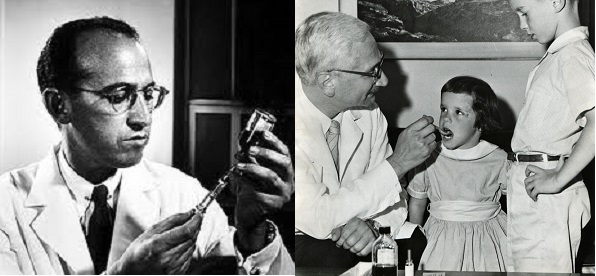
Exemplary Ethical Conduct I’m Embarrassed I Didn’t Know About Dept.: Jonas Salk and Albert Sabin
You learn the damnedest things in the damnedest places, which is a good reason to keep your ears open wherever you may be.
Last night I found myself listening to Michael Savage, easily the most offensive of all conservative talk show hosts, and he gives Rush and Mark Levine a run for their money in the ego category, too. I only listen to Savage by accident, and then only in bites of five minutes or less; it frightens me that millions of people might be influenced by such consistently hateful commentary.
But Savage (whose real name is Michael Alan Weiner) is no dummy, and not infrequently goes off on learned tangents about philosophy, history or religion in between declaring that the nation is under Nazi rule. Yesterday, just as I was reaching for the dial, he disclosed that one of his heroes growing up was Jonas Salk, not because he invented the first effective polio vaccine, but because he refused to patent it, and gave it to the world for the benefit of humanity. A bit later, Savage noted that Albert Sabin, Salk’s bitter rival who later invented the oral vaccine, also declined to profit from his invention.
Could all this be true, I wondered? If it is true, why did I not know about it? Why doesn’t everybody know about it? Continue reading
Now THAT’S An Untrustworthy Legal Secretary!
The Connecticut Law Tribune reports that Barbara Kalpin, a former legal secretary at the Waterbury law firm of Grady & Riley, has been charged with stealing more than $1 million while forging dozens of checks and documents.
She was, the story says, “a longtime and trusted employee at the firm.” It seems the firm’s trust was misplaced. Investigators have discovered that she spent about $500,000 over the last few years at an off-track betting venue in New Haven for horse and dog racing. According to police, she wrote 93 checks from a client fund that she managed, among other things using the money to pay credit card bills and to finance multiple mortgages on her home. Kalpin is facing two counts of first-degree larceny and 112 counts of second-degree forgery, and is awaiting arraignment next week.
Connecticut’s bar, like every that of every other state, imposes a strict obligation on attorneys to supervise non-lawyers who are placed in positions of assisting in legal work and the handling of client matters: Continue reading
The Ethics of Cheering Alex Rodriguez
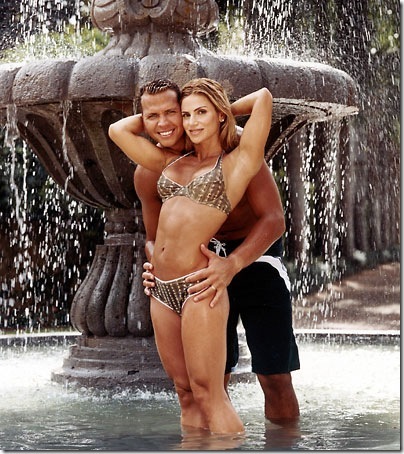
Baseball’s most embarrassing super-star, the steroid cheat Alex Rodriguez, in playing for the New York Yankees while appealing his long suspension by Major League baseball. As he is unquestionably a repeat liar and a serial violator of the game’s rules against PED’s (performance enhancing drugs), as he signed a contract, in part generated by the results of his cheating, that will both enrich him by millions and handicap his team competitively while conferring few, if any benefits, as he would qualify, by most objective standards, as the antithesis of a sports hero, the fact that Arod, as he is called, still was cheered by a vocal minority in Yankee Stadium when he made his season debut this week is intriguing. What does this mean? Can it be ethical to cheer Rodriquez now?
These are deceptively complex and difficult questions. The threshold issue is whether cheering or jeering any sports figure, or any public figure at all, is an act with ethical content rather than just a communication of an opinion. Is it conduct, or just “words”? I think, in the context of the Rodriquez situation, a sound argument can be made that it is conduct. Registering group approval or disapproval of prominent conduct by someone of status and influence is a crucial societal function in setting standards, registering disapproval, and prompting shame, regret, apology and reform—none of which, so far at least, seem to register with Arod.
That is pretty clearly what the boos convey, but what about the cheers? If the boos are ethical—they are if the disapproval is proportionate, rational, fair, and just—then are the cheers automatically unethical? Not necessarily. Here are some of the things those cheers could be expressing: Continue reading
Ethics Quote of the Week: Charles Geyh and Stephen Gillers
“Codes of ethics for judges fortify the administration of justice. They tell judges their ethical responsibilities and articulate high standards of conduct to which they should aspire. They assure litigants that a judge before whom they appear is committed to fairness and impartiality. They require judges to conduct their personal and professional lives in a manner that fosters respect for the courts.”
—–Law professors Charles Geyh and Stephen Gillers, arguing in Politico for the U.S. Supreme Court to adopt a Code of Ethics.
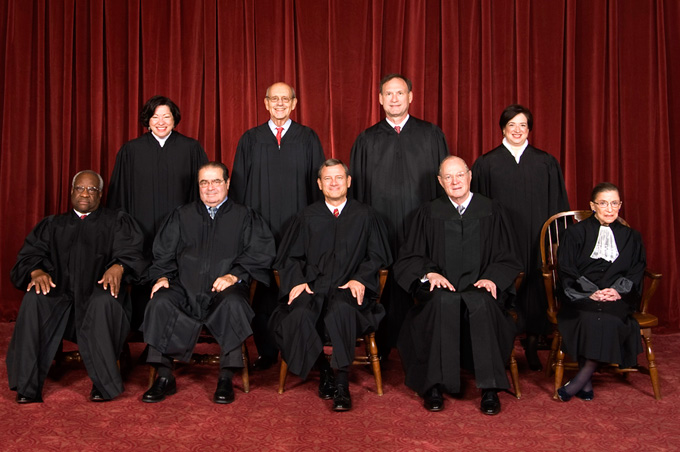
The U.S. Supreme Court, it might surprise you to know, is the only court in the U.S. without a formal Code of Ethics that its judges are required to follow. The idea appears to be that if one has risen to the tippity-top of the judicial tree, one’s ethics must be impeccable as matter of course.
Right.
On Politico, Charles Geyh and Stephen Gillers make a convincing argument that SCOTUS should not only hold itself to high ethical standards, but also make it clear to all what those standards are.
You can read the entire post here.
________________________
Pointer: Legal Ethics Forum
Badonkadonkeys
One would think—wouldn’t one?— that I could listen to a baseball game on my car radio without being jolted intro an Ethics Alarms column, but nooooooo…
Here I am, sort-of listening to the Orioles game while running to the grocery store, and suddenly I hear two morning jocks have this exchange:
“So there, in line for the roller coaster, is this woman eating a funnel cake, and she has this comically huuuuge badonkadonk butt! It is the biggest butt I have ever seen! I couldn’t take my eyes off it!”
“How was she going to fit into the roller coaster seat with that badonkadonk?”
Well, I don’t think she could! And I came this close to saying, “Ma’am, would you please stand over here so I can take a photo of your comically gigantic badonkadonk butt as you eat your funnel cake?”
(hysterical laughter) Continue reading
Ethics Dunce: “Johnny Football”—True, But Now What? Maybe Hollywood Had The Solution
Texas A&M Aggies quarterback Johnny Manziel, a.k.a “Johnny Football,” ended last year by winning the 2012 Heisman Trophy, the first freshman ever to do so. He has spent the first 8 months of this year showing that he is an immature, arrogant kid with a dangerously inflated ego, with no sense of his obligations as a widely admired elite athlete, and little expertise in how to conduct himself responsibly and ethically.
A brief and incomplete sampling of his exploits:
- In January, following his team’s A&M’s Cotton Bowl win over Oklahoma, he visited the Winstar Casino in Oklahoma for some late-night gambling. He tweeted a photo with friends, waving money around. When the photo went viral on the web, sparking criticism, Manziel tweeted, “Nothing illegal about being 18+ in a casino and winning money…KEEP HATING!”
- In March, Manziel was frustrated after throwing an interception during a spring football scrimmage, so he shoved aside a graduate assistant who happened to be in his way.
- He was photographed with a fake tattoo of Texas A&M’s archrival Texas Longhorns, infuriating the fanatic fans of the Aggies. Continue reading
Ethics Corrupter: Yankee Third Baseman Alex Rodriquez; Ethics Dunce: Yankee Manager Joe Girardi; Disgraced: The New York Yankees
Today, Major League Baseball announced that it was suspending Alex Rodriquez, the New York Yankees aging superstar, for the remainder of the 2013 season and the 2014 season for using banned performance enhancing drugs, and impeding baseball’s investigation of his cheating. This was the climax (but not the end) of a long, drawn out, messy process and investigation involving a sleazy Miami drug lab, called Biogenesis, now closed down, which had records indicating that many professional baseball players had obtained banned substances.
Former National League MVP Ryan Braun (who I keep calling “Steve”) has already been banned for the rest of the year by the evidence obtained from Biogenesis records. The process has been marred by serial leaks from MLB (unfair to the players involved, including Rodriquez) and ugly maneuvering between Rodriguez, who has been recovering from a serious hip issue, and the Yankees, who owe him approximately a gazillion dollars (thanks to an idiotic career contract signed in 2007 after he had already admitted to using steroids once), would like nothing more than for him to vanish in a puff of smoke and sulfur.
To explain the baroque ins and outs of baseball’s steroid wars, its player union relations, and the various intersecting agreements, special clauses and other things that have an impact on Rodriquez’s suspension would take too long here and would even bore the baseball fans. What you need to know now is this: Continue reading
Ethics Dunce: Photographer Jill Greenberg
In Slate, renowned photographer Jill Greenberg returns to the topic that gained her unwanted notoriety in May: her exhibition of photographs of children crying their little eyes out. Greenberg revealed at the time that she captured the powerful photographs by giving the very young children lollipops or something else they liked or wanted and then having family members ask the kids to return the item. Strangely, as Drew Curtis’Fark, one of my favorite web sources for stories is wont to say, some people had a problem with this.
Greenberg revisits the issue because she has a book of the weepy photographs coming out. Seldom does one read a more casual, “What is the matter with people?”, utterly clueless display of invalid rationalizations for unethical conduct as Greenberg belches out. Unfortunately, another tendency illustrated by the article is far more common: a news sources examination of an ethics issue without any apparent sensitivity or understanding of the ethics issues involved.
Here are Greenberg’s rationalizations, or at least the ones she gave to Slate. I’m sure she has many more.
- The Trivial Trap, or “Don’t sweat the small stuff.” “I have two children of my own. Crying is not evidence of pain or any real suffering. It’s really just the way children communicate.” Ah. Not real suffering. Then it’s all right, then. The bottom line is that Greenberg is intentionally upsetting the children, who, it can be fairly said, are less anxious and happier when they are not crying. Children who are teased, frightened or otherwise made uncomfortable can also be said not to be in pain or “real” suffering. It’s still cruel, and an abuse of power, to treat them this way. Come to think of it, Greenberg could make the same argument about some of the models in child pornography. Would she, I wonder?
- “Everybody does it” and the “They’re Just as Bad” Excuse. “Making children cry for a photographer can be considered mean. But I would say that making children laugh and show off their jeans for an apparel ad is just as exploitative and less natural.” And, I suppose, making a Bangladesh child cry by taking food from her to make her cry is just as exploitative and more natural than giving her food to make her smile, because, after all, she’s usually starving anyway.
- The Saint’s Excuse or “It’s for a good cause” a.k.a “The ends justify the means.” Slate: “The still image continues to have a ton of strength. An image taken out of context from one fraction of a second to the next can tell a story, and if photographers are looking to tell a certain story, they can curate those slices of time to their advantage. What’s weird about the images is they seemingly can be applied to all these random disparate causes. My husband was saying they’re like emoticons.” True, Jill, but those little smiley faces don’t have to be tortured to get them to frown or cry, because, unlike babies, they aren’t real human beings.
The bottom line is that Greenberg made money and got a lot of ink by making children unhappy, so she can’t see why anyone would argue that the conduct wasn’t justified, and based on the article, neither does Slate or its writer, Jordan G. Teicher. The photographer’s methods are, of course, obviously and indisputably unethical:
- She exploited the children for her own agendas and benefit.
- She abused her superior power over the children to get the reaction she wants.
- She induced anxiety in another, causing needless harm.
- She created a product, the photo, which memorializes a form of child abuse.
- She recruited the children’s parents into assisting in the exploitation for the artist’s purposes, rather that doing their job as parents, thus inducing a breach of loyalty and a betrayal of parental duty.
- She created and profited from a materialization of an unethical abuse of a child, which is identical to what child pornography does.
- She encouraged others to create similar photographs, which will be created, in some cases, with even less humane methods.
Of course her methods were unethical. She deserves every bit of criticism and hate mail that she has received. But the sophisticates, like Slate and others, just shrug off the concern as foolishness, much ado about nothing. So she made kids cry! They cry all the time! What matters is that she got some great pictures!
Many of society’s problems arise from the fact that our media can’t recognize, and thus encourages, unethical behavior, even obvious examples like making little children cry for fame and fortune.
__________________________
Pointer: Alexander Cheezem
Sources: Bored Panda, Slate, Fully M

On The NFL Player’s Slur, The MSNBC Journalist’s Lie, Words, Conduct, Reason And Proportion
There are words, there are thoughts, and there is conduct. Thoughts are not unethical. Conduct can be unethical. Words can be considered conduct when they are intended to have, or do have, material and measurable direct effects. Verbal abuse is conduct. Using a rude, vulgar or hateful word may not be verbal abuse.
Although the NFL and his team, the Philadelphia Eagles have every right, and some good reasons, to punish, suspend or even terminate Riley Cooper because a video reveals the Eagles player as saying, “I will jump that fence and fight every nigger here!” at a Kenny Chesney concert, I don’t see any conduct there, just words. He did not direct the racial slur at any individual, and there is no evidence that it was intended to harm or intimidate any African-Americans. He did not intend for the outburst to be publicized of communicated to anyone but the friends he said it to. On a pure just punishment for harm intended or achieved basis, it is ridiculous for Cooper to be facing the loss of millions and his athletic career because he uttered a single racial slur that was captured on a video. It cannot be defended logically or as a reasonable position. Using one racial slur in that setting doesn’t prove that Cooper is a racist. It doesn’t prove hate. Even if it did, hate is not illegal or even unethical until the hater acts on it in an unethical way. And a word is just a word. We don’t, or shouldn’t, fear mere words in a rational American society. We shouldn’t have taboos, or people who “cannnot be named,” like in the Harry Potter books. The ease and certitude with which otherwise intelligent people capable of making judgments involving proportion and common sense blithely go along with the batty idea that uttering a word, only uttering it and nothing more, should result in devastating consequences, is frightening. It is a per se unethical position, because it is unfair, and incompetent, because it is essentially crazy.
Having said that, I can understand why, since so many people are irrational about words, why the NFL or the Philadelphia Eagles, as a business decision, may decide that they don’t want Cooper associated with them any more. That is a rational choice, and may even be the best choice. That is not the same as saying that he deserves that result. If the bulk of NFL fans are fanatically politically correct, then the NFL and its teams cannot afford to ignore that. Sorry Riley. Continue reading