“And Now We Welcome You To Another Episode of “As The Media Shrugs”! Elizabeth Faces Exposure As a Dishonest and Unlicensed Lawyer…Will She Finally Reveal The Truth? Will Voters Care?”

“Nope, no way to Texas; can’t get to New Jersey…maybe I should just bite the bullet and get a Massachusetts law license? Nawww, who’s going to care?”

No major newspapers or broadcast news outlets seem to care, but what was originally dismissed as a partisan blogger’s over-reaching accusation has been bolstered by more than one smoking gun, proving Elizabeth Warren’s untrustworthiness and lack of fitness for high office.

Robert Eno of Red Mass Group, who joins Prof. William Jacobson as a blogger doing dogged and necessary research on the Massachusetts Senate candidate, has convincingly shown that Warren’s justification of her practice in Massachusetts, sans law license, doesn’t work, because what she says can’t possibly be true.

Earlier this week, Warren tried to rebut Jacobson’s allegations by explaining, “I haven’t practiced any law since 2010 since I went down to do the Consumer Financial Protection Bureau. I’ve been a member of the bar in Texas for all of my career, in the Supreme Court bar, and until a few weeks ago the bar in New Jersey.” Warren and her defenders also argued that Jacobson’s claim that she was operating a regular law office out of her Harvard faculty office, which would make her an unlicensed Massachusetts practitioner, was inaccurate. Warren periodically was involved in cases in Federal court, which did not require a  Massachusetts license, they said. All that was necessary for Warren to appear before various Federal Courts was for her to be duly licensed in a state or territory, and file a statutory request to the court to appear.

Warren’s problem: it is beginning to appear that she may not have been properly authorized to practice law anywhere, or, if she was, she had to be using her Harvard office as a regular law office, meaning that she was practicing Massachusetts law. Without a license.

Here is what Eno discovered:

1.  Warren says she has been a continuous member of the Texas bar,which is technically true but misleading. After following her constantly changing spin while explaining her undocumented status as an affirmative action beneficiary, I believe misleading us is her intent. Yes, she has been a member of the Texas bar during her whole career, but during most of that period she was not allowed to practice Texas law, which was the topic under discussion when Warren cited her membership. Kim Davey the Public Information Officer for the State Bar of Texas told Eno that Warren has been on inactive status in Texas since June 1, 1992. Inactive status means a lawyer is not authorized to practice law. Warren says that she only stopped practicing law (while living and working  in Massachusetts) in 2010, which means that she could not rely on her Texas license while she was at Harvard.

2. Thus it must have been her New Jersey law license that made Warren eligible to appear in Federal Court. But there’s a problem there, too. New Jersey rules hold that a lawyer can only be a licensed attorney in good standing in New Jersey if that lawyer maintains a bona fide office for the practice of law. The office can be in any state, but it must qualify as a law office, or New Jersey’s license to practice law is no longer valid.

This means that Warren is mired in a Catch 22. If, as her defenders and Warren have maintained, she was not engaged in the practice of law because her Harvard office did not constitute  “a systematic and continuous presence in Massachusetts for the practice of law” (because Warren was just a typical Harvard law professor who now and then helped write a few briefs for the U.S. Supreme Court and out-of-state federal courts), then she could not meet New Jersey’s licensing requirements, and was practicing law without any valid law license in any state once she went on inactive status in Texas. If, in the alternative, her Harvard office was a bona fide office for the practice of law, rather than a place where she just “dabbled,” then she was practicing in Massachusetts without a Massachusetts license. Continue reading →
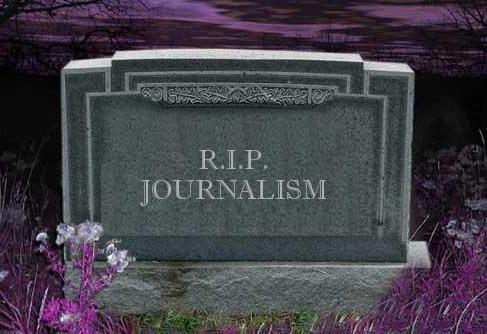
More Revelations Regarding Elizabeth Warren’s Alleged Unauthorized Practice of Law, and Why This Matters

Prof Jacobson, on his blog Legal Insurrection, is in line for an Ethics Hero award with his tenacity regarding Elizabeth Warren’s dubious qualifications to engage in the practice of law in  Massachusetts. The overwhelming reaction by his colleagues in legal academia, and mine in the legal ethics community, has been to airily dismiss his arguments as trivial, far-fetched and thinly disguised political warfare, since Jacobson is an unapologetic conservative blogger (and a distinguished one.) Meanwhile, the mainstream media has, I think it is fair to say, completely ignored the story.

Part of this is undoubtedly because of the ignorance of most journalists regarding the importance of the legal ethics rules in question. Part of it is probably due to the accurate assessment by editors and TV news producers that the average American’s brain would switch off right around the time the story mentions Massachusetts Rule of Professional Conduct Rule 5.5 Subsection (c), and will start wondering about how Blair from “The Facts of Life” is going to do on “Survivor.” And part of it, infuriatingly, is because most journalists are willing to forgo the ethical duties of their profession in order  to ensure that a Democrat wins back Ted Kennedy’s Senate seat, and character be damned.

The rude brush off Prof. Jacobson is getting in this wagon-circling exercise is wrong in every way, and does injustice to every person and institution involved, including the Massachusetts legal establishment, the legal profession, ethical lawyers (which, believe it or not, the vast majority of them are), Senator Brown, the U.S. Senate, Massachusetts voters, and the American public. Bar associations across the country regularly punish ordinary lawyers who practice law without proper authorization, and there is a reason: a lawyer who won’t or can’t obey the most basic requirement of the profession—be sure you are practicing law legally—should not be trusted to handle the important transactions and controversies of their clients’ lives. Continue reading →

More From Prof. Jacobson On Elizabeth Warren’s Law License

Uh, guys? Do you even care what really happened any more?

[ Original post here]

He has read various critiques of his analysis and allegations, and addresses them here. Jacobson also spoke with the much quoted General Counsel of the Mass Board of Bar Overseers, and confirmed that  Michael Fredrickson was not speaking officially or on behalf of the BBO, but rather giving his personal opinion.

For my part, I am dismayed, if not shocked, that the legal establishment, as well as legal ethicists who should know better, are letting their political biases dictate their analysis. It is true that Jacobson is an openly conservative blogger as well as a long-time critic of Warren, but he raises legitimate questions that deserve to be taken at face value, whatever their source. The fact Fredrickson, the BBO General Counsel, felt it necessary to personally defend Warren in the absence of sufficient facts strongly suggests a pro-Warren bias in the disciplinary system, where it really shouldn’t matter who breaks the rules, but whether or not they have. Similarly, over at the Legal Ethics Forum, legal ethics legend Monroe Freedman comments,

“It surprises me that so much commentary has been expended on such a relatively unimportant issue, which apparently was raised in the first place to embarrass a candidate for the Senate in a race that has matters at stake that could affect the future of the country.” Continue reading →

Well, There Goes Elizabeth Warren’s Legal Ethicist Vote! (UPDATED)

On the positive side for Prof. Warren, at least she may be able to  truthfully say that in Massachusetts, she’s more Cherokee than lawyer…

As thoroughly researched by Cornell Law Professor ( and conservative blogger) William Jacobson, Democratic Senate candidate Elizabeth Warren practiced law in her Cambridge, Massachusetts office for more than a decade without ever being licensed to practice law in that state. His findings are here. Continue reading →

Ethics Heroes: Papa Roach

Ethics Alarms’ 2011 Commenter of the Year tgt, who found this story and passed it on, asks,

“How is a horrible stoner rock band more ethical than everyone in politics?”

It’s a great, if sorrowful, question.

A.V. Club has a feature (which could be called “Start a Feud”) in which it asks a rock performer what song he or she hates, and why.  Jenn Wasner, one half of the Baltimore indie-folk duo Wye Oak (“a blend of Southern culture and Northern sensibilities…”) submitted to this invitation to get in trouble, and fingered the song in the video above, “Scars,” by Papa Roach.

Criticizing the work of other artists in the same field is unprofessional at best, gratuitously unkind and disrespectful. Papa Roach’s members would have been within their rights to fire back something less than complimentary in defense, at very least the observation that ethical musicians don’t take gratuitous shots at one another. What the band did however, was this: it sent Wasner flowers. Wasner was convinced it was some kind of diabolical trap, and tweeted as much. The band tweeted back: Continue reading →

The State of Our News Media in a Nutshell

Preparing for an early legal ethics program for Virginia CLE, I made the mistake of tuning in to Headline News’ morning show hosted by chirpy eye-candy Robin Meade. Breathlessly, she announced that an amazing baseball game had occurred last night in Seattle that ended at 4 AM! What followed was a three-minute routine with Robin’s sports guy, who pattered on about how long the game was, how the Beatles sang the National Anthem, how FDR threw out the first ball, showing his high school yearbook photo to show what he looked like when the game started, on and on. None of this was funny, of course, because it made no sense: the fact that the game lasted a long time didn’t send the beginning of the game back in time. The CNN editors somehow thought this was so hilarious that it justified taking up the time that Headline News could have devoted to actual news of substance, which was once the point of the channel, a compressed summary of breaking stories. That was the least of the problems with the segment, however:

  • The 18-inning game was about 5 hours long, which is noteworthy but hardly remarkable. It ended at 1 AM, however, not 4 AM. The time is measured in the time zone in which a game takes place, not whatever time zone the copywriters think will make it sound longer.
  • The sports guy announced the final score as 2-1. It was not. The score was 4-2. After an extended routine about how amazing and long the not-very-amazing and not especially long game was, the CNN team was obligated to at least get the key fact right: the score.
  • That’s not all. Perhaps in homage to the late George Carlin, who in his pre-hippie days used to do a sportscaster routine in which he said, “And now last night’s baseball scores: 4-3, 8-1, and in a real squeaker, 2-1!” , neither Robin nor her colleague ever revealed who won the game. (The Baltimore Orioles won.)

So, in summary, Headline News took almost three minutes to highlight a baseball game in order to make lame jokes, then failed to accurately inform the audience of the game’s score or winning team. The game, by the way, was an important one, as it allowed the Orioles to tie the New York Yankees for first place in the American League East.

This is, in a nutshell, the state of broadcast news today: sloppy, self-indulgent, unprofessional, incompetent, and untrustworthy. If they can’t give the results of a baseball game accurately, why in the world would we trust their coverage of anything?

______________________


Policies Don’t Fix Unethical Professors

“Here is your assignment, class: Vote for who I tell you to.”

I saw this story and decided it was too obvious to write about. A community college math professor distributes to her class a pledge to vote for Obama and the Democratic slate, and demands that the students sign it—come on! Is anyone going to defend that as ethical? Then a reader sent me several links to the item (thanks, Michael), and after reading them, I was moved to reconsider.

The professor, Sharon Sweet, was put on unpaid leave pending an investigation; I can’t fault Brevard Community College (in Florida) for not firing her yet. What troubles me is the college’s statements that her conduct is just a breach of policy. BCC Spokesman John Glisch told the press that “The college takes this policy [prohibiting employees from soliciting support for a political candidate during working hours or on college property] extremely seriously. It is very important that all of our faculty and staff act in that manner at work and while they’re on campus.” So college provosts are reminding employees about the policy.

Let’s be clear. Associate Professor Sweet’s conduct was an abuse of power and position, an insult to the autonomy of the students and an attempt to take away their rights as citizens, disrespectful to them and the values of the nation, and an attempt to circumvent election laws and to subvert democracy. It was also, quite possibly, illegal. If a college needs to have a policy to stop teachers from behaving like that, it is hiring the wrong kinds of teachers—individuals whose ethics are those of totalitarian states, and whose respect for individual rights are nil. This was an ethical breach of major proportions, not a policy misunderstanding. No teacher should require a policy to tell her that this conduct is indefensible and wrong. Continue reading →

Comment of the Day: “Yes, Reporters Engaged in ‘Collaboration’ On Questions For Romney. Good!”

Dwayne N. Zechman, who has one or two other Comments of the Day to his credit, has authored another in response to the post regarding conservative alarms over evidence that reporters coordinated their questions before Mitt Romney began a press conference on the protests and violence at Middle East embassies. My position was that there is nothing sinister in this as long as it results in the politician or candidate being grilled actually answering legitimate questions. Reporters should do this with all question sessions, if politicians insist on spinning, ducking, and prevaricating. Obviously, if reporters employ this strategy with Romney and not the President, that raises an ethical problem, but a different ethical problem.

Here is Dwayne’s Comment of the Day in response to the post, Yes, Reporters Engaged in “Collaboration” On Questions For Romney. Good!.  I’ll have a further comment at the end.

“I *do* have a problem with the Press Corps acting this way because it sets up a dangerous future license for them to engage in groupthink with no checks and balances against it. (Indeed, the First Amendment would correctly, though tragically, protect it.) Continue reading →

The Replacement Ref and the Conflicted Debate Moderator: How We Become Ethically Stupid

Note to NFL: Don’t hire Gwen Ifill as a replacement referee.

Poor Brian Stropolo was only behaving like a respected national journalist on the political scene; why didn’t it work?

Stropolo, on the crew of NFL replacement refs (that’s scab refs, if you belong to the NFL refs union, which is currecly locked out) was assigned to yesterday’s New Orleans Saints-Carolina game. He was suddenly pulled from the assignment by the league on  Sunday morning, when it came to the NFL’s attention that he had represented himself on his Facebook page as an enthusiastic Saints fan, even appearing on his page in a Saints uniform.

Imagine if Stropolo had made a controversial game-changing call that handed the game to his beloved Saints!  But then, it was up to Stropolo and the league  to imagine it long before any inappropriate game assignment was made. For Stropolo not to notify the league of his web-wide admission of pro-Saints bias when he was assigned to referee a Saints game shows a complete absence of ethics training, instincts and sensitivity. How could this not occur to him? How could the NFL not have a vetting process for refs that would discover team allegiances? Where is the Code of Conduct to remind clueless referees about the “appearance of impropriety,”and the importance of preserving the NFL’s integrity by avoiding any suspicion that referees are tilting games in the direction of teams they root for in their off days? Continue reading →

Writers Writing About Ethics, Without Any

Sorry, can’t use you.

Writer Joe Konrath has written one of those blog posts about ethics that makes me want to defenestrate myself, a post that expounds on rationalizations as a substitute for ethical analysis because he is incapable of the latter, arriving at fatuous and misleading conclusions. Naturally his post was picked up and expounded upon by another blogger, Ben Galley, who has even launched an ethics-challenged website called Ethiks to promote similar ethics rot.

Both writers are holding forth about recent scandals in the publishing world, involving so-called “sock puppetry,” where a writer anonymously praises his own books on-line or trashes the work of competitors, and writers paying for positive reviews. Both are also laboring under juvenile ethical delusions, and obnoxiously so, among them:  that “everybody does it” is a valid excuse for cheating, that the fact that a critic of unethical behavior might engage in such behavior himself under certain conditions invalidates the ethical criticism, and that unethical people insisting that unethical conduct isn’t puts such conduct in a “grey area.” None of these is true; none of these is remotely true.

The ethically-clueless tenor of both posts can be gleaned from this section, by Galley:

“Ethics in life are a grey area. No less in the book industry. To borrow JA’s analogy, the claim of “I would never kill” goes out of the window pretty quickly when protecting your family against a murderous intruder. The line of ethics is never a straight one, often zig-zagging through a charcoal no-man’s land of right and wrong. The question is this: Where does the line lie for you? It’s nothing less than personal. Some people simply shrug at the thought of sock-puppetry. Others go a shade of red and grit their teeth. Sadly, we can write all the codes and edicts we like, the point is that not everyone will a) agree, nor b) abide.”

Let me see: wrong, wrong, irrelevant, wrong, not necessarily, no it isn’t, NO, it REALLY ISN’T, and so what?

Most ethical questions are not gray at all: these definitely aren’t. They are clear as clear can be. “Sock puppetry” is dishonest and unfair. An author paying for positive reviews, and a critic accepting payment from an author to review his work, is blatantly dishonest and a conflict of interest. There is no “gray” about it; they are just wrong. Anyone who draws the “line” anywhere else is wrong too. It doesn’t matter whether everyone agrees: those who don’t agree are unethical. So are those who can’t “abide.” Their unethical conduct doesn’t alter right and wrong.

Konrath’s piece wastes our time with a long argument claiming that unless one is as pure as the driven snow, not only can’t you call unethical conduct what it is,  the fact that you can’t calls into question whether the unethical conduct is really unethical at all. Here’s his “quiz,” which Konrath presents triumphantly as if it is a real brain-buster, when anyone with a modicum of honesty, decency and common sense should be able to score 100% without straining a neuron.

Here it is, with my answers in bold: Continue reading →