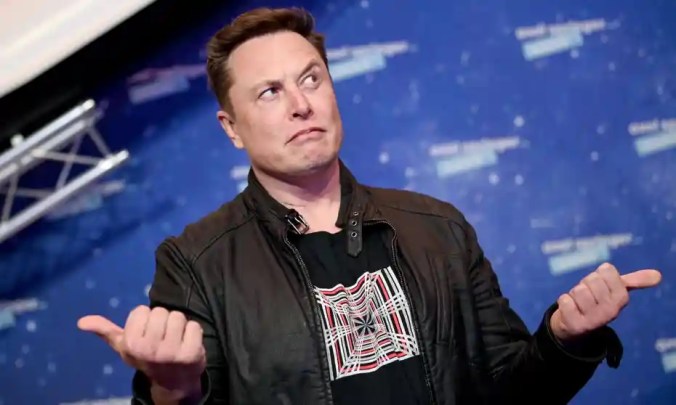
The legal ethics world is all in a fluster over a recent controversy involving Elon Musk, the world’s richest man. This means that readers at Ethics Alarms should be flustering too.
This is the story: An SEC attorney had interviewed Musk during the agency’s investigation of the Tesla CEO’s 2018 tweet claiming to have secured funding to potentially take the electric-vehicle maker private. The claim proved to be false, resulting in a settlement that required Musk to resign and also to pay 20 million dollars in fines. In 2019, Musk’s personal lawyer called the managing partner at Cooley, LLP, and demanded that the firm fire the SEC lawyer, who had left the agency to become as associate at the large firm that handles Tesla’s business. The targeted lawyer had no connection to Tesla’s legal work at the firm; the sole reason for the demand was revenge. Musk wanted him to lose his job because he was angry about their interaction at the SEC. Continue reading →
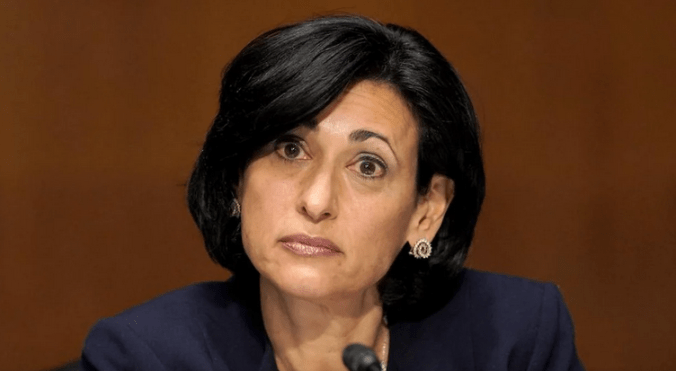
Apparently in the strange grip of a sudden compulsion to practice journalism, NBC’s Peter Alexander pressed CDC Director Walensky this week about the agency’s two years of contradictory explanations, directives and advice regarding the pandemic in its various forms. “Why should Americans trust the CDC?” he asked her.
Well obviously they can’t and shouldn’t, since the number of times what the CDC said one day was reversed another is beyond counting. The agency’s advice is untrustworthy, its messages are untrustworthy, its protocols and standards are untrustworthy and its leadership is untrustworthy. The question should be easy to answer for anyone who understands what “trust” means, and the answer is “They shouldn’t.”
I think I’m going to feature “Jingle Bells” here every day until New Years. Here’s a version by that infamous slavery fan, Nat King Cole:
December 29 is one of the bad ethics dates: the U.S. Cavalry massacred 146 Sioux men, women and children at Wounded Knee on the Pine Ridge reservation in South Dakota on this date in 1890. Seven Hundred and twenty years earlier, four knights murdered Archbishop Thomas Becket as he knelt in prayer in Canterbury Cathedral in England. According to legend, King Henry II of England never directly ordered the assassination, but expressed his desire to see someone ‘”rid” him of the “troublesome priest” to no one in particular, in an infamous outburst that was interpreted by the knights as an expression of royal will. In ethics, that episode is often used to demonstrate how leaders do not have to expressly order misconduct by subordinates to be responsible for it.
1. I promise: my last “I told you so” of the year. I’m sorry, but I occasionally have to yield to the urge to myself on the back for Ethics Alarms being ahead of the pack, as it often is. “West Side Story” is officially a bomb, despite progressive film reviewers calling it brilliant and the Oscars lining up to give it awards. What a surprise—Hispanic audiences didn’t want to watch self-conscious woke pandering in self-consciously sensitive new screenplay by Tony Kushner, English-speaking audiences didn’t want to sit through long, un-subtitled Spanish language dialogue Spielberg put in because, he said, he wanted to treat the two languages as “equal”—which they are not, in this country, and nobody needed to see a new version of a musical that wasn’t especially popular even back when normal people liked musicals. The New Yorker has an excellent review that covers most of the problem. Two years ago, I wrote,
There is going to be a new film version of “West Side Story,” apparently to have one that doesn’t involve casting Russian-Americans (Natalie Wood) and Greek-Americans (George Chakiris) as Puerto Ricans. Of course, it’s OK for a white character to undergo a gender and nationality change because shut-up. This is, I believe, a doomed project, much as the remakes of “Ben-Hur” and “The Ten Commandments” were doomed. Remaking a film that won ten Oscars is a fool’s errand. So is making any movie musical in an era when the genre is seen as silly and nerdy by a large proportion of the movie-going audience, especially one that requires watching ballet-dancing street gangs without giggling. Steven Spielberg, who accepted this challenge, must have lost his mind. Ah, but apparently wokeness, not art or profit, is the main goal.
Not for the first time, people could have saved a lot of money and embarrassment if they just read Ethics Alarms….
Kevin Clinesmith, a former senior FBI lawyer who was sentenced to 12 months probation last January after pleading guilty to a felony in connection with the falsified information used to acquire the FISA warrant used to surveil marginal Trump campaign figure Carter Paige in relation to the Trump-Russia investigation, was restored as a member in “good standing” by the District of Columbia Bar Association’s discipline committee.
Maybe there is a a good reason for this, but it seems very strange.
The Bar did not seek Clinesmith’s disbarment which lawyers convicted of felonies involving the justice system typically face. He has not even finished serving out his probation as a convicted felon. After the negative publicity about the apparently rigged FISA process (the objective was to “get Trum”), the bar temporarily suspended Clinesmith pending a review and hearing. In September, Clinesmith’s suspension was ended with time served and his status to “active member in good standing.”
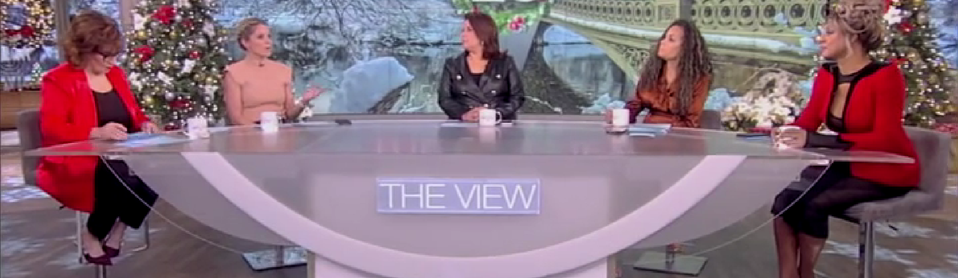
“We want victims of hate crimes and any crime to be believed. And so I think that, you know, in a sense, that was a good thing, that they came out and said, ‘We believe you.’”
—Sunny Hostin, throwing in her contribution to “The View’s” desperate efforts to offer excuses and rationalization for convicted hate-crime fraud Jussie Smollett and the race-baiting Democrats and pundits that instantly believed his absurd story and blamed his “attack” on Donald Trump.
Hostin, incidentally, is a lawyer. A lawyer actually made an argument that devoid of logic. What does that tell us about the law school that graduated her (Notre Dame), the Justice Department that hired her (Clinton’s), and the news networks that employed her as an analyst (CNN, Fox News, Court TV and ABC). Is there a dumber statement that is even possible to make? “It’s a ‘good thing’ that an obviously made-up hate crime account was believed, because we want everyone to believe even fictional accusations, though doing so wastes money, take police away from investigating real crimes, and increases societal divisions and suspicion.” Brilliant!
All right, all right: I know calling ethics fouls on the blather that passes for debate on “The View” is like beefy ex-male swimmer winning races against life-time females. Nevertheless, people watch “The View,” get fed “logic” like Hostin’s, and become dumber and dumber, until next thing you know they’re voting for Kamala Harris for President. Responsible citizens don’t just need ethics alarms, they need idiot alarms. If you can’t hear a comment like Hostin’s and instantly know what she said was idiotic, you’re not an asset to a democracy. Continue reading →
[Nat King Cole’s rendition of this song always makes me smile: his German is so dreadful. But what a voice! It’s like hot cocoa with a marshmallow melting in it.]
Well, the 8-foot Concolor fir tree goes up today, meaning about four hours of prickles and dead light strands lie ahead. Can’t wait!
I have a Christmas ethics dilemma on which advice would be appreciated. As I think I mentioned, Spuds, who is a canine battering ram, was romping at night in the field behind our house with a group of dog pals when one of the owners, a next door neighbor of thirty years, zigged when she should have zagged and Spuds ran right into her. Her leg was broken in two places, and now her 71-year-old husband is facing caring for her for at least several months, also taking care of their two large Belgian Shepherds, as well as a disabled family member who lives a few houses down the street. Lots of the dog-owners have dropped off holiday food for the couple, and we want to send a nice Harry and David package. How do we frame the gift in a way that sends the implied message we want to convey (“We’re thinking of you, and hope you can enjoy the Christmas in spite of everything”) and not “Please don’t sue us!” ? (I am not at all concerned on that score, for reasons social and legal.) Should Spuds sign the card, along with us?
I’ll be damned before I ask “The Ethicist,” or worse still, “Social Qs”…
1. Look! A competent list for a change! The Independent issued a list of “The Magnificent 20: the Top 2O Westerns of All Time.” I’ve lectured and written about this most ethics-minded and American of film genres, and I was pleasantly surprised that almost all of the Westerns I regard as essential made the list. Graeme Ross, the author, knows his stuff. That doesn’t mean I agree with all of it. I am not a Sergio Leone fan, and consider all of the spaghetti westerns as anti-Westerns at heart, so those are two slots I’d fill differently. As usual “The Searchers” is too high (it’s #1), and “Unforgiven” made the list, a film that I thought was over-rated from the second it came out (Sorry Clint.)
Still, only one of the Westerns included is affirmatively dreadful (Brando’s misbegotten “One-Eyed Jacks”) and an unforgivable choice. On my list (which is longer), “Lonesome Dove” is #1 (“Shane” is #2) but it’s not technically a movie, I guess. I also would include “Silverado” in the top 20. “The Man Who Shot Liberty Valence” is an essential inclusion on such a list; I don’t know how it was missed. Still, a responsible, respectful and fair effort—and John Wayne has more movies on the list than anyone else, even without “The Man Who Shot Liberty Valance.” Good.
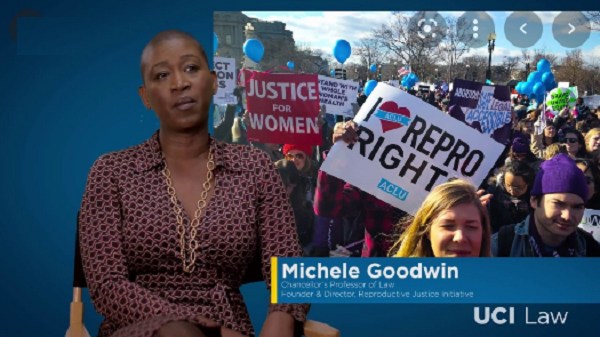
Why does Ethics Alarms rate Professor Goodwin an Ethics Villain rather than the more common, and usually forgivable, status of Ethics Dunce? It is because in her op-ed for the New York Times,“I Was Raped by My Father. An Abortion Saved My Life,” she deliberately misrepresents the law and ethics of the abortion issue while using her status as a law professor to mislead readers. She also presents an argument that is purely an appeal to emotion, though as a scholar and teacher she is professionally obligated not to advance a position without basing it in reason and fact.
There is nothing unethical or inappropriate about Goodwin advancing a pro-abortion position if she does so honestly. She is obviously committed on the issue as the founding director of the U.C.I. Law Center for Biotechnology and Global Health Policy and its Reproductive Justice Initiative, and the author of “Policing the Womb: Invisible Women and the Criminalization of Motherhood.” Terrific: make your case, Professor! I have an open mind; I look forward to reading it. You obviously have the skill, background, experience and erudition to be enlightening and persuasive on the topic.
But Goodwin doesn’t make a legal case, an ethical case, a moral case or even a logical one in her op-ed. Doing any of those require acknowledging counter arguments and rebutting them with facts and analysis. Instead, her essay goes straight for the heartstrings and viscera, bypassing the brain entirely.
Goodwin was raped by her father when she was 12, you see. How horrible. She courts our sympathy, and, not inappropriately, receives it. However, she never makes the case that a young woman’s (or girl’s) misfortunes, however severe, justify taking the life of another human being.
I’m currently weighing whether to try to get up the Ethics Alarms Best and Worst of 2021 this year, after several years in a row of failing to find the time and energy…I am also re-watching “Clickbait” in preparation for the special Ethics Alarms Zoom discussion that, I hope, will soon be scheduled for some tome in the next 31 days. As regular readers here know, my ambitions sometimes exceed my grasp.
Heh. Sometimes...!
1. Oh look, a frivolous appeal to the U.S. Supreme Court, because #MeToo, or something…The prosecutors who unethically used improperly obtained evidence to put Bill Cosby prison are now asking the United States Supreme Court to throw out the appellate court ruling earlier this year that overturned his 2018 conviction for sexual assault on due process grounds. Cosby was released in June after serving less than three years of a three-to-10-year sentence. He should not have served any time at all. A ruling by the Pennsylvania Supreme Court held that Cosby’s rights had been violated when the Montgomery County District Attorney’s office pursued a criminal case against him despite a binding “non-prosecution agreement” given to him by a previous district attorney. Cosby’s rights were violated, raping scum that he is.
Notice how feminists, civil rights activists on the left, anti-Trump fanatics and others who have a monopoly on Truth and Right (or think they do) increasingly want the law to yield to “justice”? There is no valid basis for this appeal. Zip, none. The lawyers filing it should be sanctioned for unethical conduct, just as Trump lawyers who filed suits to flip-flop the 2020 election without evidence have been sanctioned.
2. Speaking of the 2020 election, the shady dealings of Joe Biden’s son, quite possibly with Joe’s knowledge and even facilitation, were, we now know, kept from the public just long enough to ensure Donald Trump’s defeat. Today, Senator Chuck Grassley took to the Senate floor to expose more smoking gun documentation. Here’s the video:
Of course, none of the news networks, except maybe Fox, will run it, and I assume the major print sources sill ignore it. The situation is not helped by the fact that Grassley is 88 and has no business being in the Senate. He’s pretty sharp for 88, which is like saying Jane Fonda is pretty hot for 83. I don’t want to see her do a sequel to “Barbarella”, and I don’t want to have to watch Grassley stumble through an important presentation.
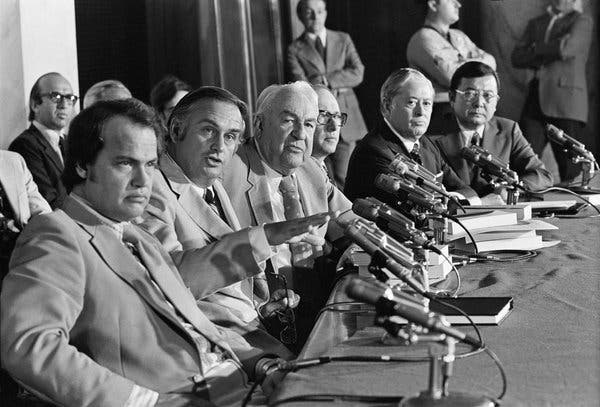
Shepard, who has been obsessed with Watergate for decades and has written three previous books about the scandal, forced the release of a secret prosecutors’ “road map” used to convince a grand jury to indict key Watergate figures and spur the impeachment inquiry. He also claims his research shows that Watergate prosecutors were coordinating with Judge Sirica, which was one reason many of them, included the sainted Special Prosecutor Archibald Cox, improperly took documents with them when they left the case. Amusingly (I guess), the Washington Examiner calls this “a big legal no-no.” That’s one way of putting it, I guess—a stupid way. If true, it’s grounds for disbarment for the lawyers and impeachment for the judge.