November Ending Ethics, 11/30/21: Unethical Appeal, Buried Corruption, The Usual Hypocrisy, A Supreme Court Threat, And That’s Not All…

Bye November

I’m currently weighing whether to try to get up the Ethics Alarms Best and Worst of 2021 this year, after several years in a row of failing to find the time and energy…I am also re-watching “Clickbait” in preparation for the special Ethics Alarms Zoom discussion that, I hope, will soon be scheduled for some tome in the next 31 days. As regular readers here know, my ambitions sometimes exceed my grasp.

Heh. Sometimes...!

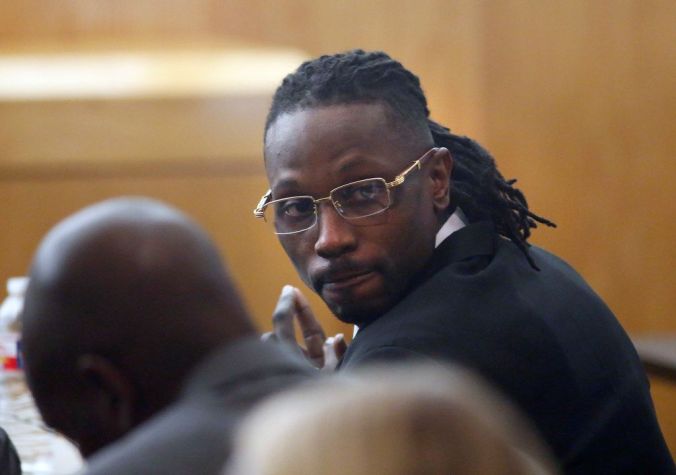
1. Oh look, a frivolous appeal to the U.S. Supreme Court, because #MeToo, or something…The prosecutors who unethically used improperly obtained evidence to put Bill Cosby prison are now asking the United States Supreme Court to throw out the appellate court ruling earlier this year that overturned his 2018 conviction for sexual assault on due process grounds. Cosby was released in June after serving less than three years of a three-to-10-year sentence. He should not have served any time at all. A ruling by the Pennsylvania Supreme Court held that Cosby’s rights had been violated when the Montgomery County District Attorney’s office pursued a criminal case against him despite a binding “non-prosecution agreement” given to him by a previous district attorney. Cosby’s rights were violated, raping scum that he is.

Notice how feminists, civil rights activists on the left, anti-Trump fanatics and others who have a monopoly on Truth and Right (or think they do) increasingly want the law to yield to “justice”? There is no valid basis for this appeal. Zip, none. The lawyers filing it should be sanctioned for unethical conduct, just as Trump lawyers who filed suits to flip-flop the 2020 election without evidence have been sanctioned.

2. Speaking of the 2020 election, the shady dealings of Joe Biden’s son, quite possibly with Joe’s knowledge and even facilitation, were, we now know, kept from the public just long enough to ensure Donald Trump’s defeat. Today, Senator Chuck Grassley took to the Senate floor to expose more smoking gun documentation. Here’s the video:

Of course, none of the news networks, except maybe Fox, will run it, and I assume the major print sources sill ignore it. The situation is not helped by the fact that Grassley is 88 and has no business being in the Senate. He’s pretty sharp for 88, which is like saying Jane Fonda is pretty hot for 83. I don’t want to see her do a sequel to “Barbarella”, and I don’t want to have to watch Grassley stumble through an important presentation.

Continue reading

Was Nixon Brought Down By A Prosecutors’ Conspiracy?

watergate

Geoff Shepard‘s intriguing new book, The Nixon Conspiracy: Watergate and the Plot to Remove the President , is out today. Shepard, a Nixon aide who turned against his former boss during the Watergate hearings after hearing some of the Oval Office tapes, has assembled a large amount of what he calls “irrefutable” evidence that President Nixon was victimized by extreme prosecutorial misconduct in a “deep state” effort to bring him down. He has even set up a website where those documents can be reviewed.

Shepard, who has been obsessed with Watergate for decades and has written three previous books about the scandal, forced the release of a secret prosecutors’ “road map” used to convince a grand jury to indict key Watergate figures and spur the impeachment inquiry. He also claims his research shows that Watergate prosecutors were coordinating with Judge Sirica, which was one reason many of them, included the sainted Special Prosecutor Archibald Cox, improperly took documents with them when they left the case. Amusingly (I guess), the Washington Examiner calls this “a big legal no-no.” That’s one way of putting it, I guess—a stupid way. If true, it’s grounds for disbarment for the lawyers and impeachment for the judge.

Continue reading

An Important Clarification Regarding The Rittenhouse Trial

Closing Rittenhouse

In yesterday’s post, And The Trayvon Martin-George Zimmerman/ George Floyd/ Kyle Rittenhouse Ethics Train Wreck Rolls On….., I wrote in reference to the certifiably terrible closing arguments by both sides in the Rittenhouse trial,

“It looks to me as if Judge Schroeder has stacked the deck: he allowed enough improper summation conduct from the State to ensure a reversal if Rittenhouse is convicted, and also allowed sufficient cheats by the defense to make an acquittal more likely.”

That statement is still accurate as far as it goes, but a friend, colleague and experienced trial lawyer just called to remind me that improper statements or actions in summary arguments in civil and criminal cases that would otherwise justify a mistrial are considered waived if opposing counsel doesn’t make a timely objection.

The judge can (and should) also intervene if an attorney crosses the ethical and legal lines in closing, but my friend emphasizes that most judges won’t, preferring to leave that task to the lawyers. Attorneys, meanwhile, are very reluctant to interrupt an opponent’s closing argument to object. If they do and are over-ruled, they lose credibility with the jury. Mid-closing interruptions are also seen as Golden Rule breaches, though that should not matter: the lawyer’s duty to the client surpasses any obligations to opponents.

Continue reading

Ethics Tricks And Treats, 10/31/2021: Kendri Traps Himself, A Good Man Dies, And More “Let’s Go Brandon!” Follies [Corrected]

Trick or treat

Jerry Remy died over the weekend. Unless you’re a Red Sox fan, you may not have heard of Remy, but he was a Boston icon by the time he died at the age of 68. I was trying to come up with an ethics theme to justify writing a post about him: I can’t, in fairness. He was just a normal guy who got to live his dream, some would say: a Boston kid (Fall River, to be accurate) who grew up, like me, loving the home town team with all of its drama and disappointments, and was talented enough to play for it, after being traded by the Angels to the Sox in 1976. Then Remy became part of Sox lore, the frustrating parts, as his team battled the New York Yankees in their most repulsive incarnation for primacy in the late ’70s, always falling short. In the most famous and tragic of those near misses, Yankee shortstop Bucky Dent’s cheap home run became the decisive blow in a single play-off tie-breaker in 1978, making Dent a a Yankee immortal. Only moral luck prevented the hero of that historic game from being Remy. In the bottom of the 9th with the Red Sox trailing by one run, Remy hit a blast to right field that Yankee outfielder Lou Piniella lost in the sun. It landed in front of him and bounced to his left: Piniella threw his glove up in blind desperation, and the ball, somehow, landed in it. Lou later told Remy that he never saw it until it was in his grip. Had that ball gotten by him, Rick Burleson would have scored the tying run from first, and Remy would have had an easy triple. He might even have had an inside-the-park homer, winning the game, the division championship, and immortality for getting the biggest hit in Red Sox history.

Remy’s knees gave out eventually, like many second basemen before base runners were forbidden from breaking up potential double-plays with hard slides. He eventually became the Sox cable broadcast color man for 34 years, until he left the booth in August to battle lung cancer. Remy was warm, informative, candid, modest and funny, all while describing himself as a mediocre hitter who felt honored to play on a team with stars like Jim Rice and Carl Yastrzemski. He also kept doing his job, despite more than his share of tragedy and pain. His oldest son was a drug addict, and murdered his girlfriend in a steroid rage. He is serving life without parole in prison; Jerry and his wife took on shared custody of their infant granddaughter. Remy’s battle with lung cancer began in 2008; he kept fighting off multiple recurrences with operations, radiation and chemo, and it kept coming back. He battled depression as well, and spoke and wrote about the illness, inspiring and comforting many who shared that often crippling condition.

Jerry’s last appearance on a baseball field was, appropriately, when he threw out the ceremonial first pitch on October 4 for another one game play-off with the Yankees, who had ended the season tied with Boston, just as in 1978. I knew he was through: he looked pale and weak, but Remy beamed at the huge ovation he received from the Fenway Park crowd as he lobbed the ball to his frequent NESN broadcast partner and fellow member of that tragic 1978 team, Dennis Eckersley. This time, the Red Sox beat the Yankees.

Jerry Remy made a lot of people happy during his life, was respected and loved by those who knew him and worked with him, and kept fighting his way through what chaos threw at him, becoming a better, kinder, nicer human being in the process. That’s a pretty good legacy, better than many greater baseball players. I know he made me happy lots of times, and did so while he must have been suffering.

Good for you, Jerry. Good job at life. I’ll miss you, and so will everyone else. The more good, hard working, courageous human beings we have around, the better it is for everyone.

Continue reading

No, It’s Not “The Worst Lawyer Advertisement Ever”…But It’s Bad Enough

Medows site

A lawyer sent around an ad by a Brooklyn, NY., traffic ticket lawyer (that’s his website above) that read,

October 13th is National Herpes Awareness Day!

This is an opportunity to raise awareness around the causes, risks, and treatment of different types of herpes infections.

Question: What is the difference between your traffic ticket and herpes?

Answer: Your traffic ticket doesn’t have to affect you forever!
We here at the Law Office of James Medows would like to bring awareness to

National Herpes Awareness Day!

To celebrate this day, we are offering

$100 OFF your next traffic ticket.

Use Promo Code: Herpes100

Expiration: The sale ends 10/19/2021 and cannot be combined with any other promotions.

Call: 845 – TICKETS or 845-842-5387 now to redeem this offer!

The lawyer who sent the copy of the ad to ethics specialists asked, “Is this the worst lawyer advertisement ever?” The answer is easy: it’s not even close. Nor is the ad unethical under the legal ethics rules of any jurisdiction, including New York. Today IS National Herpes Awareness Day, so the ad isn’t misleading. Unethical lawyer ads are misleading ads. It’s certainly a tasteless ad, but the Old Guard in the legal profession believed all lawyer advertising was in bad taste. Bars know that punishing lawyers because their ad copy is obnoxious risks having the advertising ethics rules struck down as free speech violations.

It might even be an effective marketing ploy for the lawyer, encouraging reckless drivers to go to his website.

Comment Of The Day: “Ethics Quiz: The Dying Patient’s Denial”

Unlabeled pills

The Ethics Quiz last week about the ethical propriety of doctor telling a dying man in denial that he had only a brief time to live sparked many excellent comments, but none better than that of comment wars veteran Dwayne N Zechman.

Here is his Comment of the Day on the post, “Ethics Quiz: The Dying Patient’s Denial”:

***

oh . . . Oh . . . OH . . . this one is such an easy call for me that it makes me want to scream.

A Doctor’s Lie Almost Killed Me

A few notes:
– When I was born my mother was already older than was considered advisable to have children at the time.
– I have two older brothers, but I was my mother’s fourth pregnancy. The third ended in miscarriage.
– Because of the various conditions in play and from the examinations and tests they performed, the doctors predicted (incorrectly) that I would be born brain-damaged and mentally retarded and (correctly) that I would be born with life-threatening birth defects.
– Because of the above, the doctor encouraged my parents to abort the pregnancy.

Continue reading

Communication Ethics: The American Bar Association’s Impossible Formal Ethics Opinion 500

difficult-client-yelling-at-lawyer

The duty of communication is both a fiduciary duty and, for lawyers, a professional one. American Bar Association Model Rule 1.4, one rule that every jurisdiction has adopted nearly verbatim, holds that

(a) A lawyer shall:

(1) promptly inform the client of any decision or circumstance with respect to which the client’s informed consent, as defined in Rule 1.0(e), is required by these Rules;

(2) reasonably consult with the client about the means by which the client’s objectives are to be accomplished;

(3) keep the client reasonably informed about the status of the matter;

(4) promptly comply with reasonable requests for information; and

(5) consult with the client about any relevant limitation on the lawyer’s conduct when the lawyer knows that the client expects assistance not permitted by the Rules of Professional Conduct or other law.

(b) A lawyer shall explain a matter to the extent reasonably necessary to permit the client to make informed decisions regarding the representation.

The last part is, much of the time, a fictional standard. I have been hammering at this in my recent ethics seminars, much to attendees alarm: clients often, perhaps even most of the time, don’t comprehend what’s going on on many levels.

Continue reading

The O.J. Simpson Ethics Train Wreck Rolled Out Of The Station On This Date In 1995

Simpsons verdict

O.J. was guilty: to begin with. There is no doubt whatever about that. Evoking the certitude of the beginning lines of “A Christmas Carol” is appropriate, for just as Marley’s true status as “dead as a door-nail” is crucial to what befalls Scrooge, O.J.’s guilt is essential to understanding how this awful, episode in American history damaged the nation and the culture generally, and race relations particularly. Looking back, it is clear that all that has followed oozed from this catalyst: a sociopathic celebrity athlete who could not accept that his wife was moving on from the abusive relationship he inflicted on her, so he brutally slayed her and a male friend he didn’t know. Then, because he was rich, he bought the best legal defense team any murder has ever had, and they brilliant exploited racial distrust in Los Angeles and the U.S. to win an acquittal, with no more concern for the long-term damage they were doing than they had qualms about allowing a double murderer to escape justice.

At the end of an ugly trial filled with incompetence and ethics violations, Simpson was acquitted of the brutal 1994 double murder of his estranged wife, Nicole Brown Simpson, and her friend, Ronald Goldman. Simpson’s lawyers convinced a jury that Simpson’s guilt had not been proved “beyond a reasonable doubt,” though it had been; the problem was that it had not been proved beyond an emotional doubt, which as the all-star defense team well-knew, can be more important. The scenes of black Americans rejoicing because a black man was getting away with a brutal murder of two whites expressed a level of racial hatred that most white Americans didn’t suspect existed. It also should have been an epic teaching moment about the power of confirmation bias. Blacks really believed, surveys showed, that O.J was innocent. It was an early sighting of the “Facts Don’t Matter” contagion that has fueled the Black Lives Matter, “1619” Project and critical race theory wounds inflicted on U.S. society in recent years.

Continue reading

Friday Ethics Potpourri, 9/24/2021: On PBS, Boeing, A Political Hack Law Dean, And Caring

Lawn sign

Many thanks to reader and commenter Jeff for bringing that lawn sign to my attention. It’s available here. I wish I had thought of it; one of these days I’ll get around to making a “Bias Makes You Stupid” T-shirt as an Ethics Alarms accessory. I would never post such a sign on my lawn for the same reason I object to the virtue-signaling signs in my neighborhood: I didn’t ask to my neighbors’ political views thrust in my face, and I don’t inflict mine of them. However, if a someone living in a house on my cul-de-sac inflicted a “No human being is illegal” missive on their lawn where I had to look at it every day, the sign above would be going up as a response faster than you can say “Jack Robinson,” though I don’t know why anyone would say “Jack Robinson.”

1. Roger Angell on caring…It’s September, and the Boston Red Sox and New York Yankees start a three game series tonight with nine games left to the season. It could well determined which of the two teams will go on to the post-season, with a shot at the World Series. The encounter brings back a flood of memories, wonderful and horrible, about previous Sox-Yankee battles of note, including one from 1949, before I was born. I worked with a veteran lawyer at a D.C. association who was perpetually bitter about all things, and all because the Red Sox blew a pennant to New York that year by choking away the final two games of the season. For me, moments like this are reassuring and keep me feeling forever young: as I watch such games, I realize that I am doing and and feeling exactly what I was doing and feeling from the age of 12 on. Nothing has changed. Roger Angell, one of my favorite writers, eloquently described why this is important in his essay “Agincourt and After,” from his collection,”Five Seasons”:

“It is foolish and childish, on the face of it, to affiliate ourselves with anything so insignificant and patently contrived and commercially exploitive as a professional sports team, and the amused superiority and icy scorn that the non-fan directs at the sports nut (I know this look — I know it by heart) is understandable and almost unanswerable. Almost. What is left out of this calculation, it seems to me, is the business of caring — caring deeply and passionately, really caring — which is a capacity or an emotion that has almost gone out of our lives. And so it seems possible that we have come to a time when it no longer matters so much what the caring is about, how frail or foolish is the object of that concern, as long as the feeling itself can be saved. Naivete — the infantile and ignoble joy that sends a grown man or woman to dancing and shouting with joy in the middle of the night over the haphazardous flight of a distant ball — seems a small price to pay for such a gift.”

A small price indeed.

2. PBS may be a progressive propaganda organ, but the facts will out. A streaming service offers the channel’s documentaries for a pittance, and they are a reliable source of perspective and enlightenment. One that my wife and I watched this past week was about the development of the FDA and other federal agencies that protected the public and workers. When workers at manufacturing plants making leaded gasoline started dying of lead poisoning, the government scientists’ solution was to just ban the product. General Motors and Standard Oil fought back and overturned the ban, assuring Congress that they could make leaded gas safe to produce, and they did. This was a classic example of why we must not let scientists dictate public policy: leaded gasoline transformed transportation and benefited the public. The scientists’ approach was just to eliminate risk; they didn’t care about progress, the economy, jobs or anything else. Science needs to be one of many considerations, and when scientists have been co-opted by partisan bias, as they are now, this is more true than ever.

Continue reading

Friday Ethics Wars, 9/17/21: More Harvard Craziness, Woolly Mammoth Ethics, And The Importance Of Hiring A Competent Hitman

Death Star2

1. Fair Harvard, you continue to be an embarrassment. This is a candidate to make it into my “why I’m boycotting my reunion” note for the Class book: Giang Nguyen, executive director of Harvard University Health Services, sent a campus-wide memo telling students to follow these rules while eating and socializing in the dining halls. (I learned more eating in the dining halls and in late night snack sessions than I did in my classes):

“Eating and drinking together are a cornerstone of human social interaction, but there are ways to interact that minimize the time spent unmasked and in close proximity,” Nguyen wrote.

Among his requests to students:

  • Follow the “Quick Sip Rule” when drinking. Lower your mask, take a sip, and then promptly cover your mouth and nose. A straw can make this more efficient.
  • Do not linger with your mask down. If you wish to slowly savor a hot beverage, do it away from others.
  • Consume and cover! Consume your meal and immediately mask up when done.
  • Conversation, checking your phone, and other activities should be masked, even when you are in a designated indoor dining area.
  • If you are taking your time between bites (for conversation, for example), put your mask back on.
  • Dine in small parties of 2-to-4 people.
  • Avoid table-hopping.
  • Consider dining consistently with the same small group of people rather than a different group at every meal of the day.
  • Keep your close contacts to a minimum.
  • Limit each interaction to under 15 minutes.
  • Plan events that don’t involve eating, drinking, or removal of masks

My advice to the author of such a “request” were I a student today: “Bite me. Then put your mask on.” Harvard has a 94 percent vaccination rate among its students. As of this week, its test positivity rate is 0.18 percent.

2. Fake Woolly Mammoth ethics. This article managed to go on at great length about how a new company is planning to “de-extinctify” Wooly Mammoths and start new herds in Siberia as if it all made perfect sense. They’ve fooled private investors into giving them $15 million for the project: this is a scam, whether they know it or not. As far as the Times piece goes, it rates an ethics foul for never once mentioning “Jurassic Park.” Come to think of it, the article should have mentioned “The Producers.” Jerry A. Coyne, Ph.D, and Emeritus Professor in the Department of Ecology and Evolution at the University of Chicago, explains just how absurd the project is:

“What they are doing is making a genetically modified Asian elephant by inserting into its genome a maximum of sixty mammoth genes that they think differentiate the modern species from the extinct one: genes that involve hairiness, cold tolerance, amount of fat, and so on. What they’d get would be a genetic chimera, an almost entirely Asian elephant but one that is hairier, chunkier, and more tolerant of cold. That is NOT a woolly mammoth, nor would it behave like a woolly mammoth, for they’re not inserting behavior genes…Further, a lot of other genes differ between a mammoth and an Asian elephant. What guarantee is there that the inserted mammoth genes would be expressed correctly, or even work at all in concert with the Asian elephant developmental system? But it gets worse. Since you can’t implant a transgenic embryo into an elephant mom (we don’t know how to do that, and we would get just one or two chances), [the group] has this bright idea…’make an artificial mammoth uterus lined with uterine tissue grown from stem cells.’

Continue reading