Saturday Afternoon Ethics Excursion, 5/9/2020: Putting The Wrong Thing On A Ritz [13 Typos Fixed!]

Hi!

1. Now THIS is incompetence...The makers of Ritz crackers have issued a nationwide recall of mislabeled Ritz cracker boxes after discovering that some packages labeled cheese really contained pairs of crackers with peanut butter between them, according to a statement posted on the Food and Drug Administration’s website yesterday.

Oops!

Fortunately, almost all Ritz fans regularly check the Food and Drug administration site.

2.  In the category of “professionals embarrassing themselves,” I offer this: Len Niehoff is a “Professor from Practice at the University of Michigan Law School” according to the editors at the Detroit Free Press. This is a bad start: I don’t know what a “professor from Practice” is. I assume they meant he teaches legal practice, or trial practice. Obviously they have no more understanding of law than the average guppy, which also explains why they published the professor’s article titled, “Law professor: Virus reveals we all need a class in evidence.” He begins,

“Numerous public officials and individuals have made dreadful decisions about how to assess and respond to the threat posed by COVID-19. Those errors reveal a fundamental flaw in our K-12 and collegiate education systems. We have failed to teach a subject of critical importance, and as a result have imperiled our health, our economy, and our republic. We teach it in law school. We call it Evidence.”

Hilariously, in his essay about evidence, the professor doesn’t  offer a single piece of evidence indicating any of that assertion is correct, or might be correct. He does offer, without evidence, statements like, “National and local political leaders have made decisions that ignored the evidence. Members of the general public have proved slow to accept the evidence. Measures adopted to help flatten the curve have been met with virulent protests, despite the evidence that they are working.”  Really? What is your evidence for those propositions? Those are opinions, not evidence.

Moreover, the rules of evidence he is extolling are specifically designed for trials, which involve very specialized forms of decision-making. Hearsay evidence, for example, is generally inadmissible in a trial, but in many other activities, it is valuable. Similarly, trials settle generally narrow issues. We don’t use trials, or juries, to settle more complex issues like “how long should we shut down the economy to minimize the effects of a pandemic?” The professor seems to be laboring under the delusion that it is clear what is and what isn’t relevant to such decisions.

One of my benighted Facebook friends posted this thing on Facebook as if it was meaningful. It is useful for one purpose: it is strong evidence for the proposition that if the only tool one has is a hammer, every problem looks like a nail.

3. Ringer ethics. In a famous 1992 episode of “The Simpsons,” evil nuclear power tycoon Montgomery Burns’ stacks his Springfield Nuclear Power Plant baseball squad with major league baseball players for the league championship game. Using “ringers” in such situations is unethical (but often permitted due to rules loopholes), but here is a story about something akin to Mr. Burns’ cheat that nobody seemed to mind.

In the late 1980s, a softball team known as Spike & Fat Boy was entered in a local softball beer league. The team included three active major leaguers, Kevin Mitchell, John Kruk and Randy Ready. Not only did they displace the regular players when they showed up (“You talk about pressure on a manager,” the team’s skipper says now, “What could I do? I had to put those guys in the lineup!”) and the three hit exactly as you would expect them to.

Says Ready, “We didn’t lose a single game. It was domination.”

Gee. What an achievement.

4. Laws and social distancing are for the little people. Great Britain had a juicy scandal when Neil Ferguson, a prominent  epidemiologist who advised the UK government on its pandemic response and  warned that it was possible that 500,000 British citizens  would perish if the  lockdown was disobeyed,  defied the lockdown himself (and obviously social distancing <cough>) in a rendezvous with his married lover.  He was caught, shamed, and resigned his government post. Opines Spiked in a tough editorial, the episode is significant in that it reveals

“…a great deal about the 21st-century elites and how they view their relationship with the masses. It’s one rule for them and another for us. They can carry on enjoying sneaky freedoms because their lives and jobs are important; we can’t because we are mere little people, whose silly work lives can casually be disrupted, whose love lives can be turned upside down, and whose families can be ripped apart. The Ferguson affair provides an illuminating insight into the new elitism..Ferguson’s scaremongering, his predictions of mass death if society didn’t close itself down, was the key justification for the lockdown in the UK. It influenced lockdowns elsewhere, too…Anyone who questioned the wisdom of the lockdown, or merely suggested it should be very brief, would find themselves being battered by Ferguson’s figures. Almost overnight it became tantamount to blasphemy to question these models…. It was the political class’s dodging of moral responsibility for tackling Covid without destroying the economy, and the media’s searing intolerance towards anyone who questioned the lockdown, which led to the ossification of his models into tablets of stone that you queried at your peril.”

Sound familiar?

The U.S. has had its Fergusons too. Senior White House adviser and First Daughter Ivanka Trump traveled from D.C. to the Trump National Golf Club Bedminster in New Jersey to celebrate Passover, though she had posted social media videos urging “those lucky enough to be in a position to stay at home, please, please do so.”  Michelle Obama lectured Americans to stay home as her husband was putting on the golf course.  Chicago’s Mayor Lori Lightfoot had  her hair done by a salon stylist while demanding that citizens of her city eschew such frivolous services. The mayor of Beaumont Texas locked her town down, then went to a nail salon. NYC Mayor Bill de Blasio put gyms on his “non-essential” business list, then went to one to work out.  Williamson County Judge Bill Gravell and his wife attended his grandson’s birthday party (using county resources in the process, a nice touch ) after ordering residents to stay home amid the Wuhan virus outbreak.  I do not doubt that plenty of other examples exist showing our betters behaving similarly, just  more discretely.

Sentiments like this, from Amy Johnson at Lifezette, are consistent with Spiked’s editor across the pond:

The global elites really do think they’re better than us. They’re riding high and mighty, collecting their paychecks and visiting their mistresses, as they lecture to us from their golden pedestals. Meanwhile, small business owners are watching what they’ve toiled and sacrificed for years to build crumble, as they and others deemed “non-essential” wonder how they’ll feed their families tonight.

Progressives, who increasingly sound like they want another Depression—all the better to “re-engineer society” (and, of course, defeat Donald Trump) , deride such assessments in the news media and social media as “right-wing conspiracy theories.”

Talk about evidence!

From The Ethics Alarms “Everything Is Seemingly Spinning Out Of Control!” Files, Legal Ethics Division

This story first came to the attention of the legal community in February, when a plaintiff in an employment discrimination suit against Chevron filed a Motion for Sanctions against Chevron’s Houston-based attorney, Dennis Duffy. It began by stating that Duffy had engaged in “a campaign of abusive and intolerable conduct that began with profanity-laced conversation” and escalated to “discriminatory slurs.” Then she alleged, things got really bad. The motion further alleged, Continue reading

The Pandemic Creates A Classic And Difficult Ethics Conflict, But The Resolution Is Clear, Part I: Stipulations [CORRECTED]

[Warning: I’m sure there are typos below; I’ll be fixing them, but I’m a bit swamped, and I want to get this post up. It’s a utilitarian decision. Update: I think I’ve fixed them all.]

I have been consciously avoiding wading into this issue, first, because its components are beyond my expertise in two fields, second, because to do a proper job would take a book rather than a  blog post, and third, because to even do an inadequate  job, I will have to quote extensively from the arguments of others, which I try to do as little as possible (believe it or not). I detest appeals to authority, which is basically all I get from my deranged Facebook friends all day long.  Nonetheless, I can’t put this post off any longer, because this is an ethics issue encompassing several related ethics issues. I also can’t cover it in a post of reasonable length, so this will be Part I.

The grand ethics issue facing the nation, the public, the President and our future is when to begin re-opening the  economy, allowing people to get on with their lives. Let’s begin with ten stipulations:

1. This is an ethics conflict, not an ethics dilemma. There are ethical considerations and values on both sides of the equation.

2. Many, too many, of those involved in the problem are going to approach it as an ethics dilemma, in which ethical values compete with non-ethical considerations. Unfortunately, that group includes almost all, and maybe all, politicians and elected officials, including the President.

3. It is a cruel trick of fate, or a bizarre joke by a sadistic Creator, that this crisis is occurring in an election year, and with a national leader with the personal characteristics, chaotic leadership, management style, and divided constituency of Donald Trump….but that’s the situation. It is particularly unfortunate that he does not have a reserve of public trust, because that, if not essential now, would sure help a lot as he makes some difficult decisions. He is significantly responsible for that trust deficit; the media and “the resistance” are even more responsible. That doesn’t matter right now. It is a different issue, though a related one.

4. We still do not have adequate information to make a fully informed decision, and will not have before a choice is unavoidable. That’s a fact. We still aren’t certain how the virus is transmitted, or the degree of infectiousness by the asymptomatic. We don’t know why some areas of the country are experiencing higher rates of infection than others. We cannot compare the U.S. statistics with other countries, because we can’t be sure of the accuracy of those foreign statistics. We aren’t even sure of the effectiveness of the supposedly essential precautions, like masks and social distancing. For example, I have articles on file from the last 30 days by credentialed medical professionals arguing that wearing masks may increase the likelihood of infection. I don’t care if this is a minority opinion; minority opinions are often right. Meanwhile, I just watched HLN interviewing a researcher who claims that social distancing should be 12 feet or more, after measuring how “droplets” from coughs spread. But a social distance requirement of much more than six feet is impractical, meaning that it’s not worth talking about.

5. Making important decisions without perfect information is what effective leaders have to do. Two recent weak Presidents, Barack Obama and Jimmy Carter, were marked by a habitual reluctance to make difficult and urgent choices without “all the facts,” and this resulted in multiple fiascos. The danger in making a premature decision, as defined by those two intelligent men, is that the decision will be subject to second guessing after the missing facts are known. President Trump has to be courageous and responsible and make any choice, knowing that whatever he does will be attacked whatever happens. He has to place his fate in the hands of moral luck, and the fate of the country as well. That’s a terrible situation to be in, but that’s the job. Continue reading

Before The Rot Set In: Wendell Willkie And James Beggs [Corrected]

A quote in an obituary for long-time NASA chief James Beggs, who died this week at the age of 94, shocked me into realizing once again how alien basic ethics have become to our leaders in business, government, politics…hell, just about anywhere.  And once again, I’m wondering what good I’m doing, and why I bother.

Beggs had overseen more than 20 successful space shuttle launches, but he was on administrative leave due to an investigation of his conduct when the Challenger launched and exploded in 1986. As we have discussed on Ethics Alarms, a landmark example of failed ethics and decision-making caused the temporary leadership of NASA to ignore dire warnings from two engineers and send the shuttle and its precious human cargo up in dangerously cold weather.  Indeed Beggs called NASA  from his exile that fateful day to express his concern about icing. He resigned from NASA in 1986, about a month after the Challenger disaster.

Beggs was reluctant to criticize his former agency’s culpability in the accident, but he was adamant that “they shouldn’t have launched.”  “Whether I would have done anything different at the time, I’ve thought about that,” he said. “I think I would have, but that’s pure conjecture.”

Remarkable. How often does a critic of a past decision have the intrinsic fairness and integrity to say that? The Wuhan virus landscape has been polluted by extravagant and unjust second-guessing from the start, as everyone from politicians to pundits to plumbers are just certain that they would have known how to handle an unprecedented situation with significant unknown factors and substantial risk. They would have reached a different, quicker,better approach than the individual who actually had to make the call.

It’s a disgusting spectacle, and an unethical one. The “right” decision can always be made to seem obvious after the fact; critics cannot possibly know what their state of mind would have been at the actual time the decision had to be made by someone else. Beggs’ acknowledgement of that, in a situation where he could have credibly second-guessed his colleagues without equivocation, demonstrates the character of a decent and ethical professional determined to do and say the right thing even when opportunities are present for personal gain.

That story, in turn, reminded me of…Wendell Willkie. Continue reading

Saturday Ethics Warm-Up, May 2, 2020: Paid Liars, Paid Corrupters…

Beautiful day!

Outside.

1. Feel the restraints on free expression that inconveniences ideological agendas tightening? I do A couple of friends and commenters confirm that Zscaler, a service many companies use to monitor and block employee traffic on the web, blocks my ethics blog as containing “Pornography, Adult Content, Nudity, Hacking, Illegal, Racism, Hate or Violence, Phishing.”  Nice. So good for my reputation and business too.

2. It’s past time to conclude that no polls are trustworthy, and no one who cites polls as evidence regarding public opinion is trustworthy. All week long I’ve been reading progressive blogs  and sites telling us that the President’s support as measured by the polls is “collapsing.” Then today I see the latest Gallup survey claims that 49% of adults approve of the President’s performance, up from 43% two weeks ago. That would be the highest yet according to Gallup, if you trust any of these things now. I don’t, and you shouldn’t. Continue reading

Boy, This Guy Must Be One Hell Of A Lawn Mower!

This is going to be uncharacteristically short, but I feel the story deserves its own post

The Ohio Supreme Court has indefinitely suspended lawyer Austin Roan Buttars of Dublin, Ohio for transferring more than $147,000 from the accounts of a mentally ill client though the lawyer and his law firm were only owed about $19,000. Buttars acquired the other $128,000 by stealing from  or overcharging the client

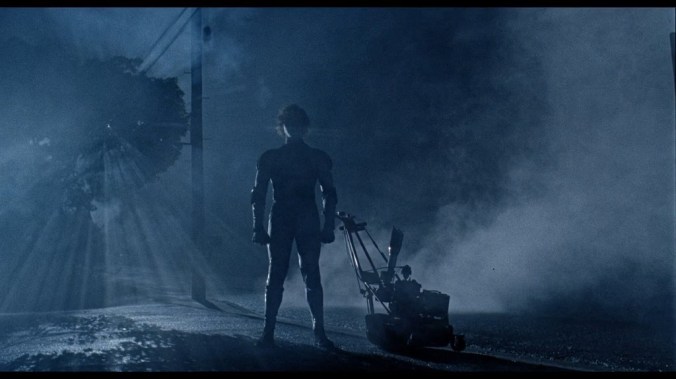
Not that he didn’t work for his money. For example, the Court found that Buttars  charged his legal hourly rate for mowing her lawn.

I just thought you should know.

Ethics Quiz And Poll: The Nurse Practitioner’s Dilemma

Sure.

It is seldom that I strongly disagree with NYU philosophy professor Kwame Anthony Appiah, “The Ethicist” of the New York Times Magazine’s long-running advice column. A month ago I did, and emphatically so.

The question posed to him involved a professional ethics dilemma, and “The Ethicist” was so certain he had the correct answer that he was uncharacteristically terse about it. I’m pretty certain about the answer too, except that my certainty is that he’s wrong. But I have some doubts, based on my ethical positions in related situations.

The inquirer was a a nurse practitioner working at a primary care clinic for low-income patients. She said that a 16-year-old patient told her that she had stopped coming by the clinic to have her birth control pills replenished because she and her partner were trying to have a baby together. She had been having unprotected sex for  a while, and she was concerned that she might have some physical problem preventing her from conceiving. The nurse practitioner asked,  “Would it be ethical for me to steer her away from trying to get pregnant? …Or, as her health care provider, do I have an ethical duty to try to help her conceive?”

Appiah doesn’t see any wiggle room. He says,

“You’re her health care provider. You should certainly tell her about the medical consequences of pregnancy. But the social and economic consequences don’t fall within your professional competence. An intervention about her life choices may seem moralizing and intrusive to her, and it could drive her away; and then she’d be losing your guidance on the things you are trained to help her with.”

Really? Continue reading

A Professional Ethics Case Study…From Broadway

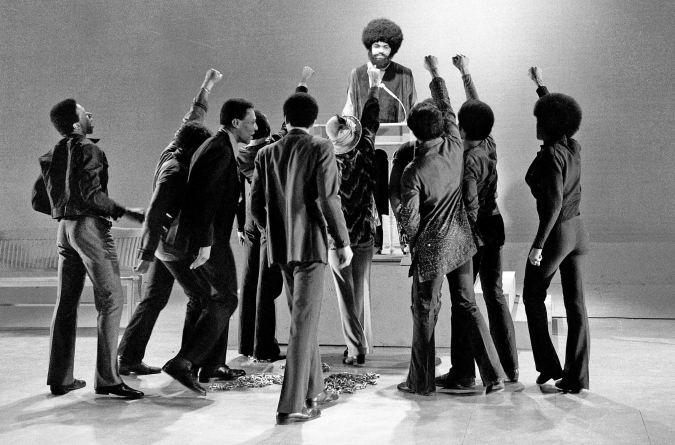
Before you read the post, can you guess who that actor is in the Afro?

Lately I’ve been helping a lot of lawyers seeking to create so-called Rule 5.4 law firms in the District of Columbia. In these firms, unique to the District, non-lawyers can be full partners. This means that they can share in the firm’s fees, which is something otherwise forbidden and a major ethics breach in the 50 states. Lawyers cannot, must not, dare not share their fees with non-lawyers…unless those non-lawyers are partners in the same firm.

There are certain requirements for that to happen, and the main one is that the non-lawyers must be supervised by a lawyer in the firm to ensure that the non-lawyers don’t engage in conduct that would be unethical for a lawyer.  The legal profession is justifiably wary that the unique priorities of the legal profession cannot be easily absorbed or understood by those who have been trained and influenced in a different culture.

It is right to be wary. Lawyers have enough trouble avoiding violations of their own rules; doctors, accountants and others, steeped in different alignments of values, can’t just shift gears like suddenly being in a law firm is like test driving a sports car. For so-called “non professionals,” a category that is increasingly contentious, it may be even harder to adjust, if not impossible.

Lawyers are often  overly optimistic about their non-lawyer partners’ ability to learn the importance of keeping all client confidences, not crossing over into the unauthorized practice of law, sensing possible conflicts of interest and illicitly soliciting clients, or engaging in misrepresentation and deceit, to name just a few. Lawyers tend to think that all professional ethics should be fungible. It’s a dangerous misconception, and there is a little cautionary tale from, of all places, Broadway, that illustrates it.

It has been mostly forgotten, but in 1969, a musical called“Buck White” opened at the George Abbott Theater. Its unlikely star: draft-resisting ex-heavyweight boxing champion Muhammad Ali.

Yes, you read that correctly. Continue reading

Now THIS Is An Unethical Lawyer. Yes, I Am Confident That I’m Not Jumping To Conclusions Here…[CORRECTED]

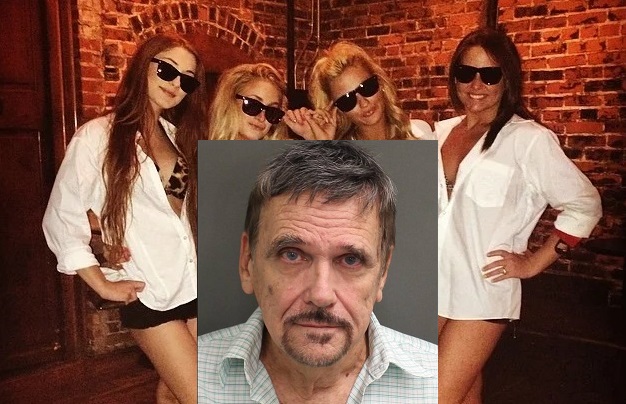
John Gillespie, a  criminal defense lawyer in Melbourne, Florida, was arrested in a law enforcement sting operation over the weekend  for using his legal practice to recruit young female clients into a prostitution ring that he ran out of his home.

And you thought “Better Call Saul” was disillusioning…

The Orlando Metropolitan Bureau of Investigation found evidence that Gillespie “would initiate women he represented on criminal charges into prostitution or exchange sex acts for legal fees.” A former law firm employee tipped off the agency, explaining that she had helped Gillespie recruit women and girls into sex trafficking. Continue reading

Which Part Of “A Judge Shall Perform Judicial Duties Without Bias” Confuses You, Your Honor?

Here are a few provisions of the Texas Code Of Judicial Conduct:

  • From the Preamble: “Intrinsic to all sections of this Code of Judicial Conduct are the precepts that judges, individually and collectively, must respect and honor the judicial office as a public trust and strive to enhance and maintain confidence in our legal system.”
  • “A judge shall comply with the law and should act at all times in a manner that promotes public confidence in the integrity and impartiality of the judiciary.”
  • “Canon 2: Avoiding Impropriety and the Appearance of Impropriety in All of the Judge’s Activities”
  • “A judge shall not allow any relationship to influence judicial conduct or judgment. A judge shall not lend the prestige of judicial office to advance the private interests of the judge or others; nor shall a judge convey or permit others to convey the impression that they are in a special position to influence the judge.”
  • “A judge shall perform judicial duties without bias or prejudice.”
  • “A judge shall not, in the performance of judicial duties, by words or conduct manifest bias or prejudice, including but not limited to bias or prejudice based upon race, sex, religion, national origin, disability, age, sexual orientation or socioeconomic status, and shall not knowingly permit staff, court officials and others subject to the judge’s direction and control to do so.”
  • A judge shall conduct all of the judge’s extra- judicial activities so that they do not cast reasonable doubt on the judge’s capacity to act impartially as a judge..
  • “A judge may participate in civic and charitable activities that do not reflect adversely upon the judge’s impartiality or interfere with the performance of judicial duties.”

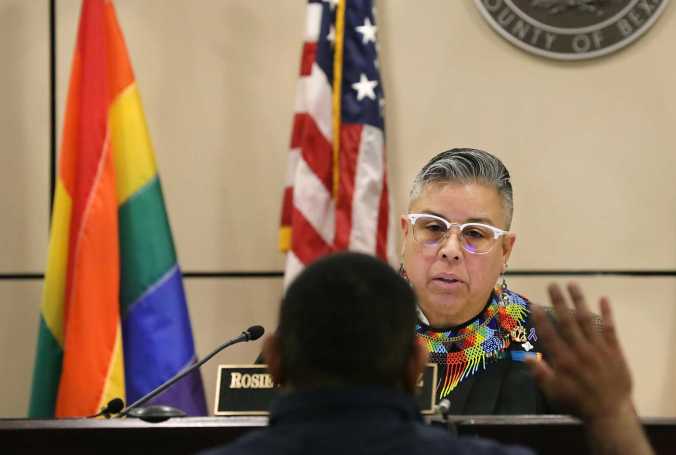
OK, now you’ve read  that, as presumably all Texas judges have. Now, if you were Bexar judge Rosie Speedlin Gonzalez, would your judicial ethics alarms start sounding as you considered displaying a rainbow flag in your courtroom, using a rainbow pen, a rainbow mouse pad and a robe with a rainbow-style strip of Mexican blanket design? Continue reading