Comment Of The Day: “From The Ethics Alarms Archives: ‘Age and the Judge’…” And A Current Day Example.

Pretty late last night, an Ethics Alarms post about mandatory ages of retirement for judges moved JutGory to offer this remarkable Comment of the Day, a tribute to a role model in his life. Coincidentally, it now follows yesterday’s last post, about a failed role model, or perhaps someone who should have become a role model but who never did.

I’m hopping Jut’s comment over a couple of waiting COTDs because I think it’s good to start off the day with some inspiration when possible.

Here is JutGory’s Comment of the Day on the post, “From The Ethics Alarms Archives: ‘Age and the Judge,’ And A Current Day Example.”

Meet Floyd.

And, if nothing else, this is the perfect post in which to mention Floyd.

Floyd was at the top of his class at West Point.

Scwartzkopf was a plebe when Floyd graduated.

Floyd injured himself parachuting into Germany on a training exercise.

He became a lawyer and the consummate Southern Gentleman.

He told me about the time that he handled one of those big divorces and his firm submitted a one-page bill in the amount of over $500,000.00 “For Services Rendered.”

He told me about the time he was able to obtain a Writ of Ne Exeat (I had never heard of it either).

And, after a career of legal practice in Georgia, this principled conservative southern lawyer relocated to the State that Mondale Won.

He did it for two reasons: his wife and one of his kids needed a change of environment because of pollen counts, etc., and Dick.

Dick was looking for a legal partner and Floyd was looking to move north. Dick was Floyd’s exact opposite in every way. Continue reading
From The Ethics Alarms Archives: “Age and the Judge,” And A Current Day Example.

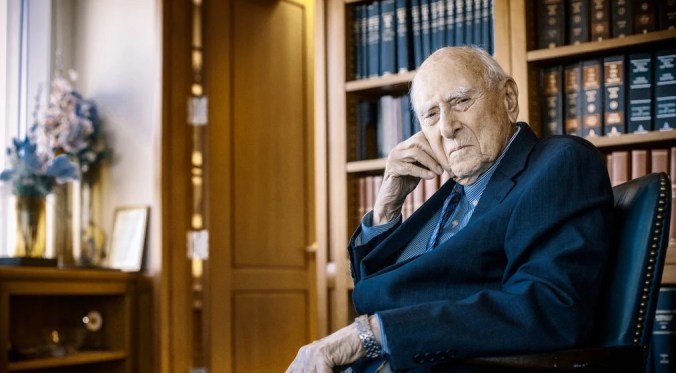
The discussions regarding Joe Biden’s age-related decline reminded me of a post that had been languishing on the runway since mid February. It was prompted by a tip from Neil Doer (I think it was Neil) who pointed me to this article about  a well-respected federal judge in Brooklyn, Jack B. Weinstein who was retiring after more than a half-century on the bench. He’s 98 years old, and it seems like he’s been an outstanding judge. My position was and is, however, that it is unethical for a judge, and indeed any professional, to continue in a position of responsibility at such an advanced age.

Obviously, I would apply that principle to politicians and leaders as well. This is another area where professional sports, especially baseball, provides useful case studies that can be instructive. Players who were great at 25 are also better when they are 40 than the more average players, whose natural decline as the result of aging will usually cause them not be able to perform  at an acceptable standard by late middle age. The great player often will still be good, but almost no player (almost) will be as excellent in his late 30s and early 40s as he was in his prime. As the financial benefits and other perks of playing major league baseball have increased over time, fewer aging greats are willing to go gentle into the good night of retirement. Their last years are often sub-par, certainly for them, or worse, but they will not voluntarily retire. Check the records of Miguel Cabrera, Pete Rose, Willy Mays, and Mickey Mantle, to name just a few.

Famously brilliant and contrary judge Richard Posner took the unpopular position among his colleagues that federal judges ought to have a mandatory retirement age. He recommended 80, but in his own case, when everyone expected him to stay until the bitter end, he retired at 78, because, he said, it was time. I’m not convinced that 80 isn’t still too old, but at least it’s a limit.

I remember well my one meeting with Antonin Scalia at a bar function not long after he had joined the Supreme Court.  He was relaxed and jovial, and when I asked him how long he thought he’d stay on the Court, he laughed and said that he couldn’t imagine staying until they “carried him out,” like so many other justices. He said it was important to leave the bench “while you still have most of your marbles.,” and to him, this meant before 80. He said he would stay about ten years.

Antonin Scalia died while still on the Court, in his 20th year of service, just short of his 80th birthday.

Here, from 2009, is “Age and the Judge.”

___________________________________________

Continue reading

Robert Bowman Redux, Times Two, But Ohio’s Nicer Than New York

For several years I chronicled the frustrating travails of aspiring lawyer Robert Bowman. He was the New York law student repeatedly turned down for membership in the bar by  a panel of New York judges, who determined that he did not have the requisite good character to be admitted to the practice of law in New York because he owed nearly a half-million dollars in student loans. Not paying back financial commitments is one of the specific components of “moral turpitude,” which will block anyone from becoming a lawyer, though it will seldom get one kicked out of the profession after one becomes a lawyer. Go figure. The panel kept rejecting Bowman  because they felt his debt was per se proof of  irresponsible and negligent financial management, making him an unacceptable risk for any client.

A New York bar association subcommittee investigated, and  concluded that far from being of dubious character, Bowman was an individual of “exceptional character,” with unusual perseverance, humility and tenacity. It strongly recommended him for admission to the New York Bar, despite the outstanding debts. Ireaclize now that I never told Ethics Alarms readers “the rest of the story”: Bowman is a New York lawyer now. He finally won his appeal, though the news media, which chronicled his failures, decided that his ultimate success wasn’t newsworthy.

How do I know this? Bowman contacted me himself to tell me. He said he was grateful to all the people who had supported his quest, and was telling each of them, individually, in person.

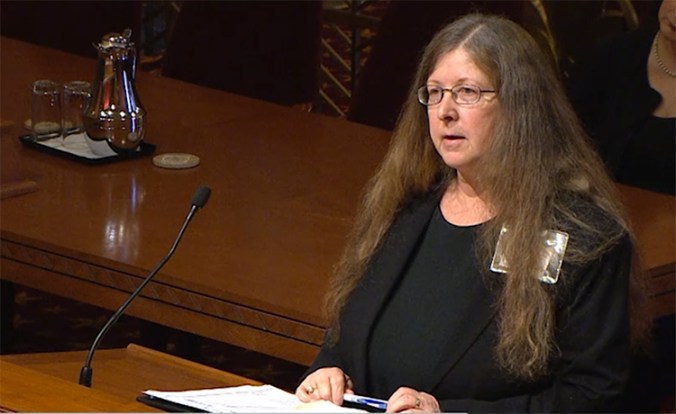
Now comes the story, also with a possible happy ending, of another frustrated lawyer-to-be with similar issues, this time in Ohio, although I must say that her circumstances seem a bit more difficult to excuse. Cynthia Marie Rodgers (above) is a Capital University School of Law graduate whose Ohio character and fitness application was rejected because she has nearly twice as much school loan debt as Bowman, almost $900,000. Continue reading

Noonish Ethics Warm-Up (But It’s Morning To Me!), 3/6/2020: Bill Clinton Returns, And Other Amusements

Morning already, Sea Dog?

I guess I have to admit that I don’t bounce back from travel like I used to…incidentally,the original voice of Captain Crunch was the great Daws Butler, who was Hanna-Barbara’s answer to Mel Blanc, and every bit as versatile as the voice of Bugs, Porky and Daffy. He was Fred Flintstone, Huckleberry Hound, Quickdraw McGraw (and Baba Looey) Yogi Bear and Elroy Jetson, just to name a few of his 459 characters.

1. Enemy of the people…the Coronavirus situation is a perfect example of how the news media’s inability to avoid partisan bias does tangible harm. It is literally impossible to get straight reporting. The left-biased news media wants to make the situation seem as dire as possible, wants disruption of the financial markets, wants to undermine trust in the federal response, all because they so, so want to see President Trump defeated in November and they can feel that objective slipping away. The conservative media is determined to bolster the administration, and give the cheeriest spin on the pandemic possible. You either have to choose what you want to believe, or, like me, resign yourself to uncertainty because we have a corrupt and unethical journalistic establishment.

After the head of the World Health Organization (WHO)  estimated the global mortality rate of the coronavirus to be 3.4%, President Trump said on Fox News that his “hunch” was that it was much lower.

“I think the 3.4 percent is really a false number, and this is just my hunch, but based on a lot of conversations with a lot of people that do this because a lot of people will have this and it’s very mild. They’ll get better very rapidly, they don’t even see a doctor, they don’t even call a doctor. You never hear about these people.”

He was immediately attacked in the press and mocked on social media, because, you know, he lies, he’s an idiot, and he doesn’t believe in science. His “hunch,’ however, is almost certainly right, and for exactly the reason he talked about. From The Hill:

“Experts warn that the figure from WHO Director-General Tedros Adhanom Ghebreyesus comes full of caveats and is likely to change as more people get tested and undergo treatment for the virus. ‘I think it’s lower because we are missing mild cases,’ said Jennifer Nuzzo, a senior scholar at the Johns Hopkins Center for Health Security. ‘We should be preparing for [the worst] cases, it’s true, but also going out to see what the real number is….Folks want to be able to understand what the true risk is. They want to know just how deadly is it, how deadly is it to me? The challenge is, we don’t totally know.'”

Joe Biden, meanwhile, noted that the outbreak occurring during The Great War made it hard to separate the Real McCoy from the malarkey.

Oh, lighten up! I’m just having a little fun. Continue reading

Real Life Imitates Fiction, In This Case, “The Firm”

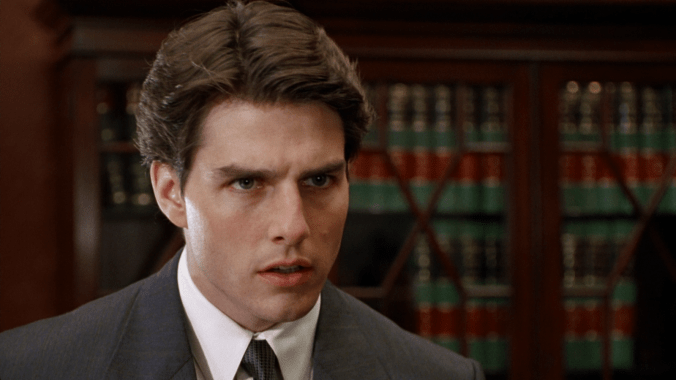
Remember how, in the film adaptation of John Grisham’s “The Firm,” the young lawyer Mitch McDeere (Tom Cruise)who is  trapped in a mob-owned law firm wiggles out of his dilemma in part by proving that the firm’s lawyers were routinely over-billing clients?

Well, the Boston-based Thornton Law Firm and the Labaton Sucharow law firm in New York were caught inflating their billings on a similar scale.

Judge Mark L. Wolf concluded that the two firms double-billed  for their attorneys’ work on a class-action lawsuit involving State Street Bank, and even billed for the work of other attorneys not employed at either firm. Thornton’s managing partner, Garrett Bradley,  listed his brother as an attorney on the case and charged $200,000 for his time even though Michael Bradley was barely involved. Uncovering this scandal was another triumph of the Boston Globe Spotlight Team, the investigative reporting division that uncovered Boston’s predator priest cover-up in 2002. Continue reading

And George Stephanopoulos Is Still On The Network How?

So ABC suspends a correspondent for uttering the truth that anyone paying attention already knew.

Project Veritas just got someone in trouble again by surreptitiously recording statements made under false pretenses. I think James O’Keefe’s stunts are always unethical, but this is worse than most, because he’s really not revealing anything we don’t already know.

Veteran ABC News reporter David Wright was suspended after executives reviewed footage in which he described himself as a “socialist.” Apparently he will no longer be on the political beat either. Wright also was heard criticiing ABC, saying of its approach to covering the news,

“I feel terrible about it. I feel that the truth suffers, the voters are poorly informed, and people also have the opportunity to tune into whatever they want to hear. And so, it’s like there’s no upside, or our bosses don’t see an upside in doing the job we’re supposed to do, which is to speak truth to power and hold people accountable.”

On second thought, maybe this was useful information. The duty of news organization is not to “speak truth to power,” but to inform the public. I don’t care what the David Wrights of the world think is “the truth,” and the fact that they presume to know is why we can’t trust them, arrogant entitled hacks that they are. Continue reading

Sunday Evening Ethics Cool-Down, 2/16/2020: Silent Sam, Creepy Michael, Sinking Joe

Chill.

1. The Silent Sam saga continues. The University of North Carolina at Chapel Hill  reached an agreement to give its toppled statue of an anonymous Confederate soldier (there’s a similar statue in down town Alexandria, Virginia, about a ten minutes drive from where I type this) to the North Carolina Division of the Sons of Confederate Veterans, along with a $2.5 million trust to display it somewhere other than on a  campus.

But professors, alumni and students accused the university’s board of governors of entering into a corrupt deal with a “white nationalist” group, so the  judge who originally approved the agreement voided it, finding that Sons of Confederate Veterans lacked the legal standing to enter into the pact.

For the record, I don’t understand what kind of “standing” any group needs to come to a contractual arrangement. I don’t understand why the school can’t give the thing to a museum  without having to pay 2.5 million bucks for the privilege. I don’t understand how the University allowed a bunch of vandals—the statue was illegally pushed over by student protesters who were never punished—to trigger this problem in the first place.

I don’t understand why a work of art showing a realistic representation of actual historical figures, for there really was a Confederacy, there really were soldiers who fought and died for it in the belief that it was a patriotic duty, and there really is a value to the culture, and especially education, in remembering controversial events and times, is viewed as so dangerous that it must be hidden from view.

James L. Leloudis, a professor of history at the University of North Carolina at Chapel Hill, is supposed to be explaining things to people like me when he said, “The people who erected the monuments went out of their way to make it clear that they honored the living as well as the dead, and most particularly, those ex-Confederates who returned from war and committed themselves to the long, bloody and ultimately successful effort to re-establish white supremacy.”  For example, when “Silent Sam” was  dedicated, a former Confederate soldier named Julian Carr delivered a speech praising the Confederate Army for saving “the very life of the Anglo Saxon race in the South” and recalled that he had “horsewhipped” a black woman “until her skirts hung in shreds” because she had publicly insulted a white woman.

Isn’t that fascinating! How times have changed! That certainly explains how Jim Crow took over, especially once President Woodrow Wilson encouraged the effort after his election in 1912. But now “Sam” looks at a very different South! You, see, students, the reason….Sam? Sam? Continue reading

Wasted Day Evening Ethics, 2/10/2020: As Your Host Tries To Salvage Some Productivity In A Messed Up Monday [CORRECTED]

I don’t want to talk about it.

1. Is it ethical to point out that the candidate my desperate progressive friends are trying to justify supporting in the arid Democratic field is really a jerk? Sure it is! In a deft call that I missed, Rolling Stone writer Tim Dickinson found yet another striking example of Pete Buttigieg’s hypocrisy. He writes,

For much of the presidential campaign, Pete Buttigieg has championed the importance of the popular vote. In a town hall nearly a year ago, Buttigieg proclaimed: “One thing I believe is that in an American presidential election, the person who gets the most votes ought to be the person who wins.”

Yet after the Iowa caucuses, where Bernie Sanders clearly got thousands  more votes, Buttigieg has been trumpeting victory — on the basis of a metric that can subvert the popular vote, the state delegate haul from Iowa’s equivalent of the electoral college.

To be plain, the actual tally in Iowa seems to matter less to the Buttigieg campaign than building a perception of victory. On the night of the caucuses, long before any of the official tally had been reported, Buttigieg dubiously declared he had won..the Iowa Democratic Party has now released 100 percent of the state results. The current tally shows Buttigieg trailing Sanders by 2,631 votes, yet leading by 2 “state delegate equivalents” — a margin of 0.1 percent on that metric. Yet the official tally includes many documented and uncorrected errors and what the state party deems “inconsistencies in data.” The Associated Press has refused to call the election, and Democratic party chair Tom Perez has demanded a “recanvass” or recount. Despite the tenuousness of these results, the Buttigieg website now proclaims: “It’s official: Pete won the Iowa Caucuses!”.

President Trump’s election, however, was illegitimate. Continue reading

Oscar Ethics Part II: The “In Memoriam” Snubs

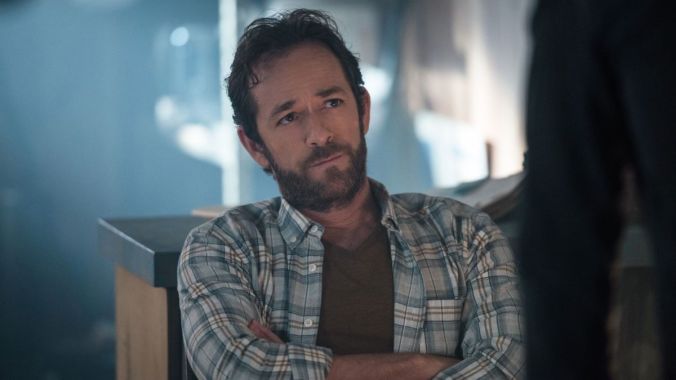
For some reason, Luke Perry’s snub (That’s Luke above) has attracted most of the outrage, though he is far from the worst of the omissions, as you will see.

Luke Perry

(October 11, 1966 – March 4, 2019

Perry became a teen idol at 23 after he was cast as the brooding son of a millionaireon Fox’s prime time soap opera,  “Beverly Hills, 90210.”  A riot broke out when 10,000 teen girls attended one of his  August 1991 autograph sessions  While starring in 90210,” Perry appeared in the original film version of Joss Whedon’s” Buffy The Vampire Slayer” (1992). That was pretty much the high point of his film career, though he had a small role in “Once Upon A Time In Hollywood.”  Mostly he was a TV actor whose career, after a spectacular launch,  settled into the typical orbit of supporting roles in various series and guest shots in everything from sitcoms like “Will and Grace” to “Law and Order: SVU.”  Between those jobs, voice-over work and regional theater paid the bills and kept him working.

He was, in short, a working professional actor who had one burst of superstardom, which is more than most. Perry was only 52 when he died of a massive stroke.

Michael J. Pollard

(May 30, 1939 – November 20, 2019)

Pollard rose to fame in 1967 as  Bonnie and Clyde’s dim-witted gang member, earning an Oscar nomination along with the other honors racked up by Arthur’s Penn’s ground-breaking, violent epic about the lover-killers. He went on to a long career as a Hollywood character actor, aided by one of the most memorable faces in screen history. That face had made him a familiar TV actor before “Bonnie and Clyde” made him famous: he played the cousin of Maynard G. Krebs (Bob Denver) on “The Many Loves of Dobie Gillis,” and Virgil, the cousin to  Barney Fife (Don Knotts), on “The Andy Griffith Show.” In the first season of the original “Star Trek,” he was  a creepy  teenage cult leader on a planet of children.

Pollard continued to make significant films after his Oscar nomination, such as  “Little Fauss and Big Halsy” (1970), a motorcycle racing buddy film in which he co-starred with Robert Redford. He was Billy the Kid in “Dirty Little Billy” (1972), an inept fireman in “Roxanne” (1987), the friend of a Utah gas station owner  who claimed to be Howard Hughes’s beneficiary in“Melvin and Howard” (1980), and  surveillance expert Bug Bailey in “Dick Tracy.”

Pollard was acting right up until his death: two of his films that yet to be released. Continue reading

It’s Comforting To Know That Yale Is Educating Future Lawyers As Incompetently As Harvard, I Guess

Actually, it’s terrifying.

A core function of lawyers in our society is to give everyone equal access to the law irrespective of their believes, interests, or motives. Without them, the public and all of its entities, institutions and organizations become slaves and victims of laws rather than beneficiaries of them, with an elite and corrupted professions using their knowledge and skills to distort democracy rather than protect it.

The relentless ideological corruption of academia is slowly but surely corrupting the professions it is trusted to train, with lawyers being a striking example. Now law students are increasingly taught that their interests, not their clients, should be the focus of their passions, and those interests have been dictated by progressive and leftist agendas, with the aim of transforning a profession designed to be equally accessible to all into a tool of dominance by one side of the political spectrum over the others.

This developments is the reason ethics alarms must sound over the students of both Yale and Harvard Law Schools condemning a major law firm’s choice of clients. They are trying to build a national law student boycott of Paul, Weiss, Rifkind, Wharton & Garrison until the firm drops  ExxonMobil as a client. Climate change, you know. As we increasingly see, the environmentalist cult is being used to justify weakening democratic institutions and principles.

A pledge is circulating declaring that top students will no longer interview for summer associate positions or work at the firm until Paul, Weiss, and of course there will be other firms, no longer represent the oil and gas giant, and, inevitably, other energy companies.  Providing Exxon with competent representation in a series of climate change lawsuits makes firms complicit in the planet’s destruction. Thus the legal system must be rigged against them.

The last sentence is my fair and accurate translation of the objective behind the pledge, which reads, Continue reading