The Ethics Incompleteness Theory, The Bigot Doctor,”The Hader Gotcha,” And The Apology Scale

Yes, she actually has both arms. She’s also photogenic: the Democrats should nominate her for Congress.

I christened the Hader Gotcha last year after several athletes were forced to apologize for youthful social media comments that suggested a bigoted or insensitive state of mind. The ethics Alarms position on people looking through old social media posts to embarrass public figures and force them to grovel apologies to which ever group their comments offended was summarized in this post in the moderate, calm manner for which I am justly praised:

As I have written here before, searching for lingering social media idiocy that an athlete authored before he could drink or vote is despicable conduct, as is anyone making an issue of  what the deep Twitter dives expose. First, what a baseball player said or thought—they are often not the same thing—in the past has nothing to do with his job, which is playing baseball and not making social policy, and second, nothing anybody says or even does before their brain has matured should be held against them in adulthood, unless it is criminal, and even then the law urges us to be forgiving. I know that a lot of social justice warriors think that any racist, sexist or homophobic comments made post birth should be treated a crimes, but they are anti-democratic nuts, and hostile to free thought and speech, so to hell with them.

That post was largely ignored, because too many readers here still fail to grasp that ethics issues arising in baseball often, indeed usually, have broader wisdom to convey. Since I wrote it, the employment of the Hader Gotcha has been expanded outside the realm of sports, most notably the recent example of Kevin Hart, the popular comic who was attacked the very day he was designated as the host of the upcoming Oscars. Hart was forced to withdraw because a Hader Gotcah exposed old anti-gay tweets. This time, however, I agreed that the tweets mandated his withdrawal, writing, Continue reading →
Ethics Quiz: The Improper Jury Instruction

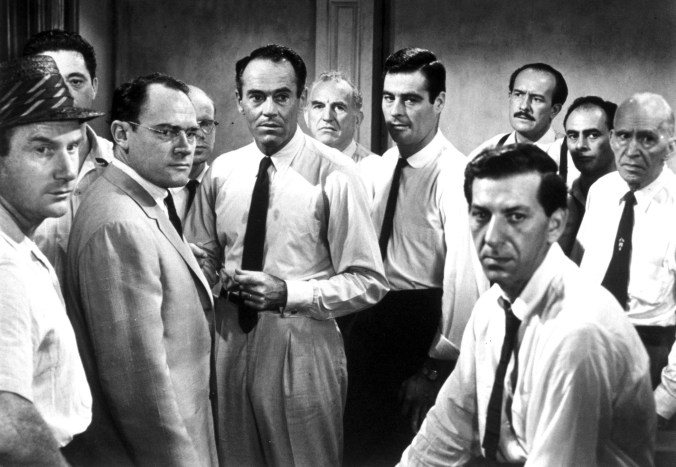
At least a dozen Pennsylvania murder convictions may be reversed because Judge Renee Cardwell Hughes included this description of reasonable doubt to instruct her juries:

“Each one of you has someone in your life who’s absolutely precious to you. If you were told by your precious one’s physician that they had a life-threatening condition and that the only known protocol or the best protocol for that condition was an experimental surgery, you’re very likely going to ask for a second opinion. You may even ask for a third opinion. You’re probably going to research the condition, research the protocol. What’s the surgery about? How does it work? You’re going to do everything you can to get as much information as you can. You’re going to call everybody you know in medicine: What do you know? What have you heard? Tell me where to go. But at some point the question will be called. If you go forward, it’s not because you have moved beyond all doubt. There are no guarantees. If you go forward, it is because you have moved beyond all reasonable doubt.”

U.S. District Judge Gerald McHugh ordered a new trial for a man convicted following this instruction, and Hughes may have used it in 50 cases.

This is why I am making this an ethics quiz: I have no idea why the instruction is wrong, or confusing. I’ve read McHugh’s opinion, and I still don’t understand what the alleged problem is, unless this judge just doesn’t want to anyone convicted. (He’s an Obama appointment, but I’m sure that has nothing to do with anything, for Chief Justice Roberts tells us so). The decision is here, and this the judge’s reasoning: Continue reading →

Now THIS Is A Frivolous Lawsuit!

Sounds noble in theory, but it doesn’t always work when the one saying “no” is a judge.

Lawyers and the public mean different things when they call a lawsuit “frivolous.” The public and the news media mean that the suit is silly, desperate, based on a crazy theory or unlikely to succeed. Lawyers, however, know that suits that seem  silly, desperate, based on a crazy theory or unlikely to succeed sometimes win. Sometimes, they even change the law for the better. ABA Rule 3.1 explains,

Rule 3.1: Meritorious Claims & Contentions

A lawyer shall not bring or defend a proceeding, or assert or controvert an issue therein, unless there is a basis in law and fact for doing so that is not frivolous, which includes a good faith argument for an extension, modification or reversal of existing law….

Comment:The filing of an action or defense or similar action taken for a client is not frivolous merely because the facts have not first been fully substantiated or because the lawyer expects to develop vital evidence only by discovery. What is required of lawyers, however, is that they inform themselves about the facts of their clients’ cases and the applicable law and determine that they can make good faith arguments in support of their clients’ positions. Such action is not frivolous even though the lawyer believes that the client’s position ultimately will not prevail. The action is frivolous, however, if the lawyer is unable either to make a good faith argument on the merits of the action taken or to support the action taken by a good faith argument for an extension, modification or reversal of existing law.

The guy currently  suing me for defamation, for example, hasn’t quite crossed the “frivolous” line, though he is arguing that what is clearly opinion is an assertion of fact, contrary to all existing jurisprudence. His appeal, however, while batty, does make an argument that I assume in in good faith, that a Supreme Court case supports his definition of libel. It doesn’t, but he has the right to make an argument in the hope that some judge or appellate panel will agree. Of course, he is also not a lawyer, so he can’t be held responsible for violating legal ethics.

This guy can be, however: Continue reading →

2018 Ethics Retrospective Poll #2 and #3: “Unethical Profession Of The Year” And “Incompetent Elected Official”

The effort to prompt some input into the 2018 Ethics Alarms Awards will obviously continue for another day or two, as my promise to “be posting these periodically during the day and evening” was foiled by intervening priorities yesterday.  There are two polls this time (here was the first, still open), and again, please don’t hesitate to expand on your votes.

Nominations for “Unethical Profession Of The Year”

Once, there was never any question about the “winner” of this  category: it was inevitably educators or, more often, journalists. One of the horrible consequences the 2016 Post Election Ethics Train Wreck, however, is that almost all the professions dived into the muck, sought headlines by making the kind of biased and irresponsible statements that society depends on professionals to eschew, and they have continued their self-debasement ever since. While journalists and educators—in this I include all academics as well as teachers and administrators, have still disgraced themselves beyond debate—they have real competition now. Each profession nominated will be linked to a representative Ethics Alarms post. The nominees are… Continue reading →

Casting Ethics: Color-Blind vs Color Conscious in “All My Sons”

Director Gregory Mosher quit the Broadway revival of Arthur Miller’s “All My Sons” (scheduled to open in the Spring) when Miller’s estate, run by his daughter Rebecca Miller,  blocked him from casting a black actor  to play George Deever, one of the main characters in the classic.  Miller objected to the director’s choice of making the Deever family black when the play’s other central family, the Kellers, had already been cast as white. If the Deevers were black, it would introduce the concept of an interracial relationship in the 1940s.

“My concern was that to cast the Deevers as black puts a burden on the play to justify the relationship in the historical context,”  Miller said “I was worried that it would whitewash the racism that really was in existence in that period by creating this pretend-Valhalla-special family where no one would mention this.”

Nice attempt to put her position in a politically correct context, I have to admit. The objection really is that the play is a period piece, firmly and unavoidably set in the post-World War II era. It will have period costumes, sets and props, and the audience seeing the story unfold in the proper historical time period is essential to the play’s success. An inter-racial romance shatters that illusion, and unnecessarily so. The play is not about race, so race should not be injected into the plot by reckless casting. Miller had previously approved of a production in which both families were black.

Interestingly, she also was willing to approve the casting of a black actor if his sister were cast as white. You see, then the casting would be “color blind,” meaning that it was just a black actor playing a white character (without white make-up, which would be “white-face,” which would suggest blackface, and—oh, never mind…), and that his family wasn’t really “black.” Got that? Otherwise, it would be “color-conscious” casting, in which the race of the performer necessarily requires a different approach to the material. Continue reading →

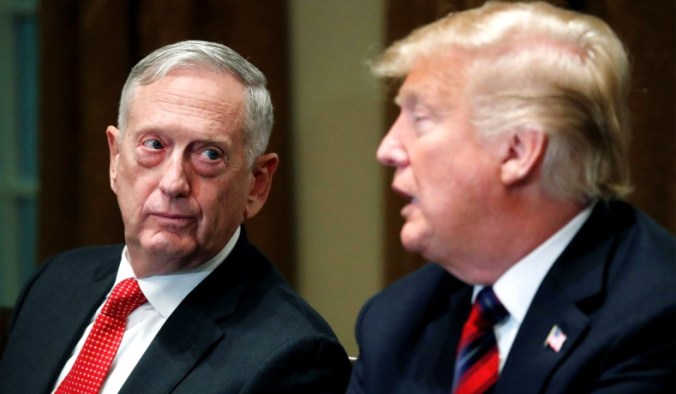
Ethics Observations On The Mattis Resignation

President Trump announced that he was ending the U.S. mission in Syria, and drawing down the troop level in Afghanistan. His Secretary of Defense,General Mattis, resigned in protest, and copied his letter of resignation to the world.

The news media, social media, and full time anti-Trump hysterics, among others, went bonkers.

  • What’s going on here? A President who has long held that U.S. domestic priorities are more important than “being the world’s policeman” followed through on his promise. As is his wont, he sprung the actual news without laying a foundation to cushion the blow. Nobody knows whether the decisions will work out or not, but the assumption is that because this President is the one making the decisions, they must be stupid, evil, or both. This, despite the fact that Barack Obama essentially did the same thing regarding Iraq, except that Iraq gave much more promise of stabilizing with continued U.S. presence. Syria is still in chaos, and nobody can confidently say when and if it will not be. As for Afghanistan, the U.S. has been expending lives and treasure there for a mind-blowing 17 years. What is the mission? Funny—I thought the original mission was to punish the country for sponsoring the 9/11 attacks. We could have declared the point made long, long ago. Is the President wrong to say “Enough is enough”?

I have no idea—and neither do you.

  • Having no idea, not having seen the data, not having been advised, and not being President of the United  States, I have little basis to challenge or deride the decision. But what’s really going on here is what has been going on since January, 2017. Any decision or action by this President is immediately assumed to be wrong. The analysis attached to it afterwards is superfluous. The position is that President Trump did it, it’s wrong because he’s a Nazi/idiot/ grifter /fool, and that’s all we need to know.

This, of course, makes it impossible, literally impossible, to get honest, trustworthy analysis about anything.

  • Anyone who criticizes Trump in public, even certifiable slime like Steve Bannon, James Comey, and Omarosa, suddenly is embraced by “the resistance ” and the news media using the formula that the enemy of my enemy is my friend. This rewards unethical conduct, and “Mad Dog” appears to have fallen into the trap, to his eventual shame. As a lawyer, I know it is unethical to drop a client, my employer, and make any pubic statements whatsoever impugning his or her judgment or conduct. It is also unethical to do this in any professional relationship. Professionals know this: I presume at one time Mattis knew this. But having paid attention to how routine betrayals of this President have been cheered and praised, he apparently couldn’t resist temptation.

Now, as a lawyer, my duties are codified. That doesn’t mean that professionals who don’t have the same duties codified aren’t obligated to follow them. Continue reading →

“Miracle On 34th Street”…An Ethics Companion: Introduction

As with most holiday movies, but perhaps more than most, the entire concept of digging into the ethics of the plot of “Miracle on 34th Street”  can be criticized as beside the point. The movie, at least the 1947 original, is a classic; it works dramatically and emotionally, it makes people feel good, and it has held up over time. That’s all a Christmas movie is supposed to do, and if it does it without really making sense or avoiding ethics potholes along the way, so what?

I sympathize with this view. However, our ethical standards and ethics alarms are affected by what we see, hear, like and respond to. If popular holiday movies inject bad ethics habits and rationalizations into our character, especially at a young age, that is something we should at least be aware of by the tenth or eleventh time we watch one of them.

One ethical aspect of “Miracle on 34th Street” that must be flagged at the outset is competence. The film is so effortlessly engrossing and convincing that it is easy to forget how easily it could have failed miserably. Actually, it is also easy to remind oneself: just watch any of the attempts to remake the film. There have been four of these, starring, as Kris Kringle, Thomas Mitchell, Ed Wynn, Sebastian Cabot, and Richard Attenborough. That’s a distinguished crew, to be sure. Mitchell was one of the greatest character actors in Hollywood history. Wynn was nominated for an Academy Award (for “The Diary of Ann Frank”) and Attenborough won one, Best Supporting Actor Award in 1967 for “The Sand Pebbles.” Cabot wasn’t quite in their class, but he was a solid pro, and looked more like Santa Clause than Mitchell,  Wynn, or Richard Attenborough. None of them, however, were as convincing as Edmund Gwenn. He made many movies—all without a white beard— and had a distinguished career in films and on stage, but even audience members who knew his work had a hard time reminding themselves that he wasn’t Kris Kringle while they watched the movie. I still have a hard time. Continue reading →

Afternoon Ethics Warm-Up, 12/12/18: Silent Sam, Nasty Nancy, Tendentious TIME

Happy pre-Christmas panic days!

Once we’re under the two week mark, it’s all anxiety, regrets, list-making, fatigue, nostalgia, and tree needles under the nails. This is what Andy called “the most wonderful time of the year.

1. The theory: political correctness and historical airbrushing is a higher priority than education. The University of North Carolina \Board of Trustees’ approved of a proposal to build erect a $5 million history center that would, among other things, house “Silent Sam,” a statue dedicated to fallen UNC grads who fought for the Confederacy. The statue stood on campus until protesters tore it down in August. Now some faculty members and graduate assistants are threatening to go on a “grade strike,” withholding grades on papers and exams to force the school to abandon “Silent Sam” for all time. They are also trying to encourage students to support their protest.

Wrote the UNC administration in response:

“This afternoon it came to my attention that some instructors have used their roles in the classroom to ask students to take a stand on the strike,” Blouin said in the email, a copy of which Campus Reform obtained. “The University has received student and parent complaints. Such actions have been interpreted as coercion and an exploitation of the teacher-student relationship and in fact are a violation of students’ First Amendment rights as well as federal law….Our students are entitled to receive their grades in a timely manner. It is especially critical for the students preparing to graduate next Sunday, as well as the thousands of students whose scholarships, grants, loans, visa status, school transfers, job opportunities, and military commissions may be imperiled because lack of grades threaten[s] their eligibility,” the provost stated. “The proposed strike exposes the University and individuals who withhold grades to legal claims for the harm they cause to students…“Failure to meet [the faculty and GA’s] responsibilities to their students, including timely submission of final grades, will result in serious consequences.”

Firing, I hope.

2. Boy, that Trump is such an uncivil boor! House Speaker Nancy Pelosi, setting a civility example for us all while describing her meeting with the President on “the wall’: “It’s like a manhood thing for him, as if manhood could ever be associated with him….It goes to show you: you get into a tinkle contest with a skunk, you get tinkle all over you.”

Nice.

Imagine the howls of indignation if the President described a foreign leader in such terms. Or the mass condemnation from both parties and the news media if any prior President had been insulted that way by a member of Congress.

3. “A person, a group, an idea, or an object that “for better or for worse… has done the most to influence the events of the year.” I would applaud TIME’s choice of journalists as the fading magazine’s “Person of the year” if it had the integrity to point out that this is an example of “the worse.” Indeed, journalists have deliberately warped and sabotaged public debate and discourse, withheld or buried information the public needs to know, divided the nation, defied their profession’s ethical standards, undermined their own institution and with it the health of American democracy, relentlessly worked to destabilize the Trump administration and undo the election, and have engaged in repeated incompetence, bias, dishonesty and conflicts of interest. The harm journalists have done is incalculable, and probably irreversible.

Quipped “Dilbert” cartoonist Scott Adams: “Fake News is TIME’s “Person of the Year.”

Bingo. Continue reading →

The Alexander Acosta-Jeffrey Epstein Scandal

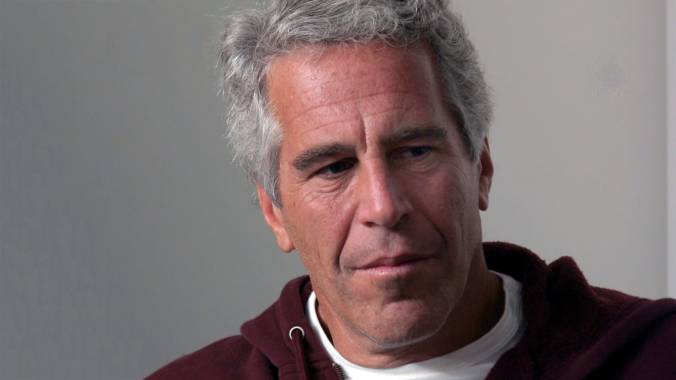
That’s Epstein…a popular guy.

You have to buckle your seat belt and read this story.

The Miami-Herald undoubtedly earned itself a Pulitzer Prize with its detailed and horrifying account of rigged justice involving jet set multimillionaire Jeffrey Epstein, who parlayed money, connections, friends in high places and quite possibly extortion into a lighter-than-light sentence despite overwhelming evidence that over many years he had used his resources to gather “a large, cult-like network of underage girls — with the help of young female recruiters — to coerce into having sex acts behind the walls of his opulent waterfront mansion as often as three times a day…The eccentric hedge fund manager, whose friends included former President Bill Clinton, Donald Trump and Prince Andrew, was also suspected of trafficking minor girls, often from overseas, for sex parties at his other homes in Manhattan, New Mexico and the Caribbean, FBI and court records show.”

The prosecutor who allowed Epstein to virtually escape accountability for crimes that make such recent cultural villains as Harvey Weinstein appear to be benign in comparison was the Trump Administration’s Secretary of Labor, Alexander Acosta, then the U.S. attorney for Southern Florida.

Nobody’s talking, except the alleged victims, who are now mounting a legal challenge to the fiasco. Epstien’s lawyers, the kind of high-powered, high-priced super-team that only the richest of the rich can summon, included Allan Dershowitz, Roy Black and Ken Starr, among others, can’t discuss their representation under the rules of client confidentiality. So far, Acosta has been silent as well. The evidence that the paper’s investigation has uncovered—and again, don’t rely on this brief post, read the whole story—is persuasive, damning, and for me, someone who works in and with the legal profession, spiritually devastating. This, from the Maimi-Herald’s introduction and conclusion, provides some sense of the magnitude of the scandal: Continue reading →

Morning Ethics Warm-Up. 11/27/18: Unethical Perry Mason, Icky Science, Race Card-Playing Democrats, Intrusive Bosses And Slanted History

Good morning…

1. They are showing “Perry Mason” reruns again on cable TV. That was the show that made my generation want to be lawyers, under the delusion that a defense attorney could regularly prove a criminal defendant innocent. (Pssst! They are almost all guilty.) The show holds up, but boy, Perry was sleazy. In an episode I watched while I was sick, he had his investigator tell the hapless prosecutor, Hamilton Burger (Ham Burger to his friends) that he had found an incriminating piece of evidence that proved someone other than Perry’s client had committed murder. Ham relied on the information and got the killer to confess once he was faced with the production of the “smoking gun.” But Perry’s investigator hadn’t really found anything.

Having one’s agent lie to the state prosecutor is a serious ethics breach. Perry also caused the DA to tell a falsehood to get the confession, though Burger wasn’t lying, since he believed Perry’s contrivance. Prosecutors are no more allowed to lie than other lawyers, but when they do lie “in the public interest,” they seldom get more than a slap on the wrist from courts and bar ethics committees, if that. Burger didn’t seem very upset that Perry conned him, because the real killer was caught. The ends justifies the means, or did in “Perry Mason.”

2. Ick or ethics? A Chinese scientist claims that he had successfully employed embryonic gene editing to help protect twin baby girls from infection with HIV. We are told that bioethicists in China and elsewhere are reacting with “horror.” Writes the Times,

“Ever since scientists created the powerful gene editing technique Crispr, they have braced apprehensively for the day when it would be used to create a genetically altered human being. Many nations banned such work, fearing it could be misused to alter everything from eye color to I.Q….If human embryos can be routinely edited, many scientists, ethicists and policymakers fear a slippery slope to a future in which babies are genetically engineered for traits — like athletic or intellectual prowess — that have nothing to do with preventing devastating medical conditions.”

As with cloning, my view on this controversy is that a new technology does not become unethical because of how it might be used. That unethical use will be unethical, and that is what needs to be addressed when and if the problem arises. (Airplanes could be used to drop atom bombs!) The fear of “designer babies” also seems to be an example of “ick”—it’s strange and creepy!—being mistaken for unethical. Making stronger, smarter, more talented and healthier human beings is not in itself unethical, even if it is the stuff of science fiction horror novels and Josef Mengele’s dreams. Continue reading →