Comment Of The Day (1): “Public Confidence And Trust (1): Observations On Gallup’s Trust In Occupations Poll”

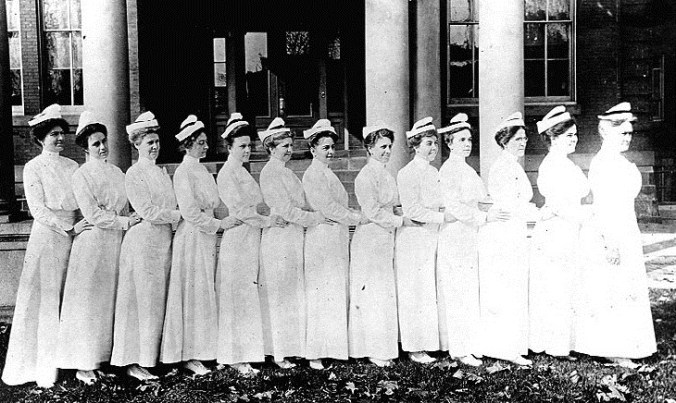
My post on the Gallup poll on public trust in various occupations and professions strayed into Charles Green’s wheelhouse, and the resulting home run comment enlightened us regarding why nurses keep “winning” the poll as the most trusted year after year after year.

Here is Charlie’s Comment of the Day on the post, Public Confidence And Trust (1): Observations On Gallup’s Trust In Occupations Poll:

Speaking just to the nursing angle: my work on trust has involved a diagnostic tool, the TQ (Trust Quotient), a self-assessment of the four components of trustworthiness in the Trust Equation:
(Credibilty + Reliability + Intimacy) / Self-Orientation.

70,000 people have taken it, and three results stand out above all others.

First, women are more trustworthy than men – a finding confirmed by informal polls in 397 out of 400 groups I’ve presented in front of.

Second, the most powerful factor of the four (defined as the highest coefficient in a regression equation) is Intimacy.

Third, the bulk of women’s outscoring men is their higher score on the Intimacy factor (again, intuitively true to the vast majority of groups I ask).

It’s in this context that I note the Gallup work (and other pollsters) finding of nursing at the top of the heap every year but 2002 (which was, not coincidentally, the year after 9/11 – and a year in which firemen, if only for that one year, took over the top spot.

Nursing is an 89% female profession. I ask my audiences, “Which of the four trustworthiness factors do you think nurses most embody: credibility, reliability, intimacy, or low self-orientation?” Most pick intimacy (with low self-orientation a frequent second).

Add ’em up: female, Intimacy, nursing – it’s a trifecta. Continue reading

A Vermont State’s Attorney Prosecuted A College Student For An Overheard Phone Call. Why Is She Still Employed?

In October of last year, police charged Wesley Richter, a University of Vermont continuing education student, with disorderly conduct after university officials said he used “explicitly racist and threatening language” against black students and diversity initiatives on campus. Richter was overheard in a phone call with his mother, though exactly what Richter allegedly said has not been made public.unknown. Of course, what he said doesn’t matter, unless he was planning a crime, which he was not. He was talking to his mother, and a student who overheard the discussion took offense at what was said. Richter, through his lawyer, denied saying anything racist, but again, it doesn’t matter. Saying racist things in a phone conversation cannot be a crime. It’s bad manners. It’s disrespectful to those listening. A school may be able to justly find some kind of violation to a reasonable and neutral civility code involving words but not content. But an overheard phone conversation cannot be a crime. It is mere words.

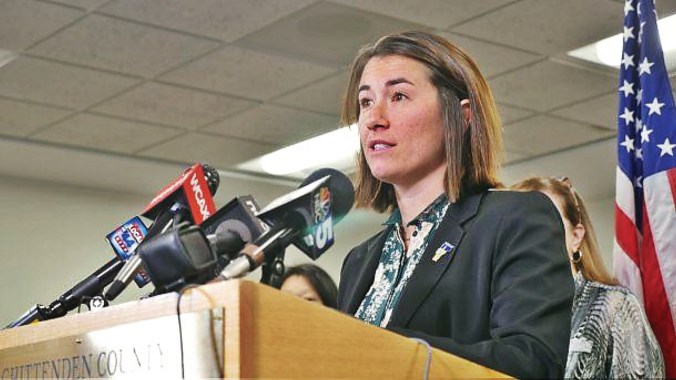
Nevertheless, the University of Vermont, the University of Vermont Police Department and the Chittenden (County) state’s attorney’s office in the person of Sarah George, the State’s Attorney, prosecuted the case against Richter. George is a graduate of the University of Vermont Law School, where presumably they taught constitutional law. There is no excuse for this.

Richter’s lawyer, Ben Luna, argued that George didn’t have probable cause to bring the misdemeanor charge, and Superior Court Judge David Fenster agreed. In a statement, Luna called the dismissal a victory for free speech and the First Amendment. “The court’s ruling reinforces my opinion that this matter should never have been brought,” he said.

The court’s ruling also reinforces my opinion that Sarah George should be disciplined by the bar and fired.

Right at the start, Vermont’s Rule 3.8, as in every other state, makes it clear that prosecutors must not charge anyone with a crime without probable cause:

Rule 3.8. SPECIAL RESPONSIBILITIES OF A PROSECUTOR

The prosecutor in a criminal case shall:

(a) refrain from prosecuting a charge that the prosecutor knows is not supported by probable cause;

The Comments to the rule say in part,

[1] A prosecutor has the responsibility of a minister of justice and not simply that of an advocate. This responsibility carries with it specific obligations to see that the defendant is accorded procedural justice and that guilt is decided upon the basis of sufficient evidence.

The First Amendment makes it beyond argument that the government may not punish or seek to punish citizens for the content of their speech. Since the only evidence that George had that a misdemeanor had been committed was a third party complaint about the content of Richter’s speech in a conversation over the phone with his mother, she did not have legal or sufficient evidence to charge or prosecute Richter. As a lawyer and a prosecutor she had to know that. If she knew it, she was knowingly abusing her power, and should be suspended from the practice of law.

If she didn’t know it, then she is incompetent and not fit to practice. She should be fired.

Incredibly, George said she thought the case was strong, but that it was also “a learning experience.” “It’s disappointing, but it’s also good for us to know. It’s a really great decision for us in terms of case law and reasoning, so we know now what this court expects of us,” George said.

Yeah, the court expects you to follow the Constitution. If you have to learn that at this late stage in your legal career, Sarah, you need to go back to the drawing board. Maybe you can sell maple syrup.

She wasn’t through. “What we allege he did, we still allege he did,” she continued.  “It just didn’t rise to the level of a hate crime.”

A phone conversation cannot be a “hate crime.” Speech cannot be a hate crime. “Hate speech” is not a legal designation.

Why is this woman a state prosecutor? Fire her.

If she is not fired, then this totalitarian, illegal, abusive and intimidating prosecution chills free speech, not just on the University of Vermont campus, but in the whole state. A citizen should not have to wait two months, as Richter did, for a judge to declare that the state cannot persecute him for what he is overheard saying, whatever it is.

Fire

Her. Continue reading

Morning Ethics Warm-Up, 1/4/2018: A Frivolous Lawsuit, An Unscripted Actress, A Lesson In Assuming, And Fake News

Good Morning!

1 On feminist integrity. The reader poll on the post about the interesting silence of US women’s rights organizations and their component feminists as their Iranian sisters protest oppression in Iran has already had more participation that the last four Ethics Alarms polls combined. Why is that? In more news related to that post, some determined spinners here claimed that the feminists have been burning up the blogs and websites with supportive essays and blog posts, so the radio silence is a myth. No, THAT was a myth: there is nothing on those sites, or if there is, it didn’t surface when I checked Ms., Jezebel, NOW and four prominent blogs. (Update: Reader Humble Talent has checked two more. Also nothing.)

Please don’t make up stuff or assume facts you haven’t checked when you don’t want to accept reality, friends. It’s not fair, and it’s not ethical debating practice. Because I trust and respect the commenter in question, I just assumed she was right, because I assumed she had checked. No, it appears she had assumed, and was not right.  And you know what Felix Unger proved happens when you assume..

2. This is why they give actors scripts. I enjoy actress Meryl Streep as an artist, but for me she is fast entering Alec Baldwin territory, a performer whose personal character deficits are becoming so overpowering that even her undeniable talent can’t make watching the performer on screen endurable. Streep is in a deep hole she keeps digging. Being a Harvey Weinstein acolyte and beneficiary for years (and a Roman Polanski apologist), she is denying culpability as an enabler of his serial sexual predation because, she says, she didn’t know. Almost nobody finds her denial credible. Yesterday the Times published a joint interview with Streep and her “The Post” co-star, Tom Hanks. Told by the interviewer that in light of the doubts about what she knew, the public wants to hear more from her, she responded,

“I don’t want to hear about the silence of me. I want to hear about the silence of Melania Trump. I want to hear from her. She has so much that’s valuable to say. And so does Ivanka. I want her to speak now.”

Streep locks up the 2018 Whataboutism of the Year title with that one, along with adding a ridiculous sentence into my personal collection of statements that deserve note because they had never been said before in the history of the English language. I started my collection decades ago at a family Thanksgiving dinner, when my sister said, “You know, the fish looks so good, I think I’ll wear my bra on my head.” And a collection was born.

“I don’t want to hear about the silence of me” has an elegant simplicity about it. In addition to being a strange sentiment, Streep also misses the whole concept of an interview—surprising, since she has done so many of them. See, Meryl, these questions are about what the public wants to hear about, not what you want to hear about. Was that really unclear to you until now? This was not an open invitation to announce all the things you’d like to hear about that have absolutely nothing to do with Harvey Weinstein. This is “Look! Squirrel!” carried to a demented extreme. Streep revealed herself as seriously Trump Deranged, as she thinks that the way out of every personal crisis is to declare, “But what about TRUMP????”

Looks like I won’t be watching “The River Wild” again. Pity. (I won’t watch “The Dear Hunter” again either, but then you never could have made me watch that thing a second time, not under torture or extortion.)

3. Now THIS is a frivolous law suit.  From CNN:
Continue reading

Morning Ethics Warm-Up, 12/28/2017: Bad Lawyer, Bad Losers, Bad Lottery, Bad Policy


GOOD MORNING!

1 Gee, I wonder how this happened? I’m doing a year-end legal ethics seminar for D.C. Bar members this afternoon, and this story showed up in time for me to use. A federal jury has found Evan Greebel, the former lawyer for convicted fraudster Martin “Pharma Bro” Shkreli guilty of helping the fick pharmaceutical executive craft a scam to repay defrauded investors. You remember Shkreli—this guy, who entered the Hall of Infamy for his unapologetic price-gouging of the HIV drug Daraprim after he bought the rights to the drug and  then hiked its price from $13.50 to $750.

Prosecutors  claimed Greebel, Shkreli’s lawyer during  scheme, gave his client detailed advice on how to pay off investors in his  hedge funds, MSMB Capital and MSMB Healthcare, with his company’s  funds, as well as how to circumvent trading restrictions. He was also was accused of participating in fraudulent backdating of documents and helping draft phony settlement and consulting agreements. Greebel’s lawyers countered that Shkreli was an evil manipulator who dragged his own lawyers, unaware, into his crimes. his own lawyers. Greebel, they said, acted in good faith as the outside attorney for Shkreli’s company, and lacked criminal intent.

The news story ends with this:

“Greebel, a partner with Katten Muchin Rosenman, saw his annual salary triple from $355,000 in fiscal year 2013 to $900,000 in 2014, when he was advising Shkreli.”

The moral: Nothing freezes ethics alarms like a lot of money.

2. What do Roy Moore, Al Gore and Hillary Clinton have in common? They are lousy losers. Moore, the horrible GOP candidate for the empty Alabama Senate seat, has filed a lawsuit to try to stop Alabama from certifying Democrat Doug Jones as the winner of the U.S. Senate race. Moore lost by 20,000 votes, but insists that there were irregularities. He wants a fraud investigation and a new election. Once upon a time, even the losers in close elections where some funny things went on conceded gracefully and accepted the results. This was a traditional demonstration of respect for the system and democracy, and girded our elections from cynicism and distrust. Even Samuel J. Tilden, the Democrat who was cheated out of the Presidency despite winning both the popular and the electoral vote, acceded to the back room deal that gave Hayes the victory.

No longer. Al Gore permanently killed that tradition in 2000, and Hillary’s minions set the corpse on fire in 2016. Now losing candidates can be expected to exploit any excuse imaginable to try to reverse election results. This is a dangerous slippery slope the endless Florida recount put us on, and I fear that it will eventually slide into violence. Better that the occasional election be won illicitly than to have every election be a potential court case.

In other news, the determination of a tie-breaker to settle who won a decisive seat in Virginia’s House of Delegates has been delayed after lawyers representing Democratic candidate Shelly Simonds filed a motion asking a trio of circuit court judges to reconsider their decision to allow a controversial ballot to be counted as a vote cast for her Republican opponent.

Of course! Continue reading

From The Ethics Alarms “Deceit Is Lying, And Stop Saying It’s Not!” Files: Baseball Commissioner Rob Manfred Is An Ethics Dunce, So Is Craig Calcaterra, And Since They Are Both Lawyers, They Should Know Better

My goals are modest. Before I die, I would like to be able to say that my cyber-output on ethics accomplished a few basic things. One of them is a greater public understanding that deceitful statements—you know, like “I did not have sex with that woman,” or my recent favorite, knife-murderer O.J. Simpson saying  at his parole hearing, “I’m in no danger to pull a gun on anybody. I’ve never been accused of it. Nobody has ever accused me of pulling any weapon on them”—are lies. Not “technically true,” not “lawyerly phrasing,” but lies. Yesterday one lawyer who should know better incorrectly told his readers than another lawyer who engaged in deceit wasn’t lying. I’m sick of this.

I’m sure most of you don’t know or care, but the sad Miami Marlins, the National League baseball team recently taken over by a group headed by former Yankee shortstop Derek Jeter, has been selling and trading off its best players to pare expenses to the bone. This is a long-term strategy called “tanking,” in which a team rebuilds by playing horribly and getting high draft choices for a few years, eventually building up a young, cheap talent base of a winning team. A team’s fans tend to despise this approach, and Marlins fans more than most, since this is the third mass sell-off in the team’s short and ugly history.

MLB commissioner Rob Manfred appeared on Dan LeBatard’s ESPN radio show yesterday to discuss the most recent recent Miami fire sale.  LeBatard asked Manfred directly if he was “aware of Jeter’s plan to trade players and slash payroll.” Manfred ducked and weaved, and said, “We do not approve operating decisions by ownership, new ownership, current owners or not, and as a result the answer to that question is no.”

LeBatard called  this a lie, responding, “You can’t tell me you’re not aware of this…were you aware of this?”  Manfred then said, “No, we did not have player-specific plans from the Miami Marlins or any other team . . .” He also said that the league did not see a payroll plan from the Marlins “until two days ago.”

Yet  the Miami Herald reported after the interview:

A source directly involved in the Marlins sales process, after hearing the Le Batard interview, said, via text: “Commissioner said was not aware of [Jeter] plan to slash payroll. Absolutely not true. They request and receive the operating plan from all bidders. Project Wolverine [the name for Jeter’s plan] called on his group to reduce payroll to $85 million. This was vetted and approved by MLB prior to approval by MLB. Every [Jeter] investor and non investor has the Wolverine financial plan of slashing payroll to $85 million. Widely circulated.”

Here NBC baseball blogger Craig Calcaterra, formerly a practicing attorney, and thus accorded some credibility on such topics, wrote, Continue reading

The Unprepared Judicial Nominee [Updated]


Matthew S.] Petersen, a lawyer serving on the Federal Election Commission, was one of five President Trump judicial nominees to be questioned by the Senate Judiciary Committee last week. Senator John N. Kennedy, a Republican from Louisiana, subjected Petersen to questions regarding basic litigation law, such as the Daubert standard, which has to do with qualifying expert witness testimony, the definition of a motion in limine, and several other bits of information a junior litigator would have to have in his memory banks. The potential judge told the Senator that he had never tried a case or argued a motion in court. He said he last read the Federal Rules of evidence in law school. “I understand that the path that many successful district court judges have taken has been a different one than I’ve taken,” Petersen said.

Naturally, being a Trump nominee, Petersen is being widely mocked in the news media and by Democrats. Some legal experts have been more sympathetic, like Judge Wayne R. Andersen, who was a federal judge in the Northern District of Illinois for nearly 20 years. He told reporters  that there was a continuing debate within the legal profession about the qualifications required of a trial judge, saying, “Anyone who steps to the federal bench lacks a huge amount of federal experience necessary to do the job,” and that Senator Kennedy’s questions, while fair, “would eliminate 80 percent of the nation’s lawyers and many of the most talented lawyers.”

Lawyer/Blogger John Hinderaker wrote in part,

The lawyers who have the most thorough understanding of substantive areas of the law–real estate, taxes, corporate governance and so on–are generally not litigators. Do we really want to say that all of these non-litigators–the majority of lawyers–are unfit to be trial judges?…does it mean that one of my non-litigator partners would be disqualified from such an appointment, no matter how good a lawyer he or she might be? I don’t think so.

… Newly-appointed judges attend “judge school,” where they are taught the finer points of the rules of evidence….Most lawyers who are appointed to the bench in both federal and state courts have backgrounds in litigation. No doubt that is appropriate. However, it is by no means rare for non-litigator lawyers to be appointed, or win election, to the bench. In my opinion, that is a good thing. I don’t see why a minority of lawyers–litigators–should have a monopoly on the bench. I don’t know whether Matthew Petersen will make a good judge or not. But in my view, he doesn’t deserve to be ridiculed because his highly-successful law career has been conducted outside of the courtroom.

I agree; he shouldn’t be ridiculed for that. Continue reading

Comment Of The Day: “Comment Of The Day: “The Popeye,” From The Ethics Alarms Ethics Estoppel Files: … And My Epiphany About Investigative Reporting'”


Arthur in Maine, who has kindly featured me on his radio show and actually given me sufficient time to explain things without being cut off, submitted the following discourse focusing on my embarrassingly slow-to-form realization that all investigative reporting into political matters had to be considered as manipulated to serve some political agenda by the news organization.

I’ll have some observations at the end, but first, here is AIM’s Comment of the Day on Comment Of The Day: ‘“The Popeye,” From The Ethics Alarms Ethics Estoppel Files: I Can Say The Republican Party Is Rotting…”, And My Epiphany About Investigative Reporting:

…Why are any of you – including Jack – surprised? Media is, first and foremost, a BUSINESS. It doesn’t sell news – it provides news as a mechanism for generating advertising (in the case of NPR, underwriting and/or listener) support.

The United States is one of the only so-called free nations that embraces the concept of objective media. In fact, the whole concept started in this nation – with Joseph Pulitzer (recognize the name?). In other words, the concept of objective media is an American conceit.

Pulitzer’s drive towards so-called “objective” media certainly raised standards, but it wasn’t due to the noble idea that newspapers – pretty much the only game in town at his time – should be objective. Pulitzer was the visionary who recognized that the way news was being reported was scaring off the advertisers, and the advertisers were way more important than the folks who plunked down a penny or two to buy a copy at the news stand.

American media at the dawn of the 20th century wasn’t dissimilar to the way it is today – and much like it has ALWAYS been in nations in which the media isn’t state-controlled. It’s rambunctious. It’s partisan. It wears its beliefs on its sleeve – both with regard to what it covers and the way it covers it. Continue reading

Gender Bias And Legal Careers

Studies show that although women have been entering the law in equal numbers to men for more than a decade, they make up just 23 percent of partners and 19 percent of equity partners. Why do so many women  leave the legal profession at what should be the height of their careers? Last month, more than 160 lawyers gathered at Harvard Law School in November for the ABA National Summit on Achieving Long-Term Careers for Women in Law to identify answers and plot a course to change the trends.

Sharon Rowen, a lawyer from Atlanta,  said her research showed three reasons women leave the practice of law: work/life balance, unconscious bias, and the pay gap. I wish I could have attended the discussion. I hope someone pointed out that seeking work/life balance is the major reason for the pay gap, and that it is not unreasonable to view that as a trade-off that is both fair and reasonable.  Rowan’s list also leaves off conscious bias that pervades society and clients regarding female lawyers, as well as law firm partners.

Iris Bohnet, professor of public policy at Harvard Kennedy School, said some women suffer from “success fatigue,” and leave “because of a work culture that forces them to minimize important parts of their lives.” They ask themselves, “Can I bring my whole self to work?” and “Is this a place where I can thrive?” What she is saying is that a lot of women don’t find the law enjoyable, and that its stresses, patterns and requirements are more accommodating to men than women. In other words, law isn’t fun for a lot of women, while men, because of the nature of males, are more tolerant of it than women tend to be. I wonder if any panelist had the guts to come right out and say that? I doubt it. I bet most of them would deny it, because it’s politically incorrect to admit any gender differences, unless they involve female superiority.
Continue reading

Yes, Catherine Gregory Should Be Fired

Jonathan Turley is fascinated with the issue of whether  faculty members and employees generally should lose their jobs over controversial conduct outside of the workplace, particularly when it involves political speech. “There remains an uncertain line in what language is protected for teachers in their private lives,” the George Washington law professor writes. As I’ve discussed here before, I don’t think it’s nearly as uncertain as Turley does. When a faculty member’s conduct or statements on social media make an objective observer think, “No competent, professional institution would hire someone like this,” it’s bye-bye and don’t let the door hit you on the way out.

Even Turley seems to waver in this ridiculous case.

Conservative commentator Lucian Wintrich was about to speak on the topic “It’s OK to Be White”—I LOVE that topic!— at the University of Connecticut when a protestor grabbed his notes. He in turn tussled with her, causing a near riot, and campus police arrested him.  The protestor was Catherine Gregory, associate director of career services  at Quinebaug Valley Community College.

Today the University came to its senses (or realized public opinion wasn’t going to allow it to get away with its attempt at liberal fascism) and dropped the charges against Wintrich  while charging Gregory.

What should happen to Gregory?

Gregory’s lawyer, Jon Schoenhorn argues that his client was justified in her actions because Wintrich’s views constitute “hate speech” and his actions “are beyond the First Amendment” in their insults to minorities. This is obviously nonsense, and I would argue it even qualifies as a frivolous and dishonest defense, an ethical violation. Unless the man is complete nitwit, he must know that there is no excluded variety of speech called “hate speech” that the First Amendment doesn’t protect. He’s lying, or he’s too incompetent to be a lawyer. Continue reading

Morning Ethics Warm-Up, 12/10/2017: Posts Collide! Journalists Self-Destruct! Women Undermine Themselves! And A Poll…

Good morning!

1  Bingo!  Amy Alkon, aka the Advice Goddess, has been staking out lonely territory as a feminist who feels the #MeToo mob and its attendant hysteria is setting the cause of women back, not advancing it. Here most recent post begins by mocking an LA Times hysteric who wrote that

“What happens when society ignores sexual assault? You get Lesotho, where girls aren’t even safe at the grocery store…”

Akon responded in part…

This sort of ridiculous hysteria — that our country is anything like a place where 19% of teenaged girls are forced to marry — makes things here cumulatively worse, not better.This is the safest, most modern, most individual rights-driven country in the world.

If you are in a profession where there’s a great deal of money and power, there are likely to be sociopaths of various stripes who will prey on you — whether you’re a man or a woman. No, sexual assault should not be ignored, but we also don’t help ourselves by turning an invitation out for a drink by a co-worker into some sort of victimization.

If it isn’t your boss trying to manipulate you into the sack when you want no such thing; if there’s no quid pro quo; if requests for a date stop when you ask for them to stop (or maybe after the second time), do you really need to identify as a victim?…

People have conflicting goals and desires. Any two people. Heterosexual men negotiate these with each other. They’re very comfortable with it — as am I, no matter what sex or sexuality you are or have. If one person isn’t holding the other down or saying “fuck me, or you lose your job…” …If there’s merely a need for a mild rebuff (like, “Sorry, I don’t date co-workers), well, this seems to me like a normal part of adult life.

I predict two things from the current hysteria (where, say, a stolen kiss from a drunken co-worker is equated with Harvey Weinsteining and may even be seen as a firing offense):

1. Employers will think twice about hiring women, especially when they have the option of hiring a commensurately qualified male.

2. Men will start seeing escort workers in larger numbers than ever, and it will become more acceptable than it’s ever been to pay for sex.

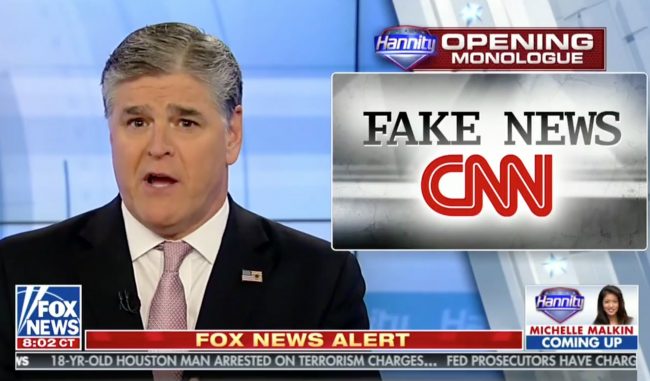
2. Who will save journalism, and when will it admit is needs saving? Washington Post politics reporter Dave Weigel‏ mocked the President for declaring his Florida rally “packed to the rafters” last week. Wiegel’s tweet included a picture of a half-empty Pensacola Bay Center.This was, it turned out, a mistake, but also a mistake brought about by confirmation bias, sloppiness, and hostility to the President. Once again, the news media handed the President the ammunition to discredit it, as it deserves to be discredited.Trump tweeted after the rally...

“@DaveWeigel WashingtonPost put out a phony photo of an empty arena hours before I arrived the venue, w/ thousands of people outside, on their way in…Real photos now shown as I spoke. Packed house, many people unable to get in. Demand apology & retraction from FAKE NEWS WaPo!”

Weigel apologized, tweeting,

“Sure thing: I apologize…Was confused by the image of you walking in the bottom right corner…It was a bad tweet on my personal account, not a story for Washington Post. I deleted it after like 20 minutes. Very fair to call me out.”

Weigel is a well-known Washington Post reporter, and the fact that he botched this in his own name rather than the Post’s doesn’t diminish its harm to the credibility of the already reeling news media one whit. The apology was nice, but it was also unavoidable. While Trump certainly has primed journalist skepticism with his adversarial relationship to reality, reporters are supposed to be professionals, and leaping to conclusions without confirmation or sufficient evidence isn’t professional, or worthy of public trust. Fact: Weigel would not have done this to Barack Obama.

Weigel’s gaffe was minor compared to CNN’s fiasco the day before, or the Brian Ross episode at ABC, but it deserves to be considered as part of the same pathology. Wrote Glenn Reynold on his blog today,

In attempting to “denormalize” Trump, they’ve denormalized themselves. If they simply reported fairly and accurately, without their screamingly obvious bias, they’d be able to do him much more damage. But they can’t help themselves.

Bingo. They can’t help themselves, and the ethics alarms when bias looms just don’t sound. Today the New York Times has a front page story, complete with a creepy photo of the President, featuring a long, insulting quote from Nancy Pelosi about how “unprepared” Trump was for the job. Oddly, nobody thought, “Wait, did we publish anything like this about the most unqualified President elected up to that  point? You know, the last one?”
Continue reading