A Naked Teacher Principle Application That Nobody Will Disagree With! At Least I Hope Not…

...especially with her new boobs....

…especially with her new boobs….

Amazingly, this is the first bona fide sighting this year of the Naked Teacher Principle, an Ethics Alarms standard, and it is, as Hazel used to say, “a doozy.” (Yes, I will continue to try to educate younger readers in the finer points of Sixties pop culture no matter how obscure the reference is. Look up Ted Key, Shirley Booth, Don DeFore, and The Saturday Evening Post, my children…)

Since it has been so long, here is the NTP:

The Naked Teacher Principle: The Principle states that a secondary school teacher or administrator (or other role model for children) who allows pictures of himself or herself to be widely publicized, as on the web, showing the teacher naked or engaging in sexually provocative poses, cannot complain when he or she is dismissed by the school as a result. The original formulation of the NTP can be found here. It has had many tweaks and variations since, which can be found here.

Now hold on to your hats, public school fans. Here is the recent story that it governs: Continue reading

The Brelo Acquittal: Once Again, No Just Cause For Protest

Brelo car

Nobody should doubt that there are too many instances of excessive police force, that racism must playsa factor in many of these episodes, and that prosecutors and juries give police special, and perhaps excessively generous,  consideration when cases of alleged abuse come to trial. The sheer numbers compel that concludion. However, the now routine presumption on the part of civil rights activists, much of the news media and Obama racially-biased Justice Department that every instance where an unarmed African American is killed by a police officer warrants indictment and conviction is as pernicious as racism itself, and threatens the rule of law as well as any semblance of peaceful race relations.

Every incident is not like the Walter Scott shooting in South Carolina, where the police officer’s actions were unequivocally homicidal, but the news media seems to blur the lines as much as it can. In the current controversy out of Cleveland, police officer Michael Brelo’s acquittal of murder charges was announced with headlines resembling  Slate’s “Cleveland Police Officer Acquitted for Firing 15 Shots That Killed Unarmed Black Couple,” which makes it sound as if Brelo personally executed the Huxtables while they were taking a Sunday drive. “Cleveland Police Officer Acquitted for Firing 15 Shots out of 137 That Killed Two Mentally-Ill, Homeless Addicts Under The Influence of Drugs Who Fled A Lawful Police Stop And Were Credibly Believed to Have Discharged A Firearm” would have been lengthy, but also would have been fair rather than deceitful.

The acquittal came because there was no way to determine for certain that Brelo’s shots were the ones that killed the couple.  Nor were the Cleveland officers’ presumption that deadly force was necessary unreasonable. Police had been informed that shots had been fired from the car (they turned out to be backfires from the auto), and the driver  had certainly exhibited reckless conduct. Was it necessary for Brelo to jump up on the hood of the car after multiple shots had been fired into it by other officers (the chase involved over 60 police cars)?  Were more shots fired by all concerned than necessary? Maybe and almost certainly, but neither of those facts add up to guilt for the officer, or justification for another “Hand up, Don’t shoot!” protest. Officers didn’t know the occupants of the fleeing car were unarmed, and had reason to think they were armed. They didn’t know they were a “couple,” or African American, or mentally ill.

Never mind; African American protesters are demonstrating, protesting and getting arrested in Cleveland anyway. Continue reading

When Typos Have Ethical Significance

Law-Firm-Advertising-FAIL

I was chided over the weekend for mocking a misspelling in one of the cuckoo online comments cheering on Texas Governor Greg Abbott’s ridiculous “monitoring” of U.S. military exercises in his state. The thrust of my critic’s argument was that picking on such modes of expression was not only a cheap shot but an elitist cheap shot. I generally deplore the “You wrote ‘teh!'” school of online debate, and in my view, that wasn’t what I was doing when I pointed out this particular Texas paranoid’s spelling of government as “goverment” twice . His “position” didn’t require any rebuttal, as it was self-evidently batty; I alluded to “goverment” because I concluded that it was not a typo, but rather an indication that the commenter was as ignorant as granite block. If you can’t spell government, you haven’t read about government enough to have an opinion on it worth inflicting on the rest of us.

It led me to ponder, however, when a typo has undeniable ethical significance, and mirabile dictu, Above the Law today provided the excellent example you see above.

This is part of the marketing for a law firm—you know, those organizations that provide lawyers to ordinary citizens who need help negotiating the complexities of our nation’s increasingly impenetrable laws and regulations in order to live and prosper? Lawyers are supposedly trained in the precision of language, as the presence or absence of a comma or semi-colon in a statute, a motion or a brief can mean the difference between a client being a criminal or a free man, and an unnoticed typo in the draft of a contract, will, trust or settlement can decide the fate of millions of dollars, the ownership of disputed property, the existence of a prenuptial agreement, and other momentous, life-altering  consequences.

The very existence of an embarrassing  law firm marketing device like this one—I think it’s a coaster—leads to many conclusions:

1. It tells us that the law firm’s managing partners are inattentive to details, and in law, details are everything.

2. It tells us that the lawyers in the firm inadequately supervise the non-lawyers who work for the firm, and the ethics rules demand that lawyers be especially attentive to such employees and contractors.

3. It tells us that at least one firm lawyer, whoever approved the thing, either is illiterate or can’t be trusted to check the text of documents, even documents containing only three words.

4.It tells us, in short, that this law firm, and by extension the lawyers it employs, cannot be trusted to exercise care, competence and diligence when they are representing themselves.

How can it possibly be trustworthy when it is representing others?

__________________

Pointer and Source: Above the Law

Ethics Dunce: CNN Morning Anchor John Berman

When to you break out the dick jokes, John?

When to you break out the dick jokes, John?

There is apparently no way to stop the trend of supposed professionals polluting our discourse, and the airwaves by inflicting gratuitous vulgarity on us, apparently in the mistaken belief that doing so is clever and cute. It isn’t. It’s unprofessional, juvenile and embarrassing.

CNN anchor John Berman is the latest to join the smut brigade. Announcing a promotion for CNN’s evening entertainment show, “Somebody’s Gotta Do It” starring Mike Rowe, in which Rowe will be doing something—I really don’t care—involving boulders—Berman smirkingly began, “Mike Rowe shows us big stones!” Nice. And stupid. Kate Bolduan, sitting next to him, seemed visibly annoyed, and when he repeated the “joke” after the break, said, curtly, “Please stop.” Continue reading

The Humiliation of Alexus Miller-Wigfall

Prom Dress

Some stories of the malfunctioning of  ethics alarms in school administrators make me want to weep, go postal, or begin a national movement to bring down the public school system for good, so untrustworthy are its stewards.

This one made me want to do all three.

The incompetent and cruel administrators at Harrisburg’s Sci-Tech High School told student Alexus Miller Wigfall that she would be suspended because the prom dress she wore was “too revealing.” The school’s dress code, like most dress codes, is so badly worded that it defies reasonable construction: this one requires “all body parts” to be covered, suggesting that the only acceptable prom dress would be something like this…

woman in Burka

Cute! Continue reading

Another TV Doctor, Another Breach: Dr. Sanjay Gupta’s Heroic And Self-serving Ethics Blindness

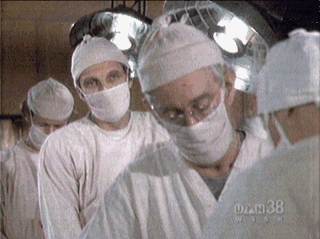
Are TV doctors entertainers, journalists or doctors? In a way the question doesn’t matter: if they are doctors, then they are obligated to follow medical ethics and the standards of their profession at all times, no matter what else they may be taking compensation for. This is why “Dr. Oz” is ducking the issue when he tries to avoid accountability for pushing quack remedies on his TV show (if it ducks like a quack…) by arguing that he isn’t practicing medicine, but engaging in entertainment. He’s still a doctor, every second of his life, once he takes that oath.

CNN’s Dr. Sanjay Gupta has largely steered clear of ethical issues in his tenure as the network’s medical expert. Not entirely, however; for example, in 2009, he was prominently mentioned as a possible Surgeon General, and was in discussions with the White House while continuing his reporting on the air, raising real and potential conflict of interest concerns. The most recent controversy is more serious. Continue reading

A Particularly Dangerous Ethics Dunce Display: State’s Attorney Marilyn Mosby’s Unethical Statement Regarding Charges In The Death Of Freddie Gray

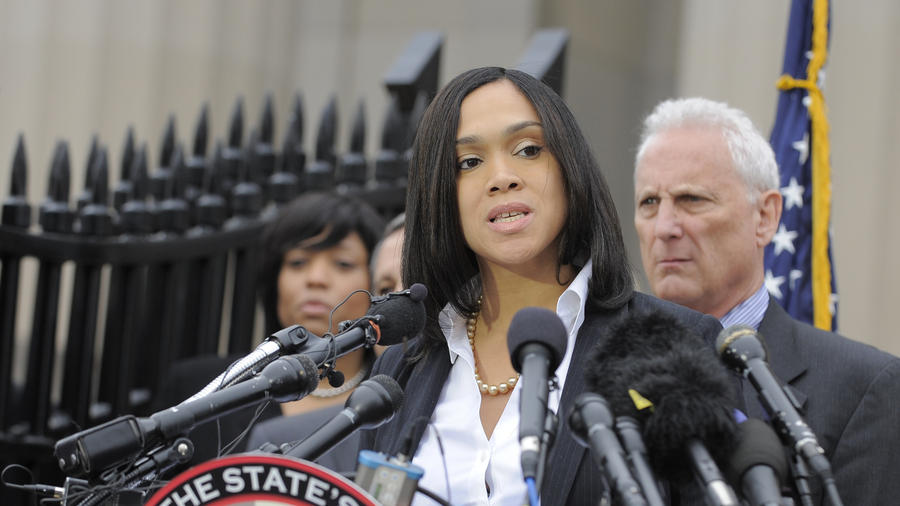
State’s Attorney Marilyn Mosby announced today that the six Baltimore police officers involved in the arrest and subsequent death of Freddie Gray  have been charged with criminal charges  second-degree murder, manslaughter, second-degree assault, vehicular manslaughter , and misconduct in office. I have no comment on that: I haven’t seen the evidence. I will assume the charges are justified base on what evidence there is.

Nonetheless, Mosby’s announcement and related statements from  the steps of Baltimore’s War Memorial Building were unethical, and indeed  constituted a professional ethics breach:

  • Mosby said she told Gray’s family that “no one is above the law and I would pursue justice upon their behalf.” Unethical. Her client isn’t the family. Her client is the state. If the evidence appears too weak to get a conviction based on any new revelations, her duty to her client, which only requires justice, not justice for any party, would be to drop the case. Telling the family that she is working “on their behalf” is either a lie, or, if true, unethical. She is not their lawyer or the victim’s lawyer.
  • “I heard your call for ‘no justice, no peace,'” she said. “Your peace is sincerely needed as I work to deliver justice on behalf of this young man.”

Ugh. Again the “on behalf of” misstatement. Worse, though, is “I heard your call for ‘no justice, no peace.” What are we to take from this statement, other than the disgraceful admission that the indictment is in response to mob violence and threats of more? She may not say that. By saying it, she has undermined the rule of law. Prosecutors must not”hear” demands that a citizen be prosecuted, or not prosecuted. They are ethically obligated to ignore them, and do what the evidence dictates.

The demonstrators obviously got her meaning. Desmond Taylor, 29, shouted to the crowd,  “This day means that your actions bring consequences in Baltimore City.”

Imagine what else riots and arson might bring! Continue reading

Death Throes Of The Death Penalty: Dumb Expert, Dumb Advocates, Dumb Debate

“Next!”

As I recently concluded, the death penalty is beyond saving, not because it can’t be defended ethically and morally, but because the issues are tangled beyond repair.

The controversy over the legality of the so-called drug cocktails that somehow became our execution method of choice is a perfect example. The battles over capital punishment trapped policy-makers into this kinder, gentler, ridiculously complicated method of execution that has suffered snafus ranging from unavailable drugs to ugly extended deaths. The problem is the floating definition of “cruel and unusual punishment,” prohibited by the Constitution, but almost entirely subjective. Many judges think killing a killer is itself cruel by definition, and the more reluctant Western Europe becomes to execute the worst of the worst, the easier it is to make the argument that the death penalty is also unusual.

I don’t get it. I never have. India once executed condemned criminals by having the subject place his head on a stump under the raised foot of  trained elephant, which on a command would smash the head like a grape. Quick, painless–messy!—but virtually fool-proof. A pile-driver would be an acceptable equivalent.  Ah, but ick! In this stupid, stupid, intellectually dishonest debate, ick always equals “cruel and unusual,” because to opponents of the death penalty, killing people, even horrible, dangerous people, is inherently icky.

(Oddly, ripping unborn babies out of the womb is not, but I digress.)

I’ve admitted it, and I will again. (This lost Ethics Alarms Luke G., one of its best commenters the last time.*) It is obviously wrong to intentionally prolong an execution or deliberately cause pain, but if the occasional execution is botched and the condemned suffers, that should be cause for great rending of garments, nor should it be used to discredit capital punishment. As I wrote here about Clayton Lockett’s execution in Oklahoma

“There was no question of Lockett’s guilt, and his crime was inhuman. Such wanton cruelty and disregard for innocent life warrants society’s most emphatic rebuke, and the most emphatic rebuke is death. It is essential that any healthy society make it clear to all that some crimes forfeit the continued right to not just liberty, but also life. Anyone who weeps because this sadistic murderer experienced a few extra minutes of agony in the process of being sent to his just rewards has seriously misaligned values. No method of execution will work every time, and to make perfection the standard is a dishonest way to rig the debate. If the death penalty is justified, and it is, then we should expect and accept the rare “botch.” Meanwhile, if the concern really is efficiency, reliability, speed of death and minimal pain, there are literally dozens, maybe hundreds of methods of swift execution that would accomplish this. They just won’t pass the standards of death penalty opponents, because no method will.”

Today the Supreme Court heard oral arguments on the question of whether Oklahoma’s use of the common surgical sedative midazolam did not reliably make prisoners unconscious during lethal injections, thus violating the Eighth Amendment’s protection against “cruel and unusual punishment.” It’s a ridiculous case, which arises out of the botched April 2014 execution of Lockett that sparked the post I just quoted. It is a ridiculous case because the method of execution isn’t worth arguing over. Elephant. Head. Problem solved. Why is Oklahoma fighting about which cocktail to use? This is the anti-capital punishment team’s game, and sooner or later, the result is preordained.  Continue reading

Acting Ethics: Why We Don’t Want Actors Being Too Picky About Their Roles

FergusonX

In the strange ethics category of “Conduct That Isn’t Exactly Wrong But That Will Have Nothing But Bad Consequences To Society If There Is A  Lot Of It” (CTIEWBTWHNBBCTSITIALOI for short) is actors rejecting roles because they have philosophical or political disagreements with the script.

We’ve had two high profile examples of this occur lately. All we can do is hope that it’s a coincidence. The first was when about a dozen Native American actors, including an adviser on Native American culture, left the set of Adam Sandler’s first original movie with Netflix, “The Ridiculous Six,”a western send-up of “The Magnificent Seven,” claiming some of the film’s content was offensive.

Really? An Adam Sandler movie offensive?

The second and more troubling was in LA,  where five actors quit the cast of the new play “Ferguson,” which consists entirely of dramatizations of the Michael Brown murder grand jury testimony, because the actors apparently felt that it did not appropriately support the “Hands Up! Don’t Shoot!” narrative.

That’s really stupid, but I’m not getting into that again.

We don’t see many examples of professional actors doing this for several reasons. One is that they can’t afford to. Acting, except for the top fraction of a per cent, is anything but lucrative; it’s a subsistence level job, redeemable because it is, or can be, art, and tolerable as long as the actor doesn’t have a family to support, or has a trust fund.

The main reason this is unusual, however, is that an actor isn’t responsible for the content of the play, movie or TV show he or she acts in, but only the skill with he or she helps present that content to an audience. Actors—and technical artists like costume and light designers—are the conduits through which a writer’s work of performance art gets to live. They don’t have to like a show, agree with it or understand it, which is a good thing, since many excellent actors don’t have the  education, experience or intellect to understand complex and profound works. As one realistic actor friend once told me, “If we were that smart, we’d be smart enough to be in another profession.” Continue reading

Comment of the Day: “Ethics Dunces: Ten Prominent Doctors, Surgeons and Med School Professors Who Want Columbia To Kick Dr. Oz Off Its Faculty”

The late Prof. George Wald, the best teacher I ever had. In biology, not political science. George did not acknowledge the distinction.

The late Prof. George Wald, the best teacher I ever had. In biology, not political science. George did not acknowledge the distinction.

Commenter Alexander Cheezem, who has quite a bit of expertise (also passion) on such matters, weighed in on the current controversy over the “quackery” of daytime TV star “Dr. Oz.” This time I’ll hold my comments until the end; here is Alex’s excellent Comment of the Day on the post, Ethics Dunces: Ten Prominent Doctors, Surgeons and Med School Professors Who Want Columbia To Kick “Dr. Oz” Off Its Faculty:

I’m going to have to both agree and disagree with you here. First off, I applaud Columbia University’s response and agree that the principle of academic freedom is applicable here… to a point.

Secondly, however, I’m going to have to disagree with you regarding the parallels. Linus Pauling was an embarrassment to medicine, not chemistry. Wald was overly passionate about politics, not biology. Nagel’s views on biology are an embarrassment, not his views on what he’s supposed to be actually teaching. Chomsky’s forays into political science may be an embarrassment (personally, I regard them as something of a mixed bag), but that’s not what he was the professor of, is it?

Kass, McKinnon, Harper, and Singer are closer parallels, of course, but there’s still one rather huge difference: Dr. Oz is a doctor… and runs his show as one. It is, as the comedian John Oliver put it, the Dr. Oz Show, not “Check This Shit Out With Some Guy Named Mehmet”. This is quite relevant for a number of reasons, not the least of which is that offering medical advice is within the scope of what doctors do. Offering that advice while invoking his medical license as a relevant qualification, simply put, can be considered part of the actual practice of medicine. Continue reading