Today I received two comments from an aspiring participant here called “snowflake.” They are really a single comment submitted in two installments. The topic was this post,about the weenie professor who grovelled an apology for daring to show Sir Lawrence Olivier’s screen performance of “Othello” in a class for discussion purposes.
In the midst of a flurry of wrongfully convicted black men finally given their freedom comes the perplexing saga of 78-year old Joseph Gorden, locked up in New York’s Fishkill Correctional Facility since 1993 for a murder he says he didn’t commit. But that, as they say, isn’t the half of it.
Last March, Gordon was denied his fifth application since since 2017, when he had served the minimum term of his sentence of 25 years to life in prison. The reason he is still incarcerated is simple: he refuses to express remorse for the 1991 murder of a white Westchester County doctor, because Gordon insists that he is innocent. Usually a parole board will not waive the remorse requirement, which—and this is not the ethics quiz!– presents a classic ethical conflict for defense lawyers.
A lawyer cannot advise a client to lie. That is a bright-line professional ethics edict of long-standing. A lawyer is also required to defend a client’s rights and fight for his or her interests as zealously as possible. Would you, as a lawyer, convinced of your client Joseph Gordon’s innocence, advise him to express remorse to the parole board, which would require a false acceptance of the jury’s verdict? Many lawyers have done exactly this, and would argue that they did the right thing. Their bar associations and courts would almost certainly disagree.
I digress, however; sorry. That problem has always fascinated me. My favorite version is when the lawyer knows the convicted client is not guilty because another one of his clients has confessed to the murder, a confidence that the lawyer cannot ethically reveal.
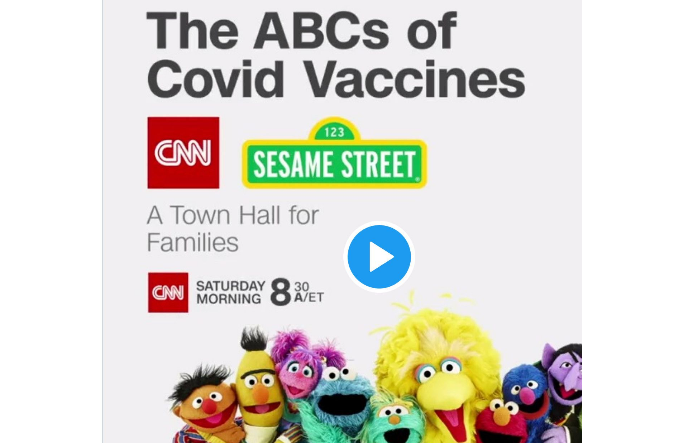
Big Bird tweeted a few days ago, “I got the COVID-19 vaccine today! My wing is feeling a little sore, but it’ll give my body an extra protective boost that keeps me and others healthy. Ms. Hill even said I’ve been getting vaccines since I was a little bird. I had no idea!” Naturally, President Biden, who watches Sesame Street religiously (yes, it’s a cheap shot, but I’m in a bad mood) tweeted back, “Good on ya, @BigBird. Getting vaccinated is the best way to keep your whole neighborhood safe.”
This set off an immediate partisan and ideological debate, with conservative hone-schooling mother, blogger and pundit Bethany Mandel taking a leadership role. She wrote in part,
Just as “Sesame Street” isn’t content with allowing parents the freedom to guide their children’s own moral compass, so too are they uncomfortable with the idea of parents making individual risk assessments for their children’s health and safety. There is a moral absolutism necessary to be part of the left, which is where “Sesame Street’s” writers appear to fall. The messaging on COVID-19 vaccination has become yet another absolutist position. Big Bird’s tweet doesn’t exist just on Twitter. It’s part of a larger campaign from the series to “educate” parents on the vaccine.
Those in charge of messaging and programming children’s media have positioned themselves as arbiters of our children’s moral compass. And that Soviet-style demand for a universal, well-curated set of beliefs from a particular coastal lens should concern all parents — not just those with religious or personal beliefs that make them uncomfortable with a particular episode of “Sesame Street” aired during Pride Month.
Parents should take note: The aim of children’s media is no longer just to provide free, education-minded babysitting while you get ready for work.
This story seems very Greek based on the attitudes and actions I observed through the years on the part of my mother and the large Greek side of my family. Greeks have a, shall we say, unique concept of ethics, which is interesting, given that ancient Greece was the home of all the earliest ethicists.
Mass fake vaccinations have been taking place in dozens of vaccination centers throughout the homeland, as doctors and nurses are accepting a standard bribe fee of 400 euros to get Wuhan virus vaccination cards but don’t want the real shot. They are getting water shot into them instead, or think they are. Mega TV is reporting that many doctors are taking the money but secretly using the vaccine instead of water. This means that the vaccination cheats aren’t cheating, but only think they are. Meanwhile, the doctors and nurses rationalize that they have earned their 400 euros because they are keeping the public safe, preventing a fraud, and benefiting those bribing them even though they’ll never know it.
The scene above was the work of Steven Novak, an artist in Dallas, Texas. Last year, neighbors were so unsettled by his Halloween decorations that one of them called the police to report a murder. (No word yet on what this year’s display was.)
Your post Halloween Ethics Alarms Ethics Quiz:
Is a display like that unfair to the neighborhood and irresponsible?
A few thoughts:
I think it’s great.
Do you think he got many trick-or-treaters?
It may be OK, but I’d advise Alec Baldwin to avoid such creativity.
A DC Comics artist announced that recent decisions by the venerable comic book company to wokify its iconic hero were causing him to quit in protest. “I’m finishing out my contract with DC. I’m tired of this shit, I’m tired of them ruining these characters; they don’t have a right to do this,” said colorist Gabe Eltaeb during a recent podcast. “What really pissed me off was [changing Superman’s credo] to “truth, justice, and a better world,” Eltaeb added. “Fuck that! It was Truth, Justice, and the American way! My Grandpa almost died in World War II; we don’t have a right to destroy shit that people died for to give [to] us. It’s a bunch of fucking nonsense!”
What do you really think, Gabe? First, you should know what you’re quitting about: the new slogan is “Fighting for Truth, Justice, and a better world.” And the company obviously has a right to change the big guy’s slogan to whatever they want to. But yes, “the American way” has been sent to the ash heap of history.
Over at Fox News, they were freaking out, as usual. Fox News contributor Raymond Arroyo said on a Sunday talking heads show that DC Comics altering Superman’s motto to eliminate fighting for “the American Way” was a “disservice to fans.” “Now you have a multinational corporation, D.C. Comics, that decided it would rather politically grandstand and build foreign markets than respect their character and the audience that built him. You don’t need Kryptonite to kill Superman when you have D.C. Comics doing a great job. This is a huge disservice to fans and I’m waiting for Superman to turn up in a red costume and we will just call him Super Person. Lex Luthor should send DC Comics a thank-you card for sidelining and killing Superman.”
“This is clearly a distortion and a disservice to anyone who loved Superman that read the comic books and watched those movies,” Arroyo told “The Big Sunday Show.” “Remember, this was about an alien from another planet, a dying planet that comes and lands in the heartland of America and embodies the American ideals of freedom, justice. He wears red, white and blue for goodness sake!”
There were two recent developments in the DC Comics universe that provoked all the angst: the longtime publisher of Superman comics, changed Superman’s 80-year-old slogan from fighting for “truth, justice, and the American way” to “truth, justice and a better tomorrow,” and also revealed that the younger version of Superman, the son of Lois Lane and Clark Kent, is bi-sexual, and was drawn kissing a guy.
OK, the last one is obviously blatant pandering, but what about the motto?
Your Ethics Alarms Ethics Quiz of the Day is…
Is there anything wrong with DC making the Superman motto change?
Let’s start off today’s ethics adventures with a quiz…
The New York Times this morning has an odd choice for its placeholder in the spot typically reserved for editorials: an essay by Dr. Daniela J. Lamas, a pulmonary and critical-care physician at Brigham and Women’s Hospital in Boston. The piece endorses lying to patients “for their own good.” The op-ed—that’s not what the times calls such essays any more, but that’s what it is and they are—is fine, raising a legitimate ethics issue for readers to ponder, hence the use of it here as an ethics quiz. The placement and timing is suspicious, however.
This could be called a “conspiracy theory,” I suppose, but such theories are germinated by a genuine and deserved development of distrust. Since I do not the trust the Times to report the news objectively and ethically, but believe with good reason that it manipulates its reporting and choice of opinion pieces to advance a progressive and usually partisan agenda, I suspect that this op-ed was given such prominent placement to plant the idea that doctors—like You Know Who—and health care “experts” are justified in using incomplete facts, false certainty and disinformation when communicating to the public regarding the pandemic, vaccines, masks and the rest for “the Greater Good.”
“Turn the following into real sentences and put them in a paragraph briefly explaining, ‘the perfect murder.’ Items should appear in your paragraph according to the order of importance. There are 10 ideas here, so if you remove one you have to add an idea of your own.
I was surprised to find how often I have written about the Steve Bartman incident (shown above) here. For those of you who missed it (and if you are not a baseball fan, couldn’t care less) the episode is rife with ethics lessons.
Bartman was the hapless young Chicago Cubs fan in 2003 who unintentionally interfered with a foul ball that might have been catchable by Cubs outfielder Moises Alou in the decisive game of 2003 National League Championship Series. Bartman’s mistake (it didn’t help that he was wearing earphones and watching the ball rather than the action on the field) began a chain of random events that ended in a complete collapse by Chicago in that very same half-inning, sending the Miami Marlins and not the Cubs, who had seemed comfortably ahead, to the World Series.
Bartman issued a sincere and pitiful apology but it didn’t help. He was widely vilified by Chicago fans, who at that point had not seen a pennant-winning team in their lifetimes. Sportswriters joined in, and he was literally run out of town. Bartman’s name then became part of Cubs and baseball lore, one more chapter in the sad saga had been called “the Billy Goat Curse,” the uncanny inability of the Chicago National League team to win it all. The Cubs finally broke the imaginary curse in 2016, and in a show of kindness and remorse, privately awarded Bartman an official Chicago Cubs 2016 World Series Championship ring.
That was nice, but Bartman’s life had already been, if not ruined, seriously degraded by the incident. I thought about poor Steve last night, when a foul ball nearing Fenway Park’s “Green Monster” left field wall wafted its way down the foul line. As Sox outfielder Danny Santana tracked it, so did several fans in the seats that look over the grandstand onto the field. Their eyes were on the ball, and as it moved way from foul territory into fair–maybe: in Fenway Park at that point, it is only a matter of a few feet’s difference—one fan lunged for the ball, deflecting it away from Santana’s glove.
I love these tweets! The pop music and Broadway diva and actress has provided a cultural, political, anthropological and philosophical artifact for the ages. I could write a book about these twin tweets and what they tell us, not just about Midler, but about a society that produces the kind of celebrity who would produce them.
Where to begin? Well, taken together they are not unethical tweets: I might even argue that they are ethical, because they publicly declare to the world, “I am a complete and utter idiot, and not only do I lack the critical thinking skills of a three-toed sloth, I suffer from a near terminal level of the Dunning-Kruger Effect, being both unable to discern just how stupid I am, but also unable to comprehend the consequences of advertising my disability to the public.” Now there is no excuse for anyone considering having an interaction of any kind with Midler that involves trust—letting her baby-sit a child, for example, or even a guppy—and thus to make the mistake of relying on her judgment. She has none, and has been considerate enough to proclaim it. (Not that she hadn’t provided plenty of evidence before.) The tweets make the world safer. How many social media posts do that?