Ethics Quiz: Covidiot Or Responsible Leader?

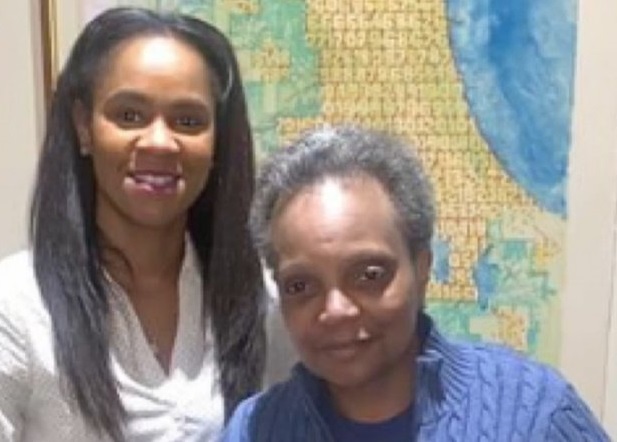
The mayor and her hairdresser…

Remember the gag in the original Batman movie, after the Joker poisons some soap and cosmetic products and news anchors go on the air looking like hell? This story reminded me of that.

Chicago Mayor Lori Lightfoot, who has just recently pivoted to race-baiting as a strategy for getting through the pandemic—nice— was forced into defending getting a $500 haircut in defiance of her own state’s  stay-at-home order.  Lightfoot had appeared recent in a public service announcement urging Chicagoans to stay home to save lives. She also spoke to her city’s women specifically, saying “Getting your roots done is not essential.” I would interpret this as “Forget about vanity: this is a national crisis.” Hairstylists and barbers are not on Illinois’ list of essential businesses and must be closed during the Wuhan virus outbreak.

Nonetheless, the Mayor had the city pay a hairdresser 500 dollars for a private hair-cutting session. If there was ever the appearance of a “laws are for the little people,” this episode is it.

The Mayor’s defense is that  because she’s “the face of this city,” maintaining her appearance is a special and necessary exception.

Your Ethics Alarms Ethics Quiz of the Day is..

Is the Mayor’s explanation and conduct ethical?

Continue reading

Yes, It’s Another “Ick Or Ethics?” Quiz: Sarah Palin’s Surprise

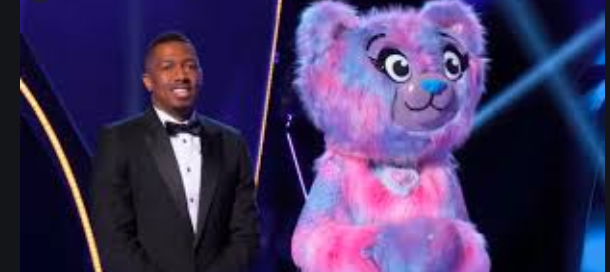
Believe it or not, that’s Sarah next to the bear….

To be absolutely transparent, my mind’s made up on this one: I think it’s unethical. However, I admit to be a hard-liner on this issue, which is “The duty of leaders not to debase their positions or former positions for personal gain or ego gratification.”

Let me introduce this  horrific cultural episode by saying that I regard the TV show involved, “The Masked Singer,” among the Top Ten Stupidest Shows in the history of network television, and I’ve seen a LOT of network television, far more than is good for me. Its existence is an insult to the public, its taste and intelligence, and the United States of America. Maybe the species too. Adam and Eve.

Now here is the video clip. Consider yourself warned: it cannot be unseen or unheard:

Yes, Sarah Palin dressed up in a rainbow teddy bear suit and rapped “Baby Got Back” on national television.

The lyrics from Sir Mix-a-Lot’s Noel Cowardesque 1992 hit:

Oh, my, God Becky, look at her butt
It is so big, she looks like
One of those rap guys’ girlfriends.
But, ya know, who understands those rap guys?
They only talk to her, because,
She looks like a total prostitute, ‘kay?
I mean, her butt, is just so big
I can’t believe it’s just so round, it’s like out there
I mean gross, look
She’s just so, black
I like big butts and I can not lie
You other brothers can’t deny
That when a girl walks in with an itty bitty waist
And a round thing in your face
You get sprung, want to pull up tough
‘Cause you notice that butt was stuffed
Deep in the jeans she’s wearing
I’m hooked and I can’t stop staring
Oh baby, I want to get wit’cha
And take your picture
My homeboys tried to warn me
But with that butt you got makes (me so horny)…

Nice. Classy!

Your Ethics Alarms Ethics Quiz of the Day:

Was Palin’s appearance on “The Masked Singer” icky, funny, or unethical?

Continue reading

Comment Of The Day: “Ick Or Ethics? The Nauseating Social Media Meme”

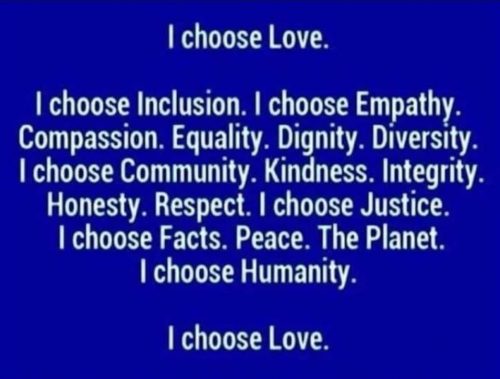
Not for the first time, a commenter has done a more thorough job fisking a problematical statement that I have. Actually, I didn’t even try to dissect the memed screed below…

…I  asked whether it was truly unethical, or just signature significance for an arrogant political correctness junkie.  Ryan Harkins took on the greater challenge, and as usual, did a superb job.

Here is Ryan’s Comment of the Day on the post, Ick Or Ethics? The Nauseating Social Media Meme…

Today I am wearing a shirt that reads:

Inconceivable. Adj.
1. Not capable of being imagined or grasped.
2. Not what you think it means.

The problem with memes like the above is that it is disingenuous. What do you mean by love? Do you mean philia? Eros? Caritas? Squishy feel-goodness, for which I don’t know a Latin equivalent? In general, especially given what I’ve observed of the people who post such memes, I don’t think “love” means what they think it means. I certainly don’t think they see love as selflessly willing the good of the other, but maybe that’s because I’m cynical and see this meme as not willing the good of someone else, but trying to proclaim one’s own virtue.

What is meant by inclusion? Is there nothing someone could ever do to warrant exclusion? Or is there a little asterisk pointing one to the fine print, where we don’t include the scum of the earth, like religious white men, sex offenders, and Trump supporters?

I don’t have much to say about empathy or compassion. Equality always begs the question: “Equal how?” Because again, people keep using that word, and I do not think it means what they think it means. Equal before the law? Equal in dignity? Equal in socioeconomic status? Equal in success? Or how about created equally, and endowed by their creator with certain unalienable rights, including (but not limited to) life, liberty, and the pursuit of happiness?

I have no problem with dignity, but what about diversity and community? There is unavoidable tension in the community when there is diversity. We might not like that fact, but it is there. As soon as you have two people of different opinions in the room, there is tension, and by and large what we’ve seen is that people are less and less tolerant of tension. I wouldn’t say they are less tolerant of differences of opinion, as long as those opinions keep to themselves and don’t bother other people. It is the tension that people are finding unbearable. Maybe it is because we are no longer equipped to have our opinions or viewpoints challenged. But I also have a hard time believing anyone believes in community, when so many are nose down I electronics (as I am as I write this) and all my friends belong to the same echo chamber as myself. Continue reading

Ethics Quiz Of The Week: Compassion For Madoff?

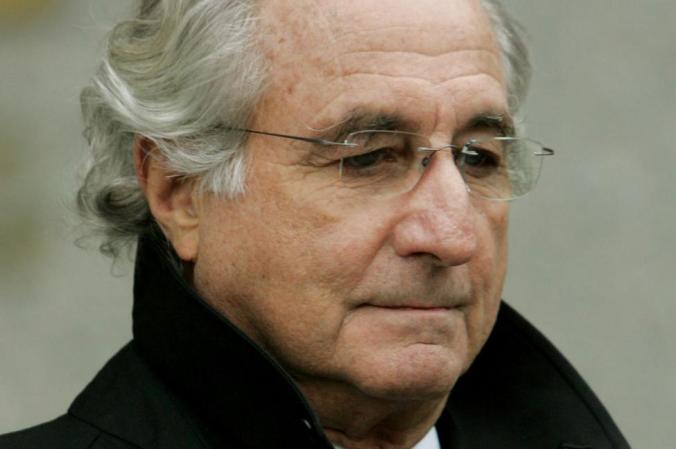
Infamous swindler Bernard Madoff had his attorney file court papers this week requesting that a federal judge  grant him a “compassionate release” from his 150-year prison sentence. The 81-year-old convicted sociopath says he has less than 18 months to live because his kidneys are failing. Madoff has served just eleven years, or less than 10% of his punishment.  His dying wish, he says, is to salvage his relationships with his grandchildren.

By all means, we should care about Bernie Madoff’s wishes. He pleaded guilty in 2009 to 11 federal counts in a heartless scheme that ruined the futures of thousands and put non-profits and charities out of business.

Your Ethics Alarms Ethics Quiz Of The Week is

Should Madoff get a “compassionate release”?

Continue reading

Ethics Quiz: Dying Dog Ethics

Well this story is calculated to make any dog-lover teary. Having lost my beloved Rugby last yearand not yet been able to consider a successor, I read it while having to constantly adjust my “don’t be an idiot” controls.

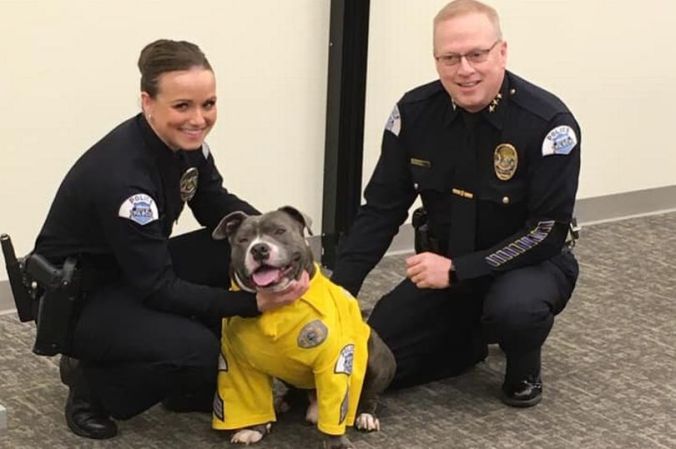
Eddie the pitbull, in the care of Mikey’s Chance Canine Rescue in Benton County, Washington, has an inoperable brain tumor. He’s been given six months to live, and the staff  decided to make his final days as much fun for him as possible by creating various “bucket list” experiences.  One recent example was giving Eddie  “his dream” of being a crime dog, and and as soon as local police heard about Eddie, they pitched in.

The officers gave Eddie his own police jacket, then set him down in a pool filled with toys. Then Eddie accompanied the police in the front of a squad car as they toured the town requesting donations for the rescue shelter.

On their Facebook page, the Pasco Police wrote: “We have finished our amazing day with K9 Eddie and we are overwhelmed with the amount of support the community has shown him. Eddie was welcomed everywhere he went and shown nothing but love and affection all day. Finally, we want to wish Eddie all the best with his bucket list and future endeavors.”

Your Ethics Alarms Ethics Quiz of Day is…

What’s going on here? Continue reading

And That’s The Rest Of The Stupid Story: Finally, Apu Is Officially Toast. Or A Somosa. Whatever.

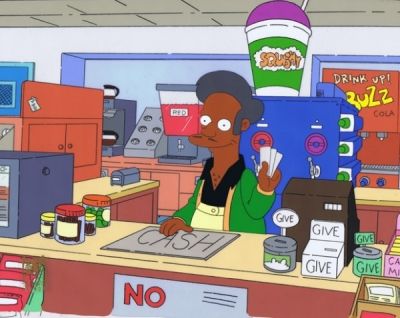
Hank Azaria, who has performed the voice of the Indian convenience store owner Apu since  1990, now says the series will capitulate to The Woke and Widiculous, and eliminate the character, who represents a stereotype. You know, unlike all the other characters on “The Simpsons.” “All we know there is I won’t be doing the voice anymore,” Azaria told the website SlashFilm. “We all made the decision together… We all agreed on it. We all feel like it’s the right thing and good about it.”

OK, what’s right and good about it? Hank is a Hollywood actor, so I don’t expect much nuanced ethical analysis from him, or any kind of analysis, really, but if an animated satire show can’t defend using stereotypes in a cartoon, then it might as well just give up.

I’m embarrassed to say this is the fourth post on this silly story, but like so many others, it is canary dying in the mine stuff. Yes, it’s just one canary. Still, the mine is looking awfully toxic.

A recap: The controversy was launched when a new documentary debuted Nov. 19, 2017  called “The Problem with Apu.” It reveals that Indian-Americans….well, at least some,  viewed Apu as a charged stereotype, and were especially upset that a non-Indian actor (Azaria), did the voice. I responded,

Move through the muck and emerge in the bright sunlight of reality,  and one sees that there is no problem with Apu. There are problems with lacking a mature reaction to humor and satire, being deliberately hyper-sensitive, power-grabbing using group-identification politics, and cynically looking for offense to justify claiming victim status,  but there is no problem with Apu.

I would love to know why Indian-Americans feel all the other characters in the show can be  outrageous stereotypes and extreme caricatures,  but Apu is unacceptably offensive and insensitive. This is contrived victimization. One cannot reasonable compare the Indians feasting on bugs and chilled monkey brains in “Indiana Jones and the Temple of Doom” to Apu because 1) Apu is entirely benign: he is one of the smartest, sanest and nicest characters in “The Simpsons,” and 2) he’s a cartoon.

“The Simpsons”writers initially took the responsible approach to this contrived controversy: they ridiculed it, taking my route and  noting that it was a cartoon, meaing to sane people that the accusation that the show was marginalizing human beings was not worth  arguing about, being box of rocks dumb. Here was the woke rebuttal to that, from a white female critic offended on behalf of cartoon Indians everywhere: Continue reading

Ethics Quiz: The Upsetting License Plate

The Utah Division of Motor Vehicles lists standards for vanity plates, based on a statute that “forbids any combination of letters or numbers that ‘may carry connotations offensive to good taste and decency or that would be misleading.’”

Plate letter and number combinations that reference drugs, that are “sexual, vulgar, or derogatory,” that  suggest ideas “dangerous to public welfare” or disrespect “race, religion, deity, ethnic heritage, gender, or political affiliation,” are not permitted.

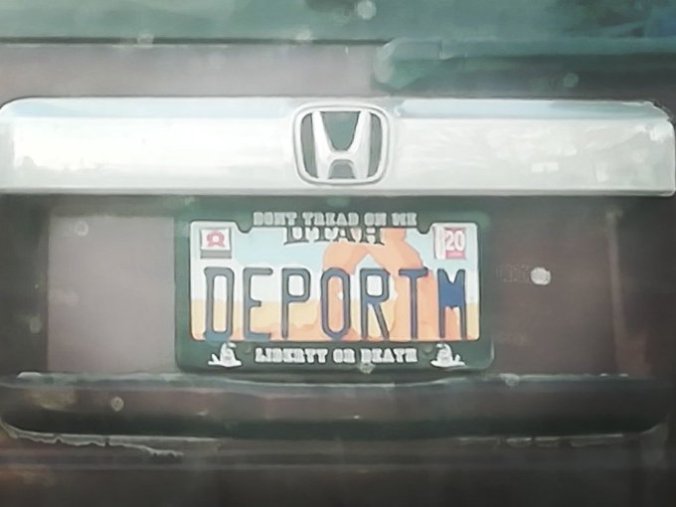
Thus it was that Utah high school English teacher Matt Pacenza, driving home, spied  a vanity plate reading “DEPORTM.” As a concerned citizen, he snapped a photo of the personalized plate and posted it to Twitter. (Note: I’m more concerned about drivers taking photos while operating their motor vehicles than about what their plates say, but I’m weird, or so I’m told). The resulting cocial media comments attracted the attention of some state senators as well as the Utah State Tax Commission, which oversees license plate approval. Now the commission says it is reviewing whether the plate violates department guidelines.

Your Ethics Alarms Ethics Quiz of the weekend is…

Is there anything wrong with having that license plate on your car?

Continue reading

Ethics Quiz: Santa In A MAGA Cap

Frank Skinner, who has played Santa Claus at a mall in Waycross, Georgia for 50 years, says he was nearing the end of a long shift with kids on on and off his knee and the mall  was finally empty. For fun, he put on a MAGA cap as he sat in his Santa chair and took his own photo. Then he shared it for friends on his Facebook page.Predictably, some jerk sent it  to the mall’s management with a complaint.To be clear, the picture didn’t show Santa reading Hustler, or feeling up a busty co-ed, or snorting coke. It showed him wearing the campaign cap of the President of the United States.

The mall responded, “We apologize for this occurrence and will be addressing this right away. The Mall at Waycross does not support any specific political party. Thank you for bringing this to our attention. Kindly, Mall Management.” Then  the mall’s manager told reporters that the posing of the photo was “done completely without our knowledge” and added that “it’s safe to say he will not be wearing this hat around here. This particular Santa has been replaced.” Frank was fired.

Your Ethics Alarms Christmas season Ethics Quiz of the Day is…

Was the mall’s action fair and responsible?

Continue reading

Ethics Quiz: The Bad Seed

“The Bad Seed” began as a  novel  by American writer William March, then became a 1954 Broadway play by playwright Maxwell Anderson, and ultimately a 1956  Academy Award-nominated film. The disturbing plot involves Rhoda Penmark, a charming little girl who is also a murderous psychopath. In the play’s climax, which the film version didn’t have the guts to follow, Rhoda’s single mother resolves, once it is clear that her daughter is killing people, to kill Rhoda herself, in a twist the anticipates such films as “The Omen.”  She fails, however, and the sweet-looking serial killer in pigtails is alive and plotting at the play’s end.

A real life bad seed scenario is playing out in Chicago. A 9-year-old  boy has been charged with five counts of first-degree murder, two counts of arson and one count of aggravated arson. The evidence suggests that he deliberately started a fire in a mobile home east of Peoria, Illinois, that claimed the lives of the boy’s two half-siblings, a cousin, his mother’s fiance and his great-grandmother.

The boy’s mother says her son suffers from schizophrenia, bipolar disorder and ADHD. She also says things like “he’s not a monster,” “he just made a terrible mistake” and my personal favorite, “he does have a good heart.”

Your Ethics Alarms Ethics Quiz of the Day is…

Is it ethical to charge a child so young  with first degree murder?

Continue reading

Ethics Quiz: The Dying Veterans Plea [Corrected]

I know my answer to this one right now, but I’m curious about everyone else, and willing to be convinced that I’m a hard-hearted meanie.

Call this one a “Good Disgraced Veteran” story, in the style of the recent spate of human interest tales designed to make us feel sorry that the law has to be enforced when those nice, noble illegal immigrants break it. In this variation, the object of sympathy is Needham Mayes, who was among the first black servicemen to be stationed at Fort Bragg following  the President Truman’s executive order desegregating the armed forces  seven years earlier. In July 1955, as a 21-year-old private, he walked into a club on the base for non-commissioned officers only.  He was quickly confronted by a sergeant; their altercation became violent, and the sergeant ended up shot and bleeding with his own gun. Mayes was arrested and led away in irons, then court-martialed. He left the Army with a dishonorable discharge.

Now in his eighties and ailing, Mayes wants his dishonorable discharge expunged so he can be buried in a national cemetery. [Notice of Correction: I erroneously wrote “Arlington National Cemetery” in the original version] His argument is that after being kicked out of the Army, he turned his life around and has been an admirable, even exemplary citizen.

In 1978, he earned a bachelor’s degree at Adelphi University, then a master’s degree. He became a social worker and therapist. He worked with organizations that fought drug abuse promoted mental health, and worked to  prevent the spread of HIV and AIDS. In 2009, when  Mayes was 75, he joined the NAACP’s Civic Engagement Committee, and began working  with young men in poor, black neighborhoods, visiting homes and jails, and also seeking out anyone who would listen at large community events. All who know him and his work acknowledge that he has changed lives for the better.

“I am a rehabilitated man,” Needham  wrote in 2017, in an appeal to have his dishonorable discharge converted to an honorable one, “and I hope to have the right to be buried in a national cemetery with my comrades-in-arms.” His request was denied. Now his lawyers are again mounting an effort to have his record cleansed, assisted by Senator Kirsten Gillibrand.

Your Ethics Alarms Ethics Quiz of the Day:

Should Mayes’ dishonorable discharge be upgraded?

As I said above, I know my answer: no.

Stipulated: Needham Mayes has been a positive force in his community and a fine citizen; based on what I know, I have no difficulty concluding that he is an ethical, virtuous, admirable human being. Nothing he has done since his military discharge, however, alters in any way his conduct when he was in the military, or renders his court martial and discharge any less valid than they were in 1955.

What the Times, Gillibrand, Mayes’ supporters and Mayes himself are arguing for is akin to the Ted Kennedy fallacy, which goes like this: Yes, horny, drunken Ted may have contributed to the death of a young woman and participated in a cowardly cover-up, but he went on to be a hard-working and respected U.S. Senator, so all of that should be forgiven and forgotten. Wrong. Ethics and personal responsibility don’t work like that, and life shouldn’t.  Past misconduct isn’t erased by present good works. Its significance in assessing the character and personal achievements of an individual are certainly mitigated and even outweighed by what has come after, but the misconduct remains, and so should its just consequences.

The Times story adds irrelevant factors to its sympathy brief. Meyers is black; black soldiers were court martialed more frequently than white soldiers; he’s old and  dying; this is a dying man’s wish; and the man he shot back in 1955 says that he holds “absolutely no animosity toward Mr. Mayes,” and  is pleased to that he spent his life helping others. That’s all nice, but it changes nothing.

This is sentimental static designed to interfere with a clear analysis. Needham Mayes was discharged dishonorably after an incident that would have had the same consequences whether the soldier was black, white, or magenta.

Burial in national military cemeteries  is earned by a soldier’s service in the military, not by subsequent achievements in civilian life. My father (along with my mother) is buried in Arlington  National Cemetery because he served honorably and with distinction during World War II, not because he was wonderful husband and father. I’d love to know what my father would think about Meyers’ case: we once had an argument about whether a convicted murderer who was a decorated veteran should be buried at Arlington. My position was that if a veteran’s military record qualified him to be buried there, nothing he did subsequently short of treason should change that. My dad disagreed, and maybe he would disagree with me here as well.

Tell me what you think.