Only in the age of social media, mandatory conformity, and militant political correctness would a conservative Catholic commencement address at a tiny conservative Catholic Benedictine College, in Atchison, Kansas about 50 miles northwest of Kansas City, turn into a national controversy. Oops, I don’t want to bias the ethics quiz: forget the way I phrased that.
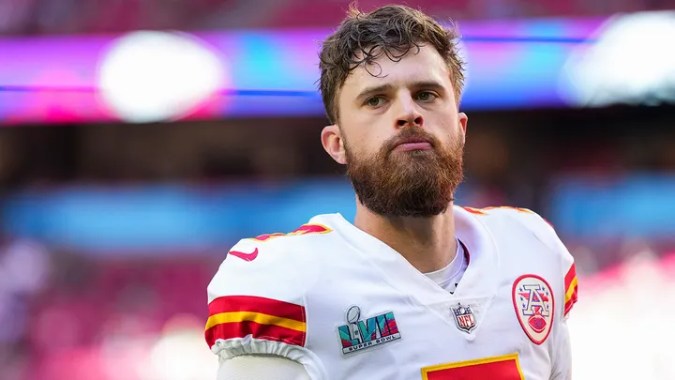
Harrison Butker of the Kansas City Chiefs, the place-kickers for the NFL’s Kansas City Chiefs, was invited to give the Commencement speech for the 2024 graduating class, seemingly an odd choice, but then maybe not. Butker had been outspoken the Cathodic Church in recent years, and I strongly suspect that he delivered exactly what the leadership of Benedictine College was seeking at the ceremony last weekend.
To gauge the reactions on social media and elsewhere, however (it sure sounded like his speech was well-received by the students) you would think his address was from the fiery depths of Hell, as if he had supported Hamas terrorism or anti-Semitism or something. He was roundly attacked on Instagram, TikTok and Twitter/”X.” About 125,000 people have signed a petition on Change.org calling for the Chiefs to fire the kicker; typical progressives: if you don’t espouse their views and support their agendas, then you don’t deserve to make a living. The reliably despicable NFL felt it had to oppose the player’s statements, as if anyone thought he was speaking for the league rather than for himself. “Harrison Butker gave a speech in his personal capacity,” Jonathan Beane, the NFL’s senior vice president and chief diversity and inclusion officer, said in a written statement. “His views are not those of the NFL as an organization. The NFL is steadfast in our commitment to inclusion, which only makes our league stronger.” Naturally, the most corrupt and hypocritical league in sports felt it had to pander to the woke, and do so by uttering the magic word, “inclusion,” thereby falsely suggesting that Butker advocated exclusion. Best of all, Kansas City used its official social media account to reveal Butker’s residence, doxxing him. Nice. The city is sorry though. That will do him a lot of good when someone burns his house down.
I could quote the sections that has the Angry Left on the warpath—can I say that?—but instead I’m going to publish the whole speech. Then I’ll ask the Ethics Quiz question, and give my answer, abut which I feel strongly. Here is the speech: