Oh, Why Not? Let’s Start Off 2021 With “Mostly Peaceful Protests” Over The Police Shooting Of A Black Man In Minnesota! Will BLM And The News Media Use It As More Evidence Of Systemic Racism?

Idd

They’ll sure try!

Here is how the New York Times described the death of Dolal Idd:

“A Minneapolis police officer shot and killed a man during a traffic stop on Wednesday evening, the first killing by a member of the department since George Floyd’s death in May, a police spokesman said.”

Let’s see: subsequent accounts show that it was not, in fact, a “traffic stop”: police had been looking for Idd as part of a firearms investigation. The account was also misleading in that it didn’t mention that Idd fired on police officers first. And, as I guess I will have to keep writing since the news media will not (although I guarantee jurors in the George Floyd trial will hear it many times), it is far from clear that the sainted Floyd was in fact killed by a police officer.

Other than that, the Times reports is pretty accurate for modern journalism; only three major misrepresentations in a single sentence of 35 words.

Since any shooting of a black man by U.S. police is presumed to be based on racism, a mob of demonstrators appeared at the scene, blocking traffic for several blocks and starting a bonfire in the middle of the street. Authorities urged them not to riot or commit arson, and they did not, apparently because the temperature of ten degrees was too cold for them. Certainly the facts of the shooting couldn’t have had anything to do with it: most of the other police-involved deaths over the summer justified riots no more than this one did, but riots we got.

Multiple police vehicles had converged on Idd’s car. He tried to elude the police, and when he realized he couldn’t, started shooting at the officers. They shot back; of course, as I’m sure we will hear from Joe Biden or someone, they should have tried to “wing” him. Sadly, he was killed at the scene.

Such a loss. The Star Tribune reports,

In 2019, Idd was convicted of illegally possessing and firing a gun in Hennepin County. The charges say, in July 2018, Idd fired a gun in the basement shower of his parents’ home around 1 a.m. with two children sleeping nearby.

Idd’s mother told Eden Prairie police that her son was not permitted in the house because “he scares the children.” Police arrested him later in Bloomington with a 9mm handgun that had been reported stolen in North Dakota, according to charges.

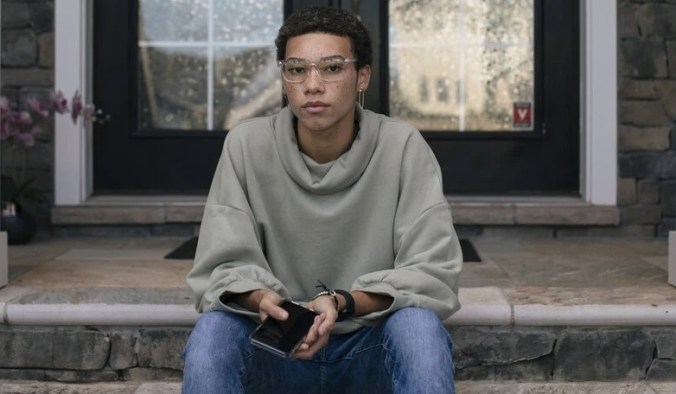
We haven’t heard from Idd’s parents and friends since the shooting, but then Ben Crump hasn’t been hired yet to represent them. I’m sure we will soon be told that Idd was a wonderful human being who wouldn’t hurt a fly, and who was in the process of turning his life around until those racist police snuffed out his beautiful life. Just look at his picture (above)! Now who could believe someone with such a sweet face was trying to kill cops? Here’s another one that is being used by the media and a GoFundMe page:

Idd2

Anyone can see he was harmless! There has already been a vigil, as CAIR sensed an opportunity. Idd was a Muslim, and as we all know, Islam is a non-violent religion.
Continue reading

Comment Of The Day: “Bizarro World Ethics: A Vicious Young Jerk’s Unethical Act Is Celebrated …..Part II: The Times And Its Readers

new yorktimes

Arthur in Maine earned the second Comment of the Day to end the year with his observations on the New York times aiding and abetting the savaging of Mimi Groves. Here is his COTD on the post, “Bizarro World Ethics: A Vicious Young Jerk’s Unethical Act Is Celebrated And His Victim Vilified In A Cautionary Tale Of What Happens When Society Allows Its Values To Be Turned Inside Out. Part II: The Times And Its Readers”:

Let me go further into my comment to Part 1, which boiled down to “the NYT acted most unethically of all.”

I chose not to expound then, anticipating this post, but I will now.It’s likely – indeed, even essential – to this story that the pitchfork-and-torches mobs on social media have a larger footprint than the New York Times. But THIS Facebook group, THAT Instagram “Influencer”, THOSE Twitter feeds – tend to be narrow channels of like-minded myrmidons (this is what social media has done to society, more effectively than any propagandist ever could: separated culture into armed camps).

Continue reading

Bizarro World Ethics: A Vicious Young Jerk’s Unethical Act Is Celebrated And His Victim Vilified In A Cautionary Tale Of What Happens When Society Allows Its Values To Be Turned Inside Out. Part II: The Times And Its Readers

Mimi

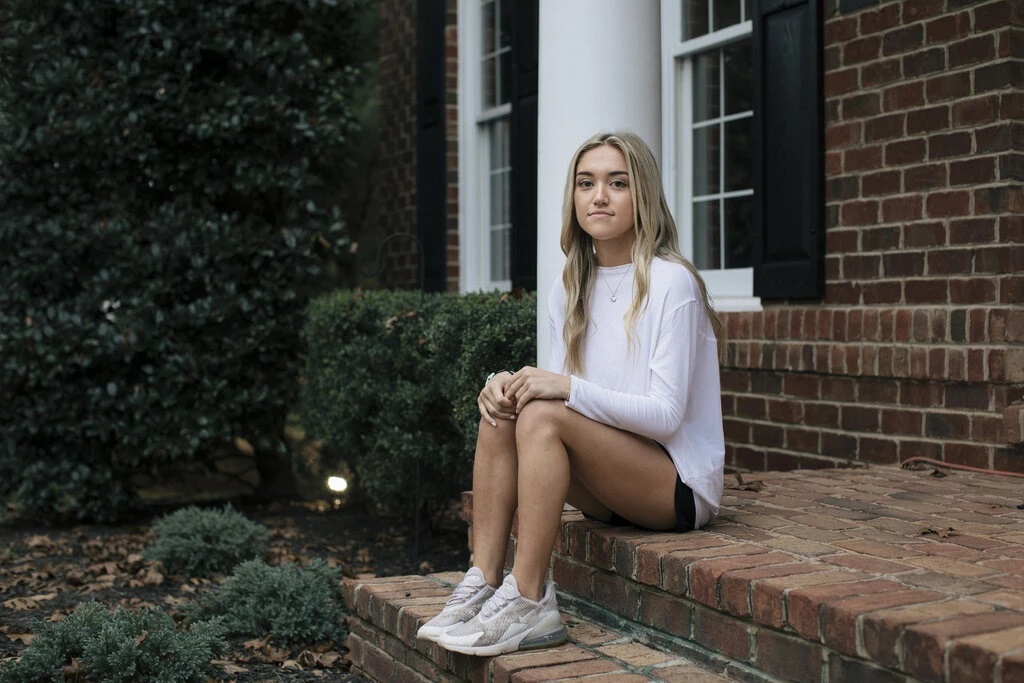
In Part I, describing the horrific personal destruction of 18-year-old Mimi Groves (above)–the antiseptic term “unethical” does not adequately convey the pure viciousness and wrongfulness of the act—I attempted to clarify what the entire scenario represents, a near complete distortion of values and ethical norms with ominous implications. I mostly left out the enthusiastic participation of the New York Times in this destructive process, first, because it was not directly involved in Jimmy Galligan’s hateful and pernicious conduct, and second, because of space considerations. Thus we have Part II.

The Times signaled its sentiments and objectives in the headline of its feature, written by reporter Dan Levin: “A Racial Slur, a Viral Video, and a Reckoning.” “Reckoning” means, in this context, a settling of accounts, a judgment, or earned punishment. In the view of the Times writer and the editors who allowed it to be published, Mimi Groves was justly punished by her black classmate, who plotted–plotted is a fair description—to derail her education and future prospects, and did so. What was the conduct that earned the “reckoning”? Groves used a word, in a general context, that the social justice establishment has ruled, on its own authority, can never be uttered for any reason, or published in print—unless the individual responsible is black, in which case it may be rude or less than desirable, but otherwise it’s OK.

At the time the word “nigger” was used by Groves in a three second video on social media, and today, popular songs embraced by her age group and peer group used the same word repeatedly, and made millions of dollars as a result. At the time the word “nigger” was used by Groves in a three second video on social media, popular movies showed black characters calling other black characters that same word in jest, or affectionately, or for shock value.The actors playing those characters, notably Samuel L. Jackson, who has earned a bundle as the spokesperson for a major credit card,while using teh word “nigger” more times on screen that any actor in film history, have not faced any “reckoning.” The screenwriters who put those words in his mouth faced no “reckoning”; the directors who permitted the dialogue to be read and the studios that sent the wave of “niggers” into theaters and streaming services faced no “reckoning.”

Just this month, Netflix premiered an adaptation of August Wilson’s play “Ma Rainey’s Black Bottom,” directed by acclaimed social justice warrior director George C. Wolfe, an African American. When a stream of “niggers” was unleashed about ten minutes into the fim, never to stop, I was genuinely confused. How could this be, when I have a file of professors and teachers who faced sanctions, protests, suspensions, and professional destruction, not by referring to any black individual as a nigger, but by using the word in the context of discussing legal, ethical and cultural implications of language.

Yes, I was confused, and I am a lawyer, a writer, an ethicist and a teacher with more than four times as much experience in life as Mimi Groves when, as a child, she mistakenly thought a casual use of the word in a social media message wouldn’t upset anyone, much less put a dedicated life assassin on her trail.The the New York Times holds that Mimi deserved her “reckoning,” and made sure that if anyone inclined to tar her as a racist unfit for human association on this woke culture we are breeding didn’t know that she had to be punished and why, a major feature in the nation’s most read, circulated and quoted newspaper would spread word of her disgrace. The paper’s verdict is clear: Jimmy Galligan struck a blow against “systemic societal racism.” He’s a hero, even though literally nothing he did was ethical, fair, or just:

Continue reading

Bizarro World Ethics: A Vicious Young Jerk’s Unethical Act Is Celebrated And His Victim Vilified In A Cautionary Tale Of What Happens When Society Allows Its Values To Be Turned Inside Out. Part I: Jimmy Galligan, Ethics Villain

The New York Times published a long and detailed account of what can and will happen if society allows its values and ethical norms to become distorted. It enters the world of Bizarro Ethics, where, like the fictional and allegedly comic planet of Bizarro World in old Superman comics, everything is backwards and inside out. In such a culture, I have explained here many times, being unethical is ethical, and being ethical is wrong. A black student set out to use an old social media post to destroy the reputation of a white classmate after she had been admitted to the college of her dreams. And he succeeded. The Times story is a cautionary tale of what is happening in our culture, but that’s not its objective. Its objective is to rationalize and justify what the black student did.

In 2016, when she was a freshman and 15-years old, Mimi Groves sent a three second video SnapChat message to some friends that said, “I can drive, nigger!” She has explained that she used the dreaded “N-word” because it was common in the music she and her friends had been listening to. It was not intended to be seen by or to upset anyone; it was just a one-off social media message like millions of others that are sent every day, by an immature child lacking common sense, experience and a fully formed brain. As such, it should have been ignored, especially by her peers, who suffered from the same maladies.

But because of the scourge of social media and a culture which increasingly encourages cruelty, vengeance, personal destruction, and the elevation of doing harm to those who “deserve it” to a societal norm, the message became a ticking time bomb in the hands of those who felt they had a right to destroy her.

Somebody send a copy of the message to Jimmy Galligan’s phone last school year. Galligan is black, and Mimi was a fellow classmate whom he knew and had spoken with earlier in their high school days.

Ethics Point 1: Whoever saved the message and set out to make sure that someone would see it who would find it upsetting is the first and the catalytic ethics villain in this story. There was no justifiable reason to send the message to Galligan except to upset and trigger him, which someone who knew him obviously believed it would. A fair, rational and ethical person would know that a years-old message on SnapChat is meaningless, and the Golden Rule would have taught him or her that circulating such a message is something he or she would never want anyone to do with an ill-considered video of their creation.

Here the Times attempts to prejudice the reader in Jimmy’s favor with a trail of irrelevancies:

Continue reading

Morning Ethics Warm-Up, 12/29/2020: Another Dark Date For Ethics

Becket-murder-2

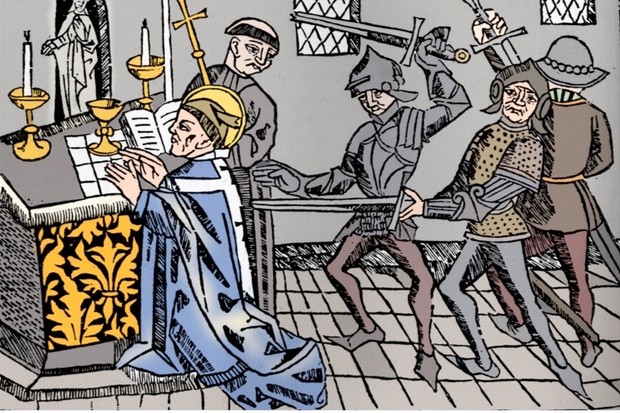
December 29 is one of the bad days in ethics history, beginning with the 1170 murder of England’s Archbishop Thomas Becket as he knelt prayer in Canterbury Cathedral by four knights of King Henry II. The knights were not explicitly ordered to kill Becket, the King’s friend who had become a problem when he took his role as Archbishop of Canterbury to be a calling to defend the Church against royal efforts to constrain its power. Instead, Henry made his wishes known by making the public plea to his court,

“What a parcel of fools and dastards have I nourished in my house, and not one of them will avenge me of this one upstart clerk.”

This is often quoted as “Will no one rid me of this troublesome priest?” Either way, the idea of such an oblique request is to relieve a leader of responsibility for the actions of subordinates, giving the leader plausible deniability. It didn’t work for Henry, but it may have worked for, for example, President Obama, whose Internal Revenue Service illegally sabotaged Tea Party groups in advance of the 2012 election, greatly assisting Obama’s efforts to defeat challenger Mitt Romney. In truth, when a powerful superior makes his or her desires known, it may as well be an order. An order is more ethical however, because it does not require the subordinate to take the responsibility upon himself.

1. But The worst example of a U.S. ethical breach on this date is the Massacre at Wounded Knee in 1890, when the U.S. Cavalry killed at least 146 Sioux at the Pine Ridge reservation in South Dakota. It is definitely the most people killed because of a dance: the government was worried about a growing Sioux cult performing the “Ghost Dance,” which symbolized opposition to peaceful relations with whites, and was seen as inciting violence. On December 29, the U.S. Army’s 7th cavalry surrounded a band of Ghost Dancers under the Sioux Chief Big Foot near Wounded Knee Creek and demanded they surrender their weapons. A fight broke out between an Indian and a U.S. soldier, a shot was fired, and an unrestrained massacre followed. Of the estimated almost 150 Native Americans were killed (some historians put this number at double that number), nearly half of them women and children. The cavalry lost only 25 men. Many believe that the tragedy was deliberately staged as revenge for Custer’s Last Stand 14 years earlier, which seems like a stretch to me.

Continue reading

“Predator,” “White Christmas” And “Ma Rainey’s Black Bottom”: Among Other Benefits, Freedom Of Expression Is Just A Lot Easier Than Creating And Enforcing Taboos

arnold-mud-face

We were watching “Predator” over the weekend, and saw Arnold Schwarzenegger color his skin black—using mud—to escape the deadly alien’s heat-based vision. Now, why doesn’t this qualify as blackface, thus threatening Arnold with “cancellation” and the film, an action classic, with permanent shelving? Don’t tell me it’s because there is a good reason for Arnold, who is as white as you can get, darkening his skin. We have been told that intentions don’t matter when it comes to this crime against racial justice. Fred Astaire wearing dark make-up to honor his black tap teachers in “Top Hat” is per se racist. Wearing black make-up to portray a black historical character in a private Halloween party is racist. Lawrence Olivier wearing dark make-up to play Othello is racist. Robert Downey, Jr. wearing dark make-up to satirize actors who go to excess to get in character for their roles is racist. Where is the “Exception for someone trying to avoid being killed by a hunter from outer space” written down?

Continue reading

Monday Morning Ethics Warm-Up, 12/28/20: Happy Birthday, Woodrow Wilson!

2020 end

As 2020 staggers to a conclusion, Ethics Alarms wants to express its gratitude to the core of devoted Alarmist commentators who kept the dialogue going during what is always an annual cratering of blog traffic. I appreciate it. I also appreciated the many kind holiday wishes, in what has been a muted Christmas for the Marshalls for a number of reasons I won’t bore you with.

In case you were among the missing, I draw your attention to…

…among other hopefully edifying and entertaining posts.

1. After signalling otherwise or perhaps just trolling, President Trump signed the truly awful pandemic relief and omnibus spending bill, really sending the national debt into orbit. One theory is that doing so was necessary to avoid a Democratic sweep of the two Senate seats up for grabs in Georgia. I will file the event as one more car on the Wuhan Virus Ethics Train Wreck, and one that will do more damage in the long run than most of them.

2. In Nevada, Gabrielle Clark filed a federal lawsuit against her son’s charter school last week for refusing to let him opt out of a mandatory class that promotes anti-white racism. It claims that Democracy Prep at the Agassi Campus forced William Clark “to make professions about his racial, sexual, gender and religious identities in verbal class exercises and in graded, written homework assignments,” creating a hostile environment, and subjecting he son’s statements ” to the scrutiny, interrogation and derogatory labeling of students, teachers and school administrators,” who are “still are coercing him to accept and affirm politicized and discriminatory principles and statements that he cannot in conscience affirm.” The lawsuit includes nearly 150 pages of exhibits documenting the curriculum in the graduation requirement “Sociology of Change,” which promotes intersectionality and critical race theory, in breach of what was promised when the Clark’s first sent their son to the school.

Continue reading

There Is No Justification For This Action By The Paducah (Ky.) Public School Board In Logic, Law Or Ethics [Corrected]

I considered several of the Ethics Alarms movie clips for this one, finally settling on the standard “The Bridge Over The River Kwai” moment above. I easily could have chosen this one…

or even this one…

…but “Madness!” won out.

The College Fix reports that Paducah Superintendent of Schools Donald Shively has been suspended by the School Board for 40 days without pay because an 18-year-old photo of him in blackface at a Halloween party came to public attention. Shively will spend his exile “engaging in additional education, training and community involvement.”

It would have made sense, at least by the Naked Teacher Principle logic, to fire Shively. That would be based on a straightforward calculation that students could not ever come to trust an administrator who had engaged in conduct many (erroneously) believe is always indicative of racist views and intent, just as, in the cases involving teachers who allowed themselves to be photographed naked or in otherwise sexually provocative poses and the photos that have been discovered on the web by students, what has been seen cannot be unseen. If there is a judgment made that such photos permanently undermine the ability of a teacher to do her job, then she (or he, in a few cases) must be fired.

Similarly, firing may be the only remedy, by that reasoning, for a superintendent haunted by photographic evidence that he engaged in conduct now viewed as per se taboo, unless the former blackface virtuoso is the Democratic Governor of Virginia, a strange exception but a real one.

Continue reading

Kwanzaa, The Unethical Holiday

Kwanza

Kwanzaa, which I began becoming faintly aware of when I was in the administration at Georgetown University and we had to include it in any holiday greetings, was always a phony holiday, packaged as and often claimed to be an authentic African alternative to Christmas when it was really a made-up event by an American in America. It’s not celebrated in Africa; it’s not celebrated anywhere but in the United States, The extra “a” at the end was just tacked on to make the thing seem more authentic, like the fake name “Häagen-Dazs.”

Here’s how one source describes in part the “holiday’s” founding on December 26, 1966:

The first day of the first Kwanzaa [was] celebrated in Los Angeles under the direction of Maulana Karenga, the chair of Black Studies at California State University at Long Beach. The seven-day holiday, which has strong African roots, was designed by Dr. Karenga as a celebration of African American family, community, and culture. He founded US, a Black cultural organization, and looked to Africa in search of practices and concepts that might empower and unite the nation’s African American community. Inspired by Africa’s harvest celebrations, he decided to develop a nonreligious holiday that would stress the importance of family and community while giving African Americans an opportunity to explore their African identities…The name Kwanzaa is derived from the phrase matunda ya kwanza, which means “first fruits” in Swahili. Each family celebrates Kwanzaa in its own way, but celebrations often include songs and dances, African drums, storytelling, poetry readings, and a large traditional meal. On each of the seven nights, the family gathers and a child lights one of the candles on the kinara, or candle holder, then one of the seven principles is discussed. The principles, called the Nguzo Saba, are values of African culture that contribute to building and reinforcing community among African Americans. These values include unity, self-determination, collective work and responsibility, economic cooperation, purpose, creativity, and faith. An African feast, called a Karamu, is held on December 31. Today, Kwanzaa is celebrated by millions of people of African descent all across the United States and Canada.

Here’s how Karenga described his creation to the Washington Post:

“I created Kwanzaa,” laughed Ron Karenga like a teenager who’s just divulged a deeply held, precious secret. “People think it’s African. But it’s not. I wanted to give black people a holiday of their own. So I came up with Kwanzaa. I said it was African because you know black people in this country wouldn’t celebrate it if they knew it was American. Also, I put it around Christmas because I knew that’s when a lot of bloods would be partying!”

He didn’t even try to make the “holiday” culturally or historically consistent. The late conservative commentator Tony Snow explained,

There is no part of Kwanzaa that is not fraudulent. Begin with the name. The celebration comes from the Swahili term “matunda yakwanza,” or “first fruit,” and the festival’s trappings have Swahili names — such as “ujima” for “collective work and responsibility” or “muhindi,” which are ears of corn celebrants set aside for each child in a family.

Unfortunately, Swahili has little relevance for American blacks. Most slaves were ripped from the shores of West Africa. Swahili is an East African tongue.

To put that in perspective, the cultural gap between Senegal and Kenya is as dramatic as the chasm that separates, say, London and Tehran. Imagine singing “God Save the Queen” in Farsi, and you grasp the enormity of the gaffe.

Worse, Kwanzaa ceremonies have no discernible African roots. No culture on earth celebrates a harvesting ritual in December, for instance…The inventors of Kwanzaa weren’t promoting a return to roots; they were shilling for Marxism. They even appropriated the term “ujima,” which Julius Nyrere cited when he uprooted tens of thousands of Tanzanians and shipped them forcibly to collective farms, where they proved more adept at cultivating misery than banishing hunger.

Even the rituals using corn don’t fit. Corn isn’t indigenous to Africa. Mexican Indians developed it, and the crop was carried worldwide by white colonialists.

Snow concluded, “Our treatment of Kwanzaa provides a revealing sign of how far we have yet to travel on the road to reconciliation. The white establishment has thrown in with it, not just to cash in on the business, but to patronize black activists and shut them up.”

Continue reading

And The Latest Honoree In The Ethics Alarms “Presumed Racism Hall of Fame” is . . .

White judges

Among the bulwarks of the George Floyd Freakout and its accompanying “anti-racism” hustle is that all whites are racists, non-whites cannot succeed, prosper or find justice in the United States, and that anti-black racism should be presumed in any situation where that presumption might advance the cause of a black citizen.

Here is a blazing example, out of Fairfax County, Virginia, virtually in my back yard. Fairfax County Circuit Court Judge David Bernhard issued an opinion his week that the portraits of past judges from the Fairfax County Circuit Court might create the impression that the court itself biased. Bernhard won’t allow any portraits to be on display for any trial he presides over going forward.

“The Court is concerned the portraits may serve as unintended but implicit symbols that suggest the courtroom may be a place historically administered by whites for whites, and that thus others are of a lesser standing in the dispensing of justice,” Bernhard wrote. “The Defendant’s constitutional right to a fair jury trial stands paramount over the countervailing interest of paying homage to the tradition of adorning courtrooms with portraits that honor past jurists.” The judge’s opinion observes that the U.S. is experiencing “heightened attention to the past inequities visited upon persons of color,” so the fact that 45 of the 47 past judges whose portraits hang in the Fairfax County courthouse were white is now an implicit threat to black defendants.

His grovel came in response to a request to remove the portraits in a motion from the layer for Terrance Shipp Jr., who is scheduled to stand trial on charges of eluding police, assault on a law enforcement officer and other counts.

Continue reading