Everyday Ethics Dilemmas: The Abandoned Tools

I was walking Spuds down a street in our neighborhood when I noticed a group of tools, five or six, lying in the grass on the strip between the sidewalk and the street. They looked new: I’d guess it was about 50 dollars worth, maybe 75. There was no automobile in front of the house, though that didn’t necessarily mean no one was home.

What’s a good neighbor to do?

These were nice tools, and kids are walking around the neighborhood constantly: maybe no one would take the tools, but maybe someone would. There’s a useful but dishonest rationalization in such circumstances: they’re abandoned! I thought about picking them up and carrying them up to the front door. I considered picking up the tools, carrying them home with Spuds, and driving by later to see if the owners were home. I was tempted to just toss them from the strip to the lawn, where nobody could argue that the strip between the road and the sidewalk is public territory.

If I had not been struggling to keep my exuberant dog under control when the cooler weather makes him especially rambunctious, my calculations might have been different. In retrospect, I see that this was a Golden Rule test: what would I want someone to do if it were my tools being left behind and left to their own resources?

At the time, however, with promises to keep and miles to go before I sleep, I decided to leave the tools where they were. I didn’t feel an obligation to do anything because there isn’t one (and also a useful rationalization that I need to add to the list: “This isn’t my problem”) , but clearly the more ethical course would have been to protect my neighbor’s property.
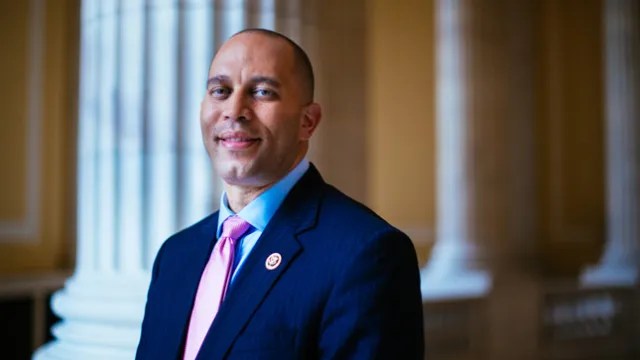
Unethical Quote Of The Month & Incompetent Elected Official Of The Month: House Minority Leader Hakeem Jeffries

“Many of these lawmakers on the other side of the aisle who had their hair on fire about what appears to have been an inadvertent action taken by Congressman Bowman, to which he is now being held accountable for, within the criminal justice system, regularly defend violent individuals who overran the Capitol on Jan. 6, as part of an effort to halt a peaceful transfer of power. And these violent individuals brutally beat and seriously injured 140 police officers, on the day of the insurrection. And many of them, who are having a panic attack, publicly, about Jamaal Bowman have actually defended or refused to comment on the violent mob on January 6.”

—House Minority Leader Hakeem Jeffries (D-N.Y.), the man every Democrat in the House voted for to be Speaker, “explaining” why Rep. Bowman shouldn’t be censured by the House for breaking the law, indeed two laws, as well as violating the House ethics code. 

To be blunt, this statement by Jeffries exhibits the approximate ethical comprehension of a Cocker Spaniel. It reveals him to be a shameless liar and an ethics corrupter:

Continue reading →

Incompetent Tweet Of The Month

“Penny” is an LGBTQ activist who didn’t think this tweet through before posting. (This is why Twitter is dangerous to the impulsive, emotional and none-too-bright.) After someone pointed out what the tweet seemed to be saying, it was taken down.

Too late.

Confronting My Biases, Episode 2: The Presumptuous And The Officious

If I didn’t find the term offensive, I might have called this post “The Attack of the Karens” (The first love of my life, in high school, was named Karen. She married my best friend. I don’t want to talk about it…). It’s also another Spuds story. Let me state right up front: this is one bias I have no intention of banishing.

We live in a cul-de-sac by a church, its parking lot and a public grade school, with a picnic area, a playground and an athletic field nearby. Spuds needed to attend to his morning toilette, so as I have for the nearly three years we have had the pleasure of his company, I followed my pit bull mix on his leash as he went to his favorite peeing place, on the grass just across the cul-de-sac from our home. My dog was just about to complete the job, whereupon he would quickly return to his perch on our sofa, when we were interrupted by a woman, who walked up to within about 15 feet of us and said, “Sir, dogs upset my animals.”

I had noticed that on this day the church or the school had set up a temporary petting zoo near the picnic tables and by the school playground, about 10 yards from where Spuds and I were. Quite a few young kids and their parents were crowded around a pen that appeared to contain a couple of goats, a lamb or two, and an alpaca.

“Why are you telling me this?” I asked, annoyed at her attitude.

“Well, sir, I don’t want you to bring your dog up to the pen. It will upset my animals.”

I was not in the mood to put up with this, in part because I have long vowed not to.

Continue reading →

Once Again, Our Leaders Inflict “The King’s Pass” On Our Culture…Well, A Variation: “The Slob’s Pass”

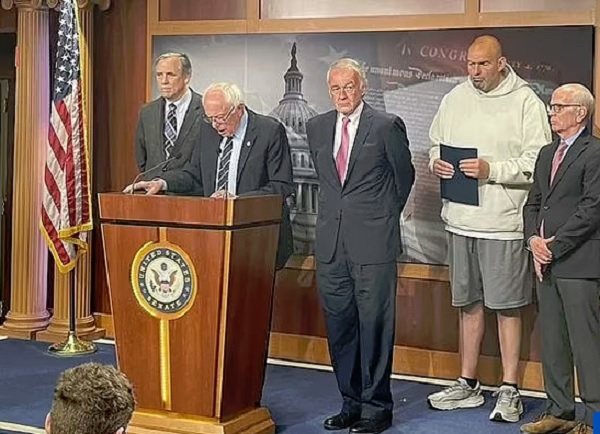
Senate Majority Leader Chuck Schumer has directed the chamber’s sergeant at arms to end the centuries-old rule requiring male U.S. Senators to wear a suit and tie on the Senate floor, with members of the upper house to wear modest business attire. This move was clearly made by Schumer to relieve pressure on Frankensteinian Senator John Fetterman (D-Pa), who has been violating the Senate Dress code and appearing in shorts, T-shirts, and hooded sweatshirts since he returned from a hospitalization for depression. He had been criticized and mocked as a result—as he should be.

The King’s Pass, Rationalization #11 on the List, is a corrosively backwards reaction by organizations to unethical conduct that violates organization norms and values, the value in this case being “respect”—respect for the institution, respect for the public, respect for the United States of America. If the organization’s (company’s, institution’s, industry’s, government’s, sports team’s…etc.) member who is breaching norms, rules, laws and values is deemed sufficiently powerful, important or popular, the rules and norms are not enforced when the King’s Pass strikes. When the most prominent member of a hierarchy is allowed to violate standards of conduct, the conduct of those of lower status will deteriorate in response: this is what “the fish rots from the head down” means, with the head in this case being a brain-damaged one.

Continue reading →

Ethics Dunce And A Tie With Rep. Broebert For Worst Apology Of The Week : Drew Barrymore

[Note: This post takes no position regarding the validity and justness of the Hollywood writers’ strike.]

Tough choice: is the now middle-aged former child star turned talk show host’s apology even more unethical than Broebert’s discussed here? It’s certainly more ridiculous, even though Drew’s was teary and seemingly sincere, unlike the Republican’s. In fact, this apology is unique in my experience: Barrymore was apologizing for something she had announced she was doing, then she went ahead and did it anyway. What is that?

The Writers Guild of America (WGA) has been on strike since May over more equitable wages and working conditions. Even though it is a talk show and theoretically shouldn’t require writers, “The Drew Barrymore Show” does employ some, and thus is officially being struck. Nonetheless, Barrymore announced that her show would metaphorically cross the picket lines to premier tomorrow as scheduled. Her announcement predictably attracted a “scab” response from the WGA and others on social media. Then Barrymore posted the mea culpa video excerpted above on Instagram.

Continue reading →

Ethics Dunce (And A Tie For Worst Apology Of The Week): Rep. Lauren Boebert (R-CO)

One of Donald Trump’s proteges, Rep. Lauren Boebert, behaved so outrageously at a a Denver theater last week during a performance of the Broadway musical “Beetlejuice,” that she was asked to leave by the theater managers. She was loud, sang along with the performers in places, got in arguments with audience members, was ostentatiously groped by her male companion, and perhaps most objectionably, vaped during the performance, which is what you see her (in the middle of the frame, second from the aisle) in the act of doing—see the little puff?— in the security camera shot above. She also took a selfie during the second act. As she and her date were ushered out, the distinguished member of Congress actually uttered the magic phrase I regard as signature significance for an insufferable celebrity jerk, “Do you know who I am?” and threatened consequences for the staff.

That’s not all. She had her office deny that she had been vaping, not realizing that security cameras memorialized it. And still that’s not all. Here is her head-exploding “apology” for acting like a 17-year old raised in a barn who had never been at a live theater show in her life:

Continue reading →

A Rationalization #22 Mitigation Of U.S. Progressive Racial Spoils: Canada Is Even Worse

Rationalization #22, in my view the worst of the over 100 rationalizations on the list, is called “The Comparative Virtue Excuse,” or “It’s not the worst thing.” I immediately thought of it when I read the head-exploding account of how a father escaped jail time in Canada for incest that resulted in the birth of a disabled child who has been placed in foster care. The father admitted that he had regularly had sexual relations with his daughter since she was 19 or 20. Incest is typically punishable with a jail sentence of at least two years and as high as 14 years, but a majority of the Nova Scotia Court of Appeal decided last month that the father shouldn’t have to spend any time in jail at all, just two years of house arrest, with a monitor. That’s nice. He can even continue his loving relationship with his daughter under those rules.

Continue reading →

Officials And Leaders Who Conservatives Consider Essential Bulwarks Of Constitutional Government Really Have To Stop Relying On “The King’s Pass”

Take Clarence Thomas for example.

As with Donald Trump, who was the object of much rationalization here yesterday, Justice Thomas apparently is certain that conservative and Republican integrity don’t have the rigor to make him accountable for a truly staggering series of judicial ethics breaches. He is also apparently correct in this assumption.

Justice Thomas finally acknowledged publicly that he should have reported selling real estate at a suspicious profit to billionaire political donor Harlan Crow in 2014, a transaction disclosed by ProPublica earlier this year. The Crow company bought a string of properties for $133,363 from co-owners Thomas, his mother and the family of Thomas’ late brother, according to a state tax document and a deed. Conservative power-player Crow then owned the house where a Supreme Court Justice’s elderly mother was living—hey, no big deal!—and soon contractors began tens of thousands of dollars of improvements on the two-bedroom, one-bathroom home. Although a federal disclosure law requires SCOTUS Justices and other officials to disclose the details of most real estate sales over $1,000, Thomas never deigned to mention this convenient and inherently suspicious transaction. You know, that “appearance of impropriety” thingy?

Continue reading →

Death On K2 And The Duty To Rescue

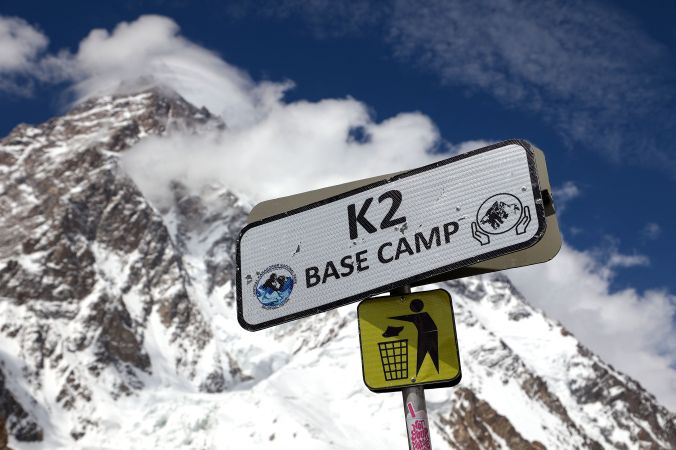
The AP story and ensuing controversy about Norwegian climber Kristin Harila and her decision, along with many other mountaineers, to leave a climbing companion dying in the snow on K2 immediately rang a metaphorical bell: Haven’t we discussed this issue before on Ethics Alarms? Indeed we have.

Back in 2011, I reposted a 2006 essay from the old (but still useful) EA predecessor The Ethics Scoreboard about the death of 34-year-old David Sharp on Mount Everest, after over 40 other climbers walked past him on their trek to the famous peak. It concluded,

The significance of the David Sharp tragedy is not that the mountaineers did the wrong thing. Of course they did the wrong thing. Nor is it that they are callous or unethical people, for they are probably no more so than you or I. The importance of the story is that it vividly shows how difficult it can be to make even obvious ethical choices when powerful non-ethical considerations are in our sights. Every one of us has a goal or a dream or a desire that could make us walk by a dying man. It is our responsibility to recognize what those goals, dreams and desires are, and to force ourselves not to forget about right and wrong as we approach them.

Harila was on K2 to set a record, and she did: along with her Sherpa guide, Tenjin, they became the world’s fastest climbers by getting to the top of the world’s second highest peak, scaling the world’s 14 highest mountains in 92 days. But of course that mission had nothing to do with her decision to leave Mohammad Hassan, a Pakistani porter and father of three, to die after he slipped and fell off the narrow path to the summit. The Norwegian climber told The Associated Press on Sunday that “in the snowy condition we had up there that day, it wouldn’t be possible to carry him down.”

It was impossible! All righty then, case closed!

Drone footage showed dozens of climbers pushing past Hassan to reach the mountain peak, the path to which was unusually crowded that day (July 27), because it was the last day of the season for a possible ascent. The nerve of that guy losing it all up by falling!

Austrian climber Wilhelm Steindl, who shot the drone footage after he had abandoned the climb because of bad weather, told the AP that more could have been done to save Hassan. “Everyone would have had to turn back to bring the injured person back down to the valley. I don’t want to kind of directly blame anybody, I’m just saying there was no rescue operation initiated and that’s really very, very tragic because that’s actually the most normal thing one would do in a situation like that.”

Well, to be fair, it isn’t. What might have changed the way the climbers reacted would have been a strong leader with the personal magnetism and persuasive skills to reorient the climbers from pursuing powerful non-ethical considerations to embracing an ethical one. No doubt about it, trying to get the injured man down the mountain involved sacrifice and risk, and might not even succeed. There is, however, an ethical duty to try. A life was at stake.

Continue reading →