Hall of Fame Ethics… Rock and Roll Hall of Fame,That Is

Cat Stevens

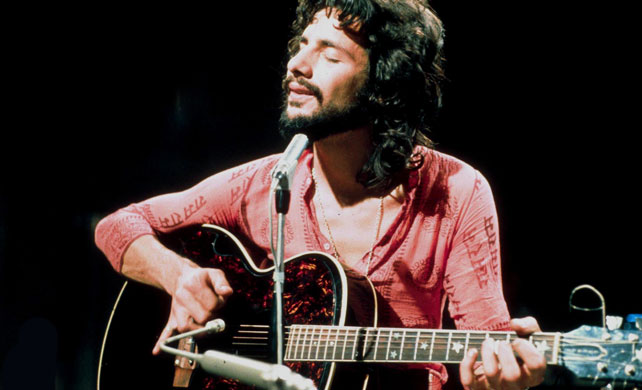
Conservative blogress Kathy Shaidle pleaded with voters not to enshrine Yusuf Islam, a.k.a Cat Stevens, into Cleveland’s Rock and Roll Hall of Fame, and then, when they added him anyway, expressed her disgust. Her objections were not based on music criticism (as would be justified with nominees like Yes), nor on Cat’s honor blocking more worthy nominees (like, say, The Zombies). She objects to Yusuf Islam on political and ethical grounds, complaining that during his activist days and perhaps even now, he qualified as a Muslim radical.

It doesn’t matter. Cat Stevens belongs in the Rock and Roll Hall of Fame because of his art, not his character. His character is irrelevant to the reach, influence and value of his art, as are his politics. The Rock and Roll Hall of Fame makes no pretense of making difficult measurements of an artist’s character, unlike the Major League Baseball Hall of Fame in Cooperstown, which has come up on Ethics Alarms frequently. Baseball players are cultural icons and societal heroes, whose symbolic exploits on the field of play evoke and inspire young people as well as the rest of us, embodying positive traits like courage, perseverance, fortitude, sacrifice, team play, loyalty, honor, fairness and honesty. As derided as it is by sportswriters and jaded fans who would like to see both the baseball Hall and its rosters filled with enabled and highly paid cheaters, felons, thugs, miscreants, deadbeat dads, and worse—like those of professional football and basketball—the character clause holds baseball players, at least those who want to be remembered as great ones, to a higher standard. And that higher standard is relevant to the game they play and our appreciation of it.

The character of artists, however, are simply accompanying trivia to the artist’s contributions to society. If there was a character clause in the Crooner’s Hall of Fame, Frank Sinatra and Bing Crosby might be barred from entry, meaning that it would then be the Imitators of Frank Sinatra and Bing Crosby Hall of Fame. For entrance to the Classical Composers Hall of Fame, Mozart and Wagner (and a lot more) would need to buy a ticket. Don’t get me started on the Novelist’s Hall of Fame, or the Hall of Fame for American Playwrights. Beautiful, transcendent, moving and immortal works have issued from ugly, warped, cruel and diseased minds, and it has always been thus, in Rock and Roll as well as every other art form. Picking on Cat Stevens, among all the others, smacks of anti-Muslim bigotry to me. Sure, I hated Cat’s politics; I hated John Lennon’s politics too.

It’s the art, and only the art, that matters.

______________________________

Sources: PJ Media 1, 2

On Cracker Barrel’s Poll-Driven “Principles”

Well, they got the color right...

Well, they got the color right…

Cracker Barrel just proved that integrity and principle are alien concepts, if not to the entire corporate sector, then at least its cheesy, weaselly corner of it. Watching a company so blatantly hold its wet finger to the wind waiting to see where the “principles” with the most profitability lie is revolting, but instructive to those of us who like to believe there are such things as ethical corporations. I think we’re probably fooling ourselves. I think they are nearly all like the spineless, pusillanimous, grovelling Cracker Barrel, but just smarter about it. But then, a box of hammers could be smarter about it.

First, reacting to A&E’s craven PC punishment of Phil Robertson of cable’s Duck Dynasty clan for expressing the basic religious convictions of millions of Americans (they think homosexuality is voluntary, and a sin) in response to an GQ interviewer’s question, Cracker Barrel pulled products with Phil’s likeness, saying in a statement,

“Cracker Barrel’s mission is Pleasing People. We operate within the ideals of fairness, mutual respect and equal treatment of all people. These ideals are the core of our corporate culture…. We removed selected products which we were concerned might offend some of our guests while we evaluate the situation.”

I thought this was unusually weasel-worded, and I was right. The translation, in retrospect:

‘We at Cracker Barrel have no principles whatsoever. We are a blank slate; we go with the flow. There is no right or wrong for us: whatever position we feel we have to hold to get the most people to buy our products, you can count on us. If 51% of America begins worshiping Baal, hey, sacrifice a goat for in our name, because we’re all in. If the majority want to ban, hey, anything or anyone, we’re in full agreement. We aim to please, in any way that helps our bottom line.’ Continue reading

Ethics Quote Of The Day (“Duck Dynasty” vs Political Correctness Division): Reason’s Brian Doherty

“There may have been a good reason why classical tolerance of expression was summed up in the epigram: ‘I disagree with what you say, but will defend to the death your right to say it!’ That has a different feel than: ‘I disagree with what you say, I think you are evil for having said it, I think no one should associate with you and you ought to lose your livelihood, and anyone who doesn’t agree with me about all that is skating on pretty thin ice as well, but hey, I don’t think you should be arrested for it.”

—– Reason Magazine’s Brian Doherty, writing about A&E choosing to punish its reality show star, Phil Robertson, for expressing his religious beliefs about homosexuality in response to a magazine interviewer’s question.

dynasty

Nicely done, Mr. Doherty. Continue reading

Gallup’s Honesty And Ethics Ratings Of Occupations

shattered-trustThe annual Gallup survey is out. You can read Gallup’s commentary here, and see the details here. (you’ll need an Adobe reader.)

Gallup’s big announcement this time is that the Clergy has declined in perceived trustworthiness since 2012, but that’s a stretch: the percentage of respondents who rated the men and women of God as “high” or “very high” in honesty and ethics declined 5% from last year, but all of the most trusted professions had similar drop-offs, including the perennial winners, Nurses (down 3 points) and Pharmacists (down 5).  The Clergy still is among the most trusted professions, and that’s especially impressive since almost half the country doesn’t believe the basic premise of their calling. I think the Gallup reasonably figured that trumpeting that the clergy’s ratings had hit a new low would garner more publicity than “Car mechanics trusted more now than ever!”, which the data also would support. (They still aren’t trusted much.)

The real surprise is how little any of the professions have changed their public standing. TV reporters, near the bottom, are still as trusted as they were in 1998. Members of Congress, held in even lower esteem, are about where they were in 2009. Lawyers, mirabile dictu, are the most trusted since this survey began, which is not to say they are trusted—they are tied with TV Reporters. The only real head-scratchers are that Ad Executives are at an all-time high—why?—and that lobbyists score so much lower than the people who tell them what to do, Business Executives, and the people they corrupt, Members of Congress. I think it’s because most people have no idea what lobbyists do, but it sounds shady. Continue reading

The Golden Rule Distortions

golden-rule distortedA recent unpleasant visitor here sought to defend unethical conduct—or perhaps it is more accurate to say that she argued that no one was qualified to assess the conduct as unethical—by citing the hoary theory that only someone who has “walked in the shoes” of the wrongdoer in question may judge the ethical nature of his actions. This is a dodge, of course, and one which I need to add to the list of rationalizations. It is an appeal to purely subjective ethics, and ultimately no ethical standards at all, since if every individual is the only one who can judge his own or her own conduct (since each individual’s experiences are unique), then everyone is free to construct their own ethics rules that seem right from their self-centered perspective. The argument is also a convenient way to shut off dissenting voices: only the poor have standing to criticize the poor, only blacks can find fault with the acts of African-Americans, and since men can’t get pregnant, how dare they have any opinion at all on abortion?

But before I added this irritating trick to the Rationalizations List—I think it will be called “The Foreign Shoes Defense”—I realized that it is also another one of The Golden Rule distortions: flawed ethical arguments that seem logical to some because they are based on a warped version of the principle of reciprocity.

The Golden Rule, usually stated as “Do unto others as you would have them do unto you,” is frequently attributed to Jesus, but in fact it is much, much older, and is a basic ethical tenet, reciprocity, of most religions and many philosophies. Here are some examples; there are many, many more: Continue reading

Ethics Quote Of The Month: Dr. Jonathan Gruber

“We currently have a highly discriminatory system where if you’re sick, if you’ve been sick or [if] you’re going to get sick, you cannot get health insurance. The only way to end that discriminatory system is to bring everyone into the system and pay one fair price. That means that the genetic winners, the lottery winners who’ve been paying an artificially low price because of this discrimination now will have to pay more in return. And that, by my estimate, is about four million people. In return, we’ll have a fixed system where over 30 million people will now for the first time be able to access fairly price and guaranteed health insurance.”

—– Dr. Jonathan Gruber of MIT, an economics professor who is among the designers of the Affordable Care Act, a.k.a Obamacare. He was interviewed by NBC’s Chuck Todd regarding the troubled law’s problems.

lottery

Could it be that the act of getting involved with this administration turns even non-politicians into deceivers and liars? For an economist to talk so deceitfully and manipulatively is distressing. He, of all people, certainly knows how insurance works, and has to work. The insurance company accepts, in essence, wagers from its insured, in the form of premiums, that they will “win” by incurring health care costs that require more funds more than the accumulated “wagers.” The insurance company gambles that it will “win” by the insured remaining relatively healthy, so that the premiums (and whatever investment income they generate) exceed what the company has to pay in medical costs for that individual. The only way a company can keep providing insurance is to win more bets than it loses.

Saying that an insurance company is “discriminating” (in the unjust and biased sense) when it refuses to  accept a wager that is virtually certain to win is like saying that a poker player is engaging in discriminatory conduct by refusing to play with a new player who brings a royal flush to the table with him. It is not discrimination to refuse to lose money, and Gruber knows it. But  like an expert liar, as I must presume he is, he plants a false definition of discrimination at the beginning of his discussion and then treats it as an agreed-upon description of what is occurring. Not selling something to a customer who can’t afford a fair price is not discrimination, and refusing to gamble with someone who is assured of winning is also not discrimination. But discrimination is something that everyone regards as wrong, unfair, and unlawful, so that is how the lawful operation of insurance companies is framed by this clever, learned, dishonest man.

I no longer trust Dr. Gruber, nor should you.

His statement is of additional interest, however, because it starkly defines the unique Progressive definition of “fairness,” by his repeated use of lottery imagery to describe the fact that some people, through no fault of their own, have fewer advantages than others, while those others, often through no virtue of their own, have more resources and opportunities. Progressives regard this as inherently wrong and unfair, and so unfair that it must be remedied by obtrusive government interference. The rest of America regards this as “life.” Continue reading

Ethics Dunce: Washington University in St. Louis

Halloween prank

Before we leave the topic of the ravages of political correctness and the excessive fear of  grievance bullies, let’s pause to ask the administrators of Washington University in St. Louis…What’s wrong with you?

On October 30, several students posted a photo (that’s it on the left) on Facebook costumed as three U.S. soldiers pointing super-soakers at another student dressed as Osama bin Laden, with a fifth student holding a large American flag as a backdrop. Several things are not in doubt. 1. This was a Halloween stunt. 2. Osama bin Laden masks and costumes have been relatively common since Halloween 2002, as have been all historical villains in U.S. history since Halloween became a tradition. 3. There is nothing wrong with that. 4. An Osama bin Laden costume  is in no way, shape or form an insult to Muslims. 5. Osama bin Laden himself was an insult to Muslims.

Notwithstanding all this, a typical grievance bully on campus named  Mahroh Jahangiri, was determined to flex her muscles on behalf of her religion and make innocent fellow-students knuckle under and bow to her will. Maybe she thought they’d even let her speak at the next Democratic national convention, who knows? She posted a screen shot of the photo on her website, and wrote,

“This photo makes a costume of the lives of the thousands of civilian Muslim men who have been murdered during our ‘War on Terror’ and the countless others who have been mutilated, robbed, and stabbed to death in hate crimes across the United States. This is disgusting and cannot be tolerated on this campus. There are very few Muslim students on this campus, and our voice is not loud enough. For those of you who had not heard of this until now, now you have. What are we going to do to change this?” Continue reading

Ethics Hero Emeritus: Sister Antonia Brenner, 1926-2013


Sister Antonia dies at 86

Sister Antonia caring for a prisoner in La Mesa in 2002

Once again, someone remarkable has died whose life was insufficiently celebrated while she was alive. I had never heard of Antonia Brenner until yesterday. I wish I had.

Mary Clarke was born on Dec. 1, 1926—we share a birthday!— the second of three children. Her father, Joseph, was a prosperous business executive; the family had a second home overlooking the Pacific. After her second marriage, to Carl Brenner, she was known as Mary Brenner, and was the mother of eight children, comfortably ensconced in Beverly Hills.  While struggling through her second divorce, she began doing charity work for the poor in Los Angeles.  A priest friend, Monsignor Anthony Brouwers, took  her to La Mesa state penitentiary in Tijuana, Mexico, which was filled with convicted murderers, thieves, gang members, rapists and other hardened criminals, all living in brutal and inhumane  conditions even by the horrible standards of U.S. prisons. Everything—her life, her name, and most of all, the existence of the prisoners, changed after that.

She became devoted to their plight as human beings, and brought the prisoners basics of comfort that were being withheld from them, at her own expense. She gave them aspirin, blankets, tooth paste, soap, even prescription eyeglasses. She carried spare toilet paper with her, and kep a lookout for other missing essentials. Brenner acquired a prison contract to sell soda pop to prisoners and then used the proceeds to post bail for minor offenders. She began spending more and more time with the prisoners, gaining their affection and trust, even singing in their church services. She treated them with dignity and kindness: when prisoners died, it was Mary Brenner who prepared him for burial. Continue reading

Ethics Quiz: The SpongeBob Headstones

SpongeBob Gravestone Removed

You can’t make stuff like this up.

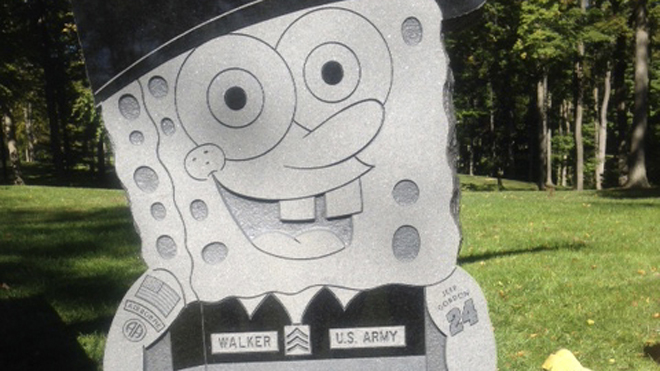
Apparently I was last one in the nation to learn about the surreal dispute between the parents of the late Kimberly Walker, a 28-year-old Iraq War vet who was  found murdered in a Colorado hotel room eight months ago, and the owners of Cincinnati’s historic  Spring Grove Cemetery, concerning the headstones erected over her grave on October 10.

The cemetery reversed its official approval of the twin monuments, apparently bestowed by someone who had momentarily been possessed by the spirit of Chuck Jones, saying that it would be inappropriate for a traditional and historic 19th Century pastoral cemetery that serves as the final resting place of Supreme Court Chief Justice Salmon P. Chase, several Civil War generals including “Fighting Joe” Hooker, who lost the Battle of Chancellorsville, the Hall of Fame manager of the 1927 Yankees, Miller Huggins, and many others, to sport not one but two hideous 6-foot-high, 4-foot-wide, 7,000 pound slabs of granite lovingly carved to depict SpongeBob Squarepants in military gear, one of which displays Kimberly’s name on his uniform. (For those of you who are hopelessly estranged from popular culture, SpongeBob is a fictional deep sea yellow sponge who stars in a popular Nickelodeon cable TV children’s cartoon show. Kimberly, we are told, loved the show. SpongeBob is an idiot, by the way.)

The family is outraged, and feels abused. “I feel like, and we all feel like, SpongeBob should stay there. We bought the plots, all six of them. We put the monuments there, we did what we had to do and they said they could provide that service to us,’ said Walker’s twin sister Kara, who was looking forward to eventually being buried under the second headstone. “I thought it was the greatest thing in the cemetery. I even told the people there that I think this is the best monument I’ve ever seen. It’s the best headstone in the cemetery and they all agreed. It came out really nice.”

Yyyyyyyeah.

Still, putting considerations of taste aside—-and what American these days doesn’t do that daily?—the Walkers duly purchased the plots (they have four more…and just think of what might end up on them) and properly cleared the monuments.

Your Ethics Alarms Ethics Quiz for this lovely Fall day is this:

Does fairness dictate that the Walkers be allowed to erect whatever monuments they choose, including giant, garish sculptures of a cartoon character, to honor the memory of their daughter? Continue reading

Psychic Found Guilty Of Fraud: Did She Know This Would Happen?

gypsy-fortune-teller2Now that the required joke is out of the way, I can more soberly state that the New York conviction of psychic Sylvia Mitchell for larceny and fraud opens up a welter of ethical, legal and religious issues. Law prof-blogger Ann Althouse is troubled by the result, writing,

“In my book, this is entertainment and unconventional psychological therapy. Let the buyer beware. Who’s dumb enough to actually believe this? Should the government endeavor to protect everyone who succumbs to the temptation to blow a few bucks on a fortune teller?”

Clearly not, and that’s where courts and states generally land in this matter, as in the case I wrote on three years ago, Nefredo v. Montgomery County. There the courts ruled (in Maryland) that it was an infringement of free speech for Maryland to ban what is, for most, just an exercise in supernatural entertainment. But the New York case involved a little bit more than that: Mitchell apparently bilked some clients out of significant amounts, getting $27,000 from one in an “exercise in letting go of money,”  $18,000 from another to put in a jar as a way to relieve herself of “negative energy,” and thousands from other clients to purchase “supplies” for various rituals—what does the eye of a newt go for these days?

Admittedly this seems to cross the line from harmless, if stupid, entertainment into preying on the stupid and gullible, but that doesn’t convince Althouse that the conviction, or the prosecution is a legitimate use of government power. She reminds us about the Supreme Court case of U.S. v. Ballard, in which the Court upheld the conviction of a faith healer for fraud. The SCOTUS majority, headed by William O. Douglas, held that if the faith healer didn’t believe in her claimed powers, then she was a fraud, and thus could be prosecuted under the Constitution if she used a claim of false powers to take money from her clients. In a sharp and thought-provoking dissent, Justice Robert Jackson wrote in part… Continue reading