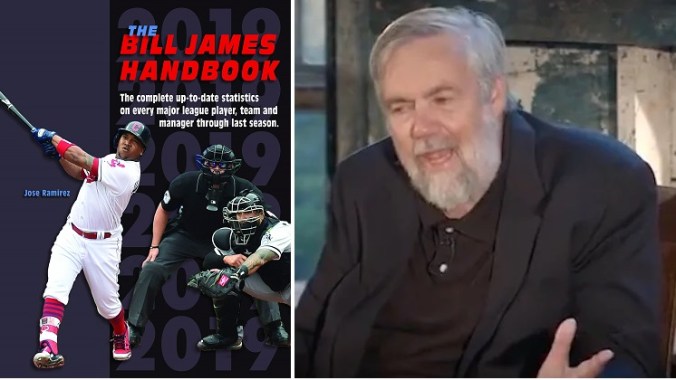
Baseball philosopher, iconoclast and analyst Bill James is one of my heroes for his amazing ability to look past conventional wisdom with an open mind. Beginning as essentially a self-published pamphleteer writing out of his basement, James’ counter-traditional explorations of baseball statistics eventually changed how baseball was watched, assessed, scouted and played, simply on the strength of Bill’s ideas and his facility in explaining them.
His talents could be used in many other fields–James has recently branched out into examining famous unsolved murders—but it is also true that many of the ideas he has developed in relation to baseball have wider applications. For example, James was the source of the concept of “signature significance,” which is a staple here at Ethics Alarms.
His writing also taught me that bias makes us stupid, and about the insidious power of rationalizations. Many of James’s observations seemed intrinsically obvious once he made and explained them, and the fact that baseball executives, writers and players could have been so wrong about their own game for so long seemed incomprehensible. But the reasons were what they always are, in all fields. People are biased toward what they have always believed —confirmation bias–and the “It’s always been this way” variation on the most powerful rationalization of them all, “Everybody does it” breeds blindness and intellectual laziness. Continue reading →
I had completely forgotten that today is the day the Barry McGwire Fan Club or whatever the scientists who maintain the so-called Doomsday Clock call themselves behind closed doors reveal how close we are to destruction this time. From the Hill:
The famed Doomsday Clock has been set at 100 seconds to midnight this year, the closest it’s ever been to the metaphorical point of the Earth’s destruction. The Bulletin of Atomic Scientists unveiled this year’s setting for the clock at a news conference Wednesday morning at the National Press Club in Washington, D.C.
“Speaking of danger and destruction is never easy. If you speak the truth, people will not want to listen because it’s too awful. It makes you sound like a crackpot,” said former California Gov. Jerry Brown (D), executive chairman of the Bulletin.
“Today we live in a world of vast, deep and pervasive complacency,” Brown added. “Even if there is a one-in-100 chance that these men and women before you are correct and we are truly in a dangerous moment, you would never know that from the president, from Republican leadership and from Democratic leadership.”
What a great job for Jerry Brown! Anyway, I had also forgotten that I had posted about this silliness in 2017, not long after President Trump had been sworn in, but several readers had not, and I received several reminders today. I went back and read the post, and it seemed appropriate to re-post it.
One update: at the end, I note that WWII songstress Vera Lynn, whose iconic rendition of the ballad “We’ll Meet Again” accompanied atom bombs exploding at the end of “Dr. Strangelove,” was 100 years old, and still singing. Well, I’m thrilled to report that Vera is now 102 , and she’s STILL singing. Here she is:
Take THAT, Doomsday!
***
I’m sure you have noticed that the scary Doomsday Clock, which tells us how long we have until “midnight,” aka. nuclear Armageddon, has been on the move again.
NBC News recently announced that the dreaded Clock was ticking like the soundtrack of “24 Hours, proclaiming: “Thirty seconds closer to global annihilation!” The New York Times, which now averages at least eight “President Trump is a menace to civilization!!! ARGGH!!!” columns, editorials or news stories every…single…day, duly announced, “Thanks to Trump, the Doomsday Clock Advances Toward Midnight.” Across the pond, the UK’s Independent stated as fact, “We’re closer to doom than any time since the Cold War!”
Why? Because the Doomsday Clock says so!
Can we officially make that “The Ridiculous Doomsday Clock?” This has to be the most useless and malfunctioning timepiece in recorded history. Even a stopped clock is right twice a day: this damn thing is never right.
The Bulletin of The Atomic Scientists dreamed the gimmick up back in 1947 , and its initial setting was “seven minutes to midnight” as in…
What sense did it make to have a clock already set at seven minutes to 12? Why wasn’t it at least a seven-minute stopwatch? What was its setting during the Black Plague? Did the dinosaurs have a Doomsday Clock? Did a wise Diplodocus and a precocious Stegasaurus see a meteor coursing through the Jurassic skies and conclude, “Oh oh. Eventually one of those is going to land here, and we’re all toast. Move the Doomsday Clock to 80 million years before midnight, let’s settle our affairs, and tell the rest of the gang that the mammals are coming…”?
The group of egg-heads devising the clock explained that it symbolized ” the urgency of the nuclear dangers that the magazine’s founders—and the broader scientific community—are trying to convey to the public and political leaders around the world.” OK, I can see that as a minor, fear-mongering news item in 1947—kind of like the climate change hysteria is now—but I would also say that when a group describes a peril as urgent and it hasn’t urged in 70 years, that isn’t just old news, it isn’t newsworthy at all. Continue reading →
A really low blow (among the other low blows, like the jerk who accused me of getting all of my ideas from Drudge) came from a former commenter here, who accused Ethics Alarms of being an “echo chamber.” That truly ticks me off. If the Trump Deranged don’t have the wits or open minds to test their biases where intelligent, informed, articulate adversaries are likely to respond, that’s not my fault, and it’s exactly what the left side of the blog’s commentariat did. They didn’t rebut the position here, proven correct, that the Justice Department’s handling of The FISA warrants were part of a dangerous effort to undermine the Trump campaign and his election: they just accused me of “drinking the KoolAid” and quit, or were insulting. They never tried to argue away the smoking gun evidence of the soft coup plans A through S that I have meticulously documents since 2016, they just act as if the current impeachment excuse is justified and offered in good faith, when it is so clearly not. It’s all denial, spin, dishonesty and mob mentality. I ended up in today’s piranha tank by pointing out to a lawyer that the the fact that Trump was intemperate at a meeting of generals was not sufficient to trigger the 25th Amendment, and that lawyers, like her, shouldn’t be misleading the public by making such lame arguments. I posted the amendment, and said that “Unable” to perform the duties of the office doesn’t mean, as she and others are arguing, “Unable to perform the duties that way she and other would prefer them to be performed” and stating that approval polls do not reflect the degree to which the impeachment charade is helping to re-elect Trump.
These are the smart Deranged. Imagine what the others are like.
1. Resistance porn.“A Very Stable Genius” is the latest “tales out of school” anti-Trump book. In this it is no different from those that have gone before, from Omarosa’s tell-all on up the ethics evolutionary scale. This one was authored by Pulitzer Prize winning journalists, so naturally the news media is celebrating it as if it is somehow different. What it is a collection of mostly anonymous accounts of people who have axes to grind and scores to settle against Donald Trump, and are violating basic professional ethics to do it. Are all of the stories true? I’m sure some are, maybe most—they don’t sound out of line with what we knew about this President before he was elected. Yet they are by very nature distorted by the theme of the book and the presumed anti-Trump bias of the book’s audience. What is so alarming about Trump’s eagerness to have a meeting with Putin? So what if he questions why U.S. businesses shouldn’t be allowed to engage in bribery abroad, when it is the accepted norm in many countries? There’s an answer to the question, but it’s not a dumb question; in fact, its one international ethicists still debate. And do you really think Trump saying to Indian prime minister Narendra Modi, “It’s not like you’ve got China on your border” wasn’t a joke? Taking it as otherwise is classic conformation bias and disrespect. It sure sounds like a typical Trump joke to me. Continue reading →
The problem–well, one of them—with trying to control how other people choose to live their lives is that nobody’s smart enough to do it without making things worse. Still,a lot of sociologists and politicians think they are smart enough.
Oklahoma City, Tulsa, Fort Worth, Birmingham, and Georgia’s DeKalb County have passed restrictions on dollar stores, and other communities are debating whether to follow their example, where laws and zoning regulations limit how many of these small stores can open within a particular area. Other laws dictate what they can and can’t sell, most notably fresh food. You see, the antipathy to dollar stores is based on the narrative pushed by activists that they saturate poor neighborhoods with cheap, over-processed food, squeezing out other retailers and lowering the quality of nutrition in poor communities. An analyst for the Center for Science in the Public Interest makes the argument, “When you have so many dollar stores in one neighborhood, there’s no incentive for a full-service grocery store to come in.” Dollar stores, like Dollar Tree and Dollar General, the researchers say, make neighborhoods seem poor, and scare away better stores, “locking in poverty rather than reducing it,” as one told the Washington Post.
Just kidding. I’m sure I’ve mentioned Barry McGwire’s hilariously overwrought rendition of P.F. Sloan’s silly lyrics before. Everyone should listen to this song every few months or so to remind them that we were pronounced doomed 55 years ago, yet here we are. The lack of historical perspective and general knowledge about the real world of geopolitics is driving so much of the over-heated laments we are hearing and reading—I think laughing is a better response that rolling one’s eyes, but I’m open to being convinced otherwise. Yes, sometimes leaders and countries have to draw red lines, and it is always best if the world believes them when they do. It never believed Barack Obama.
1. Fake news, headline-style...Yesterday, the New York Times headline, in bold, “this is really important!!!” point type, told us that Trump’s military advisers were “stunned” at his decision to kill Iran’s head terrorist. Oh, no! His decision was surprise? Tt came out of the blue? They had recommended against it? Well, no. The story under that intentionally misleading headline says that the President was presented with several options, and the pros and cons of all were discussed. They expected him to choose one of the other options, that’s all. “Stunned” carried negative implications that the facts didn’t warrant, so naturally that’s what the Times editors chose. All the better to undermine trust in the President.
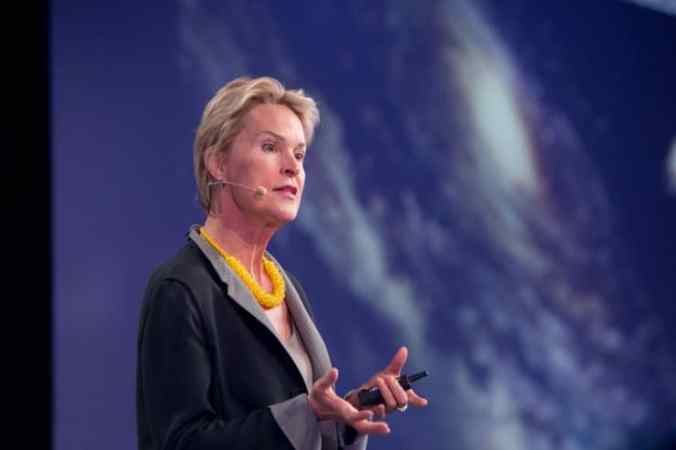
I’m sure there are a lot of people doing ethical things and not trying to deliberately make me embarrassed to be a member of the human race—just not on social media, and not in the news. And there isFrances Arnold.
She is an American chemical engineer and the Linus Pauling Professor of Chemical Engineering, Bioengineering and Biochemistry at Caltech. Professor Arnold was awarded the Nobel Prize in Chemistry in 2018 for pioneering the use of directed evolution to engineer enzymes. “Directed evolution” is a method used in protein engineering that mimics the process of natural selection to steer proteins or nucleic acids toward a user-defined goal. You know..this:
She had published a paper on enzymatic synthesis of beta-lactams in May 2019 in the Science journal. When she discovered recently that her research could not be replicated, however, Arnold repudiated her own paper, and pronounced it the product of shoddy research.
“For my first work-related tweet of 2020, I am totally bummed to announce that we have retracted last year’s paper on enzymatic synthesis of beta-lactams. The work has not been reproducible,” she posted on Twitter. “It is painful to admit, but important to do so. I apologize to all. I was a bit busy when this was submitted, and did not do my job well.”
On one hand, I wonder if it is easier for a Nobel winner to admit something like this. On the other, I am certain that the more eminent a scientist is, the harder it is to reveal a serious error. No matter how one looks at it, Professor Arnold exhibited integrity, honesty, humility and courage, may have done as much for science by showing how an ethical scientist handles an error as she did with her work on directed evolution.
I would be more certain about that if I understood what the hell directed evolution was.
On Ethics Alarms, the term “Authentic Frontier Gibberish” is used to describe “intentionally (or sometimes just incompetently) incoherent double-talk used by politicians, advocates, lawyers, doctors, celebrities, scientists, academics ,con artists and wrong-doers to deceive, obfuscate, confuse, bore, or otherwise avoid transparency, admitting fault, accepting accountability or admitting uncomfortable truths. The term comes from “Blazing Saddles,” in this memorable scene.
It sometimes arises from incompetent communication skills, which are unethical for anyone in the public eye to employ. Sometimes it is more sinister than that, and occurs when someone chooses to create a vague word cloud that obscures the speaker’s or writer’s real purpose…and sometimes the fact that they are frauds. Sometimes AFG is designed to convey a feeling while avoiding sufficient substance to really explain what he or she means.
Sometimes, it feels like gaslighting.
A New York Times article was ostensibly about “Dealing with Bias in Artificial Intelligence.” This was, obviously, click-bait for me, as the topic is a developing field of ethics. The introduction stated in part, “[S]ocial bias can be reflected and amplified by artificial intelligence in dangerous ways, whether it be in deciding who gets a bank loan or who gets surveilled. The New York Times spoke with three prominent women in A.I. to hear how they approach bias in this powerful technology.” The statements of the first two women—I see no reason why only female experts on the topic were deemed qualified to comment—were useful and provocative.
Last, however, was Timnit Gebru “a research scientist at Google on the ethical A.I. team and a co-founder of Black in AI, which promotes people of color in the field, [who] talked about the foundational origins of bias and the larger challenge of changing the scientific culture.”
Here’s what she said (Imagine, the Times said this was “edited and condensed”! ). The bolding is mine.. Continue reading →
I don’t know about you, but I feel like everything’s been one big, holiday/stress/disruption blur since I enlivened Thanksgiving dinner by keeling over. There should be law preventing Christmas and New Years from falling on Wednesdays, which effectively kills two full weeks. I’m behind on everything, and I don’t know what I could have done to avoid it…
1. Sigh. This is what we have to look forward to in 2020…Ezra Klein, the Left-biased Washington Post journalist who founded Vox, which he then staffed with all Left-biased journalists, tweeted out the link a nine-month-old Post article stating as fact that counties hosting Trump rallies saw massive spikes in hate crimes compared to counties that didn’t host Trump rallies. By Wednesday afternoon, Klein’s tweet had been re-tweeted more than 7,000 times and had more than 14,000 likes. It also polluted many Facebook feeds.
Klein didn’t tell his 2.5 million followers that the article relied on a study that had been debunked months ago by Harvard University researchers Matthew Lilley and Brian Wheaton. “The study is wrong, and yet journalists ran with it anyway,” they revealed in in Reason magazine four months ago. That’s four. 4. IV. F-O-U-R.
Lilley and Wheaton tried to replicate the original study—if a study is valid, you can do that. They discovered that “adding a simple statistical control for county population to the original analysis causes the estimated effect of Trump rallies on reported hate crimes to vanish. “Given how little scrutiny was required to reveal the flaws in the thesis that Trump rallies cause hate incidents, one cannot help but wonder whether its viral status was aided by journalists predisposed to believe its message,” the researchers noted.
Ya think?
Klein’s tweet is still up. It’s false and inflammatory, but it advances one of the key Big Lies (that would be #4), so he is running with it anyway. Do you wonder why those on opposite sides of the partisan divide have different views of reality? This kind of thing is a primary reason.
Enemy of the people.
2. The first “I don’t understand this story at ALL” of 2020:
In July 2018, Michael J. Reynolds. a New York City police officer, was in Nashville for a three-night bachelor-party trip with six other officers. At one point in the festivities, Reynolds, who is white, kicked in a black woman’s door in a drunken rage, threatening her (“I’ll break every bone in your neck…”) and her sons while calling them “niggers” and showering them with obscenities. He was arrested, tried, and sentenced to 15 days in jail with three years’ probation after pleading no contest to four misdemeanors, court records show. Nevertheless, he remains an employee of the N.Y.P.D. More than 10,000 people signed an online petition demanding his dismissal and supporting the woman whose home he invaded.
Theories? Never mind unions, due process and mandatory investigations: the incident took place a full year and a half ago. There is no excuse for this. Reynolds apologized and said that he was so drunk he doesn’t remember the episode. Oh! Then that’s OK, Officer! Let’s all forget the whole thing!
As it habitually does, the New York Times reached a false analogy, writing,
The case of Officer Reynolds is again focusing scrutiny on the pace of the Police Department’s disciplinary process. In a prominent example of how it can drag on, five years passed before Officer Daniel Pantaleo, whose use of a prohibited chokehold contributed to the 2014 death in police custody of Eric Garner, was fired and stripped of his pension benefits in August.
Ridiculous. There were legitimate issues involved in Pantaleo’s case that made the proper discipline in his case complicated and controversial. There are no reasons for controversy here. Continue reading →
In my one, fortuitous one-on-one conversation with futurist Herman Kahn, then regarded as the most brilliant man in America, he observed that society periodically for forgets everything it has learned over the years, and then chaos reigns temporarily until bad ideas and horrific mistakes re-teach the lessons that once were accepted as obvious. He was talking about the Sixties, but it is clear that this is another one of those periods. Kahn also noted that some of the forgotten lessons are re-learned too late to save society from permanent harm. The Sixties gave us socially acceptable promiscuous sex and the resulting normalization of children born out of wedlock, the re-assignment of of abortion as ethical (somehow) rather than criminal, and societal sanctions of recreational drug use.
Nice work, Boomers…
1. Speaking of abortion...can there be a more empty, fatuous justification of it than what Senator Cory Booker tried last week? ”Abortion rights shouldn’t matter to men because women are our mothers, sisters, daughters, friends,” Booker tweeted. “They should matter to men — to everyone — because women are people.”
How profound. Nobody has ever disputed that women are people, and Booker’s non-logic—the statement compels the response, “And SO…????”—is an appeal to emotion without substance. It also makes its own rebuttal screamingly obvious to anyone but a pro-abortion zealot: “Abortion should be repugnant to men and women…and Presidential candidates…because unborn babies are living human beings.” Continue reading →
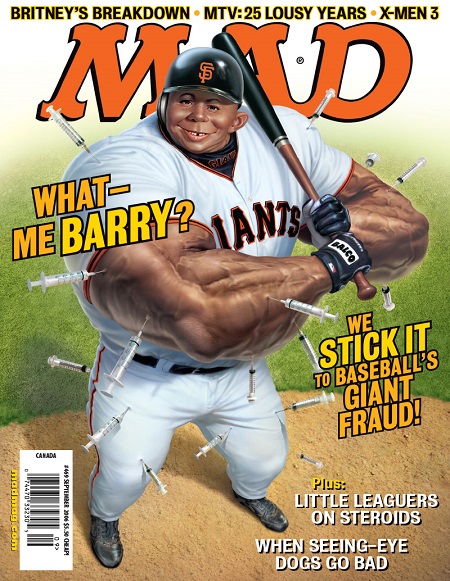
Unfortunately, MAD is no longer around to protect our values…
My favorite Christmas gift this year, as it has been in recent years, is the new Bill James Baseball Handbook, which will be my primary bathroom reading for the next ten months. Oh, it’s not as much fun as the old Bill James Abstracts, but in those days, three decades ago, Bill was revealing then-unknown nuances of the game that spawned the elaborate (and still developing) analytical tools that have changed how baseball is played, watched, and understood.
James typically writes a few long, Abstract-like articles for the Handbook, which has many contributors, and he is, as always, fascinated by the selection criteria for the Major League Baseball Hall of Fame in Cooperstown. My gift is especially timely, because his observations in the Handbook dovetail nicely with the recent voting by sportswriters on the latest entering class, including Derk Jeter, naturally, and perhaps others. The results won’t be announced for a while.
Bill did research this past year to determine who the public wanted to see elected to the Hall among players who had not yet been deemed worthy ( meaning that they hadn’t been listed on at least 75% of the ballots cast, or are not yet eligible for various reasons, including players who are still active. The results, as he explored the gap between public opinion and past voting, were disturbing, if not exactly shocking. Continue reading →