Friday Open Forum (“Is This a Great Country or What?”)

I apologize for seeming to force a topic on participants here, as the Open Forum is for you to write about ethics issues that intrigue you, and not necessarily me. However, I can’t think of anywhere else to use the remnants of a post I did a lot of work on before giving up in disgust.

The impetus for this aborted project was reading more of the increasingly unhinged rants of the formerly rational lawyers, artists, scholars and baseball fans on my Facebook feed, whose Trump Derangement is something to behold. One of them posted a chart purporting to list the nations in order of their “quality of life”; this one showed the U.S. 19th, after, among others, Slovenia, Oman, and Estonia. #1 was Switzerland. “I wonder how much lower we will be after Trump and Musk are through with us?” the poster queried to a flurry of likes. angry faces and the “care imogi. The moronic post moved me to look at the most recent such surveys, most of which seem to conclude that Spain is the best country to live in. Spain is a country where you can be imprisoned for criticizing the king, and where the average household income is around $40,000. On the one that was posted by my friend who is leaking IQ points, Spain finished 15th. Huh! First in one quality of life survey, 15th in another. This is, of course, why none of these “scientific” surveys are worth the paper they are printed on: the rankings will always reflect the biases of the researchers. The reason the U.S. always finishes absurdly low in these things is because our learned class believes fervently in socialism, and any nation that isn’t a nanny state is, by definition, inferior. The U.S. allows its citizens to own guns. It allows “dangerous” speech. It isn’t committed to fighting “climate change.” It hasn’t solved its racial tensions, while Switzerland has done such a bang-up job dealing with the descendants of its African slaves.

Yeah well, the U.S. is still guided by the most aspirational mission of any nation on Earth, and it has Major League baseball too, so bite me. (One of the rankings rated the U.S. low for “climate.” Which climate? Hawaii? Fairbanks? )

Spain is, I’m sure, a great country for someone like Richard Gere to live in (he moved there with his Spanish citizen wife and kids after Trump won the election: he was a big Harris supporter) who had lots of money and has already made his mark in life. For the most part, however, the immediate retort that comes to mind when I read someone on Facebook arguing seriously that Spain is a “better” nation than the United States of America, is “Wow, you really are an idiot, aren’t you? I’m so sorry.”

Anyway…Open Forum!

Observations on a Jobs Graph

That provocative graph above is brought to you by Apollo Global Management.

It purports to reveal what proportion of new jobs added each year since 2016 were in the private and public sectors. I have no way of telling whether the numbers are accurate, whether the manner of presenting them is fair, and whether Apollo has an agenda in presenting them this way. I guess that’s the first ethics observation. It is now impossible to trust news accounts, statistics, analysis, surveys, studies and data, no matter where it comes from. We can add this to the fact that photographs, films, recordings and videos are also untrustworthy.

But here are some more observations on the off chance that the numbers are correct and can be trusted:

Continue reading

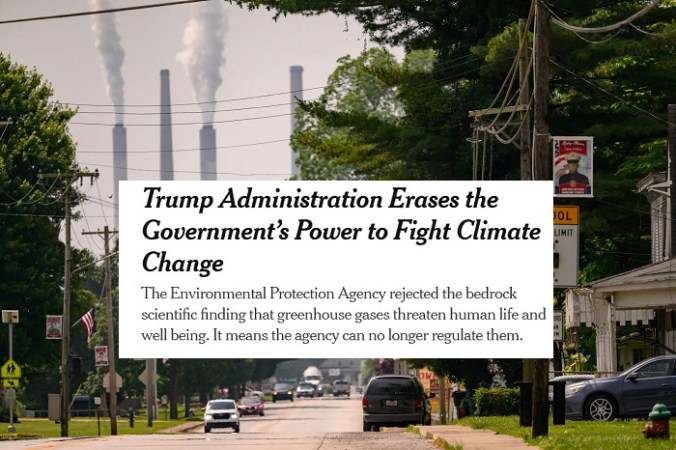
Addendum: “Gee What a Surprise: NOAA ‘Adjusts’ Its Historical Weather Data Just As ‘Climate Change Deniers’ Claim They Do

As it happens, the day that I posted on NOAA’s inherently ethically dubious “adjustments” to historical climate data, a blog post by The Manhattan Contrarian turned up in my email following up on the same ABC News story that sparked my post. It is well worth reading. His conclusion:

“If the NOAA data adjustments cannot be tied to specific metadata like station moves or instrumentation changes, then they are not really scientific “data,” but rather just opinions of people who are interested in promoting the global warming narrative. They are completely unusable for purposes of making public policy.”

Yes, but the manipulated data does make charts like the “hockey stick” graph above seem convincing, even though all those data points come from after-the-fact guesses about what the real data should be.

Gee What a Surprise: NOAA “Adjusts” Its Historical Weather Data Just As “Climate Change Deniers” Claim They Do

Of course, the corrupt news media sees no problem with this. As ABC helpfully points out, NOAA’s National Centers for Environmental Information “adjusts weather data to account for factors like instrument changes, station relocation and urbanization, and it does so through peer-reviewed studies that are published publicly through its federal website.”

And factors like the need for climate scientists to show that the climate change apocalypse that they constantly predict for us is based on convincing data, when in fact it is based on flawed data, as the scientists admit once you cut through the jargon. For example, traditional glass thermometers have been replaced with more precise digital sensors warranting “adjustments” to accurately compare readings between the two instruments. Sea surface temperatures used to be taken manually from a bucket off of a boat, unlike the network of buoys and satellites that are used to gauge water temperatures today. Then there is the “urban heat island effect”: Cities heat up more than rural areas due to human activity, infrastructure and the concentration of buildings, roads and other heat-absorbing materials, causing higher temperatures in cities compared to surrounding areas. This can distort temperature data, making an area appear hotter than it is. So the National Oceanic and Atmospheric Administration makes adjustments to account for that too.

Continue reading

Today’s Unpleasant Ethics Question: How Can We Justify Trusting Today’s Scholars and Academics To Train Our Rising Generations?

I want to state at the outset that the ridiculous research paper I’m about to make fun of is only one horrifying example of institutional insanity, and it would be unfair to use it to characterize the entire higher education complex. However, I do believe that a healthy and functioning scholarly sector must have a way to reject, condemn and shun such abuses of position and authority.

I’ll have more to say on this matter after revealing the head-exploding product of University of San Diego professors Diane Marie Keeling and Bethany O’Shea.

These scholars have published a study titled “Conceptualizing Black Humanity Through Geopoetic Intimacy and Resistance: Memory Making-with Geologic Materials” Here is the abstract:

Amplifying the importance of geologic processes in subject formation, the study asserts that geological time is important for understanding memory and memorials. In the Equal Justice Initiative’s Community Remembrance Projects and the National Memorial for Peace and Justice, materials of geologic composition like soil, and those made from earth materials, such as steel and bricks, are employed to trope the bodies of lynching victims and weather racist geologic formations of subjecthood. The holding and eroding of violent memories crafts an intimate and resistant geopoetics of Black humanity.

Oh. What???

Continue reading

Cognitive Dissonance Scale Lesson For Senate Democrats

I have mentioned here frequently that one of two things I learned in college that have been most useful in my life and career is Leon Festinger’s Cognitive Dissonance Scale. The concept illustrated by the scale is also one of the most useful tools for ethical analysis, often essential to answering the question, “What’s going on here?” the entry point to many perplexing situations. Check the tag: it just took me 15 minutes to scroll though the posts that got it. I was surprised to find that I didn’t use the tag until 2014, when the scale helped me conclude that the Tea Party, then in ascendancy, was “doomed by a powerful phenomenon it obviously doesn’t understand: Cognitive Dissonance.” Heard much about the Tea Party lately? See, I’m smart! I’m not dumb like everybody says… I wrote then,

As psychologist Leon Festinger showed a half a century ago, we form our likes, dislikes, opinions and beliefs to a great extent based on our subconscious reactions to who and what they are connected with and associated to. This is, to a considerable extent, why leaders and celebrities are such powerful influences on society. It explains why we tend to adopt the values of our parents, and it largely explains many marketing and advertising techniques that manipulate our desires and preferences. Simply put, if someone we admire adopts a position or endorses a product, person or idea, he or she will naturally raise it in our estimation. If however, that position, product, person or idea is already extremely low in our esteem, even though his endorsement might raise it, even substantially, his own status will suffer, and fall. He will slide down the admiration scale, even if that which he endorses rises. If what the individual endorses is sufficiently deplored, it might even wipe out his positive standing entirely.

The implications of this phenomenon are many and varied, and sometimes complex. If a popular and admired politician espouses a policy, many will assume the policy is wise simply because he supports it. If an unpopular fool then argues passionately for the same policy, Festinger’s theory tells us, it might..

1. Raise the fool’s popularity, if the policy is sufficiently popular.

2. Lower support for the policy, if he is sufficiently reviled, and even

3. Lower the popularity of the admired politician, who will suffer for being associated with an idea that had been embraced by a despised dolt.

This subconscious shifting, said Festinger, goes on constantly, effecting everything from what movies we like to the clothes we wear to how we vote.

Here, for the heaven-knows-how-many-th time, is the scale in simplified form…

Continue reading

Look! Another Study Showing That What Everybody Knew Anyway Is Probably True…

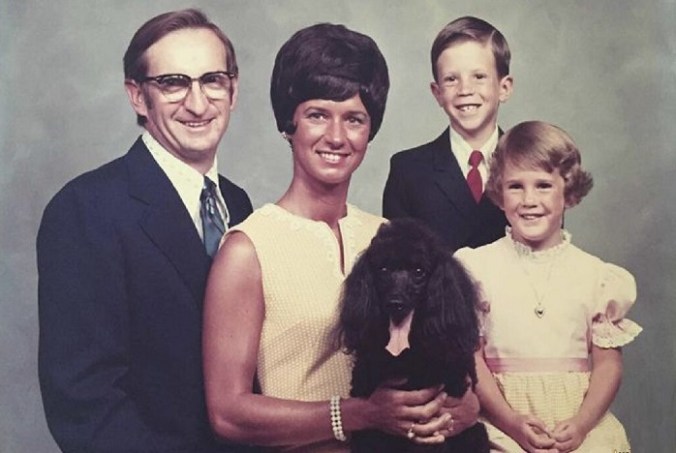
new study concludes that parents probably do have a favorites among their children.

Parents always deny this, of course. Such a preference would make any parent feel guilty, so they are in permanent denial. The favorite child reaps the benefits of his or her status, and the lesser regarded children are told that they are petty, jealous, and paranoid. Frequently, in my experience, the “Mom likes you best!” accusation works wonders, and the guilt-ridden parent will then bend over backwards to avoid any appearance of favoritism, even to the point of favoring the other child or children.

The study in question, however, seems pretty worthless. Lisa Strohschein, a sociology professor at the University of Alberta and the editor-in-chief of the journal Canadian Studies in Population, thinks that all the study does is confirm what most people already believe. The researchers acknowledged limitations in the study, and write that “the reasons why parents treat their children differently are likely more complex and extend beyond the factors explored.” Oh.

Continue reading

Talking Dog Ethics

I must confess that one reason for this post is to entice one of Ethics Alarms’ stars, the perceptive and sharp metaphorical-penned Mrs. Q, into commenting, since she is our resident canine authority (among other things).

The New York Times recently published a feature [Gift link!]about a new fad among dog-owners: multi-colored buttons one can lay out on one’s floor. The buttons can be set to emit the dog-owner’s voice saying a single word like OUTSIDE, WATER, PLAY, FRIEND, AFRAID, WALK, BALL and so on. Dogs learn to step on the buttons to emit the desired word…

Voilà! Talking dogs.

Well, maybe. Researchers disagree whether the dogs are really using the buttons to communicate or just giving a Skinnerian response when they figure out that, for example, pressing a particular button will result in a treat. Dogs using the buttons are all over YouTube and other platforms on the web: that’s Bunny the Sheepadoodle above, who supposedly makes complex remarks and even existential ones, like “DOG WHY?”

Continue reading

Comment of the Day: “Critics of Federal Workers Telecommuting May Exaggerate But the Truth Is Bad Enough”

This Comment of the Day by new participant in the comment wars Dr. Blae cheers my pre-Christmas cockles more than most for two reasons: 1) I always love it when a first time commenter weighs in with a Comment of the Day. This is especially true since I spend so much time reading attempted first-time comments that read: “You suck, asshole!” 2) Genuine expertise on these topics is always a godsend. I am a pan-ethicist, meaning that I work in the ethics field regarding too many areas to count, legal ethics substantially but also business ethics, government ethics, sports ethics, academic ethics, journalism ethics, and more. I am neither a participant nor an expert in many of these fields themselves, so when ethics and one of them intersect, a specialist is especially welcome.

Here is Dr. Blae’s Comment of the Day on the post, “Critics of Federal Workers Telecommuting May Exaggerate But the Truth Is Bad Enough”:

***

So let’s break this down…

  • Federal agencies have been maintaining uninhabited office space in some of the most expensive real estate markets in the US.
  • The majority of federal workers, that can, telework/remote work and avoid coming into the office.
  • There is an assumption of a lack of efficiency due to telework/remote work, but the evidence is anecdotal or not directly relevant (e.g., office occupation).

Now for a couple of questions… prior to COVID:

  • When were government employees accused of being efficient?
  • What is efficiency? This is really important since the implication is a quantitative comparison, so we need some numbers.
  • Are all jobs/positions the same? Is there a single solution?
  • Where do most federal employees (in the DC area) come from?
  • How do you “drain the swamp” by reconcentrating employees in the swamp?
  • What is a comparison of costs between an employee doing telework/remote work v. being physically in the office?
  • Why do federal agencies continue to rent unoccupied spaces when according to GSA regulations/policies they are supposed to “right size” office space?

Ok let’s take into consideration a few points…

Continue reading

“Monica Crowley and the Death of the Plagiarism Scandal,” The Sequel

President-elect Trump today nominated Monica Crowley to be “Ambassador, Assistant Secretary of State, and Chief of Protocol,” a position that will coordinate and oversee U.S.-hosted events of note such as America’s 250th Independence Day anniversary in 2026; the FIFA World Cup in 2026 and the Olympic Games in Los Angeles in 2028.  The position requires Senate confirmation. In reporting the nomination, The Hill described Crowley as “a former Fox News contributor,” which is deceitful and a cheap shot: she was that, but her experience is much more varied than that would suggest, and Crowley has legitimate credentials for that job—more, in fact, than many other recent nominations announced by Trump.

Crowley also, however, is a serial plagiarist, and her latest assignment from Trump—the previous one was in 2019, when then-President Trump announced Crowley’s appointment as Assistant Secretary for Public Affairs in the Treasury Department—is another canary dying in the ethics mine.

Continue reading