A court reporter in Philadelphia heard a witness say, “He don’t be in that neighborhood,” but transcribed it as, “We going to be in this neighborhood.” Yes, that’s the opposite the opposite of what the speaker meant, and a soon-to-be published study finds that Philadelphia court reporters often make errors transcribing sentences that are spoken in what the New York Times and some linguists call “African-American English.” I call it bad English, and once again the claim is being made that it’s everyone else’s fault when people can’t talk.
Here’s a jaw-dropping statement from the Times article: “Decades of research has shown that the way some black people talk could play a role in their ability to secure things like employment or housing. The new study, scheduled for publication in June in the linguistic journal Language, provides insight on how using black dialect could also impact African-Americans in courtrooms.” Ya think? I confess when I hear anyone, black or white, express themselves with a sentence like “He don’t be in that neighborhood,” I tend to think that
- Such an individual is not well-educated
- Such an individual is not well-read
- Such an individual is unlikely to think very clearly
- Such individuals may not be very bright, not necessarily because he or she speaks in such a manner, but that because they lack the common sense to know that doing so will not leave a positive impression.
In short, it is not my fault if someone else can’t speak clearly, and claiming that a grammatical and syntactical dogs breakfast like “He don’t be in that neighborhood” is acceptable because a lot of people talk that way is a rationalization. More Bizarro World reasoning from scholars,
“People who speak African-American English are stigmatized for so doing,” said Taylor Jones, a doctoral student in linguistics at the University of Pennsylvania and one of the study’s authors. Mr. Jones added that there was nothing improper or broken about the dialect that some African-Americans inherited over generations, but negative stereotypes have influenced the way people hear or perceive it.
“If you’re taught that these people speak incorrectly, then it’s very easy to say, ‘Well, they don’t make any sense; what they’re saying is wrong,’” Mr. Jones said.
Those who argue that “He don’t be in that neighborhood” isn’t incorrect are essentially pointing us toward a cultural Babel where anyone can make up and adopt whatever dialect they choose, and insist that everyone else acceptand decypher it. That’s no way to run a business, a nation, or society. Clarity in language is essential, and must not be shrugged off as one more matter of personal choice. We have to communicate, after all. Continue reading






This is the second Comment of the Day that surfaced during this week’s open forum. It was sparked by this comment, changing the subject at hand from the wisdom of training women in the military to that old stand-by, climate change. Slickwilly wrote,
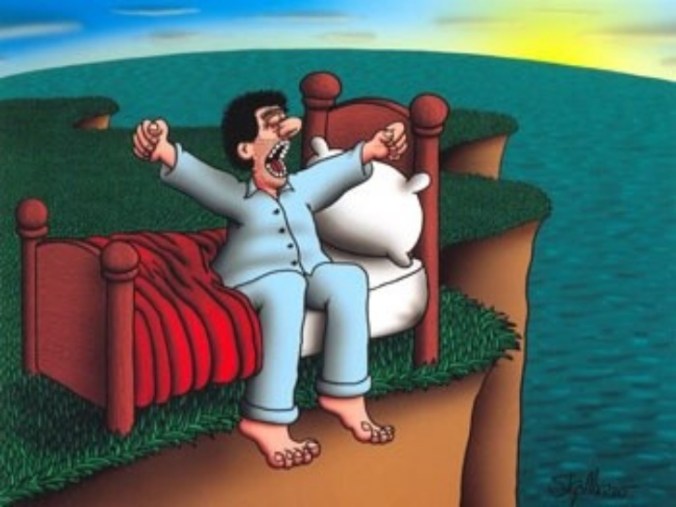
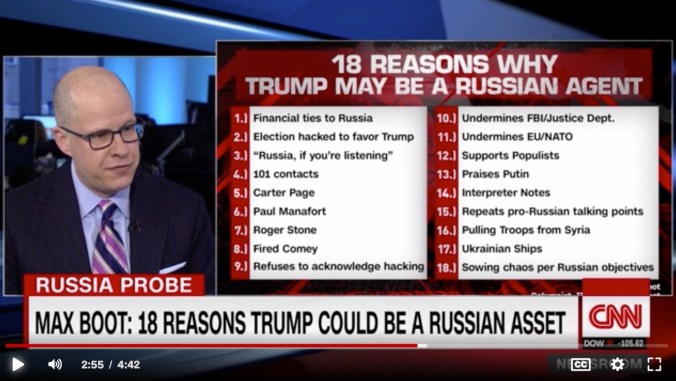
The climate change fearmongering has ticked up a notch recently, and the rhetoric of Alexandria Ocasio-Cortez, who is essentially arguing that climate change perils demand extensive government control of technology and the economy—that is, socialism, and less freedom— and the U.N., which is increasingly candid about its position that only world government, or at least a significant surrender of national interests and autonomy, can save the planet. These are really political positions rather than ecological ones, and are germane to slickwilly’s assertion.
That does not mean that climate change is a hoax. It does mean, in my view, that the climate change doomsayers and the scientists who have foolishly allied with them, have permanently, yes permanently, destroyed their credibility and their relevance to policy. The recent government climate change assessment followed the trend.
Also crippling itself as a resource and asset is the news media, which have been in full-throated support of unproven environmental doomsday scenarios for decades, and have been unwilling or incapable of rendering unbiased and apolitical analysis. Instead, they strategically feature deliberately scary pieces like this, aimed at the gullible and scientifically dim:
If…could…if…”on the same scale.” ARGHHH! That’s good enough for me! Who’s going to be the wise and benevolent dictator to save us?
Here is Michael West’s Comment of the Day on the climate change thread on the post, Open Forum Ethics