Ethics Hero: World War II Veteran Marvin Strombo

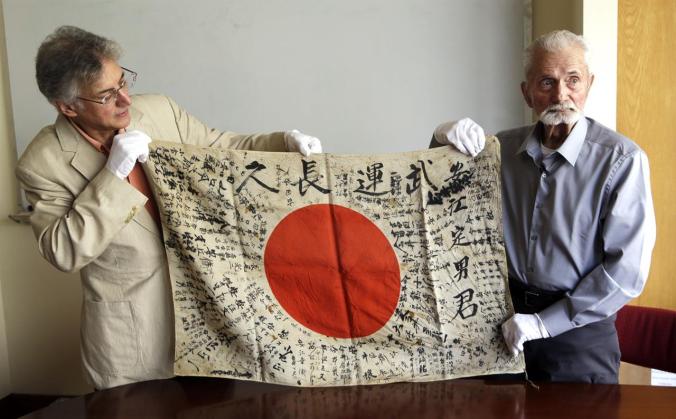
Many Japanese soldiers during World War II went into battle carrying small “Rising sun” flags, the red sphere on the field of white, with the white field decorated by hundreds of classmates, family members and friends. The flags were for good luck, and to link soldiers to their loved ones while they fought for the Emperor.  I had never heard of this practice until today; my father served in the European theater, so he would not have known that many American soldiers took these personal talismans from the bodies of fallen Japanese soldiers as war trophies.

U.S. Marine Marvin Strombo was such a soldier. A member of  an elite sniper platoon during the bloody battle for the Pacific island of Saipan in 1944, he had taken a flag from a dead Japanese soldier lying on his left side—he remembered that the young man looked like he was  asleep—after he noticed something white sticking out from his jacket.

The flag with all the inscriptions on it hung behind glass in Strombo’s gun cabinet in his home in Montana for decades until 2012, when the son of his former commanding officer contacted him for assistance with a book he was writing about the exploits of his father’s platoon. (ARGHHH! I just remembered that I haven’t gotten back to a member of my Dad’s unit who wrote me a couple of months ago!) Working with the author,  Strombo learned about  the Obon Society, a nonprofit organization in Oregon that works to locate and return the personal Japanese flags to the families of the fallen soldiers who carried them. Researchers determined that the dead soldier Marvin’s flag had belonged to was named Yasue Sadao. What Strumbo thought was calligraphy were really the signatures of 180 friends and neighbors, including 42 relatives, who saw Yasue off to war from Higashi Shirakawa, a small village of about 2,400 people in the mountains roughly 200 miles west of Tokyo. Continue reading

Ethics Quiz: “13 Reasons Why”

“13 Reasons Why” is a Netflix  television series based on the 2007 novel “Thirteen Reasons Why” by Jay Asher. A high school student receives a box containing 13 cassette tapes recorded by his friend Hannah Baker, before she committed  suicide. The show has been a critical and popular success (although the Times didn’t like it much) , and a second season is planned.

But Researcher John Ayers of San Diego State University has studied the results of the show on the culture by monitoring discussions of suicide on the internet following the debut of “13 Reasons Why.” The phrases “how to commit suicide” and “commit suicide”  have experienced a 26% and 18% increase in searches. Ayers sees no other explanation for this other than the show.  Searches for the phrase “suicide hotline number” also jumped, by 21%

Ayers now says, “Our worst fears were confirmed That is, thousands of people, thousands more, are searching online about ways to kill themselves.”

Ayers wants the first season to be re-edited to discourage suicidal behavior, and argues that the second season should be postponed. “Psychiatrists have expressed grave concerns because the show ignores the World Health Organization’s validated media guidelines for preventing suicide. The show’s staff instead continue to prefer their gut instincts,” Ayers says.

Your Ethics Alarms Ethics Quiz of the Day is this head-scratcher…

Is it ethical for Netflix to continue running the series in light of Ayers’ research and recommendations?

Continue reading

The Ohio State Fair Accident: Thanks, TV News, But I’LL Decide What I Should See

From ABC News:

Eighteen-year-old Tyler Jarrell, of Columbus, Ohio, was killed Wednesday evening when the Fire Ball ride he was on at the Ohio State Fair broke apart in mid-air, the Ohio State Highway Patrol said. Seven people were also injured in the incident…The victims were transported to local hospitals and at least three are in critical condition.

On all the news channels I saw, including CNN, HLN, ABC, Fox and CBS, video taken by an onlooker was frozen at the moment the ride broke apart. As HLN’s  cheery Robin Meade put it, “We’re not going to show the rest of the video, because it’s graphic and disturbing.”

Wait, Robin: YOU saw it. The producers saw it. Why don’t I get to see it?

I posted the unedited video above. It’s not any more graphic than this…


…and people paid to see that scene. But never mind, the silly hyper-protectiveness isn’t the ethics issue.

The ethics issue is that this is how journalists convince themselves  that they can withhold information, or distort it, change it or spin it for our own good. No, I don’t grant them that privilege, or the role. The job of the news media is to let us know what happened, as thoroughly as they know it. Today it’s some people flying off of a malfunctioning fair ride, yesterday it’s that a President of the U.S. might have raped someone. Tomorrow it might be, oh, I don’t know, this story, which had barely nicked the news networks as of yesterday.

I don’t trust these people to decide what it’s healthy for me to watch. If they want to give warnings, fine. I want the news, the whole news, and nothing but the news. Continue reading

Comments Of The Day: “Ethics Quiz: The Low IQ Parents”

This happens some times: I announce a Comment of the Day, I’m delayed in posting it, and because the comment was so provocative, it attracts equally excellent comments. This time I’m going to eschew the awkward “Comment of the Day: Comment of the Day on the Comment of the Day route, and link the comments up in sequence, beginning with the initial COTD by valentine0486.

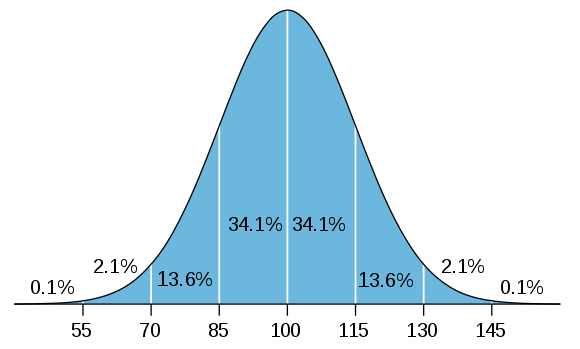
Here are sequential Comments of the Day on the Ethics Quiz, “The Low IQ Parents.” I’ve learned a lot already. The whole comment thread is excellent and you should read it; I’m starting ats valentine0486’s COTD

I worked for two years with developmentally disabled individuals within the range of these two people. And, as much as it is sad and as much as I generally don’t like it when government makes these decisions, I am absolutely 100% certain that none of the individuals I worked for could properly raise children. As such, the state’s actions here are ethical, if the reasoning is somewhat dubious.

Let me share with you just some brief highlights of my time working with this segment of the population. I will abbreviate their names, so as to protect their identities. Please note that all of these individuals had higher IQs than Amy, and they may have all been tested as higher than Eric Continue reading

What Clarence Darrow’s Dayton Statue Stands For

Apparently about a third of the population of Tennessee still doesn’t buy Darwin’s Theory of Evolution (according to a 2015 Pew Research Center study) so it should not be too much of a surprise that in Dayton, Tennessee,  site of the famous 1925 Scopes Trial, a newly erected statue of Clarence Darrow in front of the historic red brick courthouse where the trial took place was met with some protests. At a County Commission meeting in the town,  resident Ruth Ann Wilson suggested that bronze Darrow might unleash a plague or a curse. “I rise in opposition to this atheist statue, all right?” she said. “This is very serious, folks.”

No, that isn’t serious, but the persistence of ignorance both generally and about the issues battled over in 1925 are.  Another resident, Brad Putt, is quoted by the New York Times as saying,  “People around here know that if you have a court case, you have to have two sides,” referring to the fact that there has been a Williams Jennings Bryan statue standing in front of the courthouse  since 2005. “You can’t have Optimus Prime unless you have Megatron. You’ve got to have a yin to the yang.” Well, that’s not quite right either, depending on what Bryan and Darrow symbolize. If the idea is to have the most famous opposing counsel in U.S. legal history facing off, okay, that’s fair. If he is saying, as I think he is, that science and religion must counter and balance each other, that’s nonsense. Continue reading

Morning Ethics Warm-Up: 7/13/17

Good Morning!

1. I owe Robin Meade an apology. The astoundingly bright-eyed, bushy-tailed HLN morning host has been used here as an an example of the sexism of broadcast news media producers, and it is true that she is uncommonly attractive even by “news babe” standards. However, I have come to realize that she is also a unique talent, and more than just a pretty face and figure. Meade has natural presence and charisma, projects genuine optimism and and an up-beat nature, and most unusual of all, doesn’t spin the news or tilt her delivery to signal her own opinion. She’s really good at what she does. I’m sorry Robin; I was biased against you because you are attractive, which is just as wrong as being biased for you. You’re a pro, through and through.

2. Constitutional law expert Eugene Volokh (who is also my favorite candidate for a Supreme Court post if one opens up) published what I consider to be a definitive refutation of the claim that receiving opposition research, as in “damaging information about Hillary Clinton,” is a crime under current law. He also makes a case that it couldn’t be criminalized under future law:

“It would raise obvious First Amendment problems: First, noncitizens, and likely even non-permanent-residents, in the United States have broad First Amendment rights. See Bridges v. Wixon, 326 U.S. 135 (1945) (“freedom of speech and of press is accorded aliens residing in this country”); Underwager v. Channel 9 Australia, 69 F.3d 361 (9th Cir. 1995) (“We conclude that the speech protections of the First Amendment at a minimum apply to all persons legally within our borders,” including ones who are not permanent residents).

Second, Americans have the right to receive information even from speakers who are entirely abroad. See Lamont v. Postmaster General, 381 U.S. 301 (1965). Can Americans — whether political candidates or anyone else — really be barred from asking questions of foreigners, just because the answers might be especially important to voters?”

The professor concludes not. I hadn’t even considered the First Amendment issue in determining that the election law prohibition against receiving “anything of value” benefiting a candidate from a foreign nation or individual was not intended to preclude mere information, but Volokh’s argument seems air tight. Continue reading

Ethics Quiz: Should Flat Earthers Be Mocked And Ridiculed? Never Mind, Just Kidding! Of Course They Should…

The Denver Post has an alarming article on the Flat Earthers, a group of Americans who deny astronomy, physics and other known and proven facts about the physical world and universe. They are, says the Post, “thousands strong — perhaps one in every 500 — and have proponents at the highest levels of science, sports, journalism and arts.”

It would be an amusing article, were it not so sad and frightening. These people, who might be nice, kind, and otherwise great neighbors and patriots, are so suspicious and so committed to their own ignorance that they say astounding things, like Cami,  who explains,

“Our YouTube channel gets people to critically think,” she said to the Fort Collins group. “The heliocentric model says that we’re spinning at 1,038 mph. They say you won’t notice it because it’s a continual motion. But you should be able to feel it. You shouldn’t be able to function allegedly spinning that fast.”

Good point, Cami. Continue reading

Morning Ethics Warm-Up: 6/23/17

1. When I am forced to be away from Ethics Alarms for a long time, as was the case yesterday, it often renews my musings about whether I respond too much to reader comments. Everyone generally does just fine when I’m silent, and sometimes I find that fascinating and unexpected new topics have not only sprung from whatever ethics fertilizer I left behind,  but have grown and flourished like bamboo.

Unfortunately, I have also noticed that there have been a lot ( as in “too many”) of extended arguments between commenters that not only extend beyond reasonable limits, but also explode into personal attacks. I admit that Ethics Alarms is, for a moderated blog, unusually tolerant of this phenomenon. One reason for that is that sometimes such epic confrontations are both entertaining and enlightening, as when liberal commenter and Ethics Alarms immortal tgt and uber-conservative commenter Steven J. Pilling engaged in the Ethics Alarms equivalent of the Lincoln Douglas debates, only occasionally snapping and calling each other names.

However, while the occasional emotional outbursts are excusable, they should be rare. Reprimanding a commenter for  commenting style and habits is certainly fair, but doing it repeatedly is boring; and I want to remind everyone that while it is often frustrating, allowing someone to have the last word is not capitulation, especially when that last word is not particularly persuasive.

We also owe ourselves and everyone else self-awareness. When a commenter finds himself or herself repeatedly embroiled in long, heated exchanges, that commenter should consider the possibility that he or she is the problem.

The general principle is that we should strive to have all comments contain substance that advances the discussion. “You’re an asshole” is occasionally justified (when a comment has objectively revealed a commenter to be an asshole, and even then is not mandatory), but rarely.

2. When President Trump issued his trolling tweet about James Comey and the possibility that there were “tapes” of their conversations, I wrote that it was the President’s dumbest tweet to date. (I think he has made worse ones since, but at this point any tweet by the President is evidence of crippling stubbornness, impulsiveness and bad judgment). I did not think that what was obviously a bluff without substance would still be considered a headline-worthy issue many weeks later. Continue reading

Incompetent Polling + Confirmation Bias + Lazy Analysis= Fake News

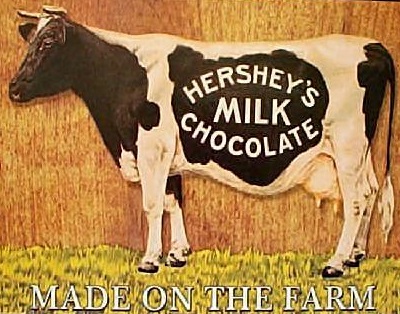
Seven percent of all American adults believe that chocolate milk comes from brown cows, according to a nationally representative online survey commissioned by the Innovation Center of U.S. Dairy, reports the Washington Post. The writer then goes on to explain why this “surprising result” occurred. The main thesis: Americans are now so far removed from farm and food production that ignorance is epidemic.

I have no doubt that too many kids aren’t properly informed by the adults in their lives about basic facts of food and agriculture., just as I know that the average American has trouble placing the Civil War and World War I on a timeline, can’t name more than ten Presidents, and thinks JFK was “great.” I also have no doubt that 7% of the American public is dumber than a box of whoopie cushions.  Taking a poll result like this one at face values, however, shows why the news media was so sure Hillary Clinton would win.

Ann Althouse nailed it in a brief post she calls : “There’s nothing dumber than forgetting that other people might have a sense of humor and are screwing with you.”:

“When you’re studying something among people you look upon as commoners, you’d better stop and wonder: Am I the Margaret Mead?”

(If you are unfamiliar with the Mead reference, this will help.) Continue reading

Comment Of The Day: “Facebook User Ethics : Don’t Spread Panic, And Don’t Make Your Friends As Ignorant As You Are”

The post on Facebook hysteria over the U.S.’s decision to withdraw from the largely symbolic Paris climate change accords has drawn perplexing commentary. The post did not assert a position on climate change, nor did it defend the reasons given for the withdrawal.  The post simply stated that it was irresponsible and dishonest to claim dire consequences of the decision when the accord itself is almost entirely symbolic, requires nothing, in the sense that there are no enforcement mechanisms, and can’t possibly carry the existential weight that social media, politicians, pundits and activists are claiming. It is all appeal to emotion and ignorance.

And it is. Especially since most of the social media hysterics haven’t read the accord and are illiterate regarding climate science.

And they are.

I guess I knew that both climate change flacks and those suspicious of them would shift gears into the messy issue itself and its controversial research and models. The dreaded (and misleading) “97% of all scientists” stat even made its appearance, although, again, it was irrelevant to the post.

Finally, Zoltar Speaks!, Popeye-like, declared that “I ain’t gonna take it, ’cause I can’t take no more!” after a side debate over whether the infamous hacked e-mails among climate-change researchers “proved” that there was a conspiracy to distort the science on climate change (no,  they prove that the scholarly research community members are not as objective and independent as they are professionally obligated to be, and that this makes their conclusions inherently untrustworthy). He produced an epic essay in response, so long and detailed that he posted it on a satellite blog. With his permission, I am posting it in it’s entirety here.

Here is the Zoltar Speaks! Comment of the Day on the post, “Facebook User Ethics : Don’t Spread Panic, And Don’t Make Your Friends As Ignorant As You Are” … Continue reading