Picking Through The Wreckage of An Ethics Tesla Wreck

The wreck participants. Not pictured: the Tesla.

The wreck participants. Not pictured: the Tesla.

There was questionable ethical conduct galore in the recently-stilled ethics wreck sparked by a New York Times review of the new Tesla electric car, the Model S. Times reporter John Broder test drove the car from Washington, D.C., to Boston, using the  charging stations Tesla has opened along the way.  Broder’s Tesla ran out of juice, and the article concluded with a sad photo of the highly-anticipated Model S  on a tow truck. In short, it was not a positive review.

In response to the review, Tesla’s CEO Elon Musk called it a “fake” on Twitter, then wrote a rebuttal using the data logs of the vehicle Broder tested. Broder wrote a rebuttal to the rebuttal, and eventually the Times “public editor” (others would call her its ombudsman), Margaret Sullivan, was drawn into the battle, performing an investigation and concluding that…

“…I am convinced that [Broder]  took on the test drive in good faith, and told the story as he experienced it. Did he use good judgment along the way? Not especially. In particular, decisions he made at a crucial juncture – when he recharged the Model S in Norwich, Conn., a stop forced by the unexpected loss of charge overnight – were certainly instrumental in this saga’s high-drama ending. In addition, Mr. Broder left himself open to valid criticism by taking what seem to be casual and imprecise notes along the journey, unaware that his every move was being monitored. A little red notebook in the front seat is no match for digitally recorded driving logs, which Mr. Musk has used, in the most damaging (and sometimes quite misleading) ways possible, as he defended his vehicle’s reputation…People will go on contesting these points – and insisting that they know what they prove — and that’s understandable. In the matter of the Tesla Model S and its now infamous test drive, there is still plenty to argue about and few conclusions that are unassailable.”

Perhaps realizing that his vigorous defense of his car had triggered the Streisand Effect, Musk took to Twitter again, this time saying that the ombudsmadam’s article was “thoughtful” and that his faith in the Times was hereby restored. This put a nicely disingenuous spin on the whole episode.

Here is the final ethics tally: Continue reading
Tricking Yourself Into Being More Ethical

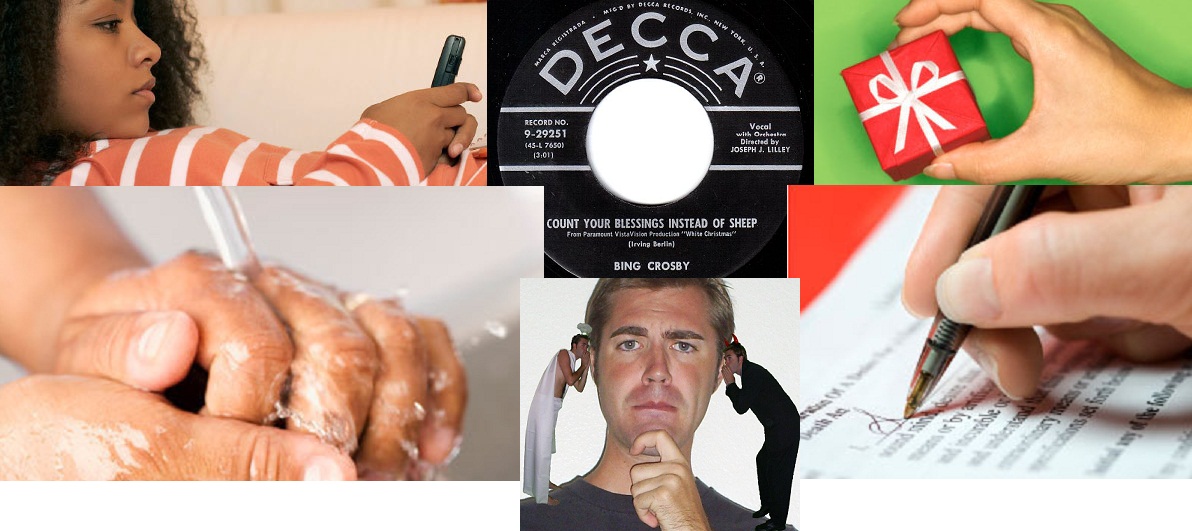
Cracked 5 waysOver at Cracked, the website that excels at developing clever factoid lists and debunking conventional wisdom, they have posted a list of “5 Scientific Ways To Trick Yourself Into Being A Good Person.”

Uh-huh. As usual for this site, the headline is just a bit overstated. “Trick” is a misleading word here: most of the devices involve the phenomenon of priming, which basically means that we are more ethical the more something focuses our attention on the ethical implications of what we are doing. By Cracked’s definition of “trick,” Ben Franklin’s morning and evening questions are tricks.

Skepticism is also warranted because we are just getting summaries of studies, and brief, non-technical, non-critical ones at that. It is impossible to know what extraneous factors might have polluted the results, or what biases the researchers brought to their research. Social science research is notoriously fallible and subject to design flaws, particularly regarding sample size. Such research is also prone to confuse cause and effect. I am especially dubious of #2 on the list, “Washing Your Hands Makes You Less Prejudiced.” Yes, researchers found that those who chose to use sanitary wipes on their hands when given the option during a flu epidemic scored better after doing so than those who declined to sanitize when they were asked to answer a survey designed to measure prejudice. I think it is a logical stretch to conclude that the act of ridding their hands of germs washed away the subjects’ biases; it is more likely that those who were more considerate of people around them, as indicated by their interest in sanitizing their hands during a flu outbreak, were also the most empathetic, tolerant and unbiased to begin with. That result isn’t nearly as startling as the claim that handwashing magically heals one’s prejudices, but Cracked apparently needed something to fill out a list of four.

It’s still an interesting article, even though ethical conduct takes a lot more cognitive effort than “tricks.”. You can read the whole thing here.

Ethics Quiz: The Professor, the Plot, and the Prisoner’s Dilemma

Prisoner's Dilemma

The Prisoner’s Dilemma

Professor Peter Frölich teaches “Intermediate Programming,” “Computer Science Fundamentals,” and “Introduction to Programming for Scientists and Engineers” at Johns Hopkins University. He uses a grading system in which the top score in any exam defines an A, and all other scores are graded down from that point (I like that system, by the way).

His students in all three courses hatched an ambitious conspiracy to ensure A’s for everyone.  They all agreed to refuse to enter the exam rooms, so the top score, and only score, anyone could get would be zero. Since the grading curve would have to start with that, they reasoned, everyone would have to get the top grade. The students stringently enforced their plot, apparently, and nobody broke ranks. Continue reading

Slow Loris Ethics: Great, Now Even The Smithsonian is Hyping!

Slow Loris

If we can’t even trust the Smithsonian not to lie to us, what hope is there?

The February issue of the Smithsonian magazine arrived, full of articles about origins and evolution. I immediately gravitated to the essay about komodo dragons, whose bite, as those of you who have been bitten by one know, is poisonous. In a colorful sidebar to the main article was a smaller note about the wide range of other animals that poison their victims, titled “Pick Your Poison.”

“The komodo dragon may be the newest addition to the elite corps of predators that kill with chemistry, but the venomous world is already more diverse than people realize,” it began. The note was illustrated by photos of a duck-billed platypus (owner of a leg spur with a poison gland that gives the thing quite a kick); the tiny Pacific cone snail, which can kill a human; the black mamba, the snake that had a co-starring role as an assassin in “Kill Bill, Part 2,” and…a slow loris???

The little, big-eyed, furry, cute Asian primate is venomous? That was a surprise. The article included no details, just noting that the slow loris was the only “venomous primate.” I managed to pass along this information as fact to my wife and two friends before bedtime (it takes so little to excite me these days!), and this morning dived into the web to learn the details of the slow loris’s poison. What I discovered was even more shocking than the original note. The Smithsonian magazine was hyping, and badly at that.

To begin with, there is a difference between venomous animals and poisonous ones. “Venomous” means that the creature injects toxin into its prey, through a sting, a bite, or other means. “Poisonous” means that the animal carries some kind of toxin that the prey ingests, absorbs or inhales, occasionally fatally. The Smithsonian article ignores this distinction for sensational purposes, as the title “Pick Your Poison” suggests. But the slow loris, which is definitely not venomous,. and  it isn’t really poisonous either. Continue reading

Dog Racism Update: A Definitive Defense of Pit Bulls

Nanny dog1

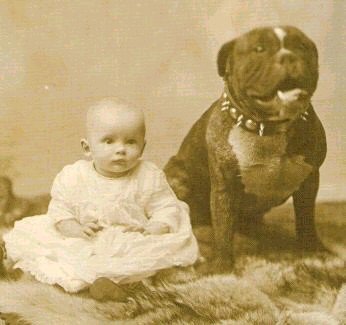
Ethics Alarms has discussed the unfairness, bigotry and ignorance behind the vilification of pit bulls and related breeds on many occasions: here, here, here , here, and here. Now Joshua Holland has written an excellent primer in Salon for the pit bull-phobics to chew on, and he did a superb job of debunking the illusion that this is a monstrous breed rather than what it really is, an uncommonly delightful one.

Among the highlights…

  • “Pit bulls are the dog of choice for irresponsible breeders, dog-fighters, people who want a tough-looking dog to tie up in their yard and those who refuse to have their male dogs… 86% of fatal canine attacks involve an unneutered male, according to the American Humane Society.”
  • “A 2009 study in the Journal of Forensic Science, found that the owners of vicious dogs, regardless of the breed, had “significantly more criminal behaviors than other dog owners”…According to the ASPCA, “Pit Bulls often attract the worst kind of dog owners.”
  • “We have tragically betrayed our children’s beloved nanny-dogs, raising them irresponsibly, training them to be aggressive and then turning them into pariahs when they behave as any dog would in similar circumstances.” Continue reading

Be Very Afraid: Why Fake Statistics Become “True”

"Those nachos were COLD!!!"

“Those nachos were COLD!!!”

Last week, I wrote about how fake statistics become “true,” after Gabriella Giffords’ husband Mark Kelly asserted as fact that “85% of all children killed by gunfire worldwide die in the U.S.” while ABC’s Diane Sawyer tut-tutted approvingly. Credible advocate, shocking statistic, passive, lazy and biased journalist, politically correct objective—all the elements were in place. We will hear this lie for decades now, probably in a future Presidential debate.

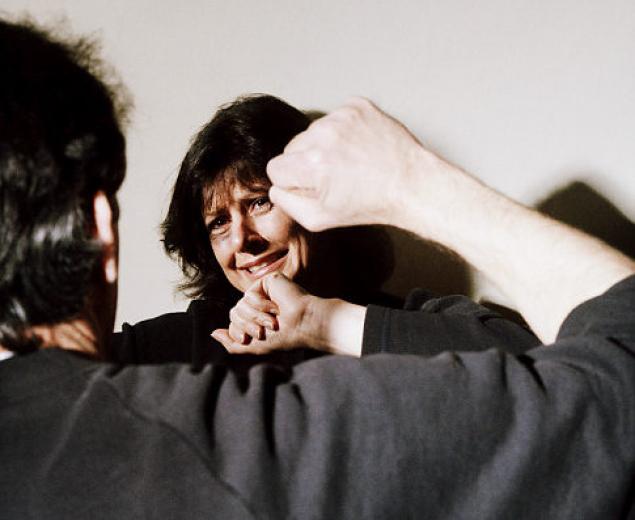
Now the perceptive and watchful James Taranto of the Wall Street Journal has found a smoky gun that tells us much about why we get so many bad statistics, and why the media supports them. A U.S. World and News Report article combined the recent passage of  the Violence Against Women Act with the upcoming Super Bowl, to get this:

“Urban myths rarely have a useful purpose other than to confound, outrage, and frighten people into passing them along. But there’s a silver lining to this one—the idea that Super Bowl Sunday is linked to the highest incidences of domestic abuse in the country. While experts in the field dismiss that theory, they value the increased attention paid to domestic violence on the occasion.

“‘The Super Bowl does not cause domestic violence, and it doesn’t increase domestic violence, but it does increase the public’s awareness of the issue, which will help victims learn about help and resources,” says Cindy Southworth, vice president of development and innovation at the National Network to End Domestic Violence.'”

Oh. Well then the lie is all right then! Continue reading

How Fake Statistics Become “True”: A Case Study From The Newtown Massacre Ethics Train Wreck

As predicted, this ethics train wreck keep getting bigger.

As predicted, this ethics train wreck keep getting bigger.

There was a lot to wince about in Diane Sawyer’s “exclusive” interview two weeks ago with former Congresswoman Gabriella Giffords and her husband, Mark Kelly. The Arizona couple announced their intention to launch a non-profit organization dedicated to more effective anti-gun violence measures, concentrating, predictably, on the prominent features of the maniac’s rampage in Tucson that left Giffords with brain injuries that will impede her for a lifetime. Nothing to wince about regarding the effort, but Giffords’ diminished state—she can speak in only short burst of words, cannot see well out of one eye, and has difficulty walking—is tragic. It reminded me how unconscionable it was that she held her post in the Congress for more than a year when it should have been clear that her disabilities precluded her functioning as a Representative. The disturbing feeling also arose that Giffords, in her current pathetic condition, is now like the children President Obama used as window dressing for his gun-related Executive Orders announcement at the White House, an exploited figure of sentiment and public manipulation being used in the anti-gun wars. Her name was listed as the author of a first person op-ed in USA Today that contained sentences and perhaps thoughts that she cannot possibly compose. Diane Sawyer told us that she will be dragged into Congressional offices with her husband to seek support from her former colleagues, who will be forced, as Sawyer said, to say no “to her face.”

The most substantive wince, however, came from a statement of “fact” by Mark Kelly, who told Sawyer this:

“You know, how do we get to the point where 85 percent of the children in the world that are killed with guns are killed in the United States. That is a sobering statistic.”

Sobering, and obviously nonsense. Continue reading

Ethics Hero: Stanford Law Prof. Pamela Karlan, Pulling A McLuhan

One of the funniest moments in Woody Allen’s Academy Award-winning comedy “Annie Hall” is the classic scene in which Woody squelches a pompous know-it-all standing in line behind him at a movie theater. The man is holding forth on film criticism and finally begins pontificating on the theories of Marshall McCluhan, a Sixties media scholar most famous for the quote, “The media is the message.”  Woody acts out everyone’s fantasy who has had to listen to strangers blather on about topics they aren’t qualified to discuss by magically producing the real McCluhan to confront the man. “You know nothing of my work!,” McLuhan tells the shocked pedant.

Today Stanford law professor pulled a McCluhan on none other than George Will, who, she pointed out in a letter to the Washington Post, recently used her law review article to bolster his position by substantially misrepresenting—or misunderstanding–what it actually said:

“Mr. Will’s column distorted my Harvard Law Review article in details both large and small. Yes, the Framers of our Constitution intended to limit the federal government’s power to protect liberty. But they also crafted the new Constitution to empower the government to deal with critical problems. For much of our history, the Supreme Court recognized congressional resourcefulness as a source of our nation’s strength. By looking only to James Madison and 1787, Mr. Will ignored the post-Civil War 14th Amendment, which explicitly authorizes Congress to enforce guarantees of liberty and equality.

“As for my discussion of the court’s Citizens United ruling, I did not attack “spending by outside groups,” as Mr. Will wrote. Rather, I pointed out only that there has been a significant increase in such spending (much of it in forms that leave voters in the dark as to who bankrolled the messages they hear) and that reasonable people can disagree about whether this is good for democracy.

“Finally, for someone who prides himself on his linguistic precision, Mr. Will’s attack is particularly tone-deaf. “Disdain” means “scorn” or “contempt.” Nothing in my article expresses scorn or contempt for the court or for judicial review. I — like many other Americans, including some of their colleagues and many of their predecessors — simply disagree strongly with the approach some justices have taken and the conclusions they have reached in some recent cases.”

Take that, George! Continue reading

Yahoo Flunks A Confirmation Bias Test

Just as you always suspected: THIS is the average Fox News viewer.

Just as you always suspected: THIS is the average Fox News viewer.

Be honest now: If you were a news editor and this press release came across your desk, what would you think? What would you do?

Birmingham, Alabama (PRWEB)

December 04, 2012

The results of a 4 year study show that Americans who obtain their news from Fox News channel have an average IQ of 80, which represents a 20 point deficit when compared to the U.S. national average of 100. IQ, or intelligence quotient, is the international standard of assessing intelligence. Researchers at The Intelligence Institute, a conservative non-profit group, tested 5,000 people using a series of tests that measure everything from cognitive aptitude to common sense and found that people who identified themselves as Fox News viewers and ‘conservative’ had, on average, significantly lower intelligent quotients. Fox Viewers represented 2,650 members of the test group.

One test involved showing subjects a series of images and measuring their vitals, namely pulse rate and blood pressure. The self-identified conservatives’ vitals increased over 35% when shown complex or shocking images. The image that caused the most stress was a poorly edited picture of President Obama standing next to a “ghostly” image of a child holding a tarantula. Test subjects who received their news from other outlets or reported they do not watch the news scored an average IQ of 104, compared to 80 for Fox News viewers. Continue reading

Untrustworthy NIH

This is what the horror movie outbreak looked like. The real one? We don’t know.

In Barry Levinson’s (terrific, scary) eco-horror movie “The Bay,” slug-like sea creatures mutated by toxic waste eat their way through the faces and bodies of the residents of a Chesapeake Bay community, as medical authorities carefully keep the story under wraps from the rest of Maryland and the nation. At the National Institutes of Health Clinical Center in Bethesda last year, a different kind of monster bug was on the loose: the antibiotic-resistant bacteria known as Klebsiella pneumoniae.  For six months the bacteria spread, eventually infecting 17  NIH patients, killing at least six of them. Doctors took extraordinary precautions to keep the so-called “superbug” from getting out into the population, but such measures didn’t include telling the city, county or state what was happening, or informing non-physician staff, many of whom were at risk of infection, about the bacteria outbreak. The full story didn’t come to light until August of this year, when NIH researchers published a scientific paper describing the advanced genetic technology they used to trace the outbreak. Continue reading