Ethics Quote of the Week: Michelle Marie Gopaul

"But I'm not a bad person!"

Everyone thinks I’m a bad person but I’m not a bad person.

—- Actress/model/child-stealer Michelle Marie Gopaul, pleading guilty in a Toronto court to one count of child abduction. Gopaul, 25, was arrested Dec. 31 after police recovered one-month-old Roma Patel. The baby disappeared four hours earlier at  a western Toronto production studio during a fake casting call set up by Gopaul to  attract a baby for her to steal.  The child”s parents had responded to an ad on Craigslist that offered $15,000 in compensation for allowing their baby to be used in a film. Continue reading

Ethics Star and Ethics Hero Emeritus: Elizabeth Taylor, 1932-2011


You did good, kid! Thanks.

I appreciated Elizabeth Taylor, who died yesterday, as a movie star, though I was never a fan. That she was astonishingly beautiful, there is no doubt, an actress who defined the word “voluptuous” when it didn’t mean”implants.” Like many of the Golden Age stars, acting was secondary with Taylor, who had such on-screen presence that she could steal a movie ( “Cat on a Hot Tin Roof”) from the likes of Paul Newman, Burl Ives, Judith Anderson, and yes, Tennessee Williams by just lounging around in a slip. Her best adult performance was probably her first, “A Place in the Sun”; her Oscars were more or less frauds, the first (“Butterfield 8”) as a film community gesture of sympathy for her health problems, and the second, for “Who’s Afraid of Virginia Woolf,” as one of those nods for playing against type without embarrassing yourself that Hollywood likes to bestow on its favorites. Continue reading

The SATs: Flat Learning Curve=Unfair Questions

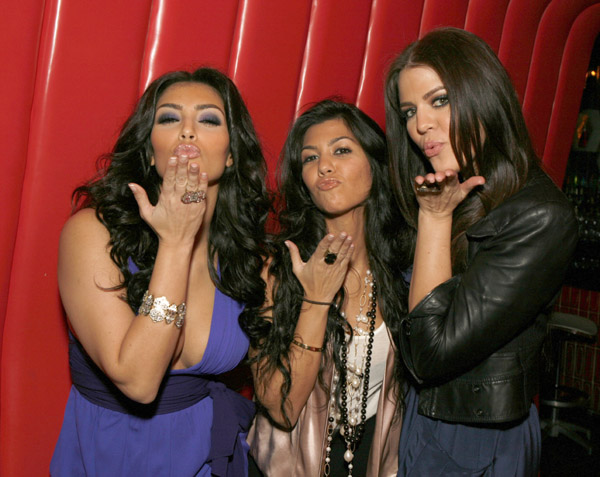
The secret to acing your SATs? Know your Kardashians!

After all the anger, debate and controversy in the Sixties over affirmative action and the Scholastic Aptitude Tests, with the case finally being made to the public’s satisfaction that including test questions  based on cultural references likely to be unfamiliar to African-Americans or lower-income students (such as, famously, questions about yachting) negatively affected their test scores, wouldn’t you think that it would have been thoroughly understood by the people who make up the SAT scores that questions with a cultural bias were inherently unfair and incompetent questions?

Here is the prompt for the essay question in the SAT test given to high school students across the country last week : Continue reading

Ethics Quiz: Find The Tell-Tale Mistake!

Unfortunately, James O'Keefe is no Nellie Bly

Kansas City Star reporter Mary Sanchez has posted an excellent column entitled “James O’Keefe and the Ethical Bankruptcy of ‘Gotcha’ Journalism.” Outside of an unfortunate final “Let’s see some genuine evidence that NPR’s coverage is biased” conclusion (you mean, other than its choice of stories, its lack of ideological balance, Nina Totenberg, its treatment of Juan Williams, and its institutionalized positions on issues like Palestine, gun control, abortion,  and illegal immigration?), she makes a strong case. But her piece is marred by a tell-tale gaffe that makes me doubt her own ethical orientation.

Your challenge in today’s Ethics Quiz: Find it! It occurs in this section: Continue reading

Ethics Alarms Presents: The Top Ten Thought Fallacies That Undermine Our Ethics

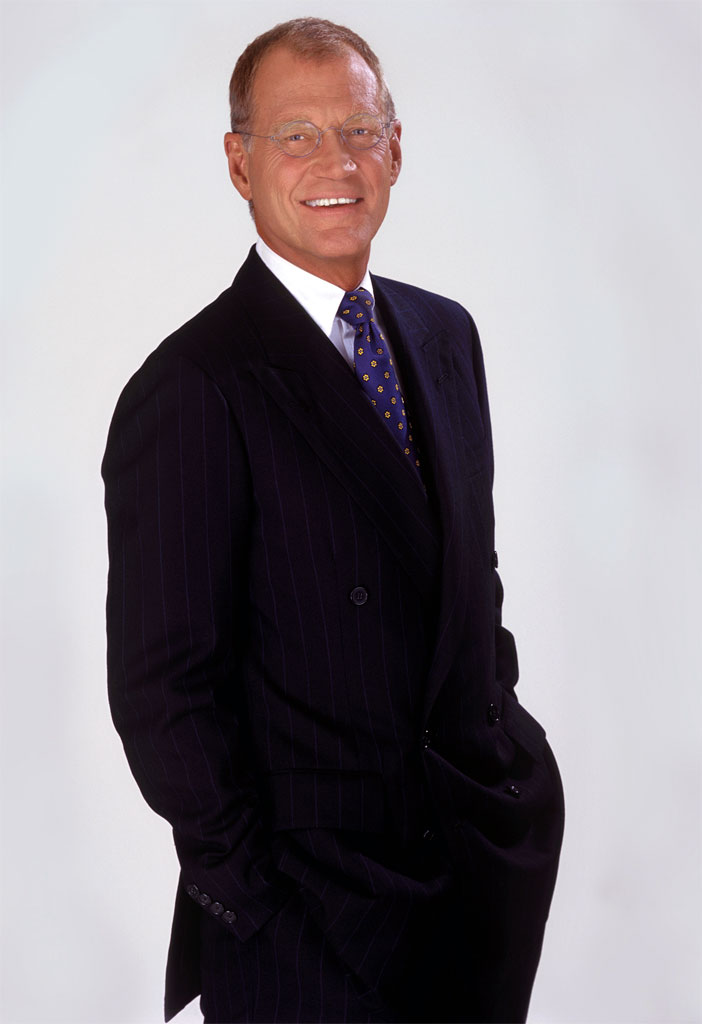
Don't expect this list from Dave. ESPECIALLY not from Dave...

Today I’m teaching two ethics seminars for The Washington Non-Profit Tax Conference in D.C. One is on accounting ethics, the other is for lawyers. One segment in the accountants’ program involves the sub-conscious and genetically programmed human tendencies that can interfere with our better judgment and perceptions, warping our ethics, and causing our ethics alarms to sound faintly, if at all. There are a lot of them:  I have a list of more than thirty, and it’s growing. Here are my current Top Ten to be especially alert to, in your own thinking, and for understanding the behavior of others: Continue reading

Comment of the Day: “Facebook Wars II”

Though not strictly an ethics comment, Mary’s theory about why school administrators are engaging in so much ethically dubious conduct is provocative and has the ring of truth. Here is her Comment of the Day, on the post “Facebook Wars II: More School Abuse of Power and Privacy“:

“A number of years ago, while extracting myself from a bad relationship, a therapist friend told me that the more healed and “normal” I became, the more outrageous and pathological my ex-partner’s behavior would be, in a psychological attempt to pull me back into the relationship.

“I sometimes think the same thing applies to social relationships and organizations. As they lose their relevancy and people withdraw and move on to new social structures, those invested in the old organizations thrash wildly to maintain an ever crumbling status quo. Continue reading

Home-Grown Mengeles, And What We Must Learn From Them

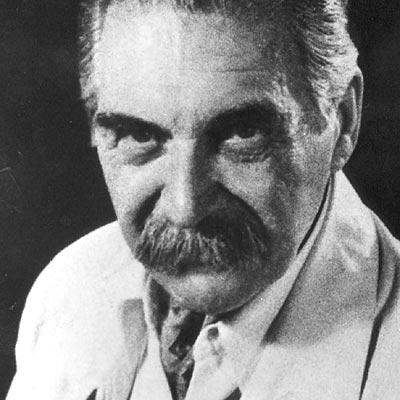
Josef Mengele: researcher, utilitarian, monster

We knew, or should have known, that this extremely ugly shoe was bound to drop eventually.

Last autumn, when the U.S. apologized for federal doctors infecting prisoners and mental patients in Guatemala with syphilis 65 years ago, it put us on notice that a vile and unethical cultural standard had taken hold of the American medical and scientific communities in the 20th century, one that held  it was “right” for the weakest, most powerless and most disposable of human beings to be tricked, coerced or bribed into serving as subjects for experiments that could lead to miraculous cures and treatments for the rest of the population. This–depriving human beings of their rights and lives in the interest of science—is “the ends justify the means” at its worst. But the Guatemala experiments proved that this was once flourishing and respectable in the U.S. scientific and medical research communities, so it would have been surprising if there weren’t more stories of home-grown Mengeles, and sure enough, there were. The U.S. acknowledged as much when it apologized for the Guatemalan tests. Now we have details. Continue reading

ABC News Breaches Its Duty Not To Make The Public Stupid

Give generously to save victims of ABC's "This Week."

On ABC’s Sunday public affairs show “This Week,” the usually admirable Jake Tapper breached the broadcast journalist’s duty not to promote logically flawed arguments that will make the public dumber than it already is.

Debating with his guests the merits of Wisconsin Governor Scott Walker’s efforts to severely reduce the collective bargaining rights of public unions, Tapper cited an intellectually dishonest New Republic article by Joseph McCartin which used data from the Bureau of Labor Statistics to make this statement: Continue reading

A Shocking Farewell Confession From “The Ethicist”

In Randy Cohen’s farewell column for “The Ethicist” today—he was sacked by the new editor of The New York Times despite providing an entertaining, well-written and provocative column for many years— he makes a statement that I find shocking, and one that challenges the core assumption of this blog and indeed my occupation.

Writing the column has not made me even slightly more virtuous. And I didn’t have to be: it was in my contract. O.K., it wasn’t. But it should have been. I wasn’t hired to personify virtue, to be a role model for the kids, but to write about virtue in a way readers might find engaging. Consider sports writers: not 2 in 20 can hit the curveball, and why should they? They’re meant to report on athletes, not be athletes. And that’s the self-serving rationalization I’d have clung to had the cops hauled me off in handcuffs.
What spending my workday thinking about ethics did do was make me acutely conscious of my own transgressions, of the times I fell short. It is deeply demoralizing.

Amazing. Randy, we hardly knew ye, and we sure didn’t understand ye, either. How can someone possibly spend one’s working day “thinking about ethics” and not become more virtuous in his daily conduct? Continue reading