Observations On The Chicago Trump Rally Protests

Trump rally riot

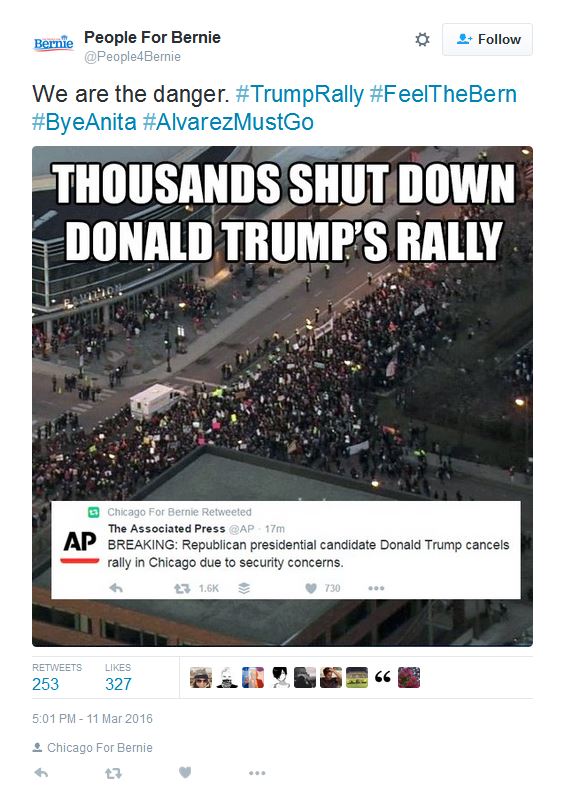
Donald Trump postponed a rally in Chicago after fights between supporters and demonstrators and protests in the streets convinced him that the event could no longer be held safely. “People For Bernie,” a pro-Sanders group that grew out of the Occupy movement, claimed early credit for shutting down the rally. Later, the left-wing sophomores at Move-On.Org announced that they were responsible, their leader, Illya Sheyman, stating,

“Mr. Trump and the Republican leaders who support him and his hate-filled rhetoric should be on notice after tonight’s events. These protests are a direct result of the violence that has occurred at Trump rallies and that has been encouraged by Trump himself from the stage. Our country is better than the shameful, dangerous, and bigoted rhetoric that has been the hallmark of the Trump campaign. To all of those who took to the streets of Chicago, we say thank you for standing up and saying enough is enough. To Donald Trump, and the GOP, we say, welcome to the general election. Trump and those who peddle hate and incite violence have no place in our politics and most certainly do not belong in the White House.”

Observations:

1. Trump was right to postpone the rally. It is true that this kind of anti-democratic speech censorship should not be encouraged by giving protesters a success from their unethical tactics, but violence was likely.

2. The protesters, whoever they were, are completely responsible for the incident. Blaming it on Trump’s “hate speech” and “irresponsible rhetoric” is a transparent rationalization. He has a right to hold a private event and say anything he wants to say. This is unequivocal.

3. Has Trump been playing with fire by taunting protesters in other events? Yes. He’s a jerk. That’s a reason to not vote for him for President, not to blame him when the left’s fascists disrupt his rally. Continue reading

Ethics Alarms Ringing: A Judge Orders Citizens to Undergo “De-Radicalization”

"You WILL feel differently about guns!"

In Minnesota, Zacharia Yusuf Abdurahman, Abdirizak Mohamed Warsame, Abdullahi Mohamud Yusuf, and Hanad Mustafe Musse  pleaded guilty to federal charges of conspiracy to provide material support to ISIS. The defendants  charged last April following an investigation into a network of young Somali-Americans  involved in  ISIS recruitment  in Minnesota. ordered the four to undergo an evaluation by a visiting German scholar, Daniel Koehler, director of the German Institute on Radicalization and Deradicalization Studies in Stuttgart. His  evaluation of the men will factor into Davis’ sentencing decisions, and will  form the basis of a “de-radicalization program” to rid the men of  their radical ideology.

The Star Tribune reports that the program will be the first of its kind in the United States. (Well that’s a relief.) Apparently such deprogramming treatments are used to “cure” radical recruits  in Europe, as hundreds of young people have left to join Middle Eastern militants.

Wait, are anyone else’s ethics alarms ringing like crazy? Mine just busted an ear drum. Continue reading

Ethics Quiz: Free The Tampon.Com

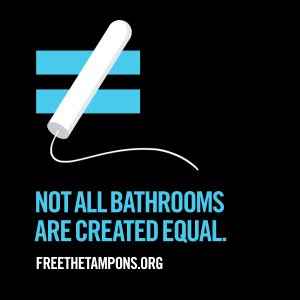
share-not-equal“Tampons and pads should be treated just like toilet paper — they’re the equivalent,” argues Nancy Kramer. She has started Free the Tampons, a campaign to make feminine products accessible in all restrooms. “Menstruation is a normal bodily function, and it should be treated like that.”

This apparently is a new front in fighting the war on women. It’s one more piece of overhead to be passed on to the public, of course.  Are tampons really like toilet paper? Funny, I thought women used toilet paper too. I also thought public hygiene and health laws made toilet paper mandatory because rest rooms in public places are mandatory, and a rest room without tp isn’t worth much. Hard to cram those rolls into a purse, too.

But I’m getting ahead of myself. Your Ethics Alarms Ethics Quiz of the Day is…

Is it unethical for restrooms not to supply free tampons and pads?

Continue reading

Abortion, Ethics, and Whole Woman’s Health v. Hellerstedt

protest SCOTUS

The Supreme Court heard arguments yesterday in a major abortion case, Whole Woman’s Health v. Hellerstedt. The case was brought by several Texas abortion clinics and three doctors who perform abortions in the state. They seek to strike down two restrictions in a law enacted by the Texas Legislature in 2013 that requires all abortion clinics to meet the standards for “ambulatory surgical centers,” including regulations concerning buildings, equipment and staffing, and also requires doctors performing abortions to have admitting privileges at a hospital.

Abortion rights groups argue that the restrictions are expensive, unnecessary and specifically designed to put many of the clinics out of business. In fact, the law has already caused many clinics to close. The number of abortion clinics in Texas has dropped  to about 20 from more than 40.

The Supreme Court will measure the law against the court’s 1992 decision in Planned Parenthood v. Casey, which held that states were not permitted to place undue burdens on the constitutional right to an abortion before the fetus was viable. Undue burdens, include “unnecessary health regulations that have the purpose or effect of presenting a substantial obstacle to a woman seeking an abortion.”

Legally, it’s a tough case, like all SCOTUS cases. Ethically, it’s pretty repugnant. All of the supporters of the bill, including the drafters, are adamantly anti-abortion, though the law is ostensibly aimed a making abortions safer. While the briefs to the court argue that the restrictions were put in place to foster safety, it’s a sham argument, crafted to meet the Casey test. Make no mistake about it: the purpose of the law is to make abortions as difficult to get performed in Texas as possible. There are literally no lawmakers behind the law nor supporters of the law who don’t want abortion banned. What a coincidence! Yesterday, at the huge demonstrations in front of the Court, the groups weren’t divided into  “Safer abortions” and “More accessible abortions.” The armies were pro- and anti-abortion, and intensely so. Thus the Supreme Court is going to decide if a law designed to interfere with a Constitutional right should be upheld because it can be justified on legitimate medical safety grounds.
Continue reading

The Costs Of Civic Ignorance: We Now Have A Frontrunning Candidate For President Who Wants To Gut Freedom Of The Press

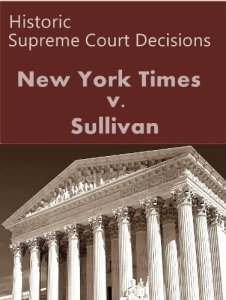
SullivanYesterday, flushed with the fact that polls said he “won’ this week’s debate despite outrageous lying, posturing, and incoherence, Donald Trump said that if elected, he will muzzle journalists with fear of libel suits:

“One of the things I’m going to do if I win… I’m going to open up our libel laws so when they write purposely negative and horrible and false articles, we can sue them and win lots of money.We’re going to open up those libel laws so when The New York Times writes a hit piece, which is a total disgrace, or when the Washington Post, which is there for other reasons, writes a hit piece, we can sue them and win money instead of having no chance of winning because they’re totally protected. We’re going to open up libel laws and we’re going to have people sue you like you’ve never got sued before.”

It’s hard to say what is the dumbest or most alarming thing Trump has said this campaign season, but this is close. To begin with, journalism cannot function under the constant threat of libel suits. This device is already used to bully websites, a form of journalism, and blogs like mine, which don’t have the resources to fight censorious and frivolous suits. Second, the statement proves that Trump is ignorant about the Constitution, ignorant about the law, ignorant about American values—Can you make America great again when you don’t comprehend the culture, traditions or history in the first place? Of course not—and ignorant about the powers of the Presidency, which is fairly shocking for someone running for the office. Luckily for Trump, and unluckily for the country, a lot of Americans are even more ignorant than he is.

Third: this can’t be done unless Trump intends to declare himself Emperor, or something similar. The Supreme Court dealt very emphatically with this issue in the 1964 case of New York Times v. Sullivan, which ruled that win a defamation case against a newspaper (and now, by extension, any journalist), a plaintiff must show four things: 1) a false statement purporting to be fact; 2) publication or communication of that statement to a third person; 3) fault; and 4) some tangible harm  to the person or entity who is the subject of the statement. Public officials and public figures–celebrities, people in the news, reality stars, Bozo the Clown— must show that alleged libelous statements were made with actual malice—that is , they were maliciously intended to harm the subjects and the writer and publisher knew they were false, or were reckless is determining if the were false or not-to recover in an action for defamation.

The standard of proof is also high for libel against the press, and this is to protect the press. A plaintiff must show actual malice by “clear and convincing” evidence rather than the lesser burden of proof in most civil cases, preponderance of the evidence.

Sullivan is a bulwark of First Amendment jurisprudence. It isn’t going anywhere. Conservative justices wouldn’t overturn it; liberal justices wouldn’t touch it. Justice Scalia, brought back from the dead, would declare it untouchable. If there is a single legal scholar who has advocated overturning the case in whole or in part, he or she is an outlier or a crackpot. It was a 9-0 decision. Justice Brennan, writing for the Court, wrote… Continue reading

The States’ Inexcusable Incompetence In Rape Cases

rape kits

If anyone can think of a good explanation for this outrage, please enlighten me.

Massachusetts has a 15-year statute of limitations on prosecuting sexual assault crimes, but the state only requires that untested rape kits be stored for six months.  No state currently provides the victim of an alleged sexual assault the right to require a jurisdiction to retain a rape kit until the statute of limitations expires, and only six states and Washington, D.C., provide a right for the prompt processing of a rape kit.

How can this be? Why wouldn’t it be obvious that as long as it is possible that rape charges can be brought, the relevant rape kit must be preserved? Continue reading

Ethics Jump Ball: What Is An Ethical Reaction To This Story?

Pippa-Bacca

From the BBC (2008):

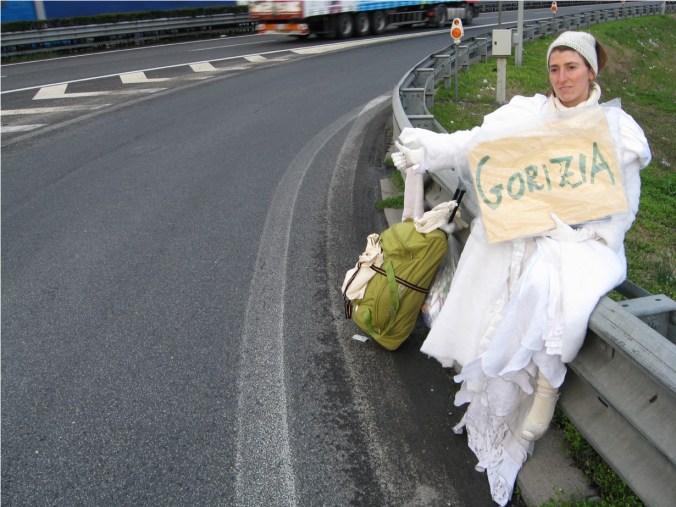
An Italian woman artist who was hitch-hiking to the Middle East dressed as a bride to promote world peace has been found murdered in Turkey.

The naked body of Giuseppina Pasqualino di Marineo, 33, known as Pippa Bacca, was found in bushes near the northern city of Gebze on Friday.

She had said she wanted to show that she could put her trust in the kindness of local people.

Turkish police say they have detained a man in connection with the killing.

Reports say the man led the police to the body.

I think I’ll add my reactions to the comments.

Fragments can be found in the tags.

You go first.

__________________

Pointer: Red Flag

Ethics Quote Of The Week: FCC Commissioner Ajit Pai

First-Amendment-on-scroll1

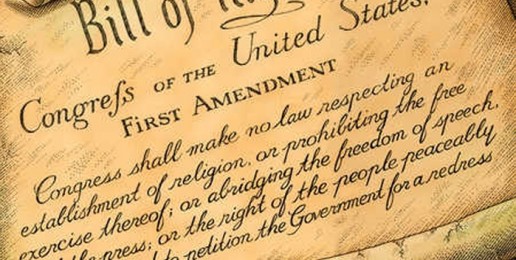
“The text of the First Amendment is enshrined in our Constitution, but there are certain cultural values that undergird the amendment that are critical for its protections to have actual meaning. If that culture starts to wither away, then so too will the freedom that it supports.”

—FCC Commissioner Ajit Pai  to the Washington Examiner, in an interview where he expressed concern that respect for First Amendment principles were diminishing, particularly on college campuses.

Isn’t it fascinating that so many of those who are concerned about the freedom of speech being diminished by political correctness have responded by supporting a Presidential candidate who regularly abuses the right of free speech, and whose response to protesters at his own speeches is to abuse them?

But I digress.

Today’s example of what Pai is talking about comes from California State University Los Angeles (CSULA), where president William Covino, responding to expressions of dismay from the same kinds of students who needed counseling at Rutgers, cancelled a scheduled speech by conservative pundit and Breitbart editor Ben Shapiro, and in a particularly Orwellian touch, did so citing the need for the “free exchange of ideas.” Continue reading

Ethics Observations On Georgetown Law Center’s Scalia Foofarah

Scalia-Georgetown

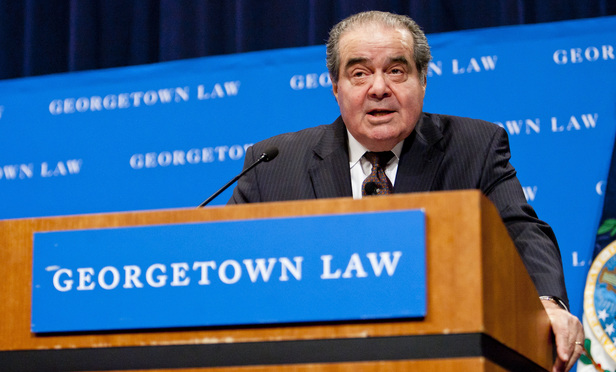
I am a Georgetown University Law Center grad, as well as a former administrator there. I also know and have personal relationships with several members of the faculty. None of this especially informs my ethical analysis of the community argument there that arose from a rather innocuous official expression of respect and mourning in the wake of Justice Scalia’s death, but if anyone wonders why I’m posting about this rather than many other ethics issues nipping at my heels, that’s part of the reason. The other reason is that this academic dust-up raises interesting ethics issues, and has received national publicity.

Observations on the tale as it has unfolded:

1.  Georgetown Law Center issued a press release mourning the death of Antonin Scalia, including a statement from Dean William M. Treanor that read:

Scalia was a giant in the history of the law, a brilliant jurist whose opinions and scholarship profoundly transformed the law. Like countless academics, I learned a great deal from his opinions and his scholarship. In the history of the Court, few Justices have had such influence on the way in which the law is understood. On a personal level, I am deeply grateful for his remarkably generous involvement with our community, including his frequent appearances in classes and his memorable lecture to our first year students this past November. The justice offered first-year students his insights and guidance, and he stayed with the students long after the lecture was over. He cared passionately about the profession, about the law and about the future, and the students who were fortunate enough to hear him will never forget the experience. We will all miss him.”

[Note: In the original post, I missed the first line, and kept missing it. Don’t ask me why. The text has been finally, after a couple botched attempts, been revised to include it.]

Is there anything inappropriate about the dean’s statement? Not in my view. This is nothing but a traditional expression of professional respect on behalf a prominent institutional member of the legal community. There is nothing in the statement, save for the last sentence, that anyone could argue is untrue. Countless academics, as well as Scalia’s more liberal colleagues, did learn “a great deal from his opinions and his scholarship.” He was an influential and significant figure on the Court. Scalia was generous with his time and passion as a teacher, and by all accounts he was a good one.

The opening statement,  “Scalia was a giant in the history of the law, a brilliant jurist whose opinions and scholarship profoundly transformed the law,”  seems to be what rankled Scalia critics. It shouldn’t have. At worst it is standard memorial puffery. But calling Scalia a giant “ in the history of the law” seems fair whether you agree with his jurisprudence or not: he is certainly among the 20 or so most quoted, most debated, and most provocative justices. The rest shouldn’t be troubling to anyone who isn’t suffering from Scalia-phobia. A Justice can be brilliant and transformational while being wrong.

None of the reports of the controversy ignited by this standard issue sentiment mention it, but Georgetown Law Center isn’t on the Georgetown campus. It has its own campus that is a 15 minute walk from the Supreme Court. Law students regularly attend oral arguments; I did: it was one of the great advantages of studying law there. More than any law school, the Law Center has good reason to feel a special affinity to the Court and all its justices.

2.  What about the last sentence? Is it appropriate for Treaner to speak for the law school community and say that “We will all miss him”? He was reasonable and fair to assume that.  Unfortunately, in today’s vicious partisan divide where opinions and sincere positions reached after thought and research are too often treated as proof of consort with Satan, and ion which even lawyers, who are trained not to take legal arguments personally, are frequently unable to respect a colleague for a well-reasoned argument that they may still think is completely wrong, it was not a safe assumption. Pillory the dean, then, for giving all members of his community the benefit of the doubt, and assuming they are capable of grace, compassion, fairness, professional respect and civility.

It’s still not unethical to assume one’s colleagues have some class.

3. They all don’t, unfortunately. Law Center professors Gary Peller and Mike Seidman (I know Mike, never met Gary) then used the Campus Broadcast system, usually used for event announcements, invitations and policy changes, to send a message  to all members of the student body titled, “Responses to Dean Treanor’s Press Release Regarding Justice Scalia.”  Peller’s statement reads,

Like Mike Seidman, I also was put-off by the invocation of the “Georgetown Community” in the press release that Dean Treanor issued Saturday. I imagine many other faculty, students and staff, particularly people of color, women and sexual minorities, cringed at headline and at the unmitigated praise with which the press release described a jurist that many of us believe was a defender of privilege, oppression and bigotry, one whose intellectual positions were not brilliant but simplistic and formalistic….That ‘community’ would never have claimed that our entire community mourns the loss of J. Scalia, nor contributed to his mystification without regard for the harm and hurt he inflicted.”

This was partisan grandstanding of the worst kind. The professors, of course, have a right to proclaim their opinions to the student body any time they want to, but their complaint here was petty and mean-spirited. It also models behavior that is poisonous both to the legal profession and the culture as a whole. The are saying, in essence,We don’t mourn him, we won’t miss him, and we’re glad to be rid of him, because his legal theories aren’t our legal theories, and we are on the side of the angels while he was an uncaring villain.” Such a message accomplishes nothing positive, and much that is destructive. The professors engaged in demonizing, when their profession and their duty is not to denigrate but reason. If they really think they can prove that Scalia was a defender of privilege, oppression and bigotry, they can make that case in a scholarly paper: I doubt that they can. Scalia often defended the rights to engage in conduct that he did not personally support, as well as some he did: the sloppy rhetoric of Seidman and Peller echoes the legally ignorant who accuse criminal defense attorneys of defending robbery and murder. Continue reading

“His WORDS Are Too Horrible to Bear!” Why Is Rutgers Pampering Student Delusions About Free Speech?

"He DISAGREES WITH ME!! ARRGH!! It's too painful to BEAR!!!"

“He DISAGREES WITH ME!! ARRGH!! It’s too painful to BEAR!!!”

It is unethical to make students or their parents pay obscene amounts of money to be rendered incompetent and dysfunctional for the life challenges that face them. Based on this bizarre incident at Rutgers—tuition about $25,000 per year, per student—that is exactly what that esteemed institution is doing. How many others are doing the same?

Journalist Milo Yiannopoulos—that’s being generous: I’d call him a professional troll, or a white, gay Ann Coulter—kicked off his “Dangerous Faggot” tour at Rutgers. He’s an in-your-face, liberal shibboleth-shattering, intentionally provocative rabble-rouser of the hard right, famously banned by Twitter, which now appears to be sucking up to Social Justice Warriors. Milo, who is one of the ugly, culture-scarring mutants created by the radiation emanating from the hyper-partisan environment encouraged by the Obama Administration,  expounded on  gender wage gap myths, feminism, the “rape culture” and Black Lives Matters in as offensive a manner as he could, and he is talented at being offensive. Some 50 students in the audience who were there to bury Milo, not to praise him,  stood up and smeared fake blood on their faces to signal their opposition. Ten protesters left, forty stayed.

Then they had a collective breakdown, or something. The Daily Targum, Rutgers newspaper, reported that following Yiannopoulos’ appearance, students and faculty gathered in the Paul Robeson Cultural Center to discuss their trauma at his words and the reaction to it from students in the audience. “We are here to show support,” was the mantra repeated by nearly every person in the crowd as they introduced themselves, as if voluntarily listening to a hard-right, politically incorrect conservative provocateur was the equivalent of experiencing sexual assault or the death of a child. Continue reading