Ethics Quote Of The Week (“Believe It or Not!” Division): The 2nd U.S. Circuit Court of Appeals

“We fail to see any reasonable connection between this defendant, his conviction more than a decade ago, his failure to fill out paperwork, and the government-mandated measurement of his penis.”

—- The 2nd U.S. Circuit Court of Appeals, rejecting as “extraordinarily invasive”a Vermont sex offender treatment program that required David McLaurin, who was convicted of producing child pornography, to submit to “penile stimulation treatment” as a condition for supervised release. He was shown child pornography images as the blood flow to his penis was measured.

Cheer up, Alex...it could be worse, You could be in Vermont...

Cheer up, Alex…it could be worse, You could be in Vermont…

McLaurin was arrested in 2011 for violating the federal Sex Offender Registration and Notification Act, which requires offenders to register and keep current their address information. He  received a sentence of 15 months imprisonment with five years of supervised release.

“The size of the erection is, we are told, of interest to government officials because it ostensibly correlates with the extent to which the subject continues to be aroused by the pornographic images,” the opinion states, dryly. The testing was apparently developed by a Czech psychiatrist and used by the Czech government as a way to identify and “cure” homosexuals.

Uh, yes, I’d say the court got this one right.

Unbelievable.

______________________

Facts: ABA Journal


The Ethics Of Demanding Charity

Joanna Leigh

Joanna Leigh

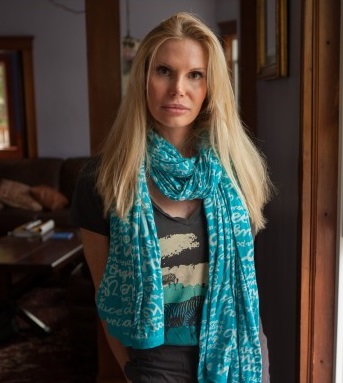
I can not imagine much more heartbreaking plights than that of Boston Marathon bombing victim Joanna Leigh.

By April 14, 2013, Leigh, 39, had a newly minted doctorate in international development, and a promising career as a consultant. On April 15, she was at the finish line of the marathon, waiting for a friend to cross it, when the second of two bombs exploded ten feet from her. She was shielded from the deadly flying metal by other spectators, but still knocked unconscious. When she awoke, there was chaos around her, people screaming, maimed, covered with blood. She helped some injured find help, and then, dazed, walked home. For various reasons, she did not get herself checked out at a hospital until more than a week had passed.

Gradually, however, the symptoms of her injuries began appearing. Soon, it became obvious that the closed head injuries she suffered in the explosion have caused devastating long-term damage to her brain, and it is doubtful that her life will ever be normal again. Today, she says, she has to sleep most of the day. She cannot work or drive, and is easily disoriented, even getting lost on her own block. She has blurred vision, her hearing is impaired and she cannot avoid the constant ringing in her ears. Concentration has become difficult, and the simplest everyday tasks are overwhelming.   Continue reading

Question: Why Is Supporting The Use Of Children As Soldiers Better Than Using Torture In Interrogations?

child-soldier5

The Child Soldiers Prevention Act of 2008 requires the United States to withhold any form of aid from nations that use children in their armies, a clear human rights violation.  President Obama  waived the provision in 2010, as Samantha Power, then the National Security Council senior director for multilateral affairs and human rights, assured the media and the nation  that “the waivers would not become a recurring event.” By the terms of the law, the President has to notify Congress that he is waiving it within 45 days of making the decision. Monday afternoon, with Congress on the eve of a government shutdown and knowing that any such announcement would be largely ignored by the public and the press, the White House press announced yet another waiver of the law The new Child Soldiers Prevention Act waiver applies fully to Chad, South Sudan and Yemen. Congo and Somalia received partial waivers.

Here’s the text of the Presidential determination, signed by Mr. Obama: Continue reading

Encore: “The Ethics of Letting a Lying Defendant Testify”

"Objection! The defendant's pants are clearly on fire!"

“Objection! The defendant’s pants are clearly on fire!”

I’m in Ohio today, talking about legal ethics with a large law firm, and the discussion there turned to the difficult problem of the lying criminal client. Here is a post on the topic from the early days of Ethics Alarms, slightly updated, and the disturbing thing is that we are no closer to finding a satisfactory and ethical solution to the problem.

What do you do when your guilty client wants to claim he’s innocent in the witness chair, under oath? Continue reading

The Truth Behind School Anti-Gun Madness: In The Battle of the Razors, Occam’s Beats Hanlon’s

"GUN!!!!!!!!!!!!!!!"

“GUN!!!!!!!!!!!!!!!”

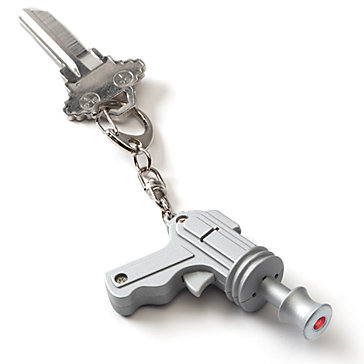
My parents once gave me a tie clip with a tiny derringer on it, which I wore to school frequently. Occasionally, I loaded it…you see, the gun took a miniscule cap, and when you pulled the trigger, the report was shockingly loud. Had this been the kind of itsy-bitsy gun that 12-year-old Joseph Lyssikatos had on his key chain (his gun was slightly larger than a quarter; mine was slightly smaller than a nickel), then his school might have had a valid reason to object. But it wasn’t. His gun was a decoration only, but it didn’t stop the school from suspending him for three days.

I’ve been pretty dense about these cases, I must admit. I used to think it was just no-tolerance idiocy, merged with post-Sandy Hook paranoia, that was behind all of the silly news stories. It finally dawned on me that it is far more sinister than that: this is a deliberate and relentless process of state indoctrination. The schools, teachers and administrators are determined to make  future generations of Americans just as fearful and negatively disposed toward guns, and thus toward self-sufficiency and the Second Amendment, while pushing them to embrace complete dependence on a government that cannot be depended upon, and trust in a government that has proven progressively more untrustworthy. Continue reading

Are Universities Ethically Obligated To Tolerate Professors Who Embarrass Them By Saying Idiotic And Offensive Things?

Apparently the answer to the above is “Yes.”

"Duh!"

“Duh!”

If the university is a state school, then for it to fire a professor who makes ridiculous, foolish or hateful statements that make people wonder why they should ever entrust the minds of their tender charges into an institution that would knowingly hire cretins and jackasses to pollute student RNA, then this is probably a First Amendment violation, since it amounts to the government punishing speech and chilling free expression. If, on the other hand, the university involved is not a state school, then to send a professor packing because he or she has rammed his or her foot down his or her throat up to the knee is a violation of the crucial principle of academic freedom, which is, in brief, that to encourage the free discussion of ideas on a college campus, education being the purpose of the institution, literally no idea, point of view or position should be blocked or chilled by substantive negative action.

Three cases of recent vintage illustrate the university’s plight: Continue reading

The Klan’s Birthday Cake, Individual Boycotts And The Ethics Of Refusing to Give Service To Jerks

"Happy Birthday to You! Happy Birthday to You! Happy Birthday, Dear Racists..."

“Happy Birthday to You! Happy Birthday to You! Happy Birthday, Dear Racists…”

[UPDATE: Apparently, the “news story” that prompted this post is a fake. In that case, I want to thank the hoaxers for  inadvertently sparking a useful discussion—nothing in my post is dependent on the factual nature of the story. I wasn’t the only one fooled, and I originally noted the links on reliable sites. On the other hand, to hell with people who plant fake stories that are not obviously tongue in cheek or satirical: it’s a despicable practice, and abuse of the web, and right down there with public vandalism and creating computer viruses as unforgivable public conduct. I apologize to readers here for misidentifying a false story as true, but I’m not the unethical jerk involved. If anyone knows who that is, please forward their names. I have some choice words for them.]

As I wrote the first time I stuck my ethics big toe into this kind of controversy, I am conflicted over the current trend of forcing certain kinds of service providers to serve customers they just don’t feel like serving. I have consistently come down on the side of the rejected customer, even when the service, as in the case of bakeries and photography salons, edges perilously close to art. I think I am there still, but my resolve is weakening. I think. Let’s look at this again, in the context of the kind of recent case that always eventually occurs when one sits on the slippery slopes.

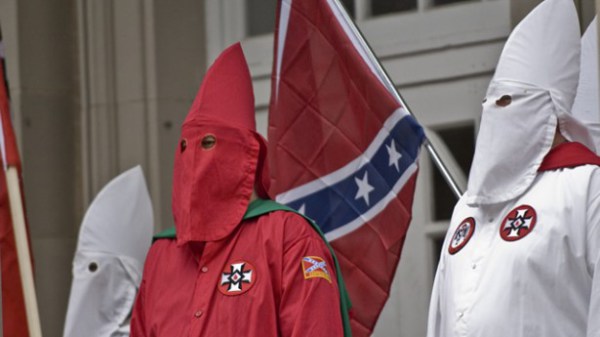
A three judge panel of a Georgia appellate court recently ruled in favor of Marshall Saxby, the Grand Wizard of a local KKK chapter, after he sued a local bakery for refusing to bake a cake for the KKK chapter’s  annual birthday party. Elaine Bailey, who owns Bailey Bakeries, said she rejected the Klan its activities violated her religious beliefs, and Saxby claimed that Bailey’s refusal of service discriminated against his religious beliefs.

The difficulty with making an ethical call on this case and others like it (and sort of like it, arguably like it or a little bit like it) is that the crucial question in ethics analysis, “What’s going on here?” cannot be answered with certainty or clarity. There are ethical arguments and ethical principles, on both sides, making the issue an ethical conflict (rather than an ethical dilemma). In an ethical conflict, we must prioritize among important ethical principles that are opposing each other.

Let’s answer “What’s going on here?” in some of the various ways this case allows, as if only one of these ethical principles were in play: Continue reading

Why Are The Core American Rights Ethics Alarms Malfunctioning?

The spark for this post is the recent fiasco engineered by Modesto Junior College in California, which told a student that he could not pass out copies of the United States Constitution outside the student center on September 17, 2013, which happens to be Constitution Day. College police and administrators demanded that student Robert Van Tuinen stop passing out Constitution pamphlets and told him that he would only be allowed to pass them out in the college’s tiny free speech zone, and only after scheduling it several days or weeks ahead of time. Fortunately, as is almost always the case in such campus outrages, The Fire, The Foundation for Individual Rights in Education (and what does it tell us that this indispensable champion of individual rights is widely regarded as a “conservative” organization?) was at the ready, and ripped off a letter to the school administrators that served the dual purpose of warning it to back off and holding it up to national ridicule. Continue reading

The Answer To Popehat’s Web Shaming Ethics Quiz

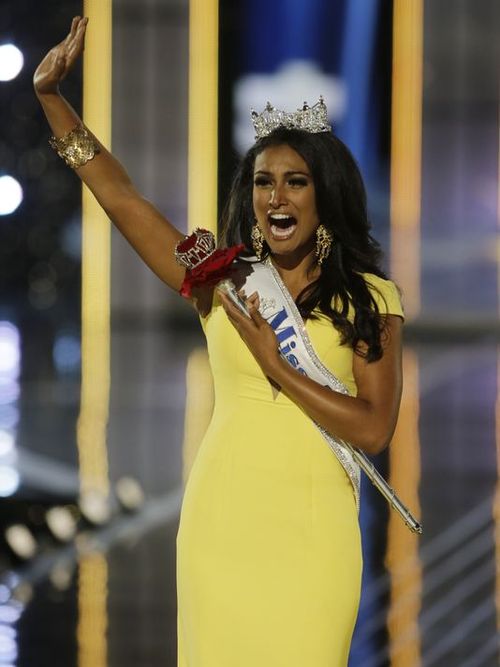
Hmmm..is it unfair to point out that tweeters who called the 2013 Miss America a terrorist and "not American enough" because of the color of her skin are bigoted morons? Let me think...

Hmmm..is it unfair to point out that tweeters who called the 2013 Miss America a terrorist and “not American enough” because of the color of her skin are bigoted morons? Let me think…

Popehat virtuoso Ken White has posed what we would call on Ethics Alarms an ethics quiz on the topic of web shaming. Is it ethical to post the embarrassing tweets of non-celebrities and public figures for the purpose widespread and national ridicule? Ken lays out the Pros and Cons thusly (these are direct quotes):

Pro:

1. It’s entertaining. Human frailty is the oldest and most consistent funny subject. People who are constantly incensed at brown people and can’t tell Arabs from Muslims from Indians are foolish and foolishness is amusing.

2. It’s whistling past the graveyard. Bigotry exists; ridiculing bigots is a mild act of defiance.

3. It’s supportive. Bigots exist; ridiculing and calling them out tells people subject to bigotry that we support them.

4. It’s a pressure release. The ability to ridicule bigots publicly reduces pressure to make the government regulate speech.

5. It’s socially transformative. Ridiculing bigots causes people to rethink being bigots.

6. It’s Darwinian. Twitter and Facebook, aided by Google, help those of us who hire employees distinguish between morons and people of normal intelligence.

Con: Continue reading

More Name Ethics: An Incompetent Judge Blocks An Irresponsible Name

"Mom...Dad! It's your son Messiah!"

“Mom…Dad! It’s your son Messiah!”

Let us stipulate that while  parents in the United States have an absolute right to name their children whatever they please, it one of those aspects of free speech that is often horribly abused by irresponsible, self-centered or just plain dumb parents who treat their children as bumper stickers or social science experiments. Naming your boy “Sue,” (You know) or your daughter “North West,” (Kanye West) or your daughter “Fifi Trixibelle” (Bob Geldof) is unforgivably and gratuitously cruel, virtually guaranteeing that your child will be a target, a head case, or will change his or her name the second legal majority comes around. Nonetheless, the state doesn’t raise children in America—yet—and parents can still decide what they wear, watch, learn and eat, as well as the name they have to answer to. The operative term is “free country.” Many of our fellow citizens don’t like or understand that concept, which is also their right in a free country. Judges, however, must not only understand the concept but constrain their power by it.

This is why Cocke County (Tennessee) Child Support Magistrate Lu Ann Ballew needs to be a) removed from her job and b) set on a more appropriate career path, like say, taking tolls in a tunnel or orders at Papa John’s. She ruled—it doesn’t matter how or why this came about—you can read the ridiculous story here-–that the parents of a baby couldn’t name him “Messiah,” because, she said in an interview with a reporter whose mouth had to be surgically closed afterward, “The word ‘Messiah’ is a title, and it’s a title that has only been earned by one person – and that one person is Jesus Christ.”  Continue reading