Morning Ethics Warm-Up, 7/6/2018: I See Unethical People…

Good morning, everyone!

1. Good, but better if it had happened six months ago. Ethically-challenged EPA chief Scott Pruitt finally “resigned” yesterday.  He was actually fired, and President Trump should have fired him as soon as it became clear that his pal couldn’t break himself of the bad habits he developed as a lawyer and a politician, including taking advantage of his position for personal gain. There were 14 separate investigations of Pruitt’s conduct, and his continued presence with Trump’s leave undermined the President’s pledge to “drain the swamp.” As several wags said with utter accuracy, Pruitt personified the swamp, but Trump does not place ethics or avoiding the appearance of impropriety high on his list of priorities, and never has. Pruitt’s conduct was also as stupid as it was wrong. He was a villain of the environmental Left, and had bullseyes and laser targets metaphorically covering his body. In such a situation, a prudent individual knows that he or she must be otherwise beyond reproach. Not Pruitt!

The National Review neatly summed up his demise:

“EPA administrator Scott Pruitt had enemies who were out to get him because he is a Republican, a conservative, a high-ranking member of the Trump administration, and an environmental deregulator. But it wasn’t liberals, the media, or deep staters who made him get large raises for his top aides, deny that he knew about it, and then admit that he did. It wasn’t they who made him have an aide find him a discount mattress, or run sirens so he could get to a French restaurant on time. The aides who told journalists, or congressional investigators, or both about Pruitt’s misbehavior weren’t all or even mostly liberals or deep staters. Several of them were conservative Trump supporters who were disturbed by Pruitt’s behavior and thought he was serving both the president and taxpayers poorly. Some of them had come with Pruitt from Oklahoma because they believed in him. The more they saw him in action in D.C., the less they did. Today it caught up with him.”

Good riddance.

2. Wait, haven’t we seen this movie before? Many commenters here expressed skepticism at the accusation that GOP Congressman Jim Jordan had turned a blind eye to sexual abuse  of student wrestlers when he was an assistant wrestling coach at Ohio State almost 40 years ago. Indeed the timing of the story looked like a political hit job, and it may be one whether the allegations are true or not. But now, as I noted in the first post about the controversy, the issue is Jordan’s denials. They rang false to my trained ear, and now there are four former wrestlers who say Jordan knew a team doctor was abusing the students.

It’s still their word against his, but it doesn’t matter. My position, as in the Harvey Weinstein mess, as in cases where fathers are molesting daughters, and in the Penn State scandal and so, so many others, is that those close to the situation either knew or should have known, and often deliberately avoid “knowing.”  Even if Jordan didn’t know, he should have and could have, and if he immediately accepted responsibility when the issue arose, he might have preserved some level of trustworthiness. He didn’t. They never do.

And we know how this movie ends. Continue reading
Ethics Dunce: The American Bar Association

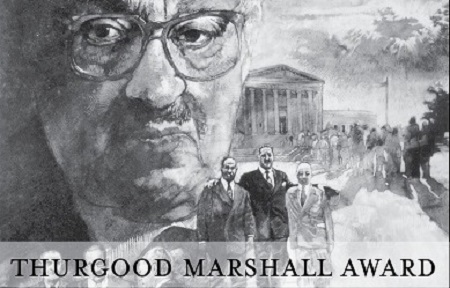
Res Ipsa Loquitur: The American Bar Association  Section on Civil Rights and Social Justice will bestow the prestigious Thurgood Marshall Award on former Obama U.S. Attorney General Eric Holder during the ABA Annual Meeting in Chicago on August 4. It has been obvious for a long time, but if anyone needed any further evidence that the ABA is now a full-fledged partisan left-wing organization masquerading as an objective professional association, this is it. Holder wasn’t just a bad AG, he was a political one in what is supposed to be a non-political office. He was also racialist, and obviously so, regularly coordinating with Al Sharpton and his followers, and constructing a Civil Rights division that adopted the position that only whites could engage in civil rights violations.

Holder should have disqualified himself from any professional awards, not to mention his high office in the Obama Administration, when he gave the green light to President  Clinton’s  infamous pardon of Democratic donor Marc Rich (aka. Clinton’s quid pro quo for his ex-wife’s  fat donation to his Presidential library). In fact, it was a defining moment, and having defined himself as a partisan lackey, Holder was exactly what President Obama wanted at Justice. Holder intervened in the Trayvon Martin case to signal it as a race-related crime in the absence of any evidence, and did likewise in the Michael Brown shooting, lighting the fuse of racial distrust and community anger at police. Then he called the United States a “nation of cowards” regarding race relations. The real coward was Holder, who used his race—he was the first black Attorney General—to shield himself from the accountability and criticism his mishandling of his office deserved.

Holder was held in contempt of Congress—and allowed the captive news media to call the action “racist”—after he withheld documents and key witnesses from oversight committees looking at several scandals in which his Justice Department was complicit. Notable among them was the “Fast and Furious” fiasco in which the government allowed Mexican drug gangs to get high-powered weapons, one of which ended up killing an American. Holder actively misled Congress in testimony under oath.ore than once.  He sought significant reductions in privacy and due process protections for citizens—civil rights? Hello, ABA?— and personally announced and supported Obama’s “kill list” policy, in which the President asserted the right to kill any U.S. citizen on his sole authority without a charge or due process.  Holder let his  department apply the controversial Espionage Act of 1917 to bring twice the number of such prosecutions under the Act that had occurred under all previous Attorneys General.  He led the Obama Administration in a campaign against government whistle-blowers. Holder championed warrantless surveillance (Civil rights? Hello?). Most damning of all given the title of his upcoming award, Holder was personally involved in targeting journalists for surveillance and  was the leader of an Obama administration attack on the news media that was condemned by many public interest and media groups. Holder’s Justice Department seized phone records for reporters and editors  at three Associated Press offices as well as its office in the House of Representatives. Under oath, Holder later claimed to know nothing about any of it.

Writes Prof. Jonathan Turley, who has written many searing articles documenting Holder’s disgraceful tenure at Justice,

“Holder’s “contributions” cost civil liberties dearly in this country. If the ABA is to give him this award, it could at least spare civil libertarians and journalists the reference to civil liberties.”

_______________

Note: You can read the various Ethics Alarms documentation of Holder unethical words and conduct here.

This one is probably my favorite, from 2014.

Morning Ethics Warm-Up, 7/5/18: Dinosaurs, Savages, And Censors

Good Morning!

1. Jurassic World II. I can’t honestly call this ethics, but as I posted about the film’s bad reviews earlier, I feel obligated to close the loop. I saw the movie last night, and as I knew I would, enjoyed it thoroughly, beginning to end. To those who did, I feel a bit the way I do about people who don’t like baseball, Westerns, Gilbert & Sullivan, and the United States of America: I’m sorry for you. This one even has a moment that seems to be written for those who don’t to help explain those who do, when Bryce Dallas Howard talks about her sense of wonder the first time she saw a dinosaur. Of course, the original movie better expressed the same sense of wonder in the iconic scene where Sam Neill is struck dumb by his first sight of  the brachiosaurus (and the lawyer’s only reaction is “We’re going to make a fortune with this place!”), but the Howard’s speech is no less an accurate description of how we dinosaur-lovers feel when we see these creatures on-screen.

No, it’s not the equal of the first “Jurassic World,” but it is excellent for the sequel, and better, I think, than either sequel to “Jurassic Park.” A vicious mutant raptor chasing a child through Victorian mansion is the stuff of nightmares, and a new concept; the dinosaur auction to a bunch of international bad-guys was a weird cross between “Goldfinger” and “Taken,” and several scenes, including the dinosaur stampede away from the erupting volcano, were worth seeing the film all by themselves. There were also more “Awww!” scenes than in all of the previous films combined: Chris Pratt’s home movies of bonding with the raptor babies; a mother triceratops and her adorable little one, and a haunting evocation of on of Charles Addams. best, but least funny, cartoons. I’ll leave it at that.

My biggest complaints would be that there was not enough of a role for the T-Rex, some of the deliberate homages to the earlier films were ham-handed and predictable, and that there was a fatal decision by one of the villains that made no sense to me at all. These flaws were more than compensated for by the star turn of the Pachycephalosaurus,  a species that had only cameos in “The Lost World” and “Jurassic World,” a terrific fight between a new species in the series, a Carnotaurus, and a Styracosaurus, (one of my mother’s best ceramic models in my collection) and several laugh-out loud moments authored by the dinosaurs. The film’s ending also sets up a final installment that should conclude the series, unless a “Jurassic Planet” is in the cards.

There are some ethics issues in the film, as in all of the films: respect for life, cloning, betrayal, and accountability for unforeseeable consequences. Michael Crichton had no qualms in his original novel with solving the problem of living dinosaurs by nuking the whole park, but Spielberg’s ending was better.

2. An Ethics Quiz That Is Too Minor To Justify A Whole Post. Do you find anything wrong with Donald Trump Jr. parading his new girlfriend in front of cameras at the White House before he is even divorced from his current wife? Writes Ann Althouse, “He and his wife have 5 children. He should be more discreet. Which, I know, obviously doesn’t sound like a Trump concept.” Let’s have a poll!

Continue reading

July Fourth 2018 Post Red Sox Victory Over The Nationals Ethics Warm-Up: Patriotic Births And Deaths, Siri, Affirmative Action, And A GOP Rep. Wants To Forget The Past…

Happy

Fourth of July!

Sorry for the late Warm-Up: I had to root the Red Sox to victory in an 11 AM game, and will soon celebrate Independence Day by seeing “Jurassic World II”…

1. Ethics Dunce: Siri.  A speech by British Defense Secretary Gavin Williamson  in the House of Commons  yesterday was interrupted when Apple’s smartphone digital assistant, which heard her master mention terrorists in Syria, blurted out,  “I found something on the web for Syria!”

2. Good. Let it never be said that the Trump administration didn’t accomplish anything positive. Yesterday the Administration withdrew several Obama Administration policy documents designed to push universities toward admissions policies that involved preferences based on race. Affirmative action, which is government sanctioned race discrimination (because the ends justify the means) has always defied the Constitution, and the Supreme Court has consistently warned that the leash was short, and the breach would not be tolerated forever.  With higher education flagship Harvard University being exposed as grossly discrimination against deserving Asian-American applicants in the interest of “diversity,” and an affirmative action-tender majority on the Supreme Court looking like a thing of the past with Justice Kennedy’s retirement, this relic of the Seventies, a policy that exacerbated racial divisions as much as any factor in U.S. society, needs to be rejected completely and finally, and the announcement from the Education Department is an excellent start. In a related statement, as in the earlier withdrawal of the “Dear Colleague letter” that extorted universities into dispensing with due process and a presumption of innocence in student sexual assault cases, Attorney General Jeff Sessions pointedly rejected this method of abusing power that the Obama Administration fine tuned to an art, saying,

The American people deserve to have their voices heard and a government that is accountable to them. When issuing regulations, federal agencies must abide by constitutional principles and follow the rules set forth by Congress and the President. In previous administrations, however, agencies often tried to impose new rules on the American people without any public notice or comment period, simply by sending a letter or posting a guidance document on a website. That’s wrong, and it’s not good government.”

Exactly. Continue reading

Morning Ethics Warm-Up, 7/3/2018: Remember Pickett’s Charge! Edition [UPDATED]

Good Morning!

1. “General, I have no division!” At about 2:00 pm, , July 3, 1863, by the little Pennsylvania town of Gettysburg, Robert E. Lee launched his last, desperate and audacious stratagem to win the pivotal battle of the American Civil War, a massed Napoleonic assault on the entrenched Union position on Cemetary Ridge, with a “copse of trees” at its center. The doomed march into artillery and rifle fire, across an open field and over fences, lasted less than an hour. The Union forces suffered 1,500 casualties,, while at least 1,123 Confederates were killed on the battlefield, 4,019 were wounded, and nearly 4000 Rebel soldiers were captured. Lee’s bold stroke had failed spectacularly, and would go down in history as one of the worst military blunders of all time.

That verdict is debatable, but this is not: Pickett’s Charge, as the attack came to be called, holds as many fascinating ethics lessons as any event in American history, and this blog has returned to it for enlightenment time and time again.

There is the matter of the duty to prevent a disaster that you know is going to occur, the whistleblower’s duty, and the theme of Barbara Tuchman’s work, “The March of Folly.” There was Robert E. Lee’s noble and unequivocal acceptance of accountability for the disaster, telling the returning and defeated warriors that “It is all my fault.” The defeat also turned on moral luck, with many unpredictable factors, such as the intervention of a brave and intrepid Union cavalry officer named George Armstrong Custer, who also teaches that our greatest strengths and most deadly flaws are often the same thing, and that the Seven Enabling Virtues can be employed for both good and wrongful objectives.  Pickett’s Charge shows how, as Bill James explained, nature conspires to make us unethical.

Pickett’s Charge also teaches that leadership requires pro-active decision-making, and the willingness to fail, to be excoriated, to be blamed, as an essential element of succeeding. Most of all, perhaps, it illustrates the peril’s of hindsight bias, for without a few random turns of fate, Robert E. Lee’s gamble might have worked.

2. Funny how if you continually denigrate someone based on his color and gender, he will eventually stop respecting you. Stanford University has established a Men and Masculinities Project  that aims to help men develop “healthy and inclusive male identities”—because they obviously don’t have those now.  “We acknowledge that male identity is a social privilege, and the aim for this project is to provide the education and support needed to better the actions of the male community rather than marginalize others,” anti-man-splains Stanford’s gurus. Stanford, of course, is not alone in pushing the ubiquitous progressive narrative that men are toxic, along with whites, making white men the worst of all. Perhaps this might explain why support for Democrats among young white men is falling fast.

Nah, it must be because they are sexist and racist…

3. But..but…settled science! The Economist estimates that as many as 400,000 papers published in supposedly peer-reviewed journals were not peer-reviewed at all. Scientists, scholars and academics are no more trustworthy or alien to unethical conduct than anyone else, but because most of the public (and journalists) don’t  understand what they write about and have to accept what they claim on faith, they are presumed to be trustworthy.

Think of them as the equivalent of auto mechanics. Continue reading

Morning Ethics Warm-Up, 6/27/2018: Unhinged

Good Morning.

1. Nah, there’s no mainstream media bias…This is one of the times that I am sorry that the Trump Deranged on Ethics Alarms have temporarily withdrawn from the Comment section battles, as I would love to hear their self-indicting rationalizations.

Here was this morning’s New York Times, big black headline:

JUSTICES  BACK TRAVEL BAN, YIELDING TO TRUMP

Outrageous in every way. The Court did not “yield” to anyone or anything but the law as it stands and has stood for centuries. As Constitutional Law expert Eugene Volokh succinctly put it, “The federal government may pick and choose which foreigners to let into the country (at least setting aside foreigners who have are already been granted residence), even based on factors — political beliefs, religion, and likely race and sex — that would normally be unconstitutional.” He explains:

This used to be called the “plenary power” doctrine, referring to the principle that the government has essentially unlimited power when it comes to at least this aspect of immigration law, unlimited even by the Bill of Rights. It is not based on the constitutional text; textually, the First Amendment would apply to all exercise of Congressional authority, whether under the Commerce Clause or the District of Columbia Clause or the Necessary and Proper Clause under Congress’s power over immigration. But, right or wrong, it is based on longstanding American legal history; and the majority adheres to that history.

Historically, this has even be used to authorize Congress to discriminate based on race (query whether the Court would today condemn this as “irrational”; more on that below). It has long been seen as authorizing Congress to discriminate based on country of citizenship, without investigation into whether such discrimination might actually be motivated by ethnic hostility. And, most relevant to today’s decision, it was seen in Kleindienst v. Mandel (1972) as authorizing discrimination based on political ideology, which would otherwise be forbidden by the First Amendment….The Court rejected the First Amendment claim:

Recognition that First Amendment rights are implicated, however, is not dispositive of our inquiry here. In accord with ancient principles of the international law of nation-states, the Court in The Chinese Exclusion Case (1889), and in Fong Yue Ting v. United States (1893), held broadly, as the Government describes it, that the power to exclude aliens is “inherent in sovereignty, necessary for maintaining normal international relations and defending the country against foreign encroachments and dangers—a power to be exercised exclusively by the political branches of government ….” Since that time, the Court’s general reaffirmations of this principle have been legion. The Court without exception has sustained Congress’ “plenary power to make rules for the admission of aliens and to exclude those who possess those characteristics which Congress has forbidden.” Boutilier v. Immigration and Naturalization Service (1967). “[O]ver no conceivable subject is the legislative power of Congress more complete than it is over” the admission of aliens. Oceanic Navigation Co. v. Stranahan (1909)….

As a result, the Court held that, if decisions to exclude aliens could ever be set aside, this would be so only if there was no “facially legitimate and bona fide” reason to exclude the alien. In Mandel’s case, the dissent noted, those reasons — labeled by the government as Mandel’s “flagrant abuses” during his past visits to the U.S. — “appear merely to have been his speaking at more universities than his visa application indicated.” The dissent argued that “It would be difficult to invent a more trivial reason for denying the academic community the chance to exchange views with an internationally respected scholar.” But the Court didn’t investigate whether the government’s true motive might have been the Administration’s disapproval of Mandel’s political ideas, rather than the supposed violation of past visa conditions; the requirement of a “bona fide” reason did not appear to require an investigation into the government’s true motivations, but rather simply focused on whether the “facial[]” reasons seemed sufficient:

In summary, plenary congressional power to make policies and rules for exclusion of aliens has long been firmly established. In the case of an alien excludable under [the provision involved in Mandel], Congress has delegated conditional exercise of this power to the Executive.

We hold that when the Executive exercises this power negatively on the basis of a facially legitimate and bona fide reason, the courts will neither look behind the exercise of that discretion, nor test it by balancing its justification against the First Amendment interests of those who seek personal communication with the applicant.

The majority’s decision in Trump v. Hawaii basically applied this logic to another clause of the First Amendment — here, the Establishment Clause (which normally bars discrimination based on religious denomination, including the use of neutral rules in a discriminatorily motivated way) rather than the Free Speech Clause….

Continue reading

Regarding National Institute for Life Advocates (NIFLA) v. Becerra

The Supreme Court ruled today that California could not require that pregnancy resource centers (PRCs) promote abortion services on their premises. The  law doing so, the 5-4 majority held, is forced speech. (A law couldn’t make the PRC’s bake cakes saying “YAY ABORTION!” either, presumably.)

The ruling in National Institute for Life Advocates (NIFLA) v. Becerra holds that by imposing the law, California created “an unduly burdensome disclosure requirement that will chill [PRCs’] protected speech.”

 California’s 2015 Reproductive FACT (Freedom, Accountability, Comprehensive Care, and Transparency) Act mandated that any facility that provides care to pregnant women must post this notice:

California has public programs that provide immediate free or low-cost access to comprehensive family planning services (including all FDA-approved methods of contraception), prenatal care, and abortion for eligible women. To determine whether you qualify, contact the county social services office at [insert the telephone number].

Fines for violating the law were $500 for the first offense after 30 days, and $1,000 for each subsequent offense.

 Justice Clarence Thomas, writing for majority, concluded that the requirement “alters the content” of the licensed centers’ speech by requiring them to notify pregnant women about the availability of low- or no-cost abortions even though the centers’ goal is to persuade women not to have abortions at all. This could be justified by a “compelling interest,” Thomas wrote, but he noted that there are other ways —an advertising campaign or posting notices on public property near the licensed centers—that would not force the centers to promote the very activity that they exist to stop.

Writes at Amy Howe at SCOTUSblog regarding the law’s application to unlicensed centers: Continue reading

Morning Ethics Warm-Up, 6/26/2018: Our Amazing, Evolving, Contentious Culture

Good Morning!

1. Outrageous Self-Promotion Dept.: Just in case you live in the vicinity of Washington, D.C., AND are interested in the cultural impact of the works of Gilbert and Sullivan in the U.S., AND would like to see me (and three long-time friends and colleagues who will periodically join me in performing some selections from the brilliant satirical operettas) discuss this rich and wide-ranging topic (Politics! Satire! Movie scores! Broadway musicals!) over a three-hour session that will fly like the wind, all it will take is a mere 50 dollars (just 35, if you are a Smithsonian Associates member) and your attendance. I’d love to see you. The program is Gilbert and Sullivan in the 21st Century, this Saturday, June 30, at 9:30 a.m. Here are the details.

2. Speaking of culture…If you want to feel better about the state of U.S. culture, I recommend watch a Beach Party movie. I just saw the first one all the way to the end for the first time—to realize that it was easily the best of its line (there were six—SIX!!!—more) is mind-boggling all by itself—and found it immediately uplifting. The 1963 William Asher-directed relic looks like it’s from some particularly demented parallel universe, depicting a weird place where 30-year-olds pretend to be  loitering teenagers who do nothing all day but gyrate to frenetic versions of the Twist, listen to awful surf music that makes the Jan and Dean sound like Brahms in comparison, do some surfing themselves (but just the males), and interact with B-list comics like Morey Amsterdam and Harvey Lembeck. The songs and their hackneyed lyrics make you yearn for the nuanced hip-hop musings of Kanye West; the comedy makes “Big Bang Theory” seem like Oscar Wilde, and to speculate on what kind of populace would actually enjoy such badly-conceived and sloppily-executed crap is to risk madness. If this was America in 1963, a) Good riddance, b) How did we survive? and c) No wonder the Soviet Union thought they were going to win!

No blacks are to be seen; indeed no skin color of any shade but glistening white is visible anywhere—didn’t these people even tan? Here’s a typically clueless exchange to ponder:  Annette Funicello: “The professor got his robe from the chief of the Tokyo Fire Department!” Random 30-year-old teenage beach bum: “Great! I’ll call him if my rickshaw catches fire!”  [laughter]. In the hilarious motorcycle gang, where all of the actors appear to be at least 45, the male members’ leather jackets say “Rats” on the back, and their female cohorts’ jackets say “Mice.” None of the”girls” have any function in the film, and no higher purpose, than to moon after the guys and gyrate in their faces.  Accepted conduct is for every male youth to gawk, pant, and emit some sound the equivalent of a wolf whistle every time a shapely female passes. The romantic lead (of sorts), teen idol Frankie Avalon, trying to make virginal, had-to-get Annette jealous, grabs a generic Scandinavian waitress and just starts kissing her. It’s like a magnet. Just kisses her He doesn’t  even wait. When you’re a star, they let you do it. You can do anything. Then he tells her he loves her so she’ll make out with him until Annette loosens up. This is the hero, remember.

They should show this film in every junior high school American History class. I’m very serious about this.

3. An abject lesson in how the news media uses language to manipulate public perception: Virtually every news report about the Trump administration’s actions at the Mexican border described them, and are still describing them, in headlines as “family separation.” The cumulative effect of this is to make casual, not fully-engaged readers and listeners think that family separation is the objective of the policy. The objective of the policy is to enforce current immigration laws while obeying other legal requirements, such as the one that forbids children from remaining with federally  detained parents.  This is, under the Ethics Alarms definition, fake news: deliberately deceitful reporting that conveys a false impression. The equivalent would be characterizing the imprisonment of African American men convicted of felonies as “the Trump policy of making black families into single-parent households.” Continue reading

Now That The ACLU No Longer Wants To Be The ACLU, The United States Needs An ACLU

In a confidential memo obtained by former board member Wendy Kaminer, the American Civil Liberties Union has defined a policy that retreats from and undermines—perhaps the best word is betrays— its traditional mission of protecting the Bill of Rights, and especially the First Amendment rights of all Americans.  The memo says in part,

Work to protect speech rights may raise tensions with racial justice, reproductive freedom, or a myriad of other rights, where the content of the speech we seek to protect conflicts with our policies on those matters, and/or otherwise is directed at menacing vulnerable groups or individuals….We are also firmly committed to fighting bigotry and oppression against other marginalized groups, including women, immigrants, religious groups, LGBT individuals, Native Americans, and people with disabilities. Accordingly, we work to extend the protections embodied in the Bill of Rights to people who have traditionally been denied those rights. And the ACLU understands that speech that denigrates such groups can inflict serious harms and is intended to and often will impede progress toward equality.

…There is no presumption that the First Amendment trumps all other amendments, or vice versa. We recognize that taking a position on one issue can affect our advocacy in other areas and create particular challenges for staff members engaged in that advocacy. For example, a decision by the ACLU to represent a white supremacist group may well undermine relationships with allies or coalition partners, create distrust with particular communities, necessitate the expenditure of resources to mitigate the impact of those harms, make it more difficult to recruit and retain a diverse staff and board across multiple dimensions, and in some circumstances, directly further an agenda that is antithetical to our mission and values and that may inflict harm on listeners…Our defense of speech may have a greater or lesser harmful impact on the equality and justice work to which we are also committed, depending on factors such as the (present and historical) context of the proposed speech; the potential effect on marginalized communities; the extent to which the speech may assist in advancing the goals of white supremacists or others whose views are contrary to our values; and the structural and power inequalities in the community in which the speech will occur….

Where the ACLU defends the right to speak of those with whom it disagrees, it should generally engage in counter-measures both to reinforce the
values the speaker attacks and to make clear that we do not endorse the substance of the views. Some options might include:

1. Denouncing the views in press statements, op-eds, social media, and other available fora.

2. Participating in counter-protests. When we assist people in securing the right to march or demonstrate for views we condemn, we can and generally should support and participate in counter-protests, with consideration given to participation by senior staff or board members to highlight the ACLU’s commitment and ensure that such participation does not disproportionately burden other staff.

3. Supporting other counter-speech by supporting, organizing or helping to organize events, facilitating access to media, or taking other actions that will amplify and
strengthen the voices of those espousing our values.

4. Expanding our work on behalf of the values the speaker attacks.

5. Earmarking any fees recovered from the case to projects within the ACLU that further the values that we support and the speaker attacked, or donating them to another organization that works to advance those values, preferably in the geographical area where the speech occurred….

Continue reading

Ethics Dilemma: What Can Be Done About People Like This? [Poll Included]

Hold on to your skulls…

Social media can spread stupidity like a viral plague. Is there anything  ethical and constitutional  that can be done to protect the imperiled children addled  mothers like this may raise?

[Related Ethics Alarms posts here (feeding kittens a vegan diet) and here (dogs).]