The Case Of The Involuntary Naked Teacher

This isn't a picture of Leigh Anne Arthur; this is 2014 Naked Teacher Principle victim Kaitlin Pearson. But even if this had been the picture on Arthur's cell phone, she wouldn't have deserve to be fired...

This isn’t a picture of Leigh Anne Arthur; this is 2014 Naked Teacher Principle victim Kaitlin Pearson. But even if this had been the picture on Arthur’s cell phone, she wouldn’t have deserved to be fired…

The Ethics Alarms Naked Teacher Principle (NTP) states:

A secondary school teacher or administrator (or other role model for children) who allows pictures of himself or herself to be widely publicized, as on the web, showing the teacher naked or engaging in sexually provocative poses, cannot complain when he or she is dismissed by the school as a result. The first formulation of the NTP can be found here.

I suppose I need to circulate this more widely, because some schools apparently are confused, such as Union County High School in South Carolina. In a completely warped and unfair application of the NTP, school district officials in Union County demanded and received the resignation of engineering teacher Leigh Anne Arthur after a student stole her phone, examined its contents and found a semi-nude selfie (intended for her husband’s enjoyment only), which he shared with his classmates.

 The district’s David Eubanks said that the district’s position was that the 13-year teaching veteran was at fault for leaving her phone unlocked on her desk when she went out of the room, and that she had, in effect made the pictures available to her students. He also said that the engineering teacher’s actions may have contributed to the delinquency of a minor.

The technical terms for Eubanks are unethical, unjust and illogical. The kid stole the phone before he knew what was on it. He would have stolen it even if it had been locked. Arthur didn’t make him a delinquent; he was already a delinquent. How far would the school board take their absurd logic? If the kid stole her purse, found a key in an envelope with a bank account number on it, and the student took it to a bank and got into her locked storage box, and in there was the combination to a warehouse storage locker that contained a nude oil painting of her that was painted when she was an artist’s model, and he stole the painting and held an exhibit of it in his garage, charging admission, would the school system fire the teacher, or expel the student for an outrageous invasion of privacy, as well as theft? Continue reading

Unethical Donald Trump Quote Of The Day: Suuuure, Donald. It Was The Earpiece..

donald-trump-gag

Today, Donald Trump “explained” how he came to tell Jake Tapper that he couldn’t condemn David Duke, white supremacists, or the Klu Klux Klan without some research.

What he said:

“I’m sitting in a house in Florida with a very bad earpiece that they gave me, and you could hardly hear what he was saying. But what I heard was various groups, and I don’t mind disavowing anybody, and I disavowed David Duke and I disavowed him the day before at a major news conference, which is surprising because he was at the major news conference, CNN was at the major news conference, and they heard me very easily disavow David Duke…. Now, I go, and I sit down again, I have a lousy earpiece that is provided by them, and frankly, he talked about groups…. He also talked about groups. And I have no problem with disavowing groups, but I’d at least like to know who they are. It would be very unfair to disavow a group, Matt, if the group shouldn’t be disavowed. I have to know who the groups are. But I disavowed David Duke…. Now, if you look on Facebook, right after that, I also disavowed David Duke. When we looked at it, and looked at the question, I disavowed David Duke. So I disavowed David Duke all weekend long, on Facebook, on Twitter and obviously, it’s never enough. Ridiculous.”

Why it’s unethical: Continue reading

An Unethical Match: The Ex-Yelp Whiner Finds The Perfect Potential Employer, Sort of

Fdbak

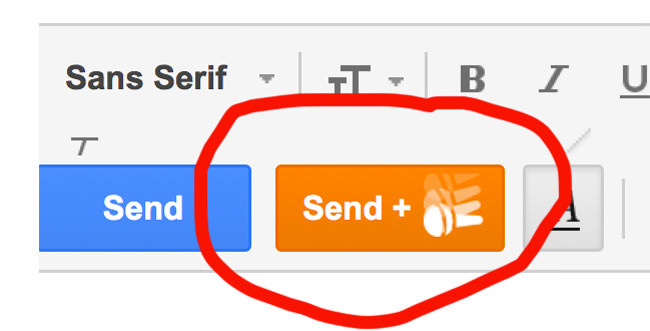
Fdbak, for those times you are afraid to complain about bad service. I think you need a better example for your website, Bob. Signed, Anonymous.

In writing about Talia Jane, Ethics Alarms concluded that her “open letter” to her boss at Yelp was really an career play designed to get the aspiring writer publicity and sufficient fame to exploit for her advancement. If it constituted unprofessional conduct and betrayal of trust, she really didn’t care. (Subsequent investigations of her social media activity indicate that her representations of abject poverty were less than honest). Whether this was the plan or not, her public screed, like excrement attracts flies, got her a job interview with what seems like a good match for someone with her peculiar sense of ethical conduct.

The marketing director at a Dallas startup company called Fdbak sent an invitation Talia’s way on the company’s Facebook page:

Dear Talia Jane,

I commend you for standing up for yourself, and your coworkers. Communicating directly with your CEO takes a lot of courage, especially when the subject matter is negative. I’m reaching out to you on behalf of Fdbak, Inc., a Dallas, TX based technology firm. Fdbak created a messaging app that lets you send and receive anonymous feedback to and from anyone. More importantly, you can tell your employer what you really think, without fear of retribution.

You have already been put through a tumultuous gauntlet of improper employee-employer relations, but there are many employees out there that are struggling to speak up, fearing a result similar to yours. Our goal is to provide individuals with an anonymous vehicle for workplace communication, protecting them from what happened to you. We’d love to have you on our team, helping us build a professional environment where you can speak freely and safely to anyone.

Robert Cowlishaw
Marketing Director at Fdbak

The message is factually incorrect, and what is known in the marketing field as “bullshit.” Talia didn’t communicate directly with her CEO, or if she did, she hasn’t said so. She communicated indirectly and publicly, using a medium, “Medium,” that it was a fair guess that her boss never used or read. So why is Fdbak extolling her unethical open letter and misrepresenting it? Simple: the company, a start-up, is trying to hitchhike on her 15 minutes of fame before it expires, even though her conduct doesn’t really fit.

‘Uh, Bob? She didn’t get fired for communicating directly with her boss. She got fired for embarrassing the company by attacking it in public.’

‘Close enough!!!!’

I now know this is a sleazy company aborning, and so should you.

Continue reading

A Google Chrome Extension So Progressives Can Distort Dissenting Opinions Without Even Trying…And The Left Thinks It’s Wonderful!

Don't worry, only the TRUTH gets through....

Don’t worry, only the TRUTH gets through….

With the addition of a simple Google add-on to your Chrome browser, each and every appearance of the term pro-life will be  replaced with, “anti-choice,” rescuing sensitive abortion advocates from having to endure a a term that reminds them that there’s a material difference between abortion and choosing which flavor to get at Baskin Robbins. This means that the journalistic, scholarly and expositional communications of individuals with varying views from the Great and All -knowing Left will be edited without their approval, and can be copied, quoted and distributed in that weakened and distorted form.

We should have seen this coming. The anti-free speech instincts in the modern progressive movement betrays its totalitarian DNA. This is the next step down the slippery into the abyss from oppressive political correctness, from intimidating and punishing those who express opinions and positions that the left deems hateful (or too close to the truth), to making it impossible to communicate non-conforming ideas aty all by translating them into something less persuasive.

What other words and phrases will be subjected to this treatment? I’ll give odds that the next one will change “illegal immigration” to just “immigration,” not that the mainstream media isn’t regularly doing that already. Continue reading

Tech And Terrorism Ethics: Apple Is Right. The Government Is Wrong.

FBI-APPLE

If, in some future nightmare scenario come true, the FBI needs to break the encryption on a private i-phone to find the secret code to defuse the Doomsday Machine  President Donald Trump set up after his mind finally snapped and he thought he was the Stay-Puft Marshmallow Man, I assume that Apple won’t stand on principle and will do what needs to be done to save the world. The current dilemma, however, is not that dire.

Although President Obama announced last year that he had decided not to pursue legislation requiring tech companies to give law enforcement access to users’ encrypted data, he proved once again that if you don’t like Obama’s promises, just wait a minute.  For last week, the FBI persuaded a judge to order Apple to create software that would help federal investigators crack into the iPhone 5C that terrorist Syed Rizwan Farook was using before he and his wife slaughtered guests at his company Christmas party in San Bernardino last December. Apple has vowed to defy the order.

Good. Continue reading

Ethics Quiz: Second Thoughts About An Ethics Hero Emeritus

challenger-shuttle-disaster-crew

I periodically read random posts here from years ago, to check and see if I would make a different analysis today, and why. It almost never happens, which is good: though I may not trace all of the steps in every post, the systems, methods, models, values and priorities I use to assess various events and scenarios are established and consistent. I also check older posts when I am uncertain about a new version of an issue I have addressed before. Again, I am almost always struck by how closely my thinking then matches my approach now. I am also often struck by the fact that I don’t recall writing the earlier post at all. There are over 6000 of them, so I don’t feel too senile.

Today, however, I read this NPR story, about a previously unnamed engineer at NASA contractor Morton Thiokol who had been interviewed, with a promise of not being named, by NPR after the Challenger Space Shuttle exploded, 30 years ago. Now Bob Ebeling has finally come forward publicly, and allowed his name to be attached to his tragic story.The night before the launch, he and four other engineers had tried to stop it, because the weather was too cold—it was the coldest launch ever— and their research told them that that the rubber seals on the shuttle’s booster rockets wouldn’t function properly in the extreme temperatures. They begged for the launch to be postponed, but their supervisors and NASA overruled them.

That night, Ebeling told his wife, Darlene, “It’s going to blow up.” It did.

“I was one of the few that was really close to the situation,” Ebeling told NPR. “Had they listened to me and wait[ed] for a weather change, it might have been a completely different outcome…NASA ruled the launch. They had their mind set on going up and proving to the world they were right and they knew what they were doing. But they didn’t.”

Thirty years ago, when Ebeling didn’t want his name used or his voice recorded,  he said he feared losing his job but that,”I think the truth has to come out.” After the interview, the investigations, and the law suits, he left the company and suffered from depression and guilt that has lasted to this day. He told NPR that in 1986, as he watched that horrible video again on TV, he thought, “I could have done more. I should have done more.”

Reading and listening to the NPR story, I agreed with him. He should have done more. I was about to write a post from that perspective, when I realized I had not only written about another engineer who had tried to delay the launch, but inducted him into the Ethics Alarms Heroes Hall of Honor. His name was Roger Boisjoly, and of him I wrote in part…

Six months before the Challenger disaster, he wrote a memo to his bosses at Thiokol predicting”a catastrophe of the highest order” involving “loss of human life.” He had identified a flaw in the elastic seals at the joints of the multi-stage booster rockets: they tended to stiffen and unseal in cold weather.  NASA’s shuttle launch schedule included winter lift-offs, and Boisjoly  warned his company that send the Shuttle into space at low temperatures was too risky. On January 27, 1986, the day before the scheduled launch of the Challenger, Boisjoly and his colleague Allan J. McDonald argued for hours with NASA officials to persuade NASA to delay the launch, only to be over-ruled, first by NASA, then by Thiokol, which deferred to its client.

And the next day, on a clear and beautiful morning, the Shuttle’s rocket exploded after take-off, killing the crew of seven and mortally wounding the space program.

My ethics verdict then? This:

“Can we accurately call Roger Boisjoly an Ethics Hero, even though he didn’t stop the launch? I usually don’t like to call people heroes for doing their jobs. If Thiokol and NASA had behaved ethically, competently and rationally, we would not know anything about his memo or him. He did the right things, as his duties demanded. He alerted management to a deadly problem in plenty of time to address it. When they went forward, he argued and protested, until the decision was final. Afterwards, he told the truth to investigators, so the decision-making problems could be addressed. In his world, in that bureaucracy, this—doing his duty, doing the right thing—took courage. He knew, I am certain, that his career would suffer as a result of his actions. Yes, that makes Roger Boisjoly an ethics hero.”

If Boisjoly was a hero, then so is Ebeling, though Boisjoly spent the rest of his professional life lecturing at engineering schools around the world on ethical decision-making, trying to prevent future disasters.

So please help me resolve a Present Jack vs. Past Jack conflict, by considering this Ethics Alarms Ethics Quiz:

Are Bob Ebeling and Roger Boisjoly really heroes?

Continue reading

Ethics Update: The Frontrunners

the-three-stooges6

There was ample evidence over the past week that all three of the candidates currently leading their respective party’s races for the presidential nomination are unqualified for the office by virtue of their deficiencies of competence, character, and principles. Hillary Clinton had the most spectacularly revealing week, but first, the other two….

Donald Trump: Hubris, incompetence, disrespect and unfairness

1. “I could stand in the middle of 5th Avenue and shoot somebody and I wouldn’t lose voters,” Trump boasted at a campaign rally yesterday. I know, it’s a joke. It’s also an astoundingly stupid thing to say, even in jest, and reveals massive hubris, the quality that brought down many a Greek king and the worst and most dangerous of all Trump flaws. This is what will get him, sooner or later. 3000 years of history and literature teach us that. The comment also reveals utter contempt for his supporters; he is essentially calling them blind morons. The crowd in Iowa laughed….because they are.

2.“Our great veterans are being treated terribly,” Trump says in a new campaign video. “The corruption in the Veteran’s administration, the incompetence is beyond. We will stop that.” Then critics pointed out that the clips used showed Russian veterans, not Americans, and he pulled the ad.

This is the man whose only claim to legitimacy is his management wizardry. Such an error, however, is proof of sloppy oversight and incompetent delegation. Moreover, this is the second time a Trump campaign ad  included mislabeled material: his illegal immigration ad earlier this month used footage of people crossing the Moroccan border to represent the U.S.-Mexico border. Conclusion: he’s faking it, “it” meaning everything. This is all posturing and bluffing, like a student taking an exam for a course he never studied for. Continue reading

From The “Ethics Isn’t Easy” Files: The FBI, Child Porn, And “Playpen”

key-computerIn order to probe “the dark web” and to apprehend those partaking of the pleasures of child pornography, the FBI emulated the illegal conduct of hackers, using a warrant to surreptitiously place malware on all computers that logged into a site called Playpen. When a user connected, the malware forced his computer to reveal its  Internet protocol address. Next a subpoena to the ISP  yielded his real name and address, and a another warrant allowed a subsequent search of the user’s home. Incriminating evidence, indictments and trials followed.

The problem of tracking computer related crime is far ahead of the law, and in the vacuum, ethical principles are being nicked, mashed, or ignored. Ahmed Ghappour, a professor at the University of California’s Hastings College of the Law, says, “It’s imperative that Congress step in to regulate exactly who and how law enforcement may hack.” If hacking is illegal, and wrong as an uncontested intrusion on privacy, when is it ethical, and thus legal, for law enforcement to do it? Continue reading

Ethics Questions And Answers Regarding The Flint, Michigan Water Crisis

how-lead-gets-injpg-1e9d798a1edee129

First, a background question: What is the Flint water crisis?

Here is what has happened so far:

1. In March of 2013, the Flint City Council voted to leave the Detroit water system and join a new pipeline project that would deliver water to the city from Lake Huron. The state agreed that it was a good idea, since it would save the financially strapped Flint 19 million dollars over 8 years. [ Addendum: The news media and progressive spin is that the cruel state unilaterally imposed this decision on Flint. That’s not true, and don’t trust any source that claims it is. Here’s one such hack, who states “In 2013, the Emergency Manager for Flint, Ed Kurtz, signed the order that Flint would stop relying upon Detroit for water and, instead, switch to a the Karegnondi Water Authority run out of Lake Huron.” The Flint City Council voted 7-1 to take this course prior to the sign-off. It was approved by Kurtz, but this blogger’s statement that the crisis “is a direct result of reckless cost-cutting by the unelected bureaucrat who Governor Snyder appointed to run the city under the state’s controversial “Emergency Financial Manager” law” is deceptive and false.]

2. Detroit retaliated by announcing that it would cut off Flint’s water supply. Since the new pipeline wouldn’t be ready for three years, Flint had to find a temporary supplier of its water needs. It then spent millions upgrading its water processing plant.

3. The months leading up to the Detroit shut-off deadline generated many meetings with the state and regulatory bodies. Mayor Dayne Walling, a Democrat, announced that the temporary supply would come from the Flint River. The plan for the switch was implement by state-appointed emergency manager, Darnell Early. The system went into operation in April of 2014.

4. Immediately, residents started complaining about the water’s taste and appearance. Early (the state) and Mayor Walling (the city) insisted that it was safe to drink. Four months later, there was a fecal content alert, meaning that the water wasn’t being sufficiently purified. In October of 2014, General Motors said that the water seemed to be corrosive, and it would no longer use it in its plant.

5.  In January of 2015, Flint told its residents that the water wasn’t safe because of chemical contamination that could cause serious health problems. Detroit offered to go back to the old arrangement. Flint declined. Erin Brockovich (yes, that Erin Brockovich)  publicly argued that there was a water safety  crisis in Flint. The Mayor asked the state for assistance, and was assured that they were “working on it.”

6.  Activists said that the water was dangerous and the city should go back to its old arrangement with Detroit. The city hired an expert who claimed the water was safe. More work was done to fix the problem, but the City Council voted to re-connect to the Detroit system, and Lake Huron water. However, the vote had to be approved by the State’s emergency manager for the city. He didn’t approve it. The advocates for going back to Detroit water sued in Federal court, and lost.

7.  This mess  dragged into last fall. In September of 2015, researchers from Virginia Tech University reported online that their testing of Flint’s water found it “very corrosive” and that it was “causing lead contamination in homes.”  “On a scientific basis, Flint River water leaches more lead from plumbing than does Detroit water,” the report concluded. “This is creating a public health threat in some Flint homes that have lead pipe or lead solder.” The very same day, Michigan told Flint that the earlier chemical contamination had fallen within acceptable levels due to improved treatment methods, and the water was officially compliant with all standards, and safe.

8. Later that month, however, testing showed frightening levels of lead in the blood of Flint infants and children. A new lead warning was sent to Flint residents.

9. In October, 2015, the County issued a warning that Flint’s water was dangerous, and asked the Governor to declare a State of Emergency. The next day, Governor Rick Snyder announced various measures to address the problem.

10. Again, the city, this time through a special advisory committee, recommended that Flint switch back to the Detroit supply. On October 8, Snyder announced a multi-million dollar plan to reconnect Flint to Detroit’s water.  A week later, the Michigan Legislature and Snyder approved  $9.4 million in aid to Flint, including $6 million to  switch its drinking water back to Detroit.

11. Thanks to the water problem, Walling was defeated in his race to be re-elected as mayor  by Karen Weaver. The switch didn’t stop the lead problem, because the corrosive water had prompted a deterioration in Flint’s lead pipes. It took a the entire holiday period for this to become sufficiently obvious, for some reason, as many residents drank lead-contaminated water they had been told was now safe.

12. Shortly after Christmas, Snyder fired Department of Environmental Quality Director Dan Wyant and apologized for what was happening in Flint. He declared a state of emergency.

13. On January 13, Governor Snyder activated the Michigan National Guard to  distribute bottled water and filters in Flint, and asked the federal government for assistance.  The same day, Michigan health officials reported an increase in Legionnaires’ disease cases during periods over the past two years in Flint and the surrounding county. Snyder requested a major disaster declaration from President Obama, and more federal aid. Obama signed an emergency declaration last week, ordering federal aid for Flint and authorizing the Federal Emergency Management Agency and the Department of Homeland Security to coordinate relief efforts.

Why doesn’t everybody know about this? Continue reading

Comment of the Day: “In Search Of A Tipping Point: Trump, The Microphone, And Thomas Dewey’s Ghost”

Trump mic

Ed Moser, a sound designer, technical director and all-around theater pro (he produced and designed sound for my recent staging of “Twelve Angry Men”…he’s also a friend), enlightens us with some insider observation relevant to Donald Trump’s recent denigration of a sound tech. It also reveals an unattractive side of an earlier GOP presidential candidate. Here is Ed’s Comment of the Day on the post, In Search Of A Tipping Point: Trump, The Microphone, And Thomas Dewey’s Ghost:

I have a friend who engineered the sound for a large church back when McCain was a candidate. He visited the church for a “town meeting”.

My friend locked all the unused gear away, and for the event distributed only freshly batteried hand held wireless mics for the event with screw on caps on the bottom. Such caps are specifically designed to prevent clumsy performers from accidentally touching the controls on the bottom of the mic– where one could turn the mic off, change the battery, or worst of all, change the frequency. Then color coded the mics with bright spike tape, so that while he was at the sound board he could instantly tell which mic/channel he was dealing with.

The plan was for McCain to give a speech, then take questions from the floor. Runners would carry one of three hand helds to the person with the query, so the question could be heard throughout the house. There was a fourth back up.

If all of this sounds pretty standard for people who know what they’re doing and have done many such events before: well, it is.

That evening, during the event, the question and answer session occurs. The first mic, it develops, is dead. A quick check reveals that ALL FOUR are dead. Irked at having to come the the edge of the stage and get close to an actual person to hear an actual question, or perhaps just trying to infuse humor at an awkward moment, McCain points to the back of the house, right at my friend, and says to the crowd, “Fire that guy!”

He gets a laugh. Except from my friend, of course.

Continue reading