A Last Word on the Kevin Coffay Sentence

Keven Coffay, the teen who drove drunk, killed three of his friends as a result and fled the wreck as they lay trapped and dying, has prevailed in his effort to get the original 20 year prison sentence (for involuntary manslaughter) reduced. Now he may be released as early as next spring, on parole from his new, lenient, 8 year sentence. I won’t re-iterate my views on Coffay’s case, which are already here and here. I will make this additional observation.

In his column today, George Will discusses the science behind the growing consensus that life sentences without the chance of parole qualify as “cruel and unusual punishment” prohibited by the 8th Amendment. I don’t disagree with his conclusion, nor do I doubt, as the father of a teen-age son, that the brain chemistry of teens dictate special calculations and analysis when trying to decide on what is just punishment for crimes arising from the recklessness and poor judgment of adolescents as opposed to adults. Continue reading

Umpire Accountability, As The Day of the Robots Fast Approaches

If Robby replaces you, Larry, it's your own fault.

Are baseball’s umpires trying to get themselves replaced by machines? Or perhaps baseball’s brass are conspiring to allow incompetent and lazy umpires to do themselves in, as their miserable work wins over the traditionalists and the Luddites to mechanical ball and strike-calling and their overseers refuse to take decisive action against the worst officials they have. Whatever the explanation, today’s debacle ending the Tampa Rays-Red Sox game in Boston showed an appalling lack of accountability and professionalism in a segment of the game that is critical to its credibility and integrity. Continue reading

From Massachusetts: Proof That It CAN Happen Here…and Does; That It CAN Happen To You…and Might.

Tortured. At his Special Needs school. By good people like us.

As I recently wrote to a commenter on another post, Ethics Alarms is not intended to catalogue every prominent example of unethical conduct, and not just because attempting to do so would require a fleet of bloggers. If it is discussed here, an incident usually requires some kind of ethical analysis to determine whether it is ethical or not, or has larger cultural or societal significance. That the incident at the center of this post was unethical (as well as illegal), there can be no doubt, and that, ironically, is why it is worthy of special attention. The conduct is self-evidently horrific and beyond justification, and yet it occurred anyway, in a community, state and nation where virtually every sentient citizen over the age of nine would say that it could never happen—not here, not in the United States of America, not in the land of the free and the home of the brave. The fact that it did happen is both a revelation and a warning.

Film footage under seal since 2002 was finally shown in a Massachusetts courtroom this week. The film shows how the staff of a school for special needs students in Canton, Mass., the Judge Rotenberg Center, strapped a disabled 18-year-old student named Andre McCollins to a table and proceeded to torture him, administering 31 jolts of electricity to the screaming boy over a seven hour period. Lawyers defending the school in a lawsuit have claimed that the atrocity was “treatment,” but other evidence indicates that it was punishment—for  McCollins’ defiance of a teacher’s demands that he remove his jacket in class. Continue reading

“Titanic” Ethics

This is Titanic week, as all of you who don’t live in tunnels like prairie dogs must know. It has been a century since the sinking of the Great Unsinkable, with the deaths of 1500 souls including some of the great artistic, financial and industrial greats of the era. James Cameron’s 1997 film is also returning this week in 3-D, which means that the misconceptions, false accounts and outright misrepresentations the film drove into the public consciousness and popular culture will be strengthened once again. I think it would be ethical, on this centennial of the tragedy, for those in a position to do so to make a concerted effort to honor the victims and their families by honoring the truth. Thanks to Cameron, this is impossible. Continue reading

The Pink Slime Debacle: Is Anyone To Blame?

YUM!!!!

The maker of so-called “pink slime” filed for bankruptcy last week as the direct result of a public furor and public relations disaster related to “finely textured beef.” As a result, upwards of 650 people are losing their jobs, perhaps many more. Ground beef and other beef-based food will be more expensive, and quite possibly less healthy. Who, if anyone, is at fault?

The “pink slime” controversy was launched by cable TV chef Jamie Oliver, a healthy eating advocate who urged his viewers to reject ground beef that included the commonly-used filler. It is all meat, you know. In fact, it is virtually fat-free beef that begins as slaughterhouse trimmings, is then heated and spun in a centrifuge to separate tiny particles of meat from fat, and subjected to a puff of ammonium hydroxide gas to kill bacteria. Then it was mixed with ground beef. The process sounded unappetizing, and the nickname, coined in an e-mail by a USDA official, made it seem especially disgusting. The internet and social media got a hold of it, and the next thing you know, there were petitions and outrage. And the net result…jobs lost, beef made more expensive, no improvement in taste or health…a complete loss.

Good job everybody!

And almost everybody’s to blame too.

In rough order of culpability:

  1. The meat industry, for using unnatural, treated meat as filler and hiding it with the deceitful label “100% beef.” Consumers should have known what was being added and how it was produced, and it should have been on the labels.
  2. The clever USDA official. His cute name was a food slur, and in these days of viral tweets, YouTube videos and emails, coming up with a disgusting name for a safe food was reckless and irresponsible.
  3. The news media and websites, for not adequately defusing the controversy by explaining exactly what the substance was, indulging the anti-meat agenda of certain writers and reporters.
  4. Consumers, for being naive, emotional, irrational, and too easily stampeded. Most processed food can be made to seem disgusting,  especially anything to do with meat. So is a lot of food preparation. The public won’t take the time to distinguish between genuinely unhealthy foods and those that just involve processing that isn’t suitable for the squeamish, so they go overboard on the random targets of attention-seeking, half-cocked activists, and often the government and regulators follow the hysteria. This is the tragedy of DDT; this is Alar; this is cyclamates. Industries are destroyed that don’t deserve to be; lives are ruined, and the public health isn’t improved.

Was Jaime Oliver’s conduct wrong? I don’t think so. He’s a natural foods advocate; he has philosophical objections to processed food, and he  performed a public service by letting the public know something about its food that it should have been told about sooner. The story of “pink slime” could and should have been explained truthfully by someone who approved of it; it’s not Oliver’s fault that the job fell to an opponent.

Why Does American Public Education Stink? The Answer: Incompetence, Stupidity, and Fear. The Proof: THIS…

Ah, that look that only a dedicated New York public school teacher can spark!!!

Over at Popehat, Ken has been on another roll, and his latest effort, as depressing and enraging as it is, is a real contribution to our understanding of the kind of entrenched foolishness, cowardice and incompetence in our nation’s public school administration that is gradually rendering the schools useless and our children uneducated.

Spurred by a New York Post story that seemed too horrible to be true, Ken set out to research the claim that the New York School system has compiled a long list of topics that are banned on student tests for a variety of reasons, prime among them that someone, somewhere, will be offended by them.  After some digging on the New York City Department of Education’s websites, what he found  was worse than how the Post had described it.

In an Appendix, he discovered a list of  test question topics “that would probably cause a selection to be deemed unacceptable by the New York City Department of Education… In general, a topic might be unacceptable for any of the following reasons:

  •   The topic could evoke unpleasant emotions in the students that might hamper their ability to take the remainder of the test in the optimal frame of mind.
  •     The topic is controversial among the adult population and might not be acceptable in a state-mandated testing situation.
  •     The topic has been ―done to death in standardized tests or textbooks and is thus overly familiar and/or boring to students.
  •     The topic will appear biased against (or toward) some group of people.

Using those criteria, and undoubtedly using astounding numbers of hours and taxpayer dollars, the Department came up with the following jaw-dropping list of banned test subjects. I’ll flag with red the taboos that are especially outrageous or idiotic, though perhaps I should note the two or three that might be appropriate. Continue reading

Unethical Quote of the Month: Mike Daisey

“Well, I don’t know that I would say in a theatrical context that it isn’t true. I believe that when I perform it in a theatrical context in the theater that when people hear the story in those terms that we have different languages for what the truth means.”

Actor, writer, activist Mike Daisey, in an interview with NPR’s Ira Glass, exploring how Daisey was able to justify fabricating facts and accounts for the earlier aired—and just retracted—“American Life” installment called “Mr. Daisy  Goes To The Apple Factory.” NPR checked the particulars of Daisey’s first hand account of the human rights and labor violations he claimed to witness at Apple’s factory in China, and found that the writer had embellished, exaggerated,  and misrepresented much of what he reported. What NPR had broadcast as journalistic reporting was an excerpt from Daisey’s acclaimed touring one-man stage show, The Agony and Ecstasy of Steve Jobs.”

Mike Daisey, lying to us for our own enlightenment

Daisey’s quote, which is both illuminating and chilling, argues that using made-up stories and personal accounts in a theatrical context qualifies as truth, even if the same misrepresentations in a journalistic context are inappropriately false. The problem with his argument, and the flawed ethical theory behind it, is that both the NPR audience and his theater audience believe that Daisey is telling the truth. Daisey’s solution to the problem is simple: his one-man show does tell the truth…it just uses lies to do it. Continue reading

The Ethics Verdict on the Homeless Hotspot Project

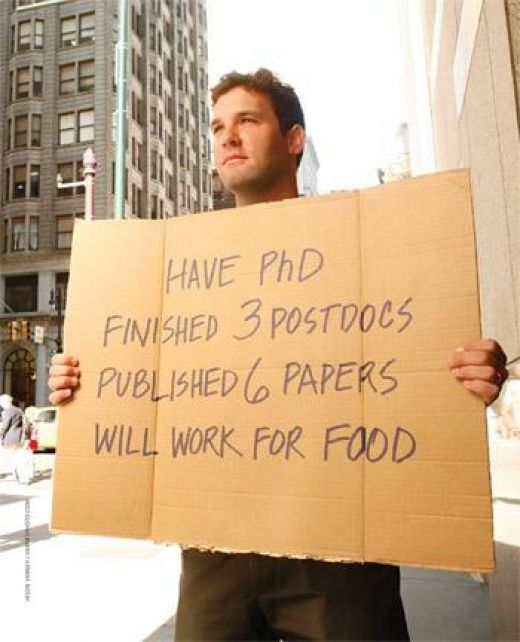
BBH Labs, the innovation unit of the international marketing agency BBH, hired members of the Austin, Texas homeless population to walk around carrying mobile Wi-Fi devices, offering high-speed Internet access in exchange for donations. Thirteen volunteers from a homeless shelter were hooked up to the devices, given business cards and put in shirts with messages that designated them as human connections. “I’m Rudolph, a 4G Hotspot” read the label on the homeless man on the New York Post’s front page with the lead, “HOT BUMS!

The Walking Hotspots—now there’s a new horror series for AMC when they run out of zombies— were told to go to the most densely packed areas of the South by Southwest high-tech festival in Austin, Texas, where the technology trend-devouring conventioners often overwhelm the cellular networks with their smart phones. Attendees were told they could go up to a Homeless Hotspot and log on to his 4G network using the number on his T-shirt. A two-dollar contribution to the homeless man was the suggested payment for 15 minutes of service. BBH Labs paid  the wired-up homeless $20 a day, and they were also able to keep whatever customers donated.

What BBH called its “charitable  experiment” ended yesterday with the conference, and with all participants seemingly thrilled. The “Homeless Hotspot” gimmick got nationwide publicity, thirteen homeless men made some money, and conference participants got great connectivity…so why were so many people upset? Continue reading

Weekend Ethics Catch-Up

If you took an ethics break this last weekend of February, here’s your Ethics Alarms make-up assignment:


Robot Ethics: Let’s Not Get Silly About It

Today seems to be “Ethics Questions That We Shouldn’t Have To Ask Day,” and Andrew Sullivan, over at the Daily Beast, phrases his entry this way:

“Is Sex With A Robot Adultery?”

Sherry Jackson as a robot on the original "Star Trek." Lovely, convincing, but still basically a toaster.

Gee, I don’t know, Andrew: is sex with a toaster adultery? What has Sullivan asking such nonsense is a new book called Robot Ethics, which has some legitimate issues to explore, and then some other phony controversies included to get publicity and interviews. The field of robot ethics still includes little that hasn’t been thoroughly explored by Robert Heinlein, Isaac Asimov and on “Star Trek: The Next Generation,” but as a few of these dilemmas are likely to enter reality from science fiction in the foreseeable future, it is reasonable to dust off the issues again as long as we don’t get silly about it. Getting overly excited for the Boston Globe, however, Josh Rothman writes: Continue reading