The T-Rex Escapes: Lessons Of The Washington Redskins’ Nepotism

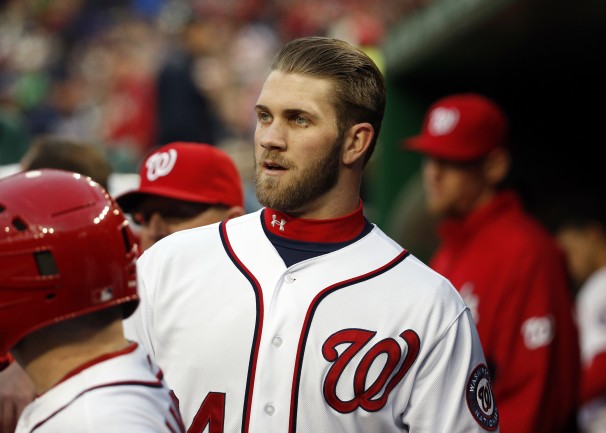
I can’t exactly say, like Jeff Goldblum as Dr. Ian Malacolm in “Jurassic Park,” that I hate being right all the time…in part because I’m not. It sure is frustrating, however, to see an ethics crisis looming, write about it once, then twice, and still see so many people surprised when it arrives like an angry T-Rex. Thus today, I began the morning by pounding my head against the wall to read in the Washington Post sports section a column by Jason Reid with the headline, “Mike Shanahan, by hiring his son Kyle, has created an untenable situation.” Wait, what year is this? Shanahan, the coach of the Washington Redskins, that team with the name that we’re not supposed to say, hired his son Kyle as the team’s offensive coordinator many moons ago, in 2010. It was a terrible idea at the time, an example of classic nepotism that created an immediate risk of exactly what is occurring now, and perhaps the certainty of it, if the situation endured long enough.

Last season, when the Redskins swept to the NFC East Championship behind thrilling rookie QB Robert Griffin III, the ethics-challenged sports fandom here (Washington, D.C., remember) cited the success as proof that nepotism is an ethics boogie man, nothing more. This was pure consequentialism. As I concluded my post on the topic last January,

“This is rank consequentialism in its worst form. Nepotism is an unethical way to run any staff, company, team, business or government, unfair, inherently conflicted, irresponsible, dangerous and corrupting. It should be recognized as such from the beginning, and rejected, not retroactively justified if it “works.”I’m sure there were and are non-relatives of the Redskins coach who could have devised a successful offense with RG3 taking the hikes. The ethical thing to do was to find them and give one of them the job. The Redskins coach’s nepotism is just as unethical in 2013 as it was in 2012, 2011, and 2010.”

In “Jurassic Park,” the same day that chaotician Malcolm warns that the dinosaur park is so complex that a fatal loss of control is inevitable, the systems break down and he gets nearly gets eaten. The same year I wrote those words, ten months later, it’s Mike Shanahan on the menu as Jason Reid wrote these: Continue reading

KABOOM! Delta Sacrifices 50 Passengers To College Basketball

Kaboom.

Kaboom.

Once again, it’s head exploding time at Ethics Alarms. If you had asked me if an airline could do this, I would have answered “I hope not.” If you had asked me if an airline would do this, I would have answered, “Never!” But an airline did do this, and apparently isn’t even sorry about it.

KABOOM!

When maintenance issues grounded the Sunday afternoon Delta aircraft flight scheduled to carry the University of Florida men’s basketball team from Gainesville to Storrs, Connecticut for a 7 pm (E.S.T.) Monday game against the University of Connecticut, Delta canceled Delta Connection flight 5059 to  Atlanta, kicked its 50 passengers off the flight without telling them why, and converted their flight into a charter to Connecticut so the Gators wouldn’t be inconvenienced. It was reported that the bumped passengers were deceitfully told that there were mechanical problems, but never let on to the fact that the problems related to a different flight. Then, once they had been told their flight was cancelled, some passengers saw what had been their plane being boarded by some very tall young men. Continue reading

Ethics Dunce: NBA Coach Jason Kidd

"Clean up on Court One!"

“Clean up on Court One!”

Needing a time out with his team trailing in a close NBA game with the L.A. Lakers, Brooklyn Nets coach Jason Kidd used a trick he had apparently learned as a player at the knee of another cheating coach. Kidd “accidentally on purpose” spilled his cup of Coke on the basketball court. Naturally, play had to be halted so the mess could be mopped up, giving Kidd that time-out he needed to set up the next play. (His Nets lost anyway. Good.)

Later, Kidd insisted that his spill was accidental.  “Cup slipped out of my hand I was getting Ty,” Kidd told reporters. “Sweaty palms. I was never good with the ball. In the heat of the battle, you’re trying to get guys in and out of the game, and the cup fell out of my hand.” Then video showed Kidd telling a player, “Hit me!” to force the spill. That sparked a $50,000 fine from the NBA, but no acknowledgment of wrongdoing by the coach. Later he admitted that he “probably” shouldn’t have done it, “it” being “cheating,” but that he was just trying to win the game. “It’s about trying to win and those guys in that locker room, and I tried to put those guys in a position to get a basket, a good look and we did,” he said. Continue reading

Ethics Dunces: NFL Football Fans

FOOTBALL FANSIn response to a question in a newly released CNN poll, a majority of football fans responded that the fact that the NFL intentionally withheld from its players evidence that repeated  concussions were inevitable despite the supposed protection provided by equipment, and that this would lead in many cases to devastating premature cognitive damage to players which would leave them disabled, depressed, violent, demented and/or suicidal until their early deaths didn’t trouble them at all, as long as they got their weekly Sunday football fix.

All right, that’s unfair. The results actually just showed that only 36% of respondents think that the NFL’s handling of the concussion issue has caused them to view the pro football league less favorably. No, on second thought, it’s not unfair at all.

I’m sure the NFL honchos who are determined to keep their billion dollar profit machine purring away, powered by the game’s consumption of the minds and bodies of young men lured by a short-term bonanza of fame and bucks, are whooping it up in their park Avenue suites. Yup, they did it! They have successfully converted much of America into crass, blood-thirsty sadists who are only different in degree from the Romans who cheered on Nero’s various bloodsports. Continue reading

Ethics Heroes: The Al Ittihad Soccer Team

Spontaneous  sportsmanship  broke out in a recent international soccer match between Al Nahdha, an Omani soccer club, and Al Ittihad, a Saudi soccer club. I’ll take my encouragement from wherever I can get it these days.

Al Nahdha’s goalkeeper was about to make a clearance early in the second half of a 2-2  tie, but hesitated because his shoelace was untied, and seemed worried that his shoe would fly off. An opposing player, a Brazilian striker named  Jobson, noticed the goalkeeper’s dilemma  and  instead of taking advantage of the soccer equivalent of a wardrobe malfunction, tied his opponent’s shoelace for him. The surprised and grateful goalkeeper slapped Jobson on the back and gave him a high-five as the crowd cheered its approval, then he kicked the ball.

A ref, however, spoiled the moment by signaling that the goalie had delayed the game by taking too long with his clearance. He awarded an indirect free kick to Al Ittihad , and Al Nahdha lined up to defend.  Then, after talking the situation over, the Saudi team took what could have been its shot at a game-deciding goal.
The team just kicked the ball harmlessly past the goal, refusing  the penalty (and rebuking the referee), while also making certain that its earlier good sportsmanship wasn’t rendered pointless by a gratuitous ruling.

The crowd loved it.

I bet I would have too, if I would let myself be caught dead at a soccer match.

[Disclaimer: The title on the video above is the opinion of the video poster, and does not necessarily represent the views of Ethics Alarms.]

__________________________

Pointer: Jonathan Turley

Ethics Quiz: Michael Wilbon’s Politically Incorrect Confession

mike_wilbon

Sportswriter Michael Wilbon, Tony Kornheiser’s African-American foil on the fluffy ESPN show “Pardon the Interruption” and hardly a rabble-rouser, shocked his audience this week when he announced that he is an aficionado of the word “nigger” (but not in public), and objects to being told that there is something wrong with that, especially by white folks. The issue came up regarding an uproar over a tweet, since deleted, from an NBA player using the word to criticize his team mates. [ Aside: It is funny how frequently a single post on Ethics Alarms  about a topic—say political correctness, word censorship, civility and the morass of related ethical issues—seems to trigger an explosion of news stories in the same area. Undoubtedly it is because the proximity of the post itself influences my judgment regarding which events deserve comment, but it sure doesn’t feel that way. This is similar to the phenomenon where you think you have heard a word or phrase for the first time, and suddenly you’re aware of it everywhere.] Wilbon said, unapologetically,

“People can be upset with me if they want, I, like a whole lot of people, use the N-word all day, every day, my whole life … I have a problem with white people framing the discussion for the use of the N-word.”

Your Ethics Alarms Ethics Quiz this weekend is this:

Is Wilbon’s defense of using the word “nigger”ethical? Continue reading

World Series Ethics: He Tipped His Cap

What would Ted Williams have done? We know the answer to THAT question...

What would Ted Williams have done? We know the answer to THAT question…

The Boston Red Sox won the World Series last night, making me happy. Something else happened too.

Some background is in order. The great Ted Williams used to give Boston baseball fans the biggest hat tip in baseball as they cheered him after a home run. This was when he was first known as “the Kid’ and indeed was one, as his Hall of Fame trajectory was obvious from the moment he stepped on a major league field in 1939 at the tender age of 19. Gradually but rapidly, a vicious local press and some ugly incidents in response to a few jackasses in the stands caused the Kid to sour on the admission-paying mortals who booed him when he struck out, and he decided to ignore their cheers, refusing to extend the traditional courtesy of a hat tip to the fans as he rounded the bases after a home run—which, since he was Ted Williams, happened frequently. Williams  spent his whole career in the city of Boston playing before those fans who offended him in his twenties, but right up to and after his final home run, which he hit, famously, in his last at bat, the Red Sox fans got no hat tip from Ted. He rounded the bases the final time as they cheered themselves hoarse, and never looked up or acknowledged their praise. Screw ’em.

That was Red Sox pitcher John Lackey’s attitude toward the current generation of Fenway fans, for similar reasons. He had been signed to a rich, long-term contract in 2010 to be a Red Sox mound ace, but arrived in Boston with his arm deteriorating and his abilities diminished. 2010 was a disappointing season for Lackey and 2011 was worse, as he pitched in pain for a team that was short of hurlers. The 2011 Red Sox became infamous for their late-season collapse and underachieving starting pitchers, and no one on that team was jeered on the field or savaged in the call-in sports shows like John Lackey. He missed the entire next Red Sox season recovering from arm surgery after the 2011 collapse, and thus missed the 2012 debacle that was even worse. In 2013, however, Lackey returned with a renewed right arm, a fit body and a fierce determination to finally live up to the big contract. He did, too. He pitched well all season, and became a key factor in the Boston charge to the World Series, as they rose from last place in their division in 2012 to first.

In 2013, Lackey received nothing but cheers from the surprised and grateful Boston fans. Nevertheless, he adamantly maintained the Kid’s attitude—“Screw ’em”—all season long. As he walked into to the Red Sox dugout after being relieved in another fine pitching performance and the Boston fans saluted him, Lackey refused to reciprocate with the traditional hat tip, all season long and through the play-offs. The fans were fickle hypocrites, and their loyalty conditional. They booed him when he was valiantly pitching hurt and embarrassed in 2011, and he wasn’t going to forget it. They were going to get snubbed like they deserved, and that was the way it was going to be.

Last night the Boston Red Sox won their third World Series in the last ten years. It was the first time the home team fans had been able to witness the deciding game since 1918 (as the Fox announcers informed the presumably senile audience over and over and over again), and John Lackey was the pitching star for the home town team. The night was a love fest for Boston baseball fans, as they cheered every move of their frequently star-crossed and quirky team, and no Red Sox player was cheered more loudly than John Lackey, as he walked off the field for the final time in 2013 in the 7th inning, with his team safely ahead by five runs. They stood and applauded and chanted his name, as he moved deliberately to the Boston dugout, head down, grim, just like Ted on that gray day in 1960 when he hit homer number 521.

Then he tipped his cap.

It was a small thing, the smallest really, only a gesture and for most players, most of the time, an automatic one…except that it symbolized the ethical virtues of grace, forgiveness, gratitude, humility and fairness. This memorable, wonderful night for the Boston Red Sox and the grand old city it represents—my home town– was no time to let bitterness and resentment prevail. Unlike Ted Williams (who wouldn’t make his peace with Boston fans until years later, when he returned as an opposition manager), John Lackey found the strength and decency to let it go.

It was, as I said, a small thing. But it took character, and it was the right thing to do.

______________________________
Graphic: USA Today

Ethics Quote Of The Week: Sportswriter Joe Posnanski

Picked off first, Kolton Wong curses the fates...

Picked off first, Kolten Wong curses the fates…

Just as baseball’s post season was starting, I wrote a post about how U.S. society’s flawed use of consequentialism to judge merit, wisdom and ethics is encouraged by our sporting events. The example I used was an old one, from the 1968 World Series, which I consider to be a classic and extreme example. This morning, the great sports essayist Joe Posnanski addressed the same issue, focusing on an event in last night’s weird World Series game, which ended like none other in post season history. With two outs and the potential tying run at the plate, Boston relief pitcher Koji Uehara picked off St.Louis pinch-runner Kolten Wong to end the game and stop the Cardinals’ most dangerous sluggers from batting with a chance to tie or win the game. Posnanski marvels at how what he considers a foolish decision to station the first baseman near the base for a pick-off throw had good results, and how hard it is for us to focus on process rather than results. He is, of course, talking about the appeal of consequentialism, and the way baseball encourages it. I beat him to it by almost a month, but Posnanski amplifies the point nicely. Here’s Joe: Continue reading

Ethics Hero: Umpire Jim Joyce…Again

Obstruction play

Last night, a close and exciting Game #3 of the baseball’s World Series ended in the most unsatisfying manner possible, especially for Boston Red Sox fans. The winning run in the bottom of the ninth inning scored because of an obstruction call at third base, made by umpire Jim Joyce, giving the victory in a tense battle to the St. Louis Cardinals. Although fans saw baserunner Allen Craig tagged out at home for the final out of the frame, sending the game into extra-innings, or so they thought, Boston third baseman Will Middlebrooks was ruled to have obstructed Craig from getting up and scoring from third on an errant throw, though both runner and fielder were caught in a tangle after a collision at third due to no fault of their own. The relevant rule says that if in the umpire’s judgement a fielder, regardless of fault or intent, impedes a runner trying to reach the next base, and that the umpire also concludes that the runner would have reached the base safely without the fielder’s impediment, then the runner will be awarded the base. This meant that Craig was awarded home plate, his team was awarded the winning run, and the game was over.

The obstruction was clear and undeniable, but in many sports, such a technical call would never be permitted to decide a crucial or championship game, and even in baseball, there are umpires who might not have the courage to make such an unpopular call. Rules, however, are rules, and a sport that suspends or alters its rules for entertainment value lacks integrity.

Baseball was fortunate to have an umpire at third base who has proved his integrity before, veteran Jim Joyce. Millions of Boston fans hate him ( though not quite as much as they hated umpire Larry Burnett, whose failure to make an interference call in Boston’s favor cost the Red Sox Game #3 of the 1975 Series) this morning, but the game they care about so passionately, in my view, has never looked better.

_____________________

Pointer: Craig Calcaterra

Facts: NBC Sports


Case Study: The Botched DP, Baseball, Ethics Evolution, and “Getting It Right”

manager-mike-matheny-argues

I know this is a long essay.

Yes, it involves baseball.

Bear with me. I think it is worth your time.

Last night, in Game 1 of the 2013 World Series, embarrassingly kicked away by the St. Louis Cardinals and won handily by some team called the Boston Red Sox,  an intricate ethics drama appeared, allowing us to see the painful process whereby a culture’s ethical standards evolve and change in response to accumulated wisdom, altered attitudes and changing conditions. An obviously mistaken umpire’s call was reversed by the other umpires on the field as the Cardinals manager argued not that the original call had been correct, but that reversing it was a violation of tradition, established practice and precedent….in other words, doing so was wrong, unfair, unethical because “We’ve never  done it this way,” a variation of the Golden Rationalization, “Everybody does it.”   You should not have to appreciate baseball (but if you don’t, what’s the matter with you?) to find the process illuminating and thought-provoking. Continue reading