CNN’s Pippification Of Kate Bolduan

Pipp and kate

CNN’s New Day  original co-host Kate Bolduan finally went on maternity leave in September after a long-on air pregnancy, and was replaced by stand-in Alisyn Camerota, long a feature on the Fox News Channel. Camerota’s  teaming with Chris Cuomo and Michaela Pereira saw New Day finally move ahead in the ratings over MSNBC’s Morning Joe, and now Bolduan, still home being a full-time mommy, is out, and Camerata has her job.  Bolduan, when she returns, will have another, less prestigious assignment.

Is this fair?

Kate was Pippified. Continue reading

Watching The Super Bowl Is Unethical. You Know That, Right?

Super2015

I was going to call this post “Ten Reasons Why Watching The Super Bowl Is Unethical,” then “TOP Ten Reasons Why Watching The Super Bowl Is Unethical.” Ethical people should only need one good reason though, and while you can rationalize it away to slave your conscience and to avoid having to renege on that RSVP to tomorrow’s Super Bowl party, it is there, undeniable, and ugly.

So you don’t even have to argue that the fact that the most successful NFL team for more than a decade is also the one repeatedly caught cheating is irrelevant because “everybody does it,” or that the large number of felons, thugs and spouse abusers the teams employ (one ex-player—why, a Patriots’ ex player, in fact!—just went on trial for murder) doesn’t matter because the players aren’t really role models, or that the fact that the NFL corrupts and warps our universities by turning them into football’s minor leagues is overstated because such scandals as the University of North Carolina conspiring to let athletes take imaginary courses aren’t really the NFL’s fault. All you have to do is accept the fact that when you support the NFL, it’s TV ratings and the companies that profit from them, you are not merely killing people, you are cheering while you do it.

Disgusting.

What the hell’s the matter with you?

Yesterday I rewatched the 2013 PBS Frontline documentary, “League of Denial.” (That’s the link to the video; the transcript is here.) It was more horrifying the second time, especially in view of how the NFL has managed to stonewall, tap-dance and delay its way through another season without seriously admitting the extent of its head injury problem. One could even argue that the Ray Rice fiasco and other scandals helped the NFL by deflecting attention away from its biggest ethical deficit. Today, CNN, which is duly promoting the Super Bowl all weekend, reported on Roger Goodell’s “state of the NFL” press conference. It didn’t mention the concussion issue at all, just spousal abuse. It’s working, Roger!

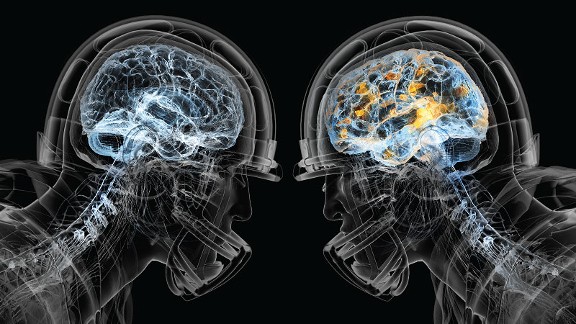
As thoroughly and irrefutable shown by the documentary and the book it was based on, football causes dementia and death. The earlier you start playing it, the worse the effects are. The NFL has systematically waged a public relations war of denial and deception, taking carefully calculated half-measures that will not address the problem, relying on America’s love of the game to allow the industry to continue making billions by paying young men to maim themselves. In hearings before Congress, U.S. representatives compared the NFL to cigarette manufacturers denying that cigarettes were addictive and that they caused health problems. The comparison is fair, but once the truth was known about tobacco, the non-smoking public quickly realized that it shouldn’t be cheering lung cancer on. Cigarette ads on TV were banned; programs that children watched were pressured to avoid showing characters smoking. But then, nobody gets a visceral rush watching human beings slowly kill themselves by puffing away: is that the difference? As long as you get a kick out of the process of athletes turning themselves into future drug addicts, depressives, neglectful fathers, abusive husbands, drooling imbeciles and suicides, it’s okay to keep watching and cheering?

Keep telling yourself that. It’s intellectually lazy and ethical abdication, and that’s all it is. Watching the Super Bowl can’t be wrong because so many people do it, right? You know, since you’re here, what’s the matter with that argument.

You can also try the argument that the players are accepting the risk, so it’s OK for you to encourage them, in fact help pay them to liquify their brains for your amusement. That would be employing three more rationalizations on the Ethics Alarms Hit Parade: Continue reading

STUPIDITY SATURDAY Bonus: The Deflategate Deniers, Excusers, Rationalizers and Corrupters

dumb football fan

[This post took so long to write that I am posting it on Sunday. Pretty stupid.]

Every few months an ethics story erupts that convinces me that I’m wasting my time. I started writing about ethics online in disgust over the Clinton-Lewinsky scandal, which revealed to me that no politicians, few journalists and a tiny minority of the public understood the difference between, right, wrong, and a desperate rationalization. I was aghast at the vigorously nodding heads on talk shows when some ethically-challenged dolt would say that “everyone lies about sex” (so it’s okay), or that because other leaders may have had illicit sex, that made it acceptable, or that Clinton deserved special dispensation because he was an effective and popular President, or that he and Lewinsky were consenting adults, or that personal conduct was irrelevant to the job, or that other Presidents had done worse. These were all just lazy, poorly reasoned and culturally corrupting rationalizations, but nobody except a derided few seemed to know it.

So I’ve been writing about these and other ethics issues, including rationalizations, for about 15 years, and nevertheless, when something like the Patriots cheating scandal arises, I hear the same unethical, ignorant crap, as if nothing has changed. And, of course, nothing has. All I can hope to do, in conjunction with others who don’t want to see society devolve into a Hobbesian Hell, is to try to convince enough rational people that we can, by constantly explaining, arguing, and pointing the way, just keep things as barely endurably corrupt as they are now.

I got depressed just writing that last sentence.

The issue regarding the New England Patriots giving their quarterback an edge by cheating—deflating the balls so he could throw more accurately–isn’t controversial or hard to understand. If the team broke a rule that relates to sportsmanship, the fairness of the competition and the integrity of the result, and it is hard to see how it didn’t, then the NFL should punish the team severely. [ The NFL, true to its black heart, has made it clear that its investigation will not allow a resolution of this until after the Super Bowl, meaning that it hopes the controversy will deflate. I’m sure it could resolve all questions and identify the accountable parties faster if it wanted to—it doesn’t want to.] To do otherwise essentially endorses cheating. Moreover, since the team involved has a head coach who has made it clear that he is willing to cheat (having been caught before), that coach must be held accountable for the unethical culture he has nurtured whether he was directly involved in this particular episode or not. This is truly Ethics 101, Management 101, Culture 101, Sports 101—let’s just call it “101.” Yet so many, from the elite among sportswriters to the public that devotes an obscene amount of their passion, time and money to following football just don’t get it. Continue reading

Comment of the Day: “Unethical Quote of the Month: Patriots Quarterback Tom Brady”

"Is this a deflated ball I see before me?"

“Is this a deflated ball I see before me?”

“Inflategate”—-the developing NFL scandal about the New England Patriots’ under-inflated, more easily thrown footballs in the team’s last play-off win and perhaps others—is a big deal to 1) people who hate the Patriots; 2) football fans who care about whether their game has any integrity and 3) people like me, who think there is no justification for cheating, in sports, in business, or in life. Those who argue that it’s “much ado about nothing,” usually without being able to quote a line or explain a plot turn from the Shakespeare comedy they’re alluding to, do so because 1) they are Barry Bonds fans; 2) they don’t know the difference between a football and a plantain, and don’t care. except that they wouldn’t want to eat a football by mistake; 3) they are typical NFL football fans and want to “oh, pshaw!”  anything that reflects badly on the sport that gives their brutal lives meaning, 4) they are John Edwards, or 5) they are members of the New England Patriots organization, and perhaps were involved in the ball deflation.

Pats quarterback Tom Brady (that’s how you know I’m from Boston: I call the team the “Pats”) gave a highly unconvincing press conference yesterday in which he maintained that he would never notice that the tool of his trade that he has plied approximately since he exited the womb felt different than usual, and, like his coach, the brilliant and soulless Bill Belichick, has no idea how the team’s balls got deflated. The credibility of that claim was severely undermined for me by Brady’s use (“This isn’t ISIS…”) of my least favorite rationalization of them all on the Ethics Alarms compendium, the infuriating #22:

The Comparative Virtue Excuse: “There are worse things” : If “Everybody does it” is the Golden Rationalization, this is the bottom of the barrel. Yet amazingly, this excuse is popular in high places: witness the “Abu Ghraib was bad, but our soldiers would never cut off Nick Berg’s head” argument that was common during the height of the Iraq prisoner abuse scandal. It is true that for most ethical misconduct, there are indeed “worse things.” Lying to your boss in order to goof off at the golf course isn’t as bad as stealing a ham, and stealing a ham is nothing compared selling military secrets to North Korea. So what? We judge human conduct against ideals of good behavior that we aspire to, not by the bad behavior of others. We should each aspire to be the best human being that we can be, not to just avoid being the worst rotter anyone has ever met.

Behavior has to be assessed on its own terms, not according to some imaginary comparative scale. The fact that someone’s act is more or less ethical than yours has no effect on the ethical nature of your conduct. “There are worse things” is not an argument; it’s the desperate cry of someone who has run out of rationalizations.

(Or someone whose coach had the equipment guy deflate the footballs.)

Now comes blogger Windypundit to expand on my derision of Brady’s embrace of #22 from a different and useful perspective. Here is his Comment of the Day on the post, “Unethical Quote of the Month: Patriots Quarterback Tom Brady”:

In a way, Brady has a point, but it’s not what he thinks it is, and it doesn’t cut in his favor. In the grand scheme of things, nothing that happens on the field of play is very important. In fact, most of the rules of sports are arbitrary — the location of the free throw line, the number of bases the runners have to tag, the pressure in the football. The rules don’t have any higher meaning. And that’s precisely why there’s no excuse for not following them.

The big issues — when you can disconnect the life support, when a cop can shoot an unarmed person, when the President can order a drone strike — are full of complications and nuance. It’s hard to come up with a clear set of rules that will apply in every possible situation. You may think you have it all figured out, and then a scenario arises that you never thought of, and your simple set of rules, if followed blindly to the letter, would produce a terrible result. So maybe after you think through all the consequences, you decide that you’ve found a valid exception, and you change the rules. Or maybe, if the matter is important enough and you believe the rules are immoral, you break the rules as an act of conscience.

But I can’t see that happening much in sports. There is no greater good that could be used to justify breaking the rules. What terrible result could arise from blindly following the rules of football to the letter? A team loses a game? That might cost the team a bit of money, and I can see where crazed fans would get upset, but you know what? Nobody dies if the Patriots don’t make the playoff. This isn’t ISIS after all.


Unethical Quote of the Month: Patriots Quarterback Tom Brady

Disappointed kid

“This isn’t ISIS. No one’s dying.”

–New England Quarterback Tom Brady, in the course of denying culpability in the latest New England Patriots cheating scandal.

Tom Brady now joins the Ethics Alarms Rationalization Spouter’s Hall of Fame, which I just started. You just can’t embody Rationalization #22, Comparative Virtue, or “It’s not the worst thing” any better than this obnoxious attempt to minimize the significance of Deflategate.

That’s the way to teach the kids to be fair competitors and good citizens, Tom! And does a star athlete whose attitude regarding cheating in his profession amounts to this fill you with trust in his integrity, honesty, and sportsmanship?

Not me.

Deflategate Ethics Verdict: Prove It, Then Ban Bill Belichick

FOOTBALL

It looks as if New England Patriots head coach Bill Belichick cheated…again. If the NFL cared about such mundane matters as integrity, fairness, honesty and ethics, it would take the kind of appropriate action any other organization is obligated to take when the evidence shows that a high-performing member of the organization is a rotten apple: throw him out, or at least discipline him and his team severely.

Will the NFL do this to the most successful play-off head coach in its history?

Don’t make me laugh. Continue reading

Ethics Alarms Awards Update: Let Us Not Forget “The Most Unethical University Of 2014,” and The Most Unethical Ethicist Who Helped Make It That Way

The unethical ethicist.

The unethical ethicist.

I finally completed the 6th Annual Ethics Alarms Awards for the Worst of Ethics yesterday, longer and more nauseating than its five predecessors, and also, as I realized when I awoke with a jolt at dawn this morning, more incomplete.

Somehow, I managed to omit two important and prominent awards that were in my notes but managed to elude me when I was preparing the final version. Here they are: I’ll be adding both to the official awards posts today:

Most Unethical University and Worst Academic Scandal of the Year:

The University of North Carolina and its incredible fake courses scheme that for 18 years between 1993 and 2011 allowed more than 3,100 students, 47.6 percent of them athletes, to enrolled in and receive credit for  classes that did not exist.

Least Ethical Ethicist

Prof. Jeanette M. Boxill, a philosophy professor and senior lecturer on ethics  who ran the University of North Carolina’s Parr Center for Ethics, and who somehow decided it was ethical to steer U.N.C.  into fake classes to help them maintain their eligibility with the National Collegiate Athletic Association, and actively worked to cover up the scam. Among other aspect of her participation, Boxill  helped players write papers, which the official university report on the conspiracy characterized as stepping across the line of permissible conduct.

Ya think??

The Chronicle of Education article about Boxill’s participation suggests that she rationalized helping the athletes graduate as “the ethics of care,” and a colleague says that she may have “often let her heart guide her.” Her heart guided her to allow students to acquire a degree that misrepresented their academic work to the world, and to perpetuate and further corrupt the already corrupt system of college athletics? Wow. For an ethics professor, she had a remarkably ignorant and unethical heart. She has,blessedly, been fired, and is appealing the decision.

I wonder on what grounds? I don’t think even The Saint’s Excuse (Rationalization #13 on the Ethics Alarms List) applies to her conduct.

The Sixth Annual Ethics Alarms Awards: The Worst of Ethics 2014 (Part 4 of 4)

mamoru-samuragochi2

Outrageous Hoax Of The Year

Mamoru Samuragochi, the composer sometimes known as “The Japanese Beethoven” because he composed critically acclaimed works despite being deaf, was exposed as double fraud: he didn’t compose the works that made him Japan’s most popular classical composer, and he isn’t even really deaf!  Samuragochi hired a musical ghostwriter named Takashi Niigaki to compose more than twenty compositions for Samuragochi since 1996.

Funniest Outrageous Hoax

Fake Panda

This.

Unethical Artist Of The Year

Performance artist Maximo Caminero, who  walked into the Pérez Art Museum in Miami, entered a special exhibit of sixteen ancient Chinese vases painted over in bright colors by celebrated Chinese dissident artist Ai Weiwei, picked up one of them, and immediately after a security guard instructed him not to touch the exhibit, allowed the vase to fall from his hands, shattering into bits. Caminero admitted that smashing the pottery, which was valued at a million dollars,  was intentional, and was his protest against in support of local artists like himself whose work is not exhibited at the museum while the art of international artists like Weiwei is.

Unethical Veterinarian Of The Year

Fort Worth, Texas veterinarian Lou Tierce lost his license for five years as a result of, among other transgressions, his telling the owners of a Leonburger (it’s a very big dog) that their pet was terminally ill and had to be euthanized, then secretly keeping the dog alive in a small cage so he could use Sid’s blood for transfusions to Dr. Tierce’s other canine patients. Eventually an assistant at the clinic blew the whistle and alerted Sid’s owners, who rescued their dog and sicced the law on the worst veterinarian since Dean Jones menaced Beethoven.

Unethical Doctor Of The Year

Dr. Nancy Snyderman, NBC’s medical expert, endangered the public by defying a voluntary quarantine for possible Ebola exposure,  because she just couldn’t bear to be without her favorite soup.

Scam of the Year

Jonathan-Gruber-1

The Affordable Care Act.

 Unethical Federal Agency Of The Year

The Secret Service. Lots of competition in this category: the Veterans Administration, the I.R.S., the CDC, the Justice Department, NSA…but when you essentially have one job to do and do it badly, sloppily carelessly and dangerously, there’s really not much more to say Continue reading

Ethics Quiz: The New England Patriots’ Loophole Victory

Cap Anson would have loved the Patriots strategy. If he wasn't dead, of course. And if they had football when he was alive....

Cap Anson would have loved the Patriots strategy. If he wasn’t dead, of course. And if they had football when he was alive….

On Saturday night, the New England Patriots ran a series of plays that exploited the complicated receiver eligibility rules, confusing the Baltimore Ravens and officials, and allowing the Pats, who were trailing badly, to get back into the game. They eventually won in a thriller.

Ravens head coach John Harbaugh was so upset during the sequence that he drew an unsportsmanlike conduct penalty. Later, he stopped just short of calling new England coach Bill Belichick a cheater. “[I]t’s a substitution type of a trick type of a thing,” Harbaugh told reporters after the game. “So they don’t give you the opportunity, they don’t give you the chance to make the proper substitutions and things like that. It’s not something that anybody’s ever done before. The league will look at that type of thing and I’m sure that they’ll make some adjustments and things like that.”  Indeed, the NFL will investigate whether the officiating crew gave the Ravens proper notice that an eligible Patriots player would be ineligible for a given play.

Let me quote NBC Sports to explain what happened: I barely understand it myself: Continue reading

Ethics Observations On The Dartmouth Cheating Scandal

DartmouthSixty four Dartmouth students have been charged with cheating in a special religion and ethics class that was designed for student athletes. The details can be found here.

1. The reports quote the professor as saying,

“Part of the reason I designed this course was that I had the sense that some athletes coming here to Dartmouth might have felt just a little bit overwhelmed or intimidated academically. I wanted to design a course that would appeal to their interests and allow them to have an early success in the classroom, and I’d hoped that they would be able to build on that success throughout their time at Dartmouth.”

Translation: The students were accepted for their athletic prowess, and this was a baby-steps course just for them.

Why is Dartmouth admitting students who need such phony courses?

2. An admittedly non-challenging course to allow athletes an easier route to graduation sends the clear message that integrity isn’t valued at the institution. The professor’s expressions of disappointment and sadness are either naive or disingenuous. The university was cheating to keep them in school: why should he be shocked that they would cheat in return? Continue reading