Ethics Dunce + Incompetent Elected Official = Censorship In North Carolina

Thank-you. I see no reason to believe that your funding is in any jeopardy, by the way."

Thank-you. I see no reason to believe that your funding is in any jeopardy, by the way.”

Central Carolina Community College pulled the plug on a public affairs  talk show airing on its radio station after a legislative assistant for State Rep. Mike Stone complained about an online post by one of the show’s hosts, criticizing the  Sanford, N.C. Republican.  Susan Phillips, Stone’s legislative assistant, wrote the school’s president, T.E. “Bud” Marchant, with pointed questions about the program’s affiliation with the school, funding sources, and budget.  Central Carolina Community College is one 58 community colleges in North Carolina that depend on the  legislature for funding, and Stone’s message was received loud and clear. Marchant shut down the show, known as “The Rant,” two days later. He also denied that Stone’s interference had anything to do with it.

Sure.

There shouldn’t be any question over what happened here. An elected official in a supposedly democratic nation decided to abuse his position and power as well as violate his oath of office  by using veiled threats and intimidation to stifle Constitutionally protected criticism of his job performance, and a craven educator caved to his pressure, violating his duty of respecting academic freedom and standing against efforts by the state to stifle free speech and political dissent. Marchant, if he had even a rudimentary backbone, would have told Stone’s minion to back off and reported this clumsy attempt at extortion to the area’s news media. Stone, if he had any integrity or respect for the founding principles of the United States, would have taken “The Rant’s” host’s criticism like an adult and a believer in free speech, and responded with a defense or a rebuttal, not by leaning on the radio station’s management. As for Marchant’s incredible claim that Stone’s complaints and the show’s demise were unrelated, even if that were true, his creating the appearance of censoring campus speech in response to government disapproval would be nearly as offensive as censorship itself, because it would still have the effect of chilling First Amendment rights.

I’m certain, considering what appears to be the generally low quality of state legislators across the country (which figures, given the abysmal quality of national legislators), that this kind of thing occurs far more frequently than we know. Let’s see if Stone’s bedrock, conservative supporters are sufficiently offended by his efforts to use government power to muzzle adverse opinion, and send him on a new career path. My guess? This incident won’t make any difference to his election chances at all, if voters like Stone’s politics and believe the radio host is a nettlesome lefty. We are constantly told how much of the country is willing to dispense with the Second Amendment, as if that proves that amendment is archaic. Sincere public support for the First Amendment is similarly shaky.

All right, let us agree that both legislator and college president are unqualified for their positions by virtue of their abandonment of their ethical obligations in their respective roles—Stone’s duty to respect free speech and observe proper limits on government power, Marchant’s duty to protect academic freedom and oppose government efforts to stifle free expression. That still doesn’t justify the elitist coverage of this story by Jonathan Turley, whose blog post first alerted me to it. For some reason, the noted civil rights expert and law professor believes that it is Stone’s wan academic credentials and humble work experience that explain his bullying tactics. Why else would Turley feel it is germane to note that Stone lists his education as ‘“Attended, Accounting, Central Carolina Business” and lists his experience as “Business Owner, O’’Connell’s Grocery Store”’ ? Why is any of that relevant? The law school professor is evidently a bigot, and believes that one’s ethical instincts and character are directly proportional to one’s degrees and work experience.

Rep. Stone is a citizen of the United States, and like every citizen, should be presumed to know about the Four Freedoms whether he graduated from Harvard or the School of Hard Knocks. There are plenty of well-credentialed bullies, fools and ignoramuses in elected office. It is sufficient to judge Stone by what he did; Turley’s implied ridicule of his educational and work background is a cheap shot, and reflects badly on the commentator, not his target.

_____________________________

Pointer: Res Ipsa Loquitur

Facts: NC Policy Watch

Graphic: Pozniak

The Ghostwriting Ethics Scale

ghostwriting

The ease with which former Congresswoman Gabrielle Giffords’ op-ed denigrating opponents of the Manchin-Toomey background check provision was accepted as her words and sentiment has prompted me to focus again on a persistent ethics issue of long-standing: ghost-written articles, op-eds, articles and other printed statements. This is the epitome of a slippery slope issue, because finding the dividing line between what is acceptable ethically and harmfully deceptive is so difficult, most people don’t even bother to try to make ethical distinctions. We have to, though, and the Giffords piece shows why.

A published opinion piece by a prominent individual can have several uses, intentional and otherwise: Continue reading

“The Ortiz Standard,” With An Ethics Note To High Appointed Officials: If You Can’t Say Something Responsible And Intelligent, Please Shut Up!

Gee, thanks, guys. Fuck.

Gee, thanks, guys. Fuck.

Apparently April is officially “Let’s Make The U.S. Permanently Vulgar and Uncivil Month.”

We’ve had a University of Maryland sorority lovely ream out her charges with a rant that would, in the words of Henry Higgins, “make a sailor blush.” Kmart launched a potty-minded commercial based entirely on the hilarious similarity between the phrase “ship my pants” and “shit my pants,” including two happy seniors boasting how they “shipped our pants.” In Bismarck, North Dakota, a local station’s brand new anchor man’s very first words to the audience were “…fucking shit!” because he didn’t know his mic was live.  And, of course, given the honor of representing his team during the Boston Red Sox’s pre-game ceremony honoring the heroes of the past week in their terror-besieged city, slugger David Ortiz told 35,000+ spectators, including many children, and a large TV audience, also including young children, watching the event, “This is our fucking city!” He was then unanimously praised for his passion.

Not to be left out of this full-throated endorsement of public incivility and locker room banter as the new normal, FCC Chairman Julius Genachowski sent out a tweet for those wondering how Ortiz’s outburst would be received by the FCC, which has previously threatened fines of networks that didn’t take sufficient precautions against live obscenities. He wrote,

“David Ortiz spoke from the heart at today’s Red Sox game. I stand with Big Papi and the people of Boston – Julius.” Continue reading

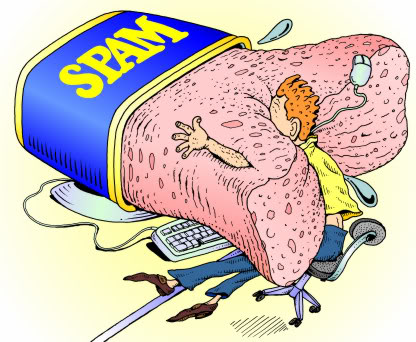
Adding Insult To Injury: Critical Spam

Spam2At least the old comment spam I have been inundated with for the last three years was usually complimentary, if vague and dumb. “Awesome revue! I will return to this weblog in the future, you can be assured of that!” Usually such a rave is attached to a post that is neither remarkable nor “a revue,” and the fact that 16 commenters, some with names like Britney Spears Nude, have exactly the same opinion usually raises suspicions, but hey, a compliment is a compliment. I feel bad sending such nice, appreciative readers to the spam bin with all the lista de email, but I do. (From today’s batch, this intriguing entry from “Graig”: “ierwa ciężkie spojrzenie. – Mówiłeś trochę? – spytał nerwowo. Nieewentualne, żeby nieco wiedział, pomyślał. Ale po co zaanonsował a figę owe? Czyżby? Arnold nie pył złych polityki. Po pro.” Who knows what hidden wisdom is in this missive? And who is “Arnold’?  It’s driving me mad!)

The latest trend, however, is to send nasty spam, on the theory , I suppose, that spam-blockers are set for fawning, and insults might slip through. I’ve received various forms of this comment in the last couple of weeks…

“The next time I read a blog, I hope that it doesnt disappoint me as significantly as this 1. I mean, I know it was my choice to read, but I basically thought youd have something fascinating to say. All I hear is often a bunch of whining about some thing that you simply could fix in case you werent too busy searching for attention.”

Again, this comment was attached to a completely inappropriate post for that reaction, in this case, my expression of amusement at the story, later shown to be a hoax, about a naked 500 lb. man sitting on the son of Fred Phelps, of Westboro Baptist Church infamy. With all the genuinely whiny posts I have, you would think  “Gesescuro” could find one (excuse me, “1”) of them, but never mind that: isn’t spamming my site and and making me waste my time screening hundreds of them every day (so a genuine comment isn’t inadvertently lost) enough?   Now I have to put up with insulting spam too?

Life is unfair, and the internet is worse.

Now that’s whining, Gesescuro.

Ethics Quote of the Week: Tom Hawking

“It’s not the role of our media and our journalists to shield us from truth; it’s their job to confront us with it. In this respect, the plurality of imagery is both a blessing and a curse, because in the sort of panic that follows an event like yesterday’s bombing, anything could be real. But equally, it’s also the volume of images and coverage — graphic and otherwise — that help us get a clearer picture of reality than we ever did in the days when our opinion was shaped by one journalist and a few photographs.”

—- Tom Hawking in his essay “The Ethics of Disaster Photography in the Age of Social Media,” discussing the controversy over whether graphic images from catastrophes like the Boston Marathon bombing ought to be published by the mainstream media, or should be toned down, edited, or withheld altogether.

Boston Marathon ExplosionHawking’s conclusions are spot-on, and you should read the entire essay here. Obviously horrendous photographs shouldn’t be thrust in readers’ and viewers’ faces; we should all have the opportunity to avoid seeing images we know would upset us. ( I have not looked at any of the graphic images from Boston. The text descriptions are plenty for me, thanks.) Leaving it to editors and journalists to decide how much realism we can stand, however, is folly. To be blunt, there is no reason to trust them. One of the blessings of the web and social media is that the traditional media no longer have the power to withhold information based on their biased and paternalistic judgement, which they are thoroughly unqualified by intellect, education  to render.

______________________________

Source and Graphic: Flavorwire (Tom Hawking)

Ethics Alarms attempts to give proper attribution and credit to all sources of facts, analysis and other assistance that go into its blog posts. If you are aware of one I missed, or believe your own work was used in any way without proper attribution, please contact me, Jack Marshall, at  jamproethics@verizon.net.

Unethical Quote of the Week: David Drumm

“Gosnell is on trial for 7 counts of first-degree murder regarding the deaths of seven babies, and one count of third-degree murder for the death of a female patient. Many conservatives pundits think there should be greater media coverage. Be careful what you wish for.”

David Drumm, guest blogger on Jonathan Turley’s “Res Ipsa Loquitur,” arguing that scrutiny of the facts behind the Gosnell late-term abortion murder trial will show that pro-life protestors at Planned Parenthood clinics forced some women to enter Dr. Gosnell’s “house of horrors,” so conservatives should be eager to suppress the ugly story, just as the main stream media has done to avoid sparking an emotional national debate over the realities of abortion.

I'll put up a more flattering photo, Professor Turley, when you stop letting unethical people write on your blog.

I’ll put up a more flattering photo, Professor Turley, when you stop letting unethical people write on your blog.

A statement like Drumm’s above is signature significance. I don’t need to read another word to know that this is a commentator driven by politics and tactics rather than principle. Why is someone like this guest blogging on Jonathan Turley’s website? Turley is a legal scholar, an ethics expert, and everything Drumm is clearly not. He does not take knee-jerk ideological positions; his commentary is not partisan, and he is a civil libertarian. Civil libertarians do not endorse media manipulation of the news in the pursuit of partisan agendas, which is exactly what Drumm does here. Continue reading

Wikipedia Ethics And The Gosnell Trial

Ah, sunlight! When all the machinations are revealed, it's a lot harder to be unethical.

Ah, sunlight! When all the machinations are revealed, it’s a lot harder to get away with  being unethical.

Apparently Wikipedia almost joined the media outlets operating a cover-up of the Gosnell baby-killing trial. For a while a debate raged on the site, with an editor advocating that the article about the abortion doctor at the center of the horrific allegations and testimony be deleted entirely, because Gosnell’s trial is only a “local multiple-murder story in Pennsylvania.”  Yes, and the Newtown murders are just a multiple-murder story in Connecticut. Outright hoaxes stay on the site for years, puff piece entries on virtual non-entities and insignificant organizations clog it, but a case with major policy implications bearing on a contentious national, bioethics  and human rights issue of long-standing isn’t worthy of a page? The editor in this case, whoever he is, is too biased and incompetent to hold the position. Had his argument prevailed, Wikipedia’s credibility and perceived trustworthiness would have been severely diminished, for an encyclopedia cannot have an ideological agenda, and the desire to marginalize the Gosnell story is smoking-gun proof of one.

Luckily, Wikipedia got it right in the end, and the article survived. What saved Wiki was transparency. The argument about the Gosnell article was open and public, and ethics always benefits when transparency reigns. You would think that would be one of the news media’s mottos…but not, apparently, when it means letting the public know how it is that certain stories get buried, marginalized and ignored.

(The mainstream media, not surprisingly, didn’t cover the Wikipedia debate, either.)

_______________________________________

Sources: Daily Caller1, Daily Caller2, Newsbusters


Portrait Of The Deadbeat As A Young Fick

christopher_robinson

We haven’t had a flaming fick for a while, but Christopher Robinson certainly qualifies for the term, denoting someone who proudly flaunts his anti-social, self-centered and unethical ways.

The man who took a photo of himself rolling in dough and then proudly posted it to Facebook, you see, is a deadbeat dad, owing three years of child support. His self-accusing photo brought him to the attention of authorities, and now he’s facing up to eleven years in prison if he’s convicted of willful non-payment.

Being a fick isn’t a jailable offense, but interestingly, most ficks find themselves in trouble with the law sooner or later.

Go figure.

_______________________________

Facts and Graphic: ABC

Ethics Hero: Lawyer/Blogger Scott Greenfield

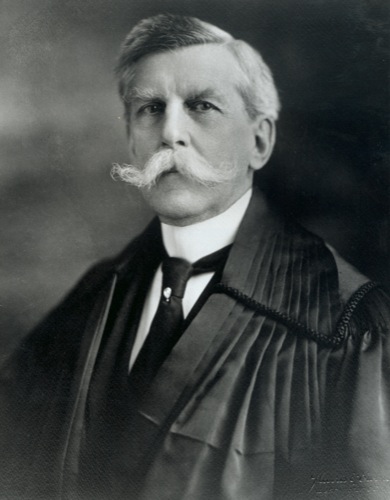
No question: Justice Holmes would think Scott Greenfield is a good man.

No question: Justice Holmes would think Scott Greenfield is a good man.

Criminal defense lawyer and caustic, if trenchant, blogger Scott Greenfield stakes out a noble and correct stand on legal ethics and ethics generally in a superb post titled, “What Tastes Good To You?” Read the entire post, but his essay springs from a question that has been posed in various forums (including,  in slightly different form,the Jack Lemmon comedy “How To Murder Your Wife”), to wit:

If you could commit any crime and get away with it, what would it be? 

Greenfield’s answer, the ethically correct one, is “none” : “Just because we can get away with it isn’t a reason to do wrong.” Thus does he definitively separate himself from what Justice Oliver Wendell Holmes referred to as “the Bad Man” in his famous 1897 essay, “The Path of the Law.”  For Holmes’ “bad man” never breaks a law, but only because he abhors punishment.From this starting point, Greenfield considers a professional debate about whether the legal marketing tactic (as determined by the courts) of buying up another firm’s name as a web “key word” to lead customers to one’s competing firm is “unseemly,” which is to say, unethical, though not technically unethical under the professional rules of conduct. One of the defenders of the practice describes the division on the issue to a difference in “taste,” leading Greenfield to aim carefully and fire: Continue reading

Self-Serving Twitter Plagiarism From Shia LaBeouf

"How To Be A Jerk"

“How To Be A Jerk”

Actor Shia LaBeouf has two impressive achievements, neither anything to be proud of, but impressive nonetheless. In a showdown with World Champion Hollywood creep Alec Baldwin, LaBeouf, against all odds. managed to come off as the bigger jerk. In the process, he created, or at least gave unprecedented publicity to a new ethical transgression: Twitter plagiarism.

You will recall LaBeouf, if you recall him at all, as the former Disney Channel child star who had movie hits with “Disturbia” and the “Transformers” franchise, as well as gaining a form of lasting notoriety as Indiana Jones’ son in the fourth and lamest installment of that classic series. He also has established a reputation for being trouble, and this week it was revealed that he had been fired (the old “artistic differences” excuse) from what was supposed to be his Broadway debut in the new play “Orphans,” starring Baldwin. The exact reasons are unclear, but incompatibility with Baldwin was part of it.

How do I know that LaBeouf, rather than the famously volatile Baldwin was at fault? Simple, really. Baldwin is the show’s star; he has theater credentials; he’s an established pro. It is part of LaBeouf’s job to get along with him, not the other way around. He could also learn something from Baldwin, who, though it seems hard to imagine, was once an even bigger jerk than he is now—so big, that at one point his career had gone from losing the Jack Ryan franchise (to Harrison Ford) to playing the conductor in the sad and awful movie version of “Thomas the Tank Engine.” Baldwin knows where Shia is headed, and could help stop him from going there.

In the wake of his canning, LaBeouf took to his Twitter feed and posted various e-mails leading up to his fate. One of them was erudite and almost poetic:

“A man can tell you he was wrong. That he did wrong. That he planned to. He can tell you when he is lost. He can apologize, even if sometimes it’s just to put an end to the bickering.”

Hey! Jerk or not, this guy can write! He has a brain!

Well, no, not really: he has a computer, and can cut and paste. His words were lifted from Tom Chiarella’s essay in Esquire, “How To Be A Man.” Continue reading